Nevada launches program to keep drivers safe

An average of 325 people lose their life annually on Nevada roads.

The Nevada Department of Transportation, Nevada Highway Patrol, Nevada Office of Traffic Safety and safety partners across the state have launched a Zero Fatalities traffic safety goal and educational campaign to save lives.

“When we each drive off to work, for a trip or for an errand, we expect to return safely,” NDOT Director Susan Martinovich explained in a press release. “Whether due to unsafe driving or something else, that tragically doesn’t always happen on Nevada roads. As drivers, as citizens, as transportation experts, it is time to stand up and say there is no number other than zero deaths that is acceptable on our roads. Zero Fatalities begins today with each Nevadan deciding to drive safely each time they get in their car.”

The Zero Fatalities goal is part of a revamped Nevada Strategic Highway Safety Plan. The plan, developed in 2006 by more than 75 Nevada traffic and safety experts, identifies five Nevada-specific focus areas including increasing seat belt usage and pedestrian/intersection safety and reducing impaired driving. Traffic engineering, enforcement, education and emergency response strategies were developed in each area to reduce road deaths and injuries. The Nevada safety plan was updated in 2010 with additional life-saving strategies to help reach the new Zero Fatalities goal.

Traffic fatalities have dropped from an all-time high of 434 in 2006 to 256 in 2010.

Over and above the life-saving strategies included in the safety plan, Nevada’s Zero Fatalities goal will be reached through a public education campaign educating motorists about traffic safety through public service announcements and other educational materials. The state’s Zero Fatalities goal is consistent with the national Toward Zero Deaths strategy led by the Federal Highway Administration and others.

Driving safety tips:

∙ Buckle up – Close to half of Nevadans who die in car crashes aren’t buckled up.

∙ Don’t drink and drive – 574 people died in Nevada alcohol-related crashes in a recent five-year period.

∙ Don’t speed – A car traveling at 60 mph travels 88 feet per second. Speed has a great impact on how much time drivers have to react to the road ahead.

∙ Drive safely near intersections/obey all traffic signals – 467 people died in Nevada intersection crashes in a recent five-year period.

∙ Watch for pedestrians/cross roads cautiously – 258 pedestrians lost their lives on Nevada roadways in a recent five-year period.

∙ Don’t let distractions take your eye from the road – Inattentive or fatigued driving can result in traffic injuries and deaths.


Price of water increases an average of 9% in most U.S. cities

By Brett Walton, Circle of Blue

In the last year, the price of water in 30 U.S. metropolitan areas has increased an average of 9.4 percent for residential customers with medium consumption levels, according to data collected by Circle of Blue. The median increase for medium consumption was 8.6 percent. Water rates for high-volume consumers have increased slightly more than rates for lower consumption—an indication that utilities may be attempting to curb water use by charging higher marginal rates.

The annual survey, which Circle of Blue first conducted in April 2010, charts what residents pay per month for water in the 20 largest U.S. cities, as well as 10 regionally representative cities.*

Monthly water bills were calculated for a family of four at three consumption levels:

* Low: 50 gallons per person per day (6,000 total gallons per month)

* Medium: 100 gallons per person per day (12,000 total gallons per month)

* High: 150 gallons per person per day (18,000 total gallons per month)

Since the prices depend on cost-of-service factors and revenue decisions unique to each utility, comparisons between cities are somewhat difficult at first glance. However, the broader trend is unmistakable: the price of water is going up.

Over the last year, the largest relative rate increases occurred in Indianapolis (29.3 percent increase at medium consumption), Milwaukee (25.4 percent), and Houston (24.3 percent).

Water prices in two cities — Fresno and Chicago — have not changed since last April. Both cities, however, have already seen their fair share of rate hikes in recent years. From 2007 to 2010, the cost of water doubled in Fresno, while prices increased by half in Chicago.

Read the whole story


Tahoe tourism officials hope spinning wheels turn into cash

By Kathryn Reed

While there is no guarantee of making money from the Amgen Tour de California race, making money is the reason to be part of it.

“California’s majestic scenery, thrilling sporting events, world-class museums and art galleries attract millions of visitors to our state each year. Last year visitors spent nearly $90 billion in our local communities. This money has an enormous impact on employment and can serve as a catalyst to grow our economy,” Gov. Jerry Brown said in a statement.
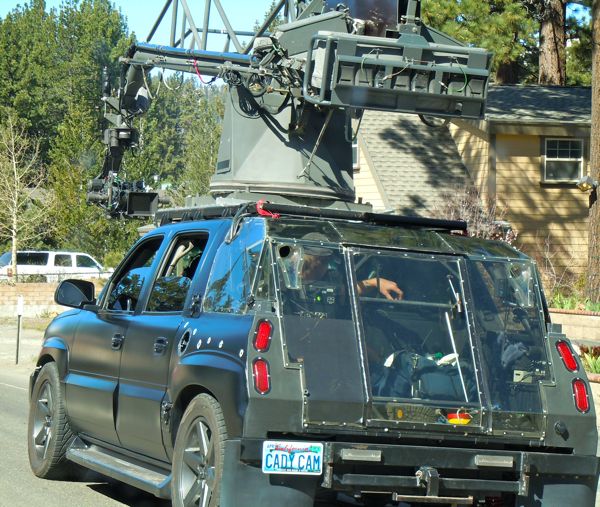
Tricked out vehicles with TV cameras are already cruising the streets of South Lake Tahoe. Photos/Kathryn Reed

Tricked out vehicles with TV cameras are already cruising the streets of South Lake Tahoe. Photos/Kathryn Reed

As the premier cycling event in the United States takes off from the South Shore on Sunday, it coincides with the final day of National Travel and Tourism Week.

May 15 begins a two-day affair for Lake Tahoe to show the world what it has to offer to cyclists and to those who would want to visit for other reasons.

“Ninety countries will be broadcasting this event to a global audience who may not even have heard of Tahoe. We can likely assume that this is millions of dollars worth of media for these impressions coupled with the incredible regional and national impressions,” explained B Gorman, president of the Lake Tahoe South Shore Chamber of Commerce. “We will never be able to track this value in terms of visitors who have the brand reinforced or begin to think about our piece of heaven as a destination they might visit in the future.”

There will be 27 hours of television coverage during the eight-day race that ends May 22 in Thousand Oaks.

Most of the economic impact to the South Shore, Truckee and Squaw Valley will come down the road when people travel here after being teased by the media with the allure of the Jewel of the Sierra.

That’s not to say hotels, restaurants and retail won’t benefit this weekend while people are in town for the start in South Tahoe, the end of stage one at Northstar-at-Tahoe, and the stage two start May 16 in Squaw.

Hotel and sales taxes, which are reported several months later, will be an indicator of how big of a boon this event was for the area. Considering May is one of deadest times in the basin, having an event of this magnitude is likely to be a bonus for some businesses.

“This event will be well followed in the European market and helps to define Lake Tahoe as a destination. The board of commissioners view this as a tremendous economic opportunity for Douglas County during a historically slow time of the year,” said Lisa Granahan, Douglas County Economic Vitality manager.

Some concerns

Several business people on the route of the race have expressed apprehension about customers being able to access their businesses during the road closures.

“To be honest, if I’m a citizen trying to run a business, I’m going to guess there is a cost,” said Truckee police Sgt. Robert Womack.

Despite what appears to be an unusual influx of travelers to Tahoe this time of year, not everyone has heads in beds.

“I haven’t heard of anyone exceedingly benefitting from this. It is creating less demand than we had hoped for,” Matt Fenn, president of the South Lake Tahoe Lodging Association said. “But there were never any promises made.”

Part of this may have to do with LTVA’s lodging partners giving away 1,700 room nights – mostly at MontBleu and Harveys. Another 700 rooms were donated on the North Shore.

That’s one of the issues with something like this, host cities are asked to give a lot in return for the recognition and prestige that is associated with being involved with this caliber of an event. Food is part of the package, too.

LTVA budgeted $250,000 to bring the event to South Lake Tahoe. What has actually been spent is not known.

North Lake Tahoe Resort Association officials would not disclose what their share is.

Money in the bank

“Hosting the Amgen Tour de California has already paid for itself in media coverage generated. The exposure prior to the stage one start is estimated at $260,000 in advertising equivalency — what it would cost to purchase the same amount of editorial space — and a reach of 96 million in circulation/listenership,” according to LTVA literature.

In addition, local tourism officials have a robust social media campaign, including the LTVA’s iPhone app Tahoe South that has tons of race information.

LTVA also expects to generate about $50,000 in revenue from retail, sponsorships, last night’s gala and today’s Legends Ride.

In the long term, LTVA told Lake Tahoe News it anticipates the local impact of the actual race and events leading up to it could bring $5 million to $10 million to the area.

Previous Tour de California races have brought an estimated $100 million to the state.

North Lake Tahoe Resort Association officials, who have partnered with LTVA, wouldn’t make projections about the fiscal impact of the race on the region or North Shore in particular. Though they also see money to be reaped down the road.

“This type of affiliation will go a long way in the promotion and awareness of this region as a bike mecca — both road and mountain,” Andy Chapman, NLTRA tourism director, said.

Even though a large number of out of town plates have been zipping along the local roads, it’s hard to know if they are here for the race.

“We have an opportunity to showcase ourselves as a destination for various types of recreational activities for individuals, families, groups, amateur, elite and professional athletes,” Gorman said. “The visitor who travels to a destination to participate in sports, activities and hobbies such as hiking, cycling, kayaking, art, culture, history etc. stay longer, use public transportation and spend more.”

It also seems like a larger number of adult beverage trucks were making deliveries on the South Shore on Friday.

Businesses have signs welcoming the riders and spectators, with some having displays out already. Highway 50 from Stateline to the Y is expected to be one big party scene, with much of the same atmosphere when the riders complete stage one at the Northstar Village.

Part of the Mikasa parking lot at Y in South Lake is already barricaded off so people can gather there to watch. The cyclists will pass that location twice. Plus, there will be a BMX demo at that site.

Cooperative effort

To put on something like this requires a great deal of cooperation with law enforcement. They will be everywhere. A California Highway Patrol SUV was speeding behind a supped up camera-mobile Friday morning as a practice run of sorts through South Lake Tahoe.

CHP did not release what this costs them or if they charge the race promoters for the added manpower.

The Nevada Highway Patrol is putting extra people on duty while the race comes through the Silver State for the first time. They are billing the folks at Amgen.

For Truckee police, no added cost is involved, though more officers will be out and about. Womack said instead of having a training day this month, officers are working the bike ride.

South Lake Tahoe is spending about $27,000 on the event — $7,000 on the BMX expo; $8,500 on community services, staffing and support, event coordination, tents along the route for nonprofits, street barricades from Stateline through the city; and $11,500 on public safety overtime. Overtime is built into the budget with the expectation of special events coming up throughout the year.

Added personnel include a combined extra 21 police and fire, five public works employees, and parks and recreation staff working the event.

“As for revenue, I understand hotels have reservations above the average occupancy for this time period, which will provide an increase in TOT if bookings hold up. More visitors would also provide an increase in sales tax,” Nancy Kerry, city spokeswoman said.

Douglas County will have 35 sworn deputies, about 10 citizen patrol officers, 15 on horseback, and 30 search and rescue.

All jurisdictions have a wealth of volunteers helping.

The Douglas County commissioners approved $9,000 in overtime costs for the sheriff’s department.

“The action sheet states that the economic impact from the Amgen tour to Lake Tahoe’s South Shore is estimated at $3 million to $6 million over a several day period,” Douglas County’s Granahan said. “That is based on information from other cities’ experiences with Amgen in the past. We expect much of that to be in room tax and sales tax regionwide. Obviously, it is also good for local merchants, catering companies, marketing/advertising, art, and flower companies to name a few who have been engaged in contracts by LTVA.”

ngg_shortcode_0_placeholder (Click on photos to enlarge.)


Transportation meeting in Carson City

A public open house to discuss transportation plans that will affect the Carson City area will be hosted by the Tahoe Transportation District, Northern Nevada Transportation Collaborative and local, state, regional and federal agencies on May 18 from 4-7pm at the Nevada Legislative Building, Room 3100 in Carson City.

Outlines will be available for numerous projects including the Carson City freeway corridor, Reno-Tahoe International Airport, Tahoe East Shore Beaches Trail, Aquatic Trail, and Regional Bike Trails, as well as other transportation improvement issues.

The public is encouraged to attend and provide comments and questions to representatives from the Tahoe Transportation District, Northern Nevada Transportation Collaborative, Nevada Department of Transportation, Regional Transportation Commission of Washoe County, Reno-Tahoe Airport Authority, Carson City Regional Transportation Commission, Douglas County, Washoe County Parks, Carson City Parks, Nevada State Parks and the U.S. Forest Service.

Additional open houses are also being planned for Reno and the Carson Valley in June.


Transportation meeting in Carson City

A public open house to discuss transportation plans that will affect the Carson City area will be hosted by the Tahoe Transportation District, Northern Nevada Transportation Collaborative and local, state, regional and federal agencies on May 18 from 4-7pm at the Nevada Legislative Building, Room 3100 in Carson City.

Outlines will be available for numerous projects including the Carson City freeway corridor, Reno-Tahoe International Airport, Tahoe East Shore Beaches Trail, Aquatic Trail, and Regional Bike Trails, as well as other transportation improvement issues.

The public is encouraged to attend and provide comments and questions to representatives from the Tahoe Transportation District, Northern Nevada Transportation Collaborative, Nevada Department of Transportation, Regional Transportation Commission of Washoe County, Reno-Tahoe Airport Authority, Carson City Regional Transportation Commission, Douglas County, Washoe County Parks, Carson City Parks, Nevada State Parks and the U.S. Forest Service.

Additional open houses are also being planned for Reno and the Carson Valley in June.


Feds reach settlement regarding endangered species

By Felicity Barringer, New York Times

The Interior Department, facing an avalanche of petitions and lawsuits over proposed endangered species designations, said Tuesday that it had negotiated a settlement under which it will make decisions on 251 species over the next six years.

Under the agreement, species that the department has already deemed to be at potential risk but whose status remains in limbo, including the New England cottontail and the greater sage grouse of the West, will take priority in the Fish and Wildlife Service workload.

If approved by a federal judge, the settlement would bring about the most sweeping change in the enforcement of the Endangered Species Act since the 1990s, when the department streamlined a procedure for protecting the habitats that endangered species need to recover.

The backlog of more than 250 cases resulted from lawsuits and petitions filed by environmental groups, a strategy for forcing the Fish and Wildlife Service to be more assertive about fulfilling its wildlife-protection mandate. Over the past four years, the service has fielded requests for listing more than 1,230 species as endangered or threatened.

Read the whole story


Twain’s name won’t be on Nevada cove

By Tom Knudson, Sacramento Bee

A proposal to name a small inlet on the Nevada side of Lake Tahoe in honor of Mark Twain was turned down Thursday on a 5-to-4 vote of the U.S. Board on Geographic Names.

Louis Yost, executive secretary for the board, said in an email that members rejected the proposal because of opposition from the U.S. Forest Service and uncertainty over whether Twain actually camped at the spot, as proponents contend.

A Bee story Thursday highlighted controversy over the proposal in which Twain enthusiasts in Nevada have clashed with a California researcher over the iconic author’s whereabouts at the lake in 1861.

Read the whole story


State looking at revamping dredging rules

By Carlos Alcalá, Sacramento Bee

There was controversy but few surprises Tuesday as the California Department of Fish and Game held its final hearing on the contentious issue of suction dredging for gold in the state’s rivers and streams.

The hearing attracted advocates and critics from El Dorado, Placer and Sierra counties – three of the top five counties for dredging according to a 2008 survey.

The department – under orders from the Legislature and a court ruling – has drafted an environmental impact report and regulations to control dredging, which sucks up river bottom gravel in an attempt to collect gold.

The report will be revised on the basis of months of public input. The department hopes to issue final regulations in November.

The most unexpected thing at Tuesday’s hearing on the report and proposed rules may have been the turnout.

Mark Stopher, the agency’s official in charge of developing the EIR and rules, told the the audience he had received well over 8,000 emails on the topic and had expected an overflow crowd at the 200-seat auditorium in downtown Sacramento.

Read the whole story


Brown set stage for budget fight during campaign

By Kevin Yamamura, Sacramento Bee

Gov. Jerry Brown set the stage for this budget fight more than a year ago.

The Democratic governor launched his campaign in March 2010 on a promise he would not raise taxes without a vote of the people. It was a way to disarm GOP attacks on taxes while embracing the popular notion of allowing voters to resolve the budget.

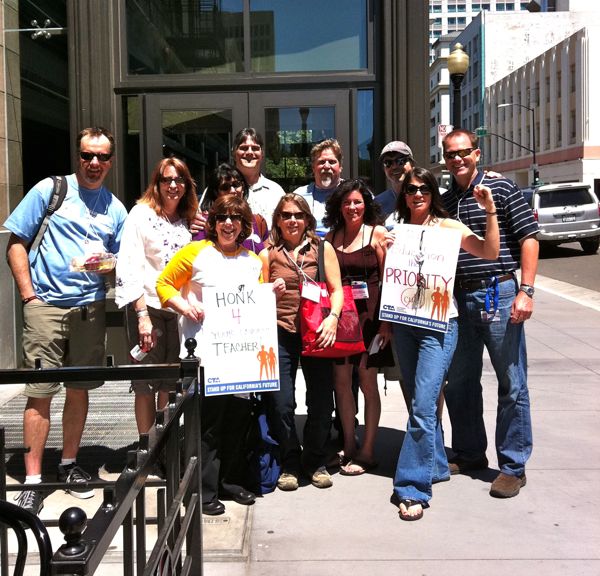
Lake Tahoe Unified teachers ready to protest May 13 in Sacramento. Photo/Provided

Lake Tahoe Unified teachers ready to protest May 13 in Sacramento. Photo/Provided

The idea remains popular among the electorate, but it has complicated Brown’s path toward a balanced budget as each month goes by without an election in place.

The specter of a public ratification has made it difficult for schools and others who rely on the state budget to prepare for the coming fiscal year. It also raises the possibility that lawmakers would have to revisit the budget this fall or winter should voters reject taxes at the ballot, possibly delaying state payments and normal borrowing procedures.

“Hindsight is always 20/20,” said Adam Mendelsohn, an adviser to former Gov. Arnold Schwarzenegger. “At the time, the pledge was very smart. It was an election that was really dominated across the country by fiscal conservatives.”

Already, major unions that support Democratic campaigns have come out against the ballot idea after offering tepid support earlier this year. Assembly Speaker John A. Pérez, D-Los Angeles, has also suggested that Brown pursue taxes without a public vote.

Read the whole story


State Parks cuts avoid Tahoe facilities

California State Parks today announced a plan to close up to 70 of its 278 parks due to budget cuts. No Lake Tahoe parks are slated to be shut down.

The closures are necessary to achieve an $11 million reduction in fiscal year 2011-12, and $22 million in the following fiscal year as mandated by Gov. Jerry Brown

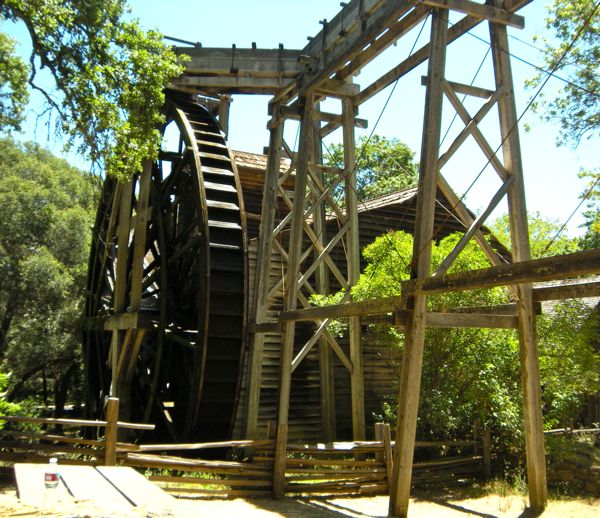
Bale Grist Mill in the Napa Valley is slated to be closed. Photo/Kathryn Reed

Bale Grist Mill in the Napa Valley is slated to be closed. Photo/Kathryn Reed

“We regret closing any park,” said Ruth Coleman, director of California State Parks, said in a statement. “But with the proposed budget reductions over the next two years, we can no longer afford to operate all parks within the system.”

Closures will begin in September, with reduction in services starting this summer.

The decision of what to close was based on being able to provide the diversity of experiences wanted by visitors across the state. For instance, State Parks has a variety of state historic parks, state beaches, state recreation areas, state nature reserves and state parks and most of the parks in all categories will remain open.

The parks to be closed are:

Anderson Marsh SHP

Annadel SP

Antelope Valley Indian Museum

Austin Creek SRA

Bale Grist Mill SHP

Benbow Lake SRA

Benicia Capitol SHP

Benicia SRA

Bidwell Mansion SHP

Bothe-Napa Valley SP

Brannan Island SRA

California Mining & Mineral Museum

Candlestick Point SRA

Castle Crags SP

Castle Rock SP

China Camp SP

Colusa-Sacramento River SRA

Del Norte Coast Redwoods SP

Fort Humboldt SHP

Fort Tejon SHP

Garrapata SP

George J. Hatfield SRA

Governor’s Mansion SHP

Gray Whale Cove SB

Greenwood SB

Grizzly Creek Redwoods SP

Hendy Woods SP

Henry W. Coe SP

Jack London SHP

Jug Handle SNR

Leland Stanford Mansion SHP

Limekiln SP

Los Encinos SHP

Malakoff Diggins SHP

Manchester SP

McConnell SRA

McGrath SB

Mono Lake Tufa SNR

Morro Strand SB

Moss Landing SB

Olompali SHP

Palomar Mountain SP

Petaluma Adobe SHP

Picacho SRA

Pio Pico SHP

Plumas-Eureka SP

Point Cabrillo Light Station

Portola Redwoods SP

Providence Mountains SRA

Railtown 1897 SHP

Russian Gulch SP

Saddleback Butte SP

Salton Sea SRA

Samuel P. Taylor SP

San Pasqual Battlefield SHP

Santa Cruz Mission SHP

Santa Susana Pass SHP

Shasta SHP

South Yuba River SP

Standish-Hickey SRA

Sugarloaf Ridge SP

Tomales Bay SP

Tule Elk SNR

Turlock Lake SRA

Twin Lakes SB

Weaverville Joss House SHP

Westport-Union Landing SB

William B. Ide Adobe SHP

Woodson Bridge SRA

Zmudowski SB

— Lake Tahoe News staff report