CTC awards $2.2 million for erosion control projects in basin

By Kathryn Reed

Both ends of the lake will be having erosion control measures put in thanks to grants provided by the California Tahoe Conservancy.

At the CTC’s meeting this month the board unanimously agreed to spend up to $1.675 million on the second phase of the Al Tahoe Erosion Control Project in South Lake Tahoe and up to $620,715 on the Brockway Erosion Control Project in Placer County.

CTC started the Soil Erosion Control Grant Program in 1985. Money is allocated to local jurisdictions and public utility districts, with more $102 million awarded to date.
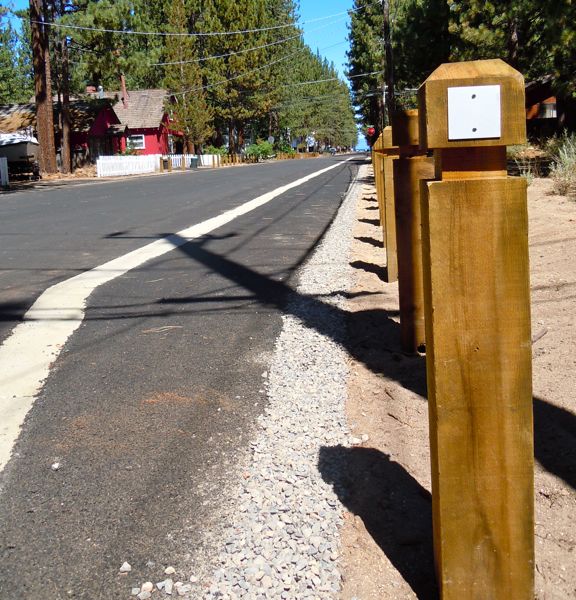
erosion

The first phase of the Al Tahoe erosion project won a TRPA award. Photo/LTN file

The South Tahoe project is expected to begin this fall. Right now runoff flows directly into the lake from this neighborhood.

“The project will stabilize and protect eroding roadway shoulders, increase infiltration, and convey stormwater runoff to an advance treatment filter prior to discharging into the lake,” the staff report says. “Project design utilizes road shoulder infiltration pads that allow for parking during the summer months while reducing stormwater flows to the lake.”

The first phase of this project won a Best in Basin award from the Tahoe Regional Planning Agency.

Mostly likely porous concrete will be used in the second phase.

A unique aspect to the North Shore project is the area being addressed touches on Nevada.

CTC’s contribution is just part of what it will take to do the work. Other sources of funding include $1.478 million from the U.S. Forest Service, $436,956 in Tahoe Regional Planning Agency mitigation funds, and $79,800 from Nevada through its sales of Lake Tahoe license plats.

Another component of this project is the improvements to Boulder Bay, the development that will overhaul the Tahoe Biltmore in Crystal Bay.

CTC board member Angela Swanson questioned what happens if Boulder Bay ends up in litigation and is not able to move forward.

Staff explained part of the contingency for the TRPA to approve Boulder Bay was the owners had to put money into a bond account for the environmental improvements to be done even if the development is never built.

“This project is a high priority because it treats numerous sources of pollutants, including fine sediment particles that are efficiently transported to Lake Tahoe,” the staff report says. “Large expanses of heavily-utilized impervious surfaces produce significant volumes of stormwater runoff and pollutants. These impervious surfaces, combined with steep slopes and slow infiltration rates, exacerbate erosion and create a high degree of hydrologic connectivity to Lake Tahoe during storm events, which results in very efficient transport of pollutants to the lake.”

Work on the erosion project could begin this summer.



KGID looking at raising water rates

Water rates in Kingsbury General Improvement District are proposed to go up 3.08 percent starting July 1.

Information about the proposal is available at 160 Pineridge Drive, Stateline. There will also be a public meeting June 21 at 6pm at the same address. The board is expected to vote on the issue that night.

The current rate is $65 month for residential customers. That would go up to $67.

— Lake Tahoe News staff report


Mountain bike race at Kirkwood

Kirkwood Mountain Classic at the Kirkwood Ski Area/Bike Park is July 23.

This cross country race is part of the Sierra Cup Mountain Bike Series.

All proceeds from this event go to TAMBA.

The race will also include a Le Mans start Super-D race in the afternoon.


Snow keeps some Tahoe National Forest sites closed

Many campgrounds and recreation sites within the Tahoe National Forest will be open for Memorial Day, however snow is expected to keep some of the more popular sites closed until later in the summer.

“Our recreation crews and campground concessionaires have been working hard to get the campgrounds ready for the Memorial Day weekend,” Tom Quinn, forest supervisor, said in a statement. “The heavy snow and rain received this past winter and spring has delayed the opening of many campgrounds, roads, picnic areas and trails. Considerable snow can still be found at 6,000 feet and above, especially on north facing slopes or in shaded areas.”

The following status report of campgrounds, roads and trails is listed by major transportation corridor or area.

Bullards Bar Reservoir – Yuba County

All campgrounds, picnic areas, boat ramps and trails are open.

Highway 49 – Sierra County

Most all campgrounds, picnic areas and trails in the lower elevations are open or will be by Memorial Day including those along the North Yuba River. These include Indian Valley, Ramshorn, Rocky Rest, Carlton, Cal-Ida, Fiddle Creek, Union Flat, and Loganville. The North Yuba, Fiddle Creek Ridge and Halls Ranch Trails are open.

In the higher elevations, Wild Plum, Yuba Pass, Sierra, and Chapman Campgrounds are still closed and expected to be closed over Memorial Day due to snow levels. At Yuba Pass there is still 4 feet of snow.

Sierra Buttes area – Sierra County

The Gold Lakes Road is only open for 3 miles from Hwy 49. Sardine Lake Road is open to the lodge. Most of the sites at Sardine and Salmon Campgrounds will be open on a first come/first serve basis. Sand Pond trail is open with some snow drifts. Packer Lake Road is not open to the lake or lodge due to snow.

Highway 89 North – Sierra and Nevada Counties

Most of the campgrounds are open including Cottonwood, Cold Creek, and Upper and Lower Little Truckee.

Jackson Meadows Area – Sierra County

The Jackson Meadows Road is only open 6 miles to the Perazzo Meadows Road intersection. Snowmobiling continues along the road.

Reservoirs East of Truckee – Nevada County

Most of the sites are open around Boca, Stampede and Prosser Reservoirs. The Boca Dam Road has been closed by the Bureau of Reclamation. Boca campground is only accessible from Highway 89 north.

The Commemorative Overland Emigrant Trail is open and is a nice trail for mountain biking or hiking.

Highway 89 South – Placer County

Granite Flat Campground is open, however, Goose Meadows and Silver Creek are closed due to snow.

Interstate 80 – Nevada and Placer Counties

The Pacific Crest Trail and other trails along the Sierra crest are still very snowy. Over 8 feet of snow was recorded in mid May at Donner Summit. Campgrounds including Hampshire Rocks, Indian Springs, North Fork, Tunnel Mills and Onion Valley are all closed due to snow.

Rattlesnake Road is closed due to snow and large slide and may not be open for a while. Loch Leven trails are very snowy.

Big Bend Visitor Center is not expected to open due snow damage over the winter. A visitor information office is expected to be available later this summer at Big Bend.

Highway 20 – Nevada County

White Cloud Campground is open. The Pioneer Trail is open from Chalk Bluff to the west. The Burlington Motorcycle Trails are open from Chalk Bluff Staging Area to the west. Those trails to the east are still blocked by snow. Rock Creek Nature Trail is open.

Bowman Lake Road – Nevada County

The road has been plowed to the Fuller Lake dam.

Foresthill Area – Placer County

Sugar Pine Reservoir campgrounds and picnic areas are open, however the water system may not be functional. Campers are advised to bring water. Big Reservoir campground (Morning Star) will be open for Memorial Day weekend. Joshua M. Hardt Trail around Sugar Pine Reservoir is open.

The Sugar Pine OHV Trail system opens May 26. Trails are still quite snowy/muddy. Once the area opens, riders are requested to help protect the trail tread and not damage the trails.

The Foresthill Road is open 2 miles beyond China Wall and then blocked by snow. Visitors are reminded that snowmobiles or Off Highway Vehicles are not permitted on the Foresthill Road.

Grouse Falls Trail is open. Mosquito Ridge Trail is open but has several downed trees. Mumford Bar Trail has large drifts of snow. All other trails are still snow-bound.

Mosquito Ridge Road is open to the Intersection of the Robinson Flat Road (6 feet of snow). A slide on the road restricts traffic to one lane between mile posts 17 and 18. Drivers are urged to drive carefully. Placer Big Trees area is not accessible due to snow. Robinson Flat Campground is not open due to snow. French Meadows area is not accessible due to snow.

River Caution

Rivers are running fast, cold and high. Caution should be taken near the water – especially with children and pets.

Cross Country Skiing/Snowshoeing

Heavy snow loads may hide familiar landmarks, can form dangerous “snow bridges” across drainages, and can cause unpredictable, slippery traveling conditions. Additionally, creeks and streams crossed early in the morning may become increasingly dangerous due to high flows late in the day during times of heavy melting.

For more information, see the Tahoe National Forest website or call one of the Ranger Stations listed below:

Tahoe National Forest Headquarters – in Nevada City (530) 265.4531

American River Ranger District Office – in Foresthill (530) 367.2224

Sierraville Ranger District Office – in Sierraville (530) 994.3401

Truckee Ranger District Office – in Truckee (530) 587.3558

Yuba River Ranger District Office – in Camptonville (530) 288.3231.


Study: Global species extinction not quite so desire

By Amina Khan, Los Angeles Times

Hit the snooze on that ecological doomsday clock for a minute: The world’s species may not be going extinct quite as fast as we thought they were. Scientists may be overestimating the crisis by as much as 160 percent, according to a recent study.

The research was published online last week in the journal Nature.

While stressing that the global extinction crisis is still indeed a crisis, the study’s two authors called for a better mathematical model to predict how fast the world’s diversity is disappearing.

The massive loss of species occurring today may constitute the sixth mass extinction of life on Earth. It is caused in large part by habitat destruction, which can be blamed on human encroachment. The rate of biodiversity loss, however, is difficult to estimate, said study coauthor Stephen Hubbell, an ecologist at UCLA.

One of the models that scientists use reverses what’s called the species-area relationship: This starts with the number of species in a certain area and then measures how many new species pop up as the surveyed area increases.

Extinction rates, at first glance, should be the opposite of that relationship — losing species as land is lost. So researchers run the equation backward to calculate how fast species are disappearing.

Read the whole story


Opinion: Wishing graduates success after high school

By Vicki Barber

Tra-la, it’s May, the lusty month of May. Remember the song from “Camelot”? Yes, it is May. El Dorado County may not be quite Camelot, but for a large number of graduating students it is a wonderful place to be this May. Students will be graduating from our high schools and moving into the future of their choice. Some are planning to go to college, others to technical training, and others to work in the community.

For some students their work and effort has turned into rewards in the form of scholarships to schools of their choice. The effort needed to receive a scholarship doesn’t occur in just the last few months of a student’s senior year of high school. Although this does feel like crunch time, in actuality the real work for a scholarship began long before these last few months as students combined their dreams for the future with the importance of hard work during their entire school career.

Vicki Barber

Vicki Barber

Many students come to the end of their high school careers with a real passion for learning, and we in El Dorado County are pleased that we are able to acknowledge and reward their arrival with scholarships to go on and learn more. As you can see when you visit the El Dorado County scholarship website, there are many organizations and individuals who want to recognize these talented students and we truly appreciate their efforts. The scholarships support students who have chosen academies, universities, community colleges, or culinary schools.

Now, this May, we congratulate all graduates and wish them well as they take their next steps toward the realization of their dreams.

Vicki Barber is superintendent of El Dorado County Office of Education.


LTUSD, LTCC able to cope with guv’s budget proposal

By Kathryn Reed

South Lake Tahoe education officials are cautiously optimistic Gov. Jerry Brown’s budget will stay intact as presented earlier this month – at least when it comes to dollars for schools.

The Friday before Brown released his proposal on May 16 all the predictions were dire.

schoolsLake Tahoe Unified School District CFO Deb Yates said a sigh of relief reverberated throughout the state with the announcement Proposition 98 would be fully funded.

This 1988 voter approved initiative guarantees a certain level of funding for K-14 education. However, in recent years the folks in Sacramento have not honored that agreement.

For LTUSD this means restoring more than $1.2 million to the budget. But it does not mean being able to hire back teachers or staff who were laid off or restoring programs.

“We are still deficit spending $1.2 million a year. It’s a systemic problem,” Yates told Lake Tahoe News before the May 24 board meeting. She gave the board an update that evening.

Adding to LTUSD’s woes is enrollment continues to decline, though it looks like the district will have lost less than 100 students from the start of the school year.

What the state budget will do for LTUSD is not make the proposed cuts for the 2012-13 school year be as drastic. But until a budget is signed, anything can happen in Sacramento.

Built into Brown’s budget is a five-year extension on taxes that are supposed to expire this year.

However, state Sen. Ted Gaines, R-Roseville, when he was in South Tahoe on Tuesday said having the taxes go away will not adversely impact education per the current budget proposed by the governor. Gaines is adamantly opposed to keeping the taxes going because it means the average family of four pays out $1,000/year.

Part of what is allowing the governor to create a rosier budget is revenues are projected to be close to $7 billion more than originally anticipated. But the state still must close a gap of nearly $10 billion.

The state budget is supposed to take effect July 1, but that hasn’t happened for years. LTUSD and Lake Tahoe Community College start their fiscal years July 1 as well. The LTUSD and LTCC boards expect to approve their respective budgets next month.

The governor is proposing to reduce preschool funding by 15 percent. This will not affect preppie-K in LTUSD. But it could have an indirect impact on the district as childcare centers in town close.

The Al Tahoe Child Development Center is closing at the end of June because of cuts. Kindertown Day Care/Preschool has lost its state funding. All of these changes have low-income parents scrambling to find a place for their children.

Another unknown impact to LTUSD is the probable shift of mental health services to education.

Yates said she doesn’t know yet what the impact to the district will be. Two students in the district are in a non-public school setting. Each child could cost the district upward of $200,000 a year.

“I have never seen adequate funding follow special education in all of my 30 years,” Yates said.

At the college board meeting that same night it was brought up that LTCC might need to seek a TRAN (Tax and Revenue Anticipation Note) to make payroll if the state does not have a balanced budget. The college projects a $1.2 million cash flow problem in September if the state holds back money. The state stops writing checks when the current budget expires June 30.

Marc Sabella, who is running the finance department because the college no longer has a vice president of Business Services, told the board the county office of education is hesitant to loan the college money because it has started the process the last two years and then backed away when it wasn’t needed. This is why the college is looking at a TRAN.

Board member Kerry David said Vicki Barber, superintendent of El Dorado County Office of Education, should be reminded it’s the people in the county who elect her and that perhaps she should be less worried about the charter schools in Southern California she wants to give money to.

The college board has until June 14 to decide about a TRAN. The negative about the TRAN is the college may only need the money for 30 days and it could cost $50,000 to $70,000 to secure the funding.

“We are optimistic while the budget is definitely tight next year, we hopefully won’t have to borrow money,” interim President Steve Maradian said.

He is estimating the college will take an $800,000 hit with what Brown has in the May revise budget.

Maradian said, “We’ve had to scrub the budget carefully” but it will be balanced when it’s presented to the board in June.

Pulled from the May 24 agenda was an item to discuss proceeding with hiring a VP of Business Services. The board is going to wait until the new president is on board to go forward with that idea.

In the mean time, the board bumped Sabella’s salary by $2,500/month on a month-to-month basis.

On a bright note, the college’s Child Development Center is breaking even, which hasn’t happened in years. Raising fees helped. And with the closure of childcare facilities in town this may bring youngsters to the college’s center.


El Dorado supes agree to remove racial slurs from headstones

By Peter Hecht, Sacramento Bee

Supervisors in El Dorado County voted Tuesday to right a historic wrong by replacing 36 cemetery headstones that the U.S. Army Corps of Engineers labeled with a racist slur in 1954.

When the Corps built Folsom Dam on the American River that year, it moved remains from a cemetery in the old Gold Rush town of Negro Hill to a new resting place in El Dorado County. The N-word was stamped into concrete headstones instead of “Negro” to note the anonymous remains had come from the former Negro Hill Cemetery.

But the supervisors’ 5-0 vote to allow a privately funded project to replace the headstones at Mormon Island Cemetery stirred debate.

Read the whole story


National Trails Day

Join the Tahoe Rim Trail Association for American Hiking Society’s 19th annual National Trails Day event on June 4.

Celebrate the start of the trail season by volunteering to build trail or by learning more about Leave No Trace principles. The event begins at Van Sickle Bi-State Park off Lake Parkway in South Lake Tahoe.

To participate, register online or contact Max at (775) 298.0239 or trails@tahoerimtrail.org.

Volunteer trail work: 9am–4pm, Van Sickle Park

Enjoy free coffee donated by Seattle’s Best, then help the TRTA build trail for the first time this season. Volunteers of all skill levels and physical abilities are welcome and encouraged to participate — no prior experience necessary.

Volunteers will receive free lunch sponsored by REI. The event will conclude at 4pm with a volunteer party at Explore Tahoe, including free food and drink. This event opens the third trail-building season of a multiyear project, which will connect the Tahoe Rim Trail with Van Sickle State Park, reroute the TRT off paved roads, and provide stunning views of Lake Tahoe to more people. Volunteers must wear long-sleeved shirts, long pants, boots, and work gloves; bring sunscreen, bug spray, water and a backpack. The Tahoe Rim Trail Association will provide hard hats, trail building tools and crew leaders.

Leave No Trace Activities: 10am-noon, Explore Tahoe

Learn about the seven Leave No Trace principles in a fun, interactive format. The hands-on activities in this program are appropriate for all ages from kindergarten through high school and adults. Leave No Trace principles are relevant for everyone – hiking, biking, camping, backpacking, climbing, skiing, or even just walking through the local park. Activities will take place at Explore Tahoe, 4114 Lake Tahoe Blvd., South Lake Tahoe.


Nevada wants piece of unclaimed casino winnings

By Bill O’Driscoll, Reno Gazette-Journal

Those little paper tickets showing slot machine winnings can add up to big numbers, and the state wants a bite of the bounty that’s never cashed in.

Once-coin-filled slot machines are now ticket-in, ticket-out cash-less games, and jackpots that used to clang into the coin bins now are spit out on paper, which the winner then must cash in to get paid.

But it seems a lot of those payouts are small enough that the winners pocket them to redeem some other time, industry observers say, and invariably expiration dates pass, and they’re never cashed in.

“It happens a lot,” said Steve Gearty, vice president of casino operations at John Ascuaga’s Nugget in Sparks. “The lion’s share of them are so small, 30, 40 cents, that they don’t bother. A ton of it is that.”

But over time and across Nevada’s 200-plus casinos, it becomes a lot of money — tens of millions of dollars a year by some estimates — which up to now has been taxable revenue for the gaming properties.

Now the 2011 Legislature, through Assembly Bill 219, seeks to redirect a majority of such “unclaimed property” to the state’s cash-starved coffers with the remainder staying at the casinos.

Read the whole story