Veterans make impact on business communities

In 2007, U.S. military veterans owned 2.4 million businesses, which accounted for 9 percent of all businesses nationwide, according to the U.S. Census Bureau. These businesses generated $1.2 trillion in receipts, or about 4.1 percent of all business receipts nationwide, and employed nearly 5.8 million people.

“Veteran-owned businesses make a valuable contribution to our economy, but until now, we did not have a benchmark that measured their role. This is the first time that we can estimate the total number of veteran-owned businesses,” Census Bureau Deputy Director Thomas Mesenbourg said in a statement. “Their impact on our economy is even greater when you add to that total those businesses owned equally by veterans and nonveterans.”

All in all, businesses where veterans were majority owners or half-owners numbered 3.7 million, representing 13.5 percent of all businesses nationwide, accounting for more than $1.6 trillion in receipts and employing 8.2 million people.

The new data come from the Survey of Business Owners: Veteran-Owned Businesses: 2007,which provides the first-ever detailed information for all veteran-owned businesses in the United States, including number of firms, sales and receipts, number of paid employees and annual payroll. Statistics are also shown for nonveteran-owned businesses, as well as for businesses that are equally owned by veterans and nonveterans.

Nearly one-third of veteran-owned businesses (32.5 percent) operated in the professional, scientific, and technical services and the construction sectors.

The three states with the largest number of veteran-owned businesses in 2007 were California, Texas and Florida. California had 239,422 veteran-owned businesses, or 9.8 percent of all veteran-owned businesses in the United States. Texas had 199,476 businesses, or 8.1 percent, and Florida was home to 176,727 businesses, or 7.2 percent.

Los Angeles County had more veteran-owned businesses in 2007 than any other county, with 62,667, or 2.6 percent of all veteran-owned businesses nationwide.
Take time to remember what Memorial Day is really about

War is one of those seemingly necessary evils in our society.

Today – Memorial Day – is when we pause to remember those who lost their lives fighting for the United States. It’s a day to put aside our political differences and personal beliefs that led to the deaths of these men and women.

These lost lives are no less significant because we don’t agree on what led to their deaths. They died fighting for what our government deemed a worthy cause.

Don’t blame the soldiers for the job they do. If you disagree with the battles being fought, then deal with the lawmakers. The soldiers who keep marching, keep training, keep fighting – they deserve our respect and our thanks.

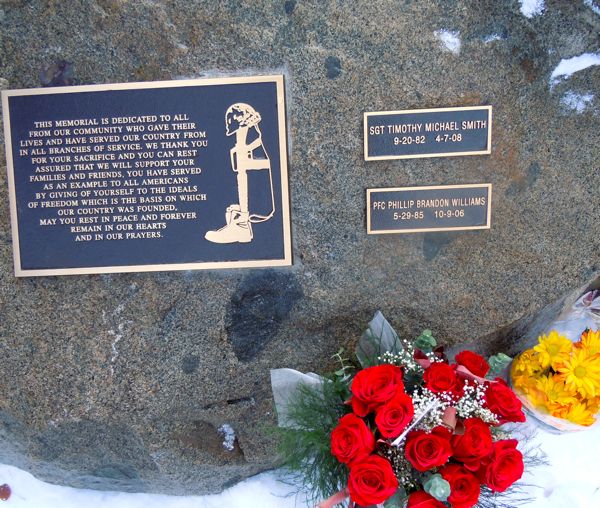
Memorial for South Lake Tahoe men who died in the Iraq conflict. Photo/LTN file

Memorial for South Lake Tahoe men who died in the Iraq conflict. Photo/LTN file

Lake Tahoe News takes this time to salute those who given the ultimate sacrifice for our country.

The ones who died deserve a moment of silence today – and more often. Take a moment from your long weekend and remember that many people have an empty chair at the picnic table today.

Go to one of the many ceremonies at the cemeteries and military halls. Place a flag on the marker of a grave of a soldier. Toast to those who are not with us.

Hardly any community has not been touched by the death of a soldier – including Lake Tahoe.

Some died in combat. Some died in training.

Those who aren’t listed are the ones who took their lives because they did not know any other way to conquer the demons they were ravaged by.

Not all of those who died volunteered to serve in one of the branches of the military. But those who join one of the branches today do so willingly. That is to be commended – especially in the world we live in today. Most of these people will see a tour of duty overseas in hostile areas where U.S. citizens are not always welcome.

It is naïve to think the numbers of military deaths will ever be nil. But we must not ever forget those who have died fighting to make the world a better, safer, more livable place.

The Washington Post keeps a running list of those who have died in the Iraq and Afghanistan conflicts. While news sites seem to keep these conflicts off the front pages, they are always front and center for the thousands of families who worry each day that the dreaded call will come saying their loved one has died.

We owe it those who have died to not forget them.

Below is a list of the wars, or whatever the government chose to call it, where the U.S. engaged in combat, the dates of the struggle, and the number of people the country lost in the fight. Of course, the numbers in the last two categories keeps growing.

Conflict                                       Dates of conflict                            Number of casualties

War of Independence                                   1775-1783                                                            25,000

Northwest Indian War                                 1785-1795                                                                1,221

Quasi-War                                                     1798-1800                                                                     20

Barbary Wars                                                 1801-1815                                                                     35

War of 1812                                                     1812-1815                                                            20,000

1st Seminole War                                           1817-1818                                                                    30

2nd Seminole War                                        1835-1842                                                               1,500

Mexican-American War                              1846-1848                                                             13,283

3rd Seminole War                                         1855-1858                                                                    26

Civil War                                                          1861-1865                                                         623,026

Indian Wars                                                    1865-1898                                                                 919

Spanish-American War                                          1898                                                             2,446

Philippine War                                               1898-1902                                                             4,196

Boxer Rebellion                                              1900-1901                                                                  37

Mexican Revolution                                        1914-1919                                                                  35

Haiti Occupation                                             1915-1934                                                               146

World War 1                                                      1917-1918                                                       116,708

World War 2                                                     1941-1945                                                       407,316

Korean War                                                       1950-1953                                                         36,914

Vietnam War                                                     1964-1973                                                         58,169

El Salvador                                                        1980-1992                                                                20

Beirut                                                                 1982-1984                                                               266

Persian Gulf “Support”                                   1987-1988                                                                 39

Invasion of Grenada                                                  1983                                                                  19

Invasion of Panama                                                   1989                                                                 40

Persian Gulf War                                                        1991                                                               269

Somalia                                                              1992-1993                                                                 43

Bosnia                                                                           1995                                                                 12

Afghanistan                                                       2002-2011                                                            1,571

Iraq                                                                      2003-2011                                                          4,442.


Tough Mudder competition at Squaw in September

Athletes will be tested on an extreme on-mountain obstacle course on Squaw Valley’s legendary terrain for the 11th Tough Mudder event Sept. 17-18.

Chosen for its challenging landscape, Squaw Valley is one of 10 Tough Mudder venues across the country and this fall marks the second time the endurance event has come to Northern California.

Mudders will scale the Sierra throughout the 10- mile long course complete with 19 obstacles.

The military-style event challenges are strategically placed across the peaks that make up Squaw Valley. With more than 10,000 men and women expected to participate, those interested are encouraged to register early for the event with other comrades. Spectator tickets are also available for friends and family who wish to cheer on participants and enjoy the resort.

The top 5 percent of finishers will qualify for the World’s Toughest Mudder, a 48-hour death race Dec. 17–18 in Englishtown, N.J., in which the winner will receive $10,000.

For more event details, go online.


Founder of Mammoth Mountain to be honored by ski association

The Far West Ski Association annually names persons from the snowsports community whom have made an indelible positive impact on skiing. The association will honor three pioneers of snowsports at its annual meeting and awards banquet June 11 at the Pacific Palms Hotel in Industry Hills.

The Snowsports Builder honorees for 2011 include:

• Dave McCoy, the man who, from 1942, made Mammoth Mountain from scratch. Hundreds of thousands of skiers from the metro areas of Southern California learned to ski on Mammoth and it was and is a center for snowsports competition and training,

• Norbert Olberz, a German immigrant who started with a small ski shop in La Canada and built Sports Chalet into a multi-state, multi-sports retailing business with travel services as well, and

• Martha Perez, a travel professional who was hired initially in 1968 from volunteer status to manage the European charter flight programs and then the domestic travel programs of Far West Ski Association, position she held for 10 years. She continues to serve a 43-year loyal customer base with Ski.com. Her career has spanned a number of travel agencies, including Sportours, and a 16-year partnership with Norbert Olberz, founder of Sports Chalet.

The 79th Annual Far West Ski Association Convention is scheduled for June 9-12.


Snippets about Lake Tahoe

chicago• “Chicago” will be staged at the Duke Theatre on the campus of Lake Tahoe Community College at 8pm June 10, 11, 16, 17, 18 and at 2pm June 11 and June 19. Tickets are $15. Call (530) 544.4660, ext. 207 for info.

• National Dairy Month is from June 1-30.

• Northern Sierra Wine Country of Nevada County is now called Sierra Vintners.

• The Nevada Public Utilities Commission is allowing NV Energy to raise its rates 3.4 percent beginning July 1. NV Energy services Nevada customers in the Lake Tahoe Basin.

• The bubble at the South Lake Tahoe community pool is set to come off June 1.

• Here is the Caltrans road work schedule for the coming week for Tahoe/El Dorado County.


More craft brews turning to cans

By Tom Daykin, Milwaukee Journal Sentinel

MILWAUKEE — For decades, the pffsst sound that comes from popping open a can of beer usually meant the drinker was about to imbibe a mass-produced brew like Budweiser or Pabst Blue Ribbon. Higher-priced craft beers, made in small batches for those seeking something outside the mainstream, were available in bottles only.

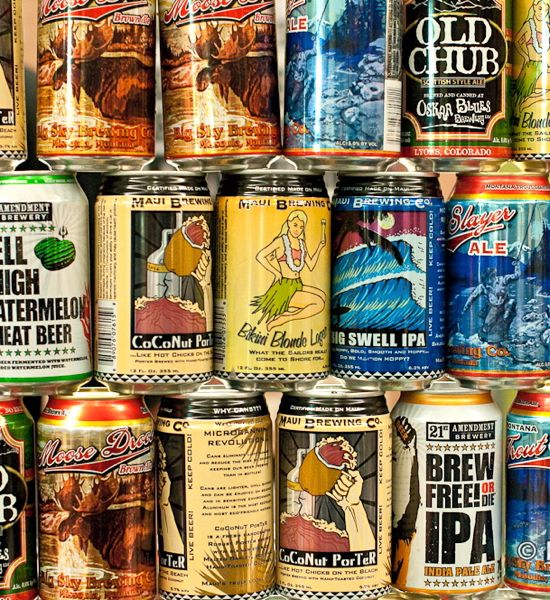
beerBut a growing number of craft beers, including some made in Wisconsin, is being sold in cans, as brewers look to cut packaging and delivery costs, while finding a place at outdoor parties and other events where cans are preferred to glass bottles.

“It’s just a convenient package,” said Jeff Hamilton, president of Glendale, Wis.-based Sprecher Brewing Co. Sprecher is among Wisconsin’s oldest craft brewers, defined by the trade group Brewers Association as small, independent companies that use traditional brewing methods.

Sprecher this month becomes the latest Wisconsin craft brewer to sell its beer in cans, with its Special Amber brand.

That comes one year after Milwaukee Brewing Co. began selling two of its brands, Louie’s Demise and Flaming Damsel, in cans. Others selling canned craft beer include Stevens Point Brewery, which has begun putting some of its specialty brews in cans, and Middleton-based Capital Brewery Co. – Wisconsin’s second- and third-largest craft brewers behind No. 1 New Glarus Brewing Co., which does not sell its beer in cans.

“We’re really big on cans. We love them,” said Jim McCabe, Milwaukee Brewing president. His company this summer plans to launch two new brands in cans only: Godzilla, an Asian-spiced wheat beer, and Monkey Paw, an English-style ale.

By selling beer in cans, craft brewers reach certain venues – such as golf courses and baseball stadiums – where glass bottles are discouraged, or even banned. Canned beer appeals to drinkers going to outdoor events, like tailgating and picnics.

Read the whole story


Opinion: California should look at 4-day school week

Publisher’s note: This editorial is from the May 8, 2011, Los Angeles Times.

The general assumption is that when it comes to educating American kids, more is more. Longer school hours. Saturday school. Summer school. Yet more than 120 school districts across the nation are finding that less can also be more — less being fewer days spent in school.

The four-day school week has been around for decades, according to the National Council of State Legislatures, but it’s quietly spreading as a money-saving tactic, especially after several states — including Montana, Georgia, Missouri and Washington — passed legislation allowing school districts to make the switch as long as they lengthened each school day so that there was no reduction in instructional hours. Teachers work just as much under the four-day plan, so there are no cost reductions there, but schools have saved from 2 percent to 9 percent, according to a 2009 report by the Center for Education Policy at the University of Southern Maine. Utility and transportation costs are lower; there’s no need to serve a fifth lunch each week; even the reduced wear and tear on buildings has helped.

Here’s the surprise: There appear to be educational benefits as well. Absenteeism among students and teachers in these schools has fallen appreciably, the report said. (As a result, schools also paid less money for substitute teachers.) Students reported feeling more positive about school. Dropout rates fell, students behaved better and participation in extracurricular activities rose. Parents of young children often objected to the change because of the need to find childcare, but once the programs were in place, the report said, they often found that it was easier to find care for one full day a week than for several partial days. Test scores didn’t fall, and in many cases, they rose.

Read the whole story


Book highlights first aid necessities in the wilderness

By Emilie Lucchesi, Reno Gazette-Journal

There are many outdoor activities that require education and certification.

Scuba divers, for example, must train indoors under an instructor’s supervision before hitting the open water. Or to legally drive a motorcycle, riders must pass a driving test and receive a special license.

But there aren’t any requirements regarding hiking, camping or heading into the deep wild for sport.

Read the whole story


Pine Nuts lure mountain bikers with dry, challenging terrain

By Joel Fleishman

PINE NUTS — “Damn, that was a good ride. Only thing missin’ were dancing girls around every corner.”

“Yeah, naked ones,” a fellow dirt biker chimes in.

Soon, the snap, crackle and pop of Budweiser cans opening complement the macho banter, along with some very impressive expectoration. Gunshots echo from a firing range somewhere distant in the sagebrush. No question, this is Nevada.

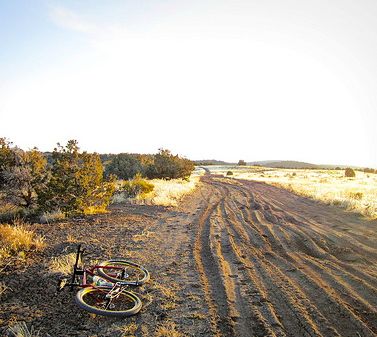
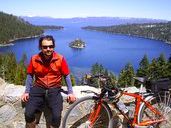
Pine Nuts offer mountain biking this time of year when trails in Tahoe are soggy. Photo/Jeff Moser/BikeCarson.com

Pine Nuts offer mountain biking while trails in Tahoe are soggy. Photo/Jeff Moser/BikeCarson.com

To be exact, we’re at “The Tree,” the access point to the labyrinth of off-road trails leading into the Pine Nut Mountains at the southeast corner of the Carson Valley. I have come here not to ride a motorcycle nor to shoot a gun, but to venture out on a mountain bike.

I had heard of the “Pine Nuts” before, but with world-class mountain biking just out of my Lake Tahoe backyard (the Flume, Mr. Toad’s, Corral) I hadn’t bothered with the 30-mile drive. And no one had ever said, “Man, you just gotta ride the Pine Nuts.” But with our local trails still saddled with snow and mud, it was time to give it a try.

At “The Tree,” an unmistakable, solitary pinion off Pine Nut Road, I’m not sure how to proceed into this maze of unfamiliar trails. Luck intervenes as I see another cyclist and flag him down.

“This is my first time out here … can you tell me where to go?” I plead.

“How ’bout I show you? Come on, let’s go,” urges fit-looking Mark, whom I would find out trains triathletes. I get the feeling I’ll have to bring out my A-game to hang with him.

Immediately, we are hammering on a dirt road that soon morphs into roller-coaster single track heading east into the hills. We crest the short, steep climbs only to dive back down, keeping the low gear handy for the next ascent. On one furious attempt up, my right foot loses contact with the pedal, which comes around and slams my shin.

“That’s going to leave a mark,” I mutter to myself. The impact also draws some blood, which seems to christen me to the Pine Nuts. A little bit of blood on a ride is fine; a lot, on the other hand, is another story.

We swoop around banked turns on firmly packed dirt with just enough rocks to make it interesting. But this in no way is technical mountain biking — my hardtail (a bike with only front suspension) handles it just fine.

Worries over a rampant motorcycle presence are unfounded on this day. The few dirt bikers we do see are courteous, albeit noisy. We all just want to get along and enjoy this place.

Joel Fleishman

Joel Fleishman

After about an hour in, I realize from the view that we’ve gone up more than down. The Carson Valley below is abnormally green due to the big winter and wet spring. To the west, the Sierra Nevada mountain range explodes an almost perpendicular 5,000 feet from the valley floor. Job’s and Job’s Sister, both 10,000-foot peaks, are still covered with a massive, winter-like blanket of snow.

When you ride in the Sierra, sometimes it’s hard to the see the Sierra. Sure, riding through a dense alpine forest in a bowl known as the Lake Tahoe Basin offers plenty of eye candy. But out here in the Pine Nuts, a valley away on the next mountain range, you can better appreciate the immensity of that 400-mile-long wall of Sierra granite.

Looping back west and mostly down, view-gawking competes with concentrating on the trail. The predominant single-leaf pinions, from which the Pine Nuts gets its name, are too squat to obscure the panoramic scene. Neither better nor worse, it’s a different experience than riding under the canopies of the 200-foot pines up at the lake.

Back at “The Tree,” I thank Mark for his patience, and we go our separate ways. With a few hours of warm daylight left, I look for a mellow way to soak up some high-desert solitude. I cross Pine Nut Road and hit the Teacher’s Trail, so named because it’s a good place for beginners. A couple of local bicyclists are on the trail and I mention how much I’m enjoying my first trip out to the Pine Nuts.

“This is our little secret. Don’t tell anyone,” says one of them.

I grin and think, “Yeah, right.”


Regional charitable giving below national average

By Cathy Locke, Sacramento Bee

Residents of the Sacramento region are less likely to give to charity than their counterparts nationwide – and the average amount given per household lags behind the national average.

These are among the findings of the Greater Sacramento Generosity Project scheduled for release this week, and the impetus for a campaign this fall to boost charitable giving.

The project, commissioned by the Sacramento Region Community Foundation and the Nonprofit Resource Center, found that 62 percent of households in the four-county region — El Dorado, Placer, Sacramento and Yolo – give to charities, compared with 66 percent of households nationwide. The average annual contribution per donor household in the Sacramento region is $1,990, trailing the national average of $2,355.

Read the whole story