Hyatt Tahoe wine fundraiser

Hyatt Lake Tahoe and Lone Eagle Grille present the second annual Wine on the Water Event on Aug. 21 from 1-5pm.

Experience some of the regions finest food and wines right along the pristine shores of Lake Tahoe. Featuring 25 celebrated wineries and more than a dozen local restaurants, the annual event will include eclectic live music from Jeff Jones & Friends, a noteworthy silent auction.

All proceeds generated from ticket sales and silent auction sales at the event will be donated directly to the Boys & Girls Club. Tickets to the event are $65 per person in advance, $75 at the door. Tickets can also be purchased online.


Karla Alayne Lanz Coburn — 1977-2011

Karla Alayne (Lanz) Coburn, at the young age of 34, died in her home May 21, 2011.

She is survived by her three vibrant and amazing children: Dana, 10, Katie, 7, and Drew, 5, two adult siblings, Shenja Lanz and Bethany Lanz, and her parents Nan and AI Lanz.

Karla’s entire daily livelihood and fulfillment came in the form of motherhood. She would be happy to know that her children will be cared for by the family members they’ve been closest to, their loving grandparents Nan and AI.

Karla has been known to be a pillar of strength and a well of courage. She has always stood as an example of the power of our personal will. Karla experienced many challenges and struggles in her life and turned them all into stepping stones to create greatness in her spirit. All who’ve known her have learned from her in this regard. The family wishes to thank everyone who has always provided love to the Coburn family and especially the care of her children.

A native to South Lake Tahoe for 20 years, Karla moved to Klamath Falls in 2007 for her children to have the opportunity to grow closer to their natural grandfather Dana Coburn Sr. of Bonanza, Ore. She graduated from South Tahoe High School in 1995. As a devoted wife and mother, she spent many days volunteering at her children’s schools and attending to their complete health and joy. Karla was a beautiful person who was so very loved. She will be missed by all who knew her.

A funeral will be June 4 at 1pm at Davenport’s Chapel of the Good Shepherd, 2680 Memorial Drive, Klamath Falls, Ore. (541-883-3458), which is in charge of the arrangements.


Summer weather not in the forecast for Lake Tahoe

By Kathryn Reed

That whining noise you hear is nearly every Lake Tahoe Basin resident complaining about the weather.

“A lot of people are on their toes waiting for summer to come, but it’s going to be at least another week,” said Scott McGuire, meteorologist with the National Weather Service in Reno.

Snow, rain, wind, clouds. That’s the forecast for about the next 10 days. With the calendar saying summer is 19 days away, the banter being heard is “bring on summer, we’ll just skip spring”.

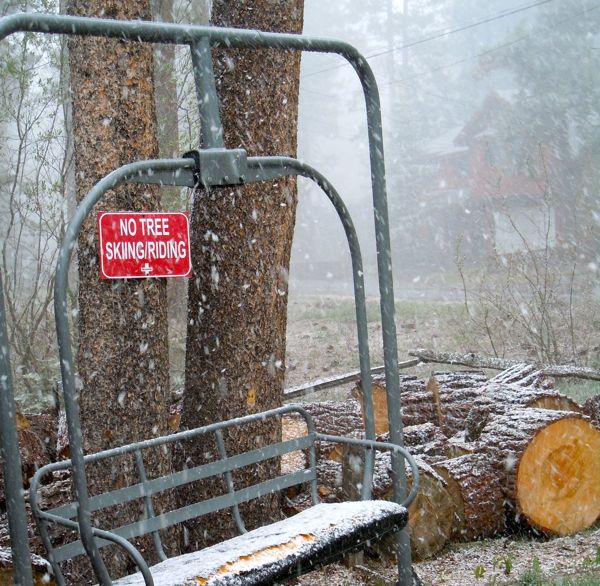
June in South Lake Tahoe started off with snow. Photos/Kathryn Reed

June in South Lake Tahoe started off with snow. Photos/Kathryn Reed

Old man winter doesn’t seem to want to leave despite having overstayed his welcome. June started off with snow for much of the basin, with the white stuff accumulating as the afternoon went on.

While May 2011 was wetter than May 2010, it was actually slightly warmer in South Lake Tahoe this year.

The average temperature for South Lake Tahoe this May was 43.9 degrees. In 2010 it was 42.8 degrees. The normal average is 46.5 degrees.

The hottest it ever got was 72 degrees on May 5. The coldest was 18 degrees on May 16.

Plenty of plans were wrecked by the weather. One need just remember the Tour de California that never happened in Lake Tahoe. Mother’s Day was wet. Memorial Day weekend saw several inches of snow accumulate.

In total, South Lake Tahoe collected 1.38 inches of precipitation in May. A year ago the total was 0.84 inches. The Weather Service doesn’t have the average.

Oddly enough, Reno was below it’s average for moisture in May. Normal is 0.66 inches. This May it received 0.4 inches. (The Reno temps were 2 degrees below the normal 54 degrees.)

In Tahoe City the gauge hit 2.04 inches in May. Normal is 1.21 inches.

“It’s the second spring when it’s been wetter, windier, cooler and cloudier than normal,” McGuire said. “We can’t be 100 percent certain, but a significant portion last year was the affect of El Nino. This year was the La Nina off the coast of South America.”

No record highs, lows or moisture totals were recorded in the region in May.

The cooler weather has the benefit of keeping the snow in higher elevations from melting at a rapid pace. It has the downside of keeping hiking trails looking like snowshoe paths for longer.

“We are not anticipating any danger for flooding. Some creeks are running high, but it’s almost a good thing with the extent of the snowpack to have below normal temperatures in spring,” McGuire said.

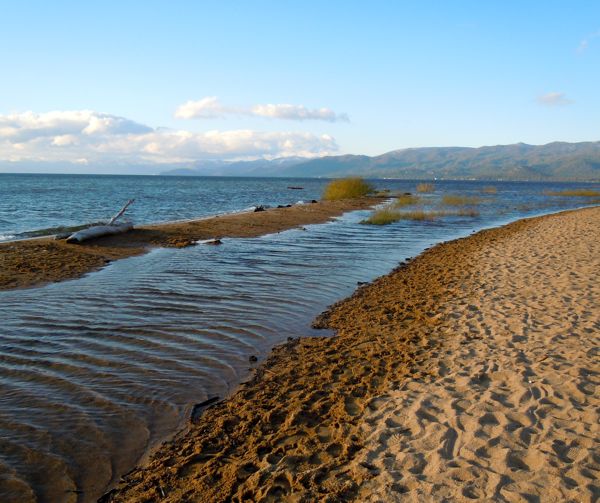
Many beaches in Lake Tahoe have less sand and more water than people are used to.

Many beaches in Lake Tahoe have less sand and more water than people are used to.

The snowmelt, added moisture and lack of evaporation have Lake Tahoe rising on a daily basis.

At 1pm June 1 the lake was at 6,226.78 feet. The natural rim is 6,223 feet, with the legal limit being 6,229.1 feet.

The last time Lake Tahoe was this high was Aug. 6, 2007.

Still, the level is below average. The lake now has 460,000 acre-feet of storage above its natural rim. The average for June 1 is 474,500 acre-feet. So, it was at 97 percent of average for June 1. Capacity is 744,600 acre-feet.

During the most recent drought, which was called off earlier this year by Gov. Jerry Brown, the lake dropped to a low of 6,222.62 feet on Dec. 6, 2009.

The last times it was near full were June 16, 2000, and June 28, 2006 – both dates show a level of 6,229.06 feet.

Water officials in Reno are projecting a high-water mark to be set between June 10 and June 15.

A little bit of water is being released downstream now – 66 cubic feet per second. That is about 40 percent of the average release for this time of year.


Snippets about Lake Tahoe

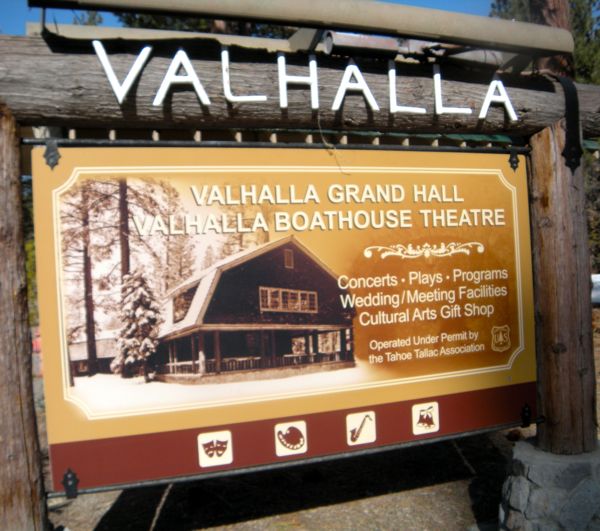
valhalla• The Cork and More in South Lake Tahoe is hosting a wine tasting event to benefit the Tahoe Tallac Association on June 16 at 7pm. Purchase tickets directly through the Cork and More — $15 in advance, $18 at the door. Wines from Spain will be featured.

• The Human Rights Campaign, the nation’s largest LGBT civil rights organization, commends Nevada Gov. Brian Sandoval for signing AB211 into law. The bill codifies prohibitions against discrimination in employment on the basis of gender identity or expression.

• El Dorado County Board of Supervisors will have a 2011-12 budget workshop June 6 starting at 9am at the Placerville office. It’s possible the workshop will continue throughout the week at 330 Fair Lane.

• Watch out for cyclists on June 5. America’s Most Beautiful Bike Ride starts and ends in Stateline that morning. Riders will be going clockwise around the lake.

• Sierra Watershed Education Partnerships is having its annual sunset cruise benefit on June 9. Read the flyer for more information.


Opinion: South Lake Tahoe justifies reallocation of $7 million

To the community,

The following is a response to recent allegations of misappropriation of city/Redevelopment Agency funds in regards to actions that occurred approximately 10 years ago. The information presented comes from the public record, auditor’s reports, evaluations conducted and discussions with staff that are currently or formerly employed by the city/Redevelopment Agency. The information is supplied to the best of our ability as most of the staff are no longer employed at the city or Redevelopment Agency.

sltAt issue is the question of how the South Tahoe Redevelopment Agency developed a deficit of $7,007,000 between the years 1999 and 2003. There is no evidence to suggest anyone “stole” the funds as recently alleged by Mr. Steve Kubby who has not presented any evidence to support such accusations.

Where did the deficit come from?

The accumulative deficit that occurred between the years of 1999-2003 were determined and found to be in the following line items:

Revenue reductions:

• $500,000 late start at Park Avenue (less revenue than budgeted)

• $371,076 in reduced property values of the Embassy Suites

• $1,200,000 administrative costs advanced by the City

Excess expenditures:

• $1,184,053 overhead charges the city “charged” the agency as described below (charging the agency was not anticipated at the time the budget was prepared and

resulted in the budgets showing a deficit).

• $1,800,000 excess expenses to acquire the Transit Center which were not known at the time the grant funds were received

• $1,100,000 legal expenses related to acquiring property

• $476,000 road construction costs higher than budgeted

• $333,000 relocation costs higher than budgeted

• $42,871 miscellaneous costs higher than budgeted

What caused the deficit?

As has been said in the past in the public record, the amount and causes of the deficit are not uncommon when projects are in the midst of getting built, when revenues come in less than anticipated and when project expenses are higher than budgeted. In this case, the developer was also going through bankruptcy, which contributed to the outcome. How the deficit occurred has been reviewed by a multitude of professionals and citizens, from the grand jury to lawyers, CPAs, auditors and councilmembers. No evidence of criminal or illegal conduct has been determined by appropriate authorities who reviewed the situation. The oversights or errors that were made can be debated and judged in retrospect, but the most important action is to reflect on them and make the necessary corrections to avoid similar situations in the future. Under new procedures in place today, the City Council would have been presented with a decision whether or not to continue to support and fund the projects before the actions taken to do so were implemented, which did not occur in every instance between 1999 and 2003.

The grand jury looked into the financial matter of the deficit for two years, independent auditors have reviewed the records, contracts and expenditures and the $7,007,000 deficit is accounted for as described above. The issue was discussed with the City Council at a public meeting in 2003 and a detailed accounting was presented to the City Council in a staff report for the March 16, 2004, meeting. At that same meeting a loan agreement between the city and agency was approved to create the process for repaying the city from Redevelopment Agency proceeds. To date, the agency has repaid $4,000,000 to the city’s general fund. The deficit issue, discussion of the oversights that occurred, along with proposed corrective actions have come before the City Council and the public many times in the years since the deficit was realized.

Most, if not all the errors or oversights that led to the deficit, were identified by the El Dorado Grand Jury in its review of the actions and which have been previously reported. Those of most significance include the following:

• Inadequate financial policies. In 2005, the City Council adopted a comprehensive set of financial policies to prevent the kind of errors that led to the deficit. Prior to 2005, the city did not have sufficient financial policies. While the use of the funds may not have been improper or outside the scope of the city manager’s position and decision-making authority, the City Council upon learning of the deficit realized part of the problem was a lack of strict financial controls that would keep City Council more informed and provide them the opportunity to make the financial and policy decisions on matters of importance to the community and on significant projects. The adoption of the financial policies has led to significantly improved public and City Council involvement with respect to all levels of financial management and reporting.

• Lack of transparency with City Council. Some of the deficit was first reported in the 2001 and 2002 auditor’s evaluation reports. Those auditor’s reports were provided to the City Council, but not appropriately highlighted. The growing deficit should have been more directly brought to City Council’s attention as soon as it was reported.

• Charging the Redevelopment Agency for “admin costs” when the agency didn’t have funds. The City had a practice and cost allocation recovery policy to charge the Redevelopment Agency for the city’s expenses it incurred to develop projects on behalf of the agency. This practice itself is appropriate to recover costs. However, it was known at the time that the agency didn’t have any additional funds outside of the funds it was going to need to build the project(s) yet, the city billed the agency for those costs, which contributed over a million dollars to the deficit, the portion of which is literally “on paper.” While it is proper for the city to recover costs it incurred, the process of billing the agency contributed (somewhat falsely) to the eventual total deficit.

• Poor communication. Inadequate communication between several city managers between 1999–2003, redevelopment project managers and Redevelopment Agency board of directors (City Council) appears to have contributed to the overall situation.

In retrospect, the errors or oversights that led to the deficit were not caused by a single person or single instance. The procedural issues that caused the deficit were understood upon reflection and examination after the projects were done, which provided the opportunity to improve. Looking back one can conclude, as the grand jury did when presented with all of the facts and information that the lack of financial management and policies, inadequate financial staffing at the senior management level, organizational culture and lack of transparency all contributed to the $7,007,000 deficit.

New procedures in place

What is most important is to learn from our mistakes. To date the city has completely retooled its financial practices and continues to do so. These changes include:

• Comprehensive financial policies adopted by City Council in 2005 – these policies strengthened financial and management controls. A deficit of any amount is no longer possible without prior City Council authorization. New purchasing and grant management

policies have also been put in place since 2005. All of these policies place financial management controls over the city’s finances, require multiple reviews of expenditures and provide for better accounting and public reporting.

• New budgeting and financial reporting – each year the budget process and documents have been improved resulting in recognition from the Government Finance Officers’ Association for meeting the national standards for budgeting and financial reporting.

• Re-established the position of finance director to oversee and review expenditures. The position has authority to inquire of staff regarding budget expenses and ensure appropriate tracking procedures are in place to notify senior staff and City Council if and when budget concerns are realized.

• The hiring of new auditors through a competitive process in accordance with the recommended best practices of the GFOA.

• Updated purchasing polices limiting the authority of the city manager to sign contracts over $30,000.

• Established a general fund reserve policy requirement to set aside 25 percent of the general fund operating expenses, which is currently fully funded. This is a remarkable turnaround from 2003 when the city’s reserve fund was zero! This outcome is commendable as recently reported in the Sacramento Bee, “Dry Times for Many Rainy Day funds” (May 29, 2011) the city of South Lake Tahoe has been identified as the second best among local governments in the region for the amount of reserve funds as a percentage of its general funds.

In 2010-11, the city’s trend toward improved policies continued with:

• Hiring a new city manager tasked with improving the organizational culture, developing strategic plans and developing a five-year financial plan.

• Changing the process of preparing staff reports for City Council to include a review by the Finance and Legal departments to ensure appropriate funds have been budgeted and legal requirements are met.

• Appointing of a Fiscal Sustainability Committee comprised of members of the public at-large with business and financial backgrounds and expertise to review the city’s finances and provide opportunity for unique perspectives.

• Adopting the Five-Year Financial Plan in March 2011 to reduce expenses and focus on financial priorities.

• Adopting a Strategic Plan to keep fiscal s sustainability as a top priority of the city. Letter to community.

• Establishing new communication practices and improved responsiveness to concerns and questions raised by the public or employees.

• Creating accountability between city manager and City Council through a truly open door policy at the highest level of the organization to receive information, ideas and complaints.

City employees are encouraged to directly communicate with any member of senior staff, the public or city councilmembers.

Looking toward the future

The city continues to focus on improving its efforts to provide information to the public, senior management and to City Council. Errors or oversights will still happen, they always will in any organization. An ongoing review of financial policies, input from staff, City Council and citizenry along with improved accountability to the public for the city’s performance will help to minimize errors. We appreciate the opportunity to respond about the events that occurred between 1999 and 2003 and hope this review helps to fill in any gaps that may have been missing.

We are now moving forward toward an improved, better prepared and focused city government.

We have committed to the citizenry and City Council to focus on the strategic priorities, which include improving the infrastructure and built environment, responding to public inquiries, involving the citizenry, focusing on our fiscal sustainability, bringing much needed jobs to the community and addressing issues of concern efficiently.

The citizenry can and should expect what the city has promised to deliver including:

• Performance measures for each strategic priority to allow rapid responses to changing conditions.

• Quarterly progress reports on our efforts to achieve stated goals.

• A new, improved user-friendly budget document and process involving a wide variety of input from citizens, City Council and city staff at all levels.

• Improved customer service and community relations providing opportunity for public input. debate and dialogue on the issues and routine feedback.

• A focus on improving the built environment so it will correspond to the beauty of the natural environment.

• Better partnerships and responsiveness to local agencies and special interest groups to bring more projects to completion.

• And many others.

We welcome any suggestions or comments on any item of interest and at any time.

Nancy Kerry, South Lake Tahoe public affairs and communications manager


Nevada’s pension law allows double-dipping

By Martha Bellisle, Reno Gazette-Journal

As Nevada lawmakers struggle to fund state agencies while ensuring the long-term health of the employee retirement account, some public employees continue to legally collect salaries and retirement checks at the same time, an investigation by the Reno Gazette-Journal found.

To date, almost 700 state workers have taken advantage of the double-dipping law, which allows some workers who are retired and collect a pension to come back to work at state jobs where a “critical labor shortage” exists and earn paychecks. These are positions that state employers have found difficult to fill for a variety of reasons, including that they are in rural locations, don’t pay well or require special skills.

As of May, 14 retired workers who were rehired before July 2003 — when the law changed to require recertification every two years — remain in their critical-labor-shortage jobs, documents show. The positions include senior judges, bus drivers and special education teachers.

Read the whole story


Tahoe City walk all about the wine

If you love great wine, tasty food, and spectacular views of the Sierra and Lake Tahoe, the Tahoe City Wine Walk is a great way to enjoy all three.

wineThe sixth annual Tahoe City Wine Walk is June 18 from noon to 4pm. Stroll downtown Tahoe City to 30 tasting locations while visiting retail shops and businesses. Live music will be at three spots.

There’s even a “milk bar” for kids. Childcare is available for parents who would like to drop off their children before they stroll.

This event is produced by the partnership of PR/marketing firms SDBX Studios and Wild West Communications Group for the Tahoe City Downtown Association to benefit Tahoe City. Tahoe City Wine Walk is the flagship event of TCDA’s the annual Tahoe City Heart and Solstice Festival. This year’s festival includes an antique car show and Farmers’ Market on June 16, restaurant specials, comedy performance and Photography Show Friday, Saturday is Wine Walk in the afternoon. Then on Sunday, the kick-off of the summer music season with the opening of the popular Concerts at Commons Beach.

Tickets for Tahoe City Wine Walk are $30 in advance, $40 that day. Tickets are available at James-Harold Galleries in the Boatworks, Tahoe Dave’s, The Store, Uncorked Wine Bar in the Cobblestone Mall, and the North Lake Tahoe Visitor Center. Or purchase tickets online.


Efforts under way to preserve Nevada butterfly habitat

By Jeff Delong, Reno Gazette-Journal

Through much of March, Ramona Cordasco and friends were in New Orleans rebuilding homes ravaged by Hurricane Katrina.

Last week, they were in the middle of the Nevada desert, climbing hills of sand so steep some likened it to trying to scale a vertical treadmill.

Cordasco, 22, and colleague Gina Giraldo, 25, paused part way up the slope, dug a hole, and planted a knee-high shrub pulled from a patch of nearby desert.

Volunteers with AmeriCorps, the two women were among a crew erasing some established off-highway vehicle trails at Sand Mountain, one of the West’s largest and most popular sand dune formations.

It’s part of an ongoing effort to protect a rare butterfly, the vegetation it depends upon and preserve the ability of off-roaders to continue to enjoy their sport at one of their favorite places.

“I like to think that I’m helping,” said Cordasco of Cherry Hill, N.J. “It’s definitely hard work climbing up and down every day, but I really hope it’s going to help.”

Work is being headed up by the nonprofit Great Basin Institute, which has taken over implementation of a near-$1 million grant to manage activities at Sand Mountain and in doing so, protect the Sand Mountain blue butterfly.

Read the whole story


Nevada budget deal reached, TRPA dissolution still on table

By Anne Knowles

CARSON CITY – An amendment to the bill to withdraw Nevada from the Tahoe Regional Planning Agency unless the bi-state regulatory body is reformed was introduced Wednesday by TRPA board member and Nevada Secretary of State Ross Miller.

Miller said the amendment would alleviate problems within the TRPA by changing the agency’s voting procedures which now hamstring the group and keep it from doing meaningful work, including producing a Regional plan for the Lake Tahoe Basin. The last Regional Plan, developed in 1997, was supposed to expire in 2007.

“We’re four years overdue for getting a Regional Plan in place,” Miller said. “That is unacceptable, and it’s due to the strict voting requirements. Something has to give.”

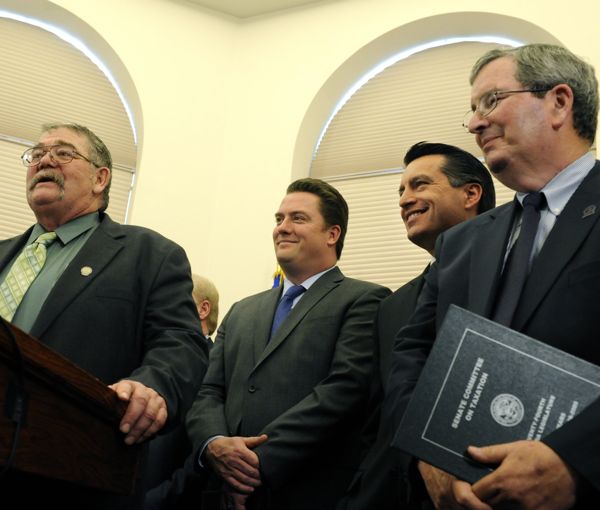
Gov. Brian Sandoval, second from right, is joined by legislative leaders Assemblyman Pete Goicoechea, R-Eureka, left, Assembly Speaker John Oceguera, D-Las Vegas, and state Sen. Mike McGinness, R-Fallon, to announce a budget agreement June 1 at the Nevada Legislative Building in Carson City. Photo/Lisa J. Tolda

Gov. Brian Sandoval, second from right, is joined by legislative leaders Assemblyman Pete Goicoechea, R-Eureka, left, Assembly Speaker John Oceguera, D-Las Vegas, and state Sen. Mike McGinness, R-Fallon, to announce a budget agreement June 1 at the Nevada Legislative Building in Carson City. Photo/Lisa J. Tolda

Miller’s amendment would require nine votes to adopt, amend or repeal environmental standards, or threshold carrying capacities, or a Regional Plan, policies or procedures. To get a project approved under Miller’s amendment, four votes from board members of the state where the project is located and a total of nine votes would be needed. Currently, projects need five votes from members of the state’s project and a total of eight votes. The board is comprised of 14 voting members, seven each from California and Nevada, and a non-voting member representing the federal government.

“There have been instances in the past where getting five votes from one state (to approve a project) was problematic,” Miller told Lake Tahoe News after his testimony, citing Boulder Bay, the mixed-use project at the site of the Tahoe Biltmore Casino in Crystal Bay. The hotel-casino project was approved by the TRPA in late April after a four-year process.

Roger Wittenberg, president and CEO of Boulder Bay, also testified before the Assembly committee. Wittenberg said if he had to do it all over again, he would not have gone forward with his project because of what he called the uncertainty of the TRPA approval process.

During questions from the committee, Assemblywoman Teresa Benitez-Thompson, D-Reno, suggested that a multi-year approval process for such a large development was not onerous.

Wittenberg said he had no complaints about what he called an arduous process or the TRPA staff, which he said was exemplary.

“It comes down to a vote with people from out of town who then leave. If the vote is fact-based and based in science, I’m fine with it,” he said. “But if it’s politically based, I have a problem with that.”

Wittenberg said he was neutral on the bill, but urged lawmakers to do something to accelerate redevelopment of the lake so projects like Boulder Bay don’t take 10 or more years to complete.

“The problem is not what we’re doing at the lake, but what we’re not doing,” he said.

But several opponents to the bill said changing the voting structure wouldn’t solve any problems.

“Even if the bill passes, it won’t solve what its proponents allege,” said Kyle Davis, political and policy director for the Nevada Conservation League & Education Fund in Reno. “You can change the voting structure, but if a project violates the Compact, then the court will strike it down.”

Davis also said that the purpose of the existing voting structure was not to require a super majority, as critics of it say, but a bi-state concurrence in which Nevada and California have an equal say in decisions affecting the lake.

Scientists opposing the bill drove home that point.

“The two states have to work together and the TRPA provides a framework for that,” said Alan Gertler, senior director for Clean Technologies & Renewable Energy Center at the Desert Research Institute in Reno. “You can’t have two players marching to the beat of a different drummer.”

The controversial bill drew an overflow crowd of homeowners, environmentalists, developers and gaming lobbyists June 1.

“This isn’t my first road show on a contentious item and it won’t be my last,” said Chairwoman Marilyn Kirkpatrick, D-North Las Vegas, who urged all those testifying to be respectful.

The committee meeting was overshadowed during an afternoon break when Gov. Brian Sandoval and leadership from both houses had a press conference to announce they had reached agreement on a $6.25 billion budget.

That deal raises about $620 million by extending several taxes that were about to expire for two more years. Among those is the modified business tax, but the deal calls for the exemption of about 115,000 small businesses.

Government Affairs adjourned for the Assembly floor session at 3pm without finishing. The committee will continue to hear more testimony on SB271 Thursday at 9am.

The bill attempts to reform the TRPA to avoid the state’s withdrawal from the agency. But the reforms, including changes to the voting structure, would have to be approved by the Nevada and California Legislatures as well as Congress.


Caltrans restarts multiple projects along I-80

Caltrans has resumed its Interstate 80 projects from Colfax to the Nevada state line.

Actual project time lines may vary, but weather permitting construction is scheduled from now through November.

caltransProjects slated for construction this season will replace and rehabilitate worn roadway, rehabilitate ramps, improve drainage, widen shoulders and replace metal guardrails. Caltrans will make every effort to limit traffic impacts to the public caused by the construction.

Projects include:

Emigrant Gap

The $167 million project will repair and resurface more than 42 lane miles of roadway in Placer and Nevada counties from Carpenter Flat undercrossing at the Emigrant Gap interchange to Hampshire Rock undercrossing at the Rainbow interchange. The project will repair severely distressed pavement and improve safety by upgrading median barriers. Completion is expected by fall 2013.

Donner III

This project will rebuild and replace aging pavement and improve safety on eastbound Interstate 80 from Castle Peak undercrossing to 1.4 miles west of Donner overcrossing, and westbound from the Donner Summit Rest Area to just east of Donner Lake. In addition to roadway rehabilitation, the $78 million project includes replacement of guardrail, existing drainage systems, storm water treatment systems, lighting safety upgrades and rehabilitation of the Donner Lake undercrossing. Expected completion of the project is fall 2011.

Meadow Vista to Colfax

The $4.9 million rehabilitation project will replace and improve almost nine miles of pavement on Interstate 80 from Meadow Vista to Colfax in both east and westbound directions. The project is scheduled to begin mid-June and completed by late October 2011.

The “Get Across 80” construction program, launched in 2010, consists of eight projects totaling more than $520 million to repair and improve Interstate 80 between Colfax and the Nevada state line. Voter-approved, Proposition 1B funds contributed almost $74 million to the cost of improving this vital economic artery.