Lawsuit filed in Amtrak crash; most victims identified

By Martha Bellisle, Reno Gazette-Journal

Records searches by the Reno Gazette-Journal revealed Tuesday that the truck driver who plowed into an Amtrak train, killing six, had two additional speeding violations besides the four reported by the Nevada Department of Motor Vehicles.

Those two other tickets issued to Lawrence Valli included one for slamming his semi into the back of a Toyota Camry that had stopped on Interstate 80 in 2007 for an accident, sending a family of three to the hospital, the Gazette-Journal found.

But the speeding citations, and Valli’s other tickets for driving without insurance, without a seatbelt and talking on a cell phone, did not reach a level under Nevada law that would have allowed officials to suspend or revoke Valli’s license.

“It was apparent Mr. Valli was at least a very distracted driver if not a driver who’s conduct exhibited a disregard for the safety of others,” said Curtis Coulter, the lawyer for the Pinon family, which sued Valli and his employer, Volz Trucking Service, in 2009 for damages from the crash.

“That’s evident by the damage he did to the Pinon’s vehicle.”

A new lawsuit filed Tuesday also names Valli and the John Davis Trucking Company, claiming they were negligent for failing to heed the railway crossing gates and signals, and crashing into the Amtrak train.

On Tuesday afternoon, the Washoe County Medical Examiner-Coroner’s Office identified one more of the six crash victims as 34-year-old Cheuy Ong, of West Jordan, Utah. That leaves only one more of the six to be named.

Only two of the nine crash victims that were taken to Renown Regional Medical Center remained hospitalized Tuesday. One is in serious condition, and one in fair, the hospital said.

Read the whole story


Study: Potatoes are not your friend

By Daniela Hernandez, Los Angeles Times

Public Enemy No. 1 in America’s battle of the bulge isn’t cupcakes, soda or double bacon cheeseburgers. It’s the simple potato, according to Harvard University researchers.

Daily consumption of an extra serving of spuds — French fries, crispy chips, mashed with butter and garlic, or simply boiled or baked — was found to cause more weight gain than downing an additional 12-ounce can of a sugary drink or taking an extra helping of red or processed meats.

friesAltogether, after tracking the good and bad diet and lifestyle choices of more than 120,000 health professionals from around the country for at least 12 years, the research team calculated that participants gained an average of 0.8 of a pound a year, close to the U.S. average, according to a report published in Thursday’s edition of the New England Journal of Medicine.

It may not sound like much, but as the years go by “it becomes like compounded interest,” adding up to 16 pounds over 20 years, said Dr. Jeffrey Schwimmer, director of the weight and wellness program at Rady Children’s Hospital in San Diego, who wasn’t involved in the study.

Potatoes have a long pedigree in the human diet. They were once hailed as history’s most important vegetable, and the Incas — whose ancestors are credited with domesticating spuds in South America — worshiped a potato god.

They are still certified as a “heart healthy” food by the American Heart Assn. And the United Nations declared 2008 the International Year of the Potato, praising the tuber for being a good source of vitamin C, several B vitamins, and minerals including iron, potassium, phosphorus and magnesium.

But when the team from Harvard Medical School and the Harvard School of Public Health in Boston examined the potato’s role in the modern diet, they found that people who ate an extra serving of French fries every day gained an average of 3.4 pounds over a four-year period. On top of that, those who munched on an extra serving of potato chips daily gained an average of 1.7 pounds every four years. Overall, an extra serving of potatoes prepared in any non-chip form was found to contribute an average of 1.3 pounds to total weight over four years.

The typical American consumes 117 pounds of potatoes each year, including 41 pounds in the form of previously frozen French fries, according to data from the U.S. Department of Agriculture. “Fresh” spuds account for only 28 percent of the total, the USDA said.

Read the whole story


Study: Livestock not culprit in Yosemite toad decline

By Pat Bailey, UC Davis

Livestock grazing is apparently not the culprit in the steep decline of Yosemite toads and their habitat, according to the results of an extensive, five-year study conducted by UC Davis, UC Berkeley and the U.S. Forest Service.

“A direct correlation between the intensity of cattle use and toad occupancy of meadows was not found for any portion of the grazing season — early, mid or late,” said Leslie Roche, a UC Davis Department of Plant Sciences graduate student who worked on the study.

Results from the study will impact ranchers whose grazing allotments were restricted by the U.S. Forest Service in 2001 based on the assumption that grazing is contributing to the toads’ decline. Forest Service officials will use the study to develop plans that allow grazing within appropriate standards while conserving toads.

The researchers had hypothesized that a reduction in grazing intensity would stop or even reverse the decline of the Yosemite toad but, in fact, they found no evidence to support that premise.

“Results strongly indicate that toad presence is driven by meadow wetness rather than cattle utilization,” said Roche, who is completing her doctoral dissertation on this project.

Read the whole story


Chautauqua performers shed selves, become historical figures

By Forrest Hartman, Reno Gazette-Journal

Marvin Jefferson knows what it means to walk in the footsteps of Dr. Martin Luther King Jr. because he’s done it.

Jefferson, a professional actor, has portrayed the beloved civil rights leader numerous times, and he’s preparing to do it again for Nevada Humanities Chautauqua. The event, which is celebrating its 20th anniversary this year, asks performers to transform themselves into historical figures, offering entertaining and educational monologues and then answering audience questions, both in and out of the historical figure’s persona.

“It’s not like just doing a monologue,” Jefferson said. “You have to know enough about the figure to answer competently.”

That means Chautauquans do a lot more than study lines. Jefferson, who also portrays singer, actor and activist Paul Robeson, said it can take between six and 12 months for a Chautauquan to properly prepare a role.

Read the whole story


Blast of cold, wet weather headed for Tahoe

The National Weather Service in Reno has issued a wind advisory for Lake Tahoe through 11 tonight. By afternoon gusts should be 40 mph.

Wave heights could reach 2 to 4 feet. Small boats will be prone to capsizing, with the NWS suggesting they be pulled form the lake.

The strong cold front moving through the Lake Tahoe Basin is likely to bring heavy rains overnight and through Wednesday.

Areas north of Interstate 80 and west of Highway 395 are likely to receive the brunt of the storm. Small creeks and streams are expected to rise overnight, raising concerns about flooding.

Temperatures are expected to be 15 to 20 degrees below normal.

Sun will return to the basin Thursday, with temperatures back in the 70s by Friday.

Fourth of July is expected to full of sun, with highs in the low 80s.

— Lake Tahoe News staff report


History: Retracing the Oregon-California Trail

Publisher’s note: This is republished with permission from the September 1975 Lake Tahoe Historical Society newsletter.

A picture story of the Oregon-California Trail was presented by Chuck Lucas on August 28th. Ninety-eight per cent of the 225 photographic slides were taken on site as he recently followed the route of the Oregon Trail from Independence, Missouri into Idaho; the California Trail from Fort Hall, Idaho to the Humboldt and Carson Sinks; and on over Carson Pass to the Sacramento Valley. The pictures were taken generally at the same time of year the pioneers would have reached each location in their trek across plains, desert and mountains to reach their “promised land” – CALIFORNIA.

history logoCommencing with the Louisiana Purchase in 1803 and exploration parties sent out by the U.S. Government, the narrative moved on to the 1810-1824 age of the mountain men, who both trapped for the fur trade and scouted such places as Coulter’s Hell (Yellowstone Park). The discovery of the South Pass (Wyoming) in October 1812 blazed the way for further exploration as well as the great wagon migration to come.

From the early 1840’s to the late 1860’s, the Oregon Trail saw the greatest mass movement of humans, animals, and equipment in civilized history. As many as 13,000 travelers moved over the road in a single season. In spite of dust storms, tornadoes, quicksand, flood waters, Indian raids, accidents, sickness and death (graves still remain along the way) – on those portions of the trail not now covered by highways or development are clearly discernible since not one blade of grass is growing where the wagon wheels compacted the earth.

The usual method of forming a westbound wagon party was to advertise in eastern newspapers a year in advance that, for instance, a wagon train would be leaving Sapling Grove, Missouri the following May 15th. Everyone interested would gather at that location with household goods, animals, supplies and other equipment. No one really knew where they were going – just “west” – and many came ill equipped. One of the early day prevailing rumors had the Great Salt Lake draining into the Sacramento River. As a result, some of the adventurers planned to float west down the river, packing oars, sails, even collapsible boats into their wagons.

Moving out from Independence, the wagons followed the Santa Fe Trail for 40 miles into Kansas where a crude sign reading “Oregon Road” pointed to the west. At Ash Hollow they met the Platte River which followed the Nebraska sand hills to Chimney Rock and Scotts Bluff. Thirty-five miles west of Scotts Bluff, at the eastern edge of Wyoming, was the Cold Spring Campground where the travelers rested before pushing on 12 miles to Ft. Laramie where they could get wagons repaired and reprovisioned. They had traveled 642 miles, but they were still 1442 miles from Sutter’s Fort.

Reaching Ledger Cliff the first night out for Fr. Laramie, the travelers carved names and camping dates into the soft sandstone. In this area are ruts cut into the trail by the ironed-tired wagon wheels. The Platte River was forded again and again and finally the wagons reached the Sweetwater where Independence Rock, rising 150 feet into the air and 600 yards long, served as a trail marker for a campsite with plenty of grass and water. The name of the rock came from its discovery on July 4, 1821, and the travelers’ timetable predicted their arrival at that point on the 4th of July. Here, too, they carved their names before moving on to Split Rock which could be seen for 15 miles in either direction.

After clearing the steep slope of the 7550 ft. summit of South Pass, the road branches. To the right was the more direct route to Fort Hall on the Snake River. From there, the trail followed the north bank for Oregon; the south bank for California. Register Rock, which also still bears the inscription of the weary travelers, was the last campground on the Snake before the trail turned southward into Nevada to follow the Humboldt River for 200 miles across the Nevada wastes before reaching the Humboldt Sink. Water was rationed, animals fell by the wayside, various items of furniture, pianos, anything not necessary, even wagons, were abandoned in the desert flats. The emigrants regrouped at the Lower Carson. Some moved on via Truckee Meadows over Donner Pass and an equal number followed the Carson River, passing near Ft. Churchill and present Dayton, Nevada. They were less than 125 miles from Sutter’s Fort, but ahead loomed the sheer granite eastern face of the Sierra Nevada.

The trail went southwest into the Canyon near present day Woodfords. The steep rocky terrain of Carson Canyon accounted for the heaviest stock losses of the entire trip. Through Faith, Hope and Charity Valleys they plodded, up the slope near Red Lake, and on to the gap behind Caples Lake which must be reached no later than October 1st to escape the perils of early winter. And, on the other side – after six months of all but scratching their way by their fingernails – were the oak covered foothills of the western Sierra slope and just ahead, their destination – the Sacramento Valley.


Snippets about Lake Tahoe

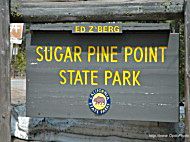
park• Sugar Pine Point State Park is going to bring its facilities into ADA compliance. The West Shore state park is seeking bids on the project until July 20. Engineers expect the work needed to cost about a half million dollars.

• The South Lake Tahoe City Council anticipates voting July 12 on an entity to run the city’s ice rink, with transfer of responsibility occurring  Aug. 1.

• South Lake Tahoe Parks and Recreation Department is looking to use inmates from the county jail to do unskilled tasks.

• Tony Romo, quarterback of the Dallas Cowboys, is co-favorite with Rick Rhoden to win the 22nd annual American Century Championship celebrity golf tournament next month in Stateline. Golf Digest magazine ranked Romo as the No. 1 pro athlete golfer in the country in 2009.

• Kristi Laguzza-Boosman will start July 5 working in TRPA’s PR department.


Derby Dames to compete at home

Tahoe Derby Dames take on the NorCal Roller Girls on July 9 at 5pm.

Gates at Bijou Community Park open at 4pm.

Tickets are $10 at the door. Kids 10 and under free.

Click here for Derby Dames info.


Twain’s first paid appearance benefited Carson City church

By Guy Rocha

Carson City’s First Presbyterian Church celebrated 150 years as a congregation on June 2.

Legend has it that Mark Twain once performed in the church in 1864 to raise money to replace a roof on the building. The fundraiser was a favor to his brother, Orion Clemens, who was a church member and Nevada’s secretary of state at the time, so one version of the story goes.

According to Webster’s Dictionary, a legend is “a story coming down from the past, especially one popularly regarded as historical although not verifiable.” The Twain story may have come down from the past, or maybe someone just assumed it to be true and told a newspaper reporter. However, it is verifiable.

Relying on “Twain’s Letters, Vol. 1, 1853-1866,” we know that while there was a church fundraiser, it was not held in the church because it was unfinished and there was no roof to replace. At the same time, the request to speak came from two church trustees and not brother Orion, who was secretary of Nevada Territory and not secretary of state.

Guy Rocha is the former Nevada state archivist.

Read the whole story


Opinion: Endangered Species Act creating false drought for farmers

By John Harris

Higher crop prices, an increase in acres and more water helped boost Kings County’s overall crop value to $1.7 billion in 2010, an increase of 30 percent over the previous year.

As a farmer and rancher gravely concerned with the health of agriculture in California — and as a citizen who wants a strong recovery for our state’s recession-burdened economy — I’ve enjoyed reading the precipitation surveys out of the Sierra this year.

Snow depths were more than twice the long-term average at some measuring stations, and reservoirs are brimming.

As a result, there has been a pronounced short-term change in outlook for farmers and communities that were seared by a three-year drought. More acres are being planted, more workers are being hired, more farm machinery is being purchased, and a world-class food supply is being produced.

As the Wall Street Journal reported recently, “California’s farm economy is on the rebound.”

Just one acre of vegetable production in my area can generate more than $5,000 in incremental jobs. My on-farm payroll has gone up $4 million over the past year. Local businesses, such as car dealers, have seen their sales soar. This shows that if the farm economy has money, it will be spent and help grow the economy.

However, while we are all thrilled by the dramatic turnaround in water supply, there are justified fears about future years. Although the natural drought has ended, we’re still faced with harmful regulatory barriers to getting the needed water to those who grow the food and provide the stimulus our economy needs.

Most of the regulatory restrictions are part of a misguided federal scheme to help fish on the Endangered Species Act list. The cutbacks in pumping from the Sacramento-San Joaquin Delta were based on federal “biological opinions” that too often involved junk science, as Fresno-based U.S. District Judge Oliver Wanger found.

John Harris is chairman and CEO of Harris Farms Inc. in Coalinga and chairs the board of trustees of Pacific Legal Foundation.

Read the whole story