Opinion: Patience needed to bring Olympics to Tahoe-Reno

Publisher’s note: This editorial is from the July 12, 2011, Reno Gazette-Journal.

There are lots of hurdles that must be jumped before the Reno-Lake Tahoe area wins the right to host the Winter Olympic Games.

Some are out of the hands of local organizers — among them the often complicated politics of the U.S. Olympic Committee and International Olympic Committee, as well as their diverse constituencies.

When it comes time to choose the next bidder from the U.S., will the USOC favor Denver, just up the Interstate from the USOC’s Colorado Springs headquarters but also the only city to ever renege after winning the bid to host the Olympics? Will the IOC favor the U.S. again once financial disagreements finally are settled? Or will a U.S. bid for the Summer Games in 2020 (in Chicago, perhaps) derail a U.S. bid for the 2022 games?

Those are the unknowns that face the Reno Tahoe Winter Games Coalition, led by Lt. Gov. Brian Krolicki.

The highest hurdle, however, might well be impatience. It already has been a long road for an idea that’s floated around this area since at least the 1980s, and there are many miles still to go.

Read the whole story


Barton Foundation collecting wine for annual auction

Barton Foundation’s 8th Annual Wine Tasting Auction is Aug. 17 at 5:30pm at Edgewood Tahoe Clubhouse, 100 Lake Parkway, Stateline.

Admission to the auction is a donation of a bottle of wine (valued at $75 or more) or $85. All proceeds help build Barton Foundation’s Community Health Endowment. The auction will include the donated wine and wine-related gifts, such as wine tasting excursions, over night stays at exclusive wineries, wine tours, gift baskets and much more.

To RSVP or become a sponsor of the event, email foundation@bartonhealth.org or call (530) 543.5614.


Great gray owls finding a home in Placerville

By Tom Knudson, Sacramento Bee

Flip through a field guide to western birds and you’ll discover the great gray owl occupies the narrowest of ecological niches in California: dense conifer forests next to moist mountain meadows.

But lately, the elusive owl has been spotted swooping through much different terrain: the sun-baked Sierra Nevada foothills where – surprisingly enough – it is thriving on land owned by the state’s largest timber company, Sierra Pacific Industries.

The bird’s discovery south of Placerville has startled wildlife biologists and bird-watchers who have long considered the exceedingly rare, brownish-gray owl to be a stalwart of higher elevations, a winged icon of the wilderness.

“It’s pretty exciting they are being found this low,” said Graham Chisholm, executive director of Audubon California. “It shows the resilience of these birds.”

Read the whole story


Biking on busy streets linked to heart risks

Brett Israel, Environmental Health News

When Ed Campaniello chooses his biking route between his Mission District home and job in downtown San Francisco, traffic is a top consideration.

And new research shows that’s a smart move – not only because fewer cars mean less of a chance of being hit, but because polluting vehicles may give cyclists heart problems.

The 42-year-old solar energy consultant said it makes sense. Occasionally, he gets a funky taste in his mouth after riding behind trucks and buses.

“I consider bicycling part of what keeps me healthy,” he said. “But the benefits might be mitigated by the greater level of pollutants I’m being exposed to.”

A new study published in the journal Environmental Health Perspectives showed a link between biking in heavy traffic and heart health risks, with cyclists having heart irregularities in the hours after their exposure to a variety of air pollutants on busy roads.

Canadian study

The study by scientists from Health Canada, Environment Canada and the University of Ottawa does not suggest that bikers would be better off driving. Rather, the findings intensify the scrutiny on cyclists’ pollution exposure and point to simple solutions for a cleaner ride, such as avoiding busy roads whenever possible.

For the study, 42 healthy, nonsmoking cyclists in Ontario wore heart monitors before, during and after cycling for one hour on congested and uncongested roads. Instruments on the bikes measured exposure to air pollution.

Read the whole story


Placer County exhibit wins at state fair

Placer County took top honors among county exhibits at the California State Fair in Sacramento.

The exhibit won the Gold Ribbon, Best Animation, and the Golden Bear/Best in Show Award. This is the second year in a row the county exhibit captured these awards.

The exhibit features the ski and recreation areas at Lake Tahoe, nature, culture, history, fine food and wines available throughout the county. The exhibit also offers a look at the many activities in the county, including gold panning, camping, boating, hiking, fishing and museums.

The exhibit makes note of the area’s history, including Maidu Indians, the Gold Rush and the Transcontinental Railroad.


Players in both states developing South Shore vision

By Kathryn Reed

Taking a look at the South Shore it doesn’t take a rocket scientist to figure out things must change or the area will be irrelevant to tourists.

Various stakeholders who want to revamp the area from Ski Run Boulevard on the California side to Kahle Drive on the Nevada side have put out a call to action. The state line is not an impediment, but instead viewed as nothing more than a traffic light along Highway 50.

“It benefits us if we work regionally,” Lisa Granahan, economic vitality manager, in Douglas County said. A collaborative approach with more partners is also beneficial when it comes time to look for funding for specific plans.

Driving down Highway 50 it's hard to know the recreation opportunities that abound on the South Shore. Photo/Kathryn Reed

Driving down Highway 50 it's hard to know the recreation opportunities that abound on the South Shore. Photo/Kathryn Reed

As South Lake Tahoe City Manager Tony O’Rourke put it, “We are one market … one destination. Tourists could care less about the state line.”

Redevelopment attorney Lew Feldman is impressed so far with how things have evolved since last fall.

“The level of participation is extraordinary. It is a new day in terms of trying to achieve environmental and economic excellence,” Feldman said.

Design Workshop’s Aspen and Lake Tahoe offices have been massaging the vision that is starting to evolve. This week more clarity to the direction players want to go will come to light.

A two-day charette is scheduled for Tuesday and Thursday, with Wednesday being a working day. It is not open to the public.

Richard Shaw of Design Workshop says what will make this plan different than all the others sitting on shelves collecting dust is that it will have a vision for the South Shore out 25 to 30 years, with some ideas that can be implemented immediately. A working document should be completed this fall.

Starting in Douglas County

All of this talk of turning the economic and environmental tide around began in Douglas County. Knowing government cannot cure all that ails society, a partnership has been formed with private entities to help various regions in the county – with one person designated as the “champion” of a particular project.

Tahoe is one of 12 projects in the county.

Granahan said government can’t do it alone. She said bringing the private sector on board makes sense because businesses have a lot to lose by not helping to improve the economy.

In the county’s strategic plan it’s about concepts more than it is specifics to provide more latitude and creativity.

At Lake Tahoe the “champion” is Mike Bradford, CEO of Lakeside Casino. He has assembled interested people – including Andrew Strain from Heavenly Mountain Resort, O’Rourke, Feldman, Douglas County officials, Embassy Suites, Edgewood Companies and others.

Bradford said, “The refrain coming back was the problem is we don’t have a plan.”

Gaming is no longer king and everyone wants recreation to be the leading tourism draw to the area. It’s also one of the three components to the Lake Tahoe Prosperity Plan. (B Gorman with Lake Tahoe South Shore Chamber of Commerce did not return multiple calls.)

South Tahoe Alliance of Resorts (the former Gaming Alliance) is paying Design Workshop $50,000 to come up with a plan.

“This town is dying. Someone needs to resuscitate it,” Bradford said. “We need a discovery a day for tourists.”

Finding consensus

“I’m not disagreeing the initial reason people travel to Tahoe is the lake,” Shaw told Lake Tahoe News. “But the reality is when you are there, particularly on the South Shore, it’s a struggle to find recreation opportunities. Short of high rises, there is almost no view opportunity.”

He pointed out while locals and repeat visitors know where the public beaches are, it is near impossible for a first-time visitor to find them. The same goes with mountain bike trails and other outdoor activities that the marketing gurus are telling them exist here.

Bradford simplified the goal of all of this  – “To draw a picture of what Tahoe should be.”

While sitting in his casino’s restaurant Bradford readily admits the gaming model is no longer relevant.

“We never created a connectivity,” he says. “That is what we are focused on now. How we connect the product.”

The product is no longer what’s inside, but everything that is outside.

Feldman says it’s time “community character” is a factor in planning.

“This will help TRPA understand what the local jurisdictions and property owners in the Compact area believe is necessary and desirable to achieve environmental and economic excellence,” Feldman said.

(TRPA officials were not available for comment.)

What those involved in this process want is to show the bi-state regulatory agency there are other ways to accomplish environmental goals, which in turn will stimulate the economy. But change must come from the Tahoe Regional Planning Agency to make all of this a reality. Stakeholders are hoping to be influential as the Regional Plan update is being worked on and should be released late 2012.

So many people today speak to the built environment being horrible for the natural environment. This is because what was erected in the 1960s had little or no thought about sediment, what pollutes the lake and how runoff without treatment is not a good thing if Lake Tahoe is not to turn into a brown body of water.

“It’s a very risky and costly process to gain approval for a project (in the Lake Tahoe Basin),” Shaw said. “There is a conflict between the business model that can succeed and what development parameters are.”


Forests sucking up planet’s fuel emissions

By Margaret Munro, Vancouver Sun

The world’s forests gobble up so much carbon they are protecting the planet from the worst impacts of humans’ staggering fossil fuel emissions.

An international study has concluded forests suck up a third of the carbon pumped into the atmosphere each year through the burning of oil, gas and coal: “That one third taken up by the forests would otherwise be in the atmosphere,” said Werner Kurz of the Canadian Forest Service, co-author of the report published Thursday in the journal Science.

The oceans suck up another 20 percent of the emissions, which means “we have basically been getting a 50 per discount on all our fossil fuel emissions,” said Kurz.

The report is the most comprehensive assessment yet of the global forest “sink” and shows trees from the tropics to the boreal play a huge role in controlling the global carbon budget by sucking up vast amounts of carbon from the air and locking it away in wood and soil.

It says that the forests have been a major carbon sink since 1990, and shows the changing dynamics of the world’s trees.

It says fire and insects hit this country’s forests so hard between 1990 and 2007 that the carbon sink in Canada’s managed forest was “reduced by half”. On the other side of the Atlantic, the carbon sinks grew in fast-growing new forests in Russia and northern Europe.

Read the whole story


Wagner wins celeb tourney; Sakic sinks hole-in-one

By Dan Hinxman, Reno Gazette-Journal

STATELINE – The best golfer at Edgewood Tahoe this past week didn’t play a single hole in the 22nd annual American Century Championship celebrity golf tournament.

But he did play a major role.

PGA Tour player David Berganio Jr., caddied for longtime friend Jack Wagner, and when Wagner’s big lead began to evaporate Sunday, Berganio helped steer him to victory.

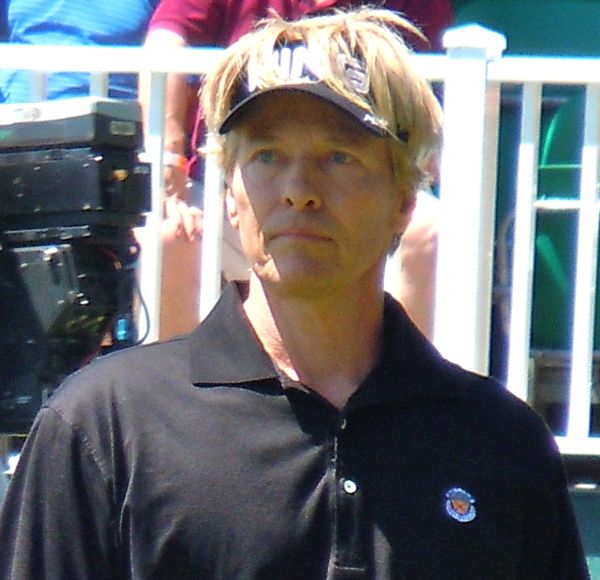
Jack Wagner

Jack Wagner

“It’s a combination of friendship and a pro going, you know, ‘Hey, dude, work through this. You gotta work through this,’” Wagner said after eking out a three-point win over Romo. “’You’re as good or better than anyone else out here on the greens. You’re the best putter by far in the tournament. Knock it in.’ …

“Today I stayed pretty positive. That’s a lot to do with David, by the way.”

Wagner, who led throughout the tournament, had a 10-point lead through the first nine holes over playing partner Tony Romo, but Romo’s six-point eagle on No. 11 closed the gap.

By the time the two reached the par-3 17th, Wagner’s lead was down to two. He sank a 10-footer for birdie right after Romo missed his 12-foot birdie try, and then both players hit their second shot on 18 into Lake Laimbeer. Romo needed to make about a 30-footer to force Wagner to get up and down in three shots, but he missed and Wagner claimed his second ACC title in five years.

It put the finishing touches on a day of quality golf, with Wagner shooting a three-under 69 and Romo shooting a 66. Wagner finished with 80 points, the second-highest total in the tournament’s modified Stableford scoring history (since 2003).

Wagner also became the first golfer since 2003 to go wire-to-wire, capturing the $125,000 check as the tournament celebrated a record weeklong crowd of 40,156, about 6.5 percent higher than the previous record set last year.

Wagner’s check was tiny, though, compared to the one Joe Sakic received. The retired NHL star aced the 167-yard 17th hole to win $500,000, nearly the amount of the entire purse ($600,000). The ace was worth $1 million, half of which goes to the Lance Armstrong charity, Livestrong.

Read the whole story


Wyland’s whale won’t be on Calif. license plates

By Tony Barboza, Los Angeles Times

For years, a painting of a whale’s tail splashing out of the gray, misty ocean has been one of the most popular license plates in California. Nearly 200,000 have been sold, raising millions for coastal and environmental conservation programs.

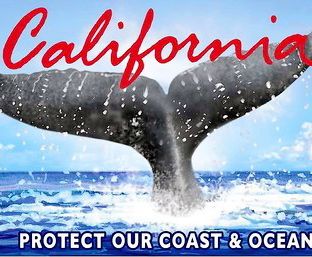
whaleBut the artwork by Wyland was deep-sixed after the Laguna Beach muralist’s request for 20 percent of the state’s profits from the plates to fund his environmental foundation was rebuffed. Wyland also has a gallery in South Lake Tahoe.

Rather than tangle with the artist over the rights to the painting, titled “Tails of Great Whales,” the state decided to retire the plate instead and hold a contest to replace it.

The new plate to debut Aug. 2 is a crisper, brighter rendering of a whale’s tail that California Coastal Commission officials say more closely resembles an actual whale — a humpback — than Wyland’s more dreamy design.

Tens of thousands of the whale-tail plates can be spotted on California roads, according to the state Department of Motor Vehicles. They are some of the most sought-after of the state’s 10 specialty plates, which include depictions of such state treasures as Lake Tahoe and Yosemite. Since the plates were introduced in 1997, sales and renewals have raised more than $60 million for coastal and environmental conservation programs.

Read the whole story


Lawsuits piling up after Nev. train crash

By Martha Bellisle, Reno Gazette-Journal

In most rail-crossing accidents, trains slam into trucks or cars as they try to sneak through the rail gates, get stalled on the tracks or fail to heed or receive warnings of an approaching train.

But the deadly crash on Highway 95 east of Reno in June was different: A semitrailer truck traveling on a high-speed highway skidded 320 feet before slamming into an employee dormitory car on an Amtrak passenger train, killing six and injuring dozens.

“It’s pretty rare,” said Tom Demetrio, a Chicago-based lawyer who has a history of big wins in railroad cases and who, along with Reno lawyer Bill Bradley, has filed two lawsuits over the deadly crash.

“A vehicle shouldn’t hit a moving train.”

That difference has raised questions about why John Davis Trucking Co. driver Lawrence Valli, 44, locked up his brakes before impact, and whether the 70 mph speed limit on U.S. 95, and the angle of the track and the road were factors that contributed to the crash.

Concerns about the safety of that rail crossing, raised by the Amtrak engineer operating that train and another engineer who was involved in a Sept. 14, 2010 near-miss at the same crossing, may mean that others, including Amtrak, Union Pacific and the Nevada Department of Transportation, could be named in upcoming lawsuits, according to lawyers involved with and watching the case.

Much will depend on the final report by the National Transportation Safety Board. Investigators who have been working on the case since Day One will come up with a probable cause for the accident some time in the next year.

Depending on the results, that report could lead to a flurry of lawsuits against whoever is named as responsible for the fiery crash.

Within days of the deadly June 24 California Zephyr crash, the first lawsuit was filed. Alexandra Curtis, an on-duty train attendant from Evanston, Ill., claimed John Davis Trucking in Battle Mountain was negligent when it hired, trained and supervised its driver, Valli, who was killed in the crash.

Read the whole story