Marijuana movement’s voice bucks stereotype

By Barbara Venezia, Orange County Register

The Regulate Marijuana like Wine Act of 2012 is gaining momentum, and its key advocate isn’t your stereotypical hippy-dippy pot smoking liberal. It’s a Republican, former federal prosecutor and retired Superior Court judge named James Gray.

Those in the Newport/Costa Mesa area are probably most familiar with Jim through his weekly Daily Pilot columns, “It’s a Gray Area.” He’s a guy with strong opinions and never one to shy away from controversy.

Article Tab: gray-believes-regulate-ja

James Gray, a former federal prosecutor and retired Superior Court judge is co-author of the Regulate Marijuana Like Wine Act of 2012, which he believes is gaining momentum.

A few weeks ago I asked Jim why he’s co-authored this act and why he feels it has legs in 2012.

As a former federal prosecutor, he says, “I saw we weren’t winning the war against drugs.”

There are six groups who will continue to win if this legislation isn’t passed, he contends.

• Drug lords making millions – if not billions – annually.

• Juvenile gangs whose main source of funding is drug sales.

• Law enforcement officials who make big money fighting the drug lords and juvenile gangs.

• Politicians who run on anti-drug platforms and keep getting reelected because of it.

• Businesses that build prisons and staff them – and the state’s powerful prison guard union.

• Terrorists who globally fund their operations through drug sales and say “Drug prohibition is the Golden Goose of terrorism.”

Read the whole story


S. Tahoe weighing how to pay for rehabbing roads

By Kathryn Reed

South Lake Tahoe is between a pothole and a debt payment when it comes to dealing with the roads that crumble a bit more each day.

At the Aug. 2 City Council meeting, the five are likely to be asked if they are willing use a certificate of participation to pay for the millions of dollars needed to repair the asphalt.

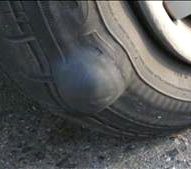
Potholes can cause serious tire damage.

Potholes can cause serious tire damage.

The COP is the preferred method instead of a general obligation bond that had first been floated by City Manager Tony O’Rourke. A main difference is all bonds – which are a tax – must be passed by two-thirds of the voters. A COP doesn’t need the taxpayers’ blessing.

While a COP is not tax on the people directly, the repayment of the money is taxpayer dollars from the general fund.

The council in April through the passage of the five-year financial plan OK’d spending $5 million for each of the next five years on capital improvements, with the bulk to go to roads.

Councilmen Tom Davis and Hal Cole expressed the least amount of enthusiasm to go into debt to pay for the roads.

“The interest is $32 million over a 30-year period so really it’s $10 million a year,” Davis said of the cost going to roads. “(The COP) just doubled the cost.”

Cole said, “The roads may not last 30 years.”

While the city’s Redevelopment Agency has outstanding debt, the city does not. The two are distinctly separate entities even though how the council and RDA business is conducted in public does not make that fact obvious.

The city has the money to pay for the first two years of the capital improvement plan, but would need another source of income going forward. Raising the hotel room tax has been broached as a possibility down the road.

“We need to get the ball rolling. We need to deliver something,” O’Rourke said. “To date there has been a lot of talk. The infrastructure we have demonstrates that.”

At a workshop this month, Jim Marino, who is in charge of the roads plan, told the council that staff had identified 168 capital improvement projects within the city limits. Those were narrowed down to a short list that could begin to be implemented in fiscal year 2011-12, which begins Oct. 1.


USFS collecting weather data in Meyers

The U.S. Forest Service’s Remote Weather Access Station in Meyers is up and running.

The weather station collects vital fire forecasting data such as wind speed and direction, relative humidity, temperature, precipitation depth, fuel moisture and solar radiation.

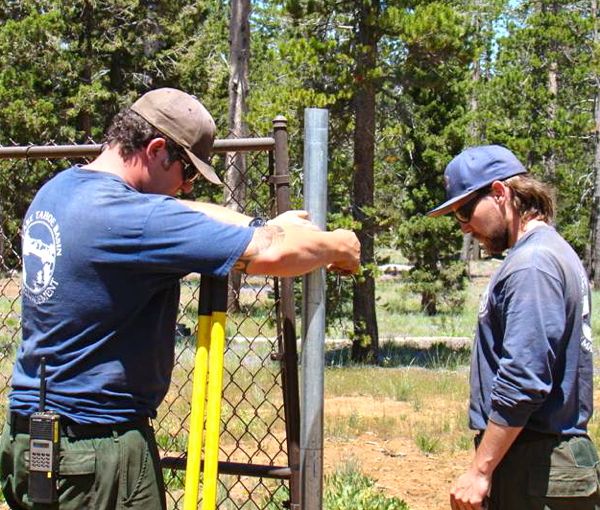
USFS employees install the weather station. Photo/Lisa Herron/USFS

USFS employees install the weather station. Photo/Lisa Herron/USFS


Action sports camp turning Boreal into year-round resort

By Katherine E. Hill

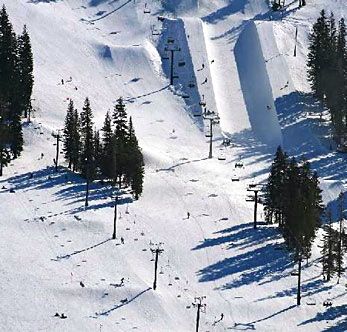
Boreal Mountain Resort is transforming itself into a year-round destination for freestylers from all sports. Known for its terrain parks attracting freeriders and freeskiers each winter, Boreal is hoping to capture more of the freestyle market with an indoor facility that will serve as part-camp, part-training ground for skateboarding, skiing, snowboarding, BMX riding and cheer-gymnastics.

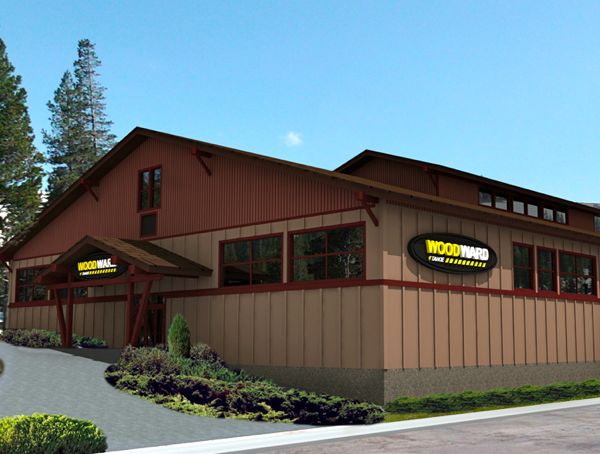
The 33,000-square-foot facility is under construction next to the ticket windows, with plans to open the center – dubbed Woodward Tahoe – next summer, according to Boreal General Manager Jody Churich. The goal of the camp is to provide an action sports training center to youth and to provide Boreal with year-round business.
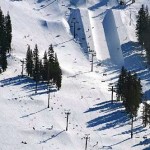
Boreal is becoming more than a ski resort.

Boreal is becoming more than a ski resort.

“It’s the economy of it … it’s very much the point of it to fill in the valleys” when there is no snow, Churich told Lake Tahoe News.

The project also is helping to fill the valleys of the local economy with Truckee-based J&S Construction building the camp. Churich estimates that the project would employee between 50 and 75 people during construction.

Churich said Boreal had been looking at the Camp Woodward program, based in Woodward, Pa., for about a year before deciding to contract with the company to build an instructional facility at the resort.

“Copper Mountain built in 2009 and we’re owned by the same company,” she said. “I looked at it and it’s a niche very heavily skewed in action sports and terrain parks.” She said that makes it a perfect fit for Boreal.

Powdr Corp., which owns Boreal and Soda Springs resorts on Donner Summit, recently acquired and partnered with Camp Woodward, Churich said. She said the decision to build Woodward Tahoe at Boreal was made before Powdr Corp. purchased Woodward.

Woodward Tahoe will be open for about 10 months of the year, Churich said, with closures likely in September and October for maintenance. The center will offer weeklong programs in a camp-like setting for the summer months, while also offering half- and full-day programs open to everyone the rest of the year.

The camps are geared toward action sports with an emphasis of freestyle instruction and will focus of snowboarding, skiing, skateboard, BMX and cheer-gymnastics. The programs will be open to kids as young as 7 to 8 years up to 17 years of age. The camps will be tailored according to age and discipline. The weeklong camps also will offer onsite lodging at existing facilities at Boreal.
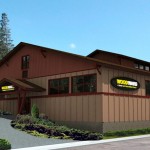
Woodward Tahoe will open at Boreal in 2012.

Woodward Tahoe will open at Boreal in 2012.

When completed, Woodward Tahoe will feature an indoor skate park, ski-ride ramps, trampolines, a digital media area and foam pits. The foam pits are used for practicing freestyle maneuvers for all of the sports and contain large foam blocks that young athletes can use to practice grabs and other tricky maneuvers before trying them on the slopes or the parks, Churich said. As well, there will be an outdoor park and pipe for riding in the summer.

Churich said they believe there’s a market for more youth-based action sports camps and noted that a skiing and snowboarding camp offered in June at Boreal was a success.

In addition to facilities at Cooper Mountain in Colorado and the camp in Pennsylvania, Camp Woodward operates camps geared toward action sports in Wisconsin, Tehachapi, and Beijing.

Boreal will be open for summer skiing and riding on July 23 with the Castle Peak quad chairlift running from 9am to 2pm, with a full terrain park and one run open. Beginner terrain will not be available, but rental equipment and food and beverages will be available. Tickets are $25.
Learning about life along the Emigrant Trail

Nevada State Parks invites the public to a day of free presentations on the Emigrant Trail at Mormon Station State Historic Park on July 23.

The outdoor presentations is form 10am-5pm.

Each presentation will be approximately 45 minutes, with time for questions.

Visitors are asked to bring lawn chairs and a beverage. Dogs will not be allowed.

Schedule:

10am – Jeff Kintop, State Archivist, “The Early Settlement of Genoa”

11:30am – Doris Dwyer, Professor of Women’s History, “Women’s Voices from the Overland Trail”

1pm – Fred Horlacher, Historian, “Tales from the Emigrant Trail/40 Mile Desert”

2:30pm – Chris Bayer, Historian/Musician, “Music and the Emigrant Trail, Stories and Songs”

4pm – Stan Paher, Historian/Author, “Early Settlements of Genoa/Dayton/Nevada Ghost Towns”

Additionally, Dave Jamiel, director of the California Trails Center, will be on-site to answer questions and provide information about the California Trail.

Mormon Station State Historic Park in Genoa is a 20 minute drive from Carson City via Highway 395 and 20 minutes from South Lake Tahoe via Kingsbury Grade and Foothill Road.


‘King Arthur’s Quest’ on stage in the outdoors

Embark on an adventure with the legendary King Arthur, Guinevere, Lancelot and a host of others on July 23 as the Missoula Children’s Theatre and 50 local students present “King Arthur’s Quest” at the Lake of the Sky Amphitheater at the Taylor Creek Visitor’ Center on the South Shore at 2pm.

This production is part of the Missoula Children’s Theatre’s unique international touring project and is presented locally by Tahoe Arts Project.

Admission is $10 for adults and $5 for children.

For more information, call Tahoe Arts Project at (530) 542.3632.


Heroin bust lands mom, son in Tahoe jail

By Kathryn Reed

A mother and son are in El Dorado County jail on heroin charges, which, if found guilty of, could lead to their deportation because neither one has been living in South Lake Tahoe legally.

South Shore narcotics officers had been working undercover, which led them to arrest Jose Ruben Gomez Gonzalez, 25, of South Lake Tahoe after he allegedly sold them heroin.

He was busted July 15 on the third sale, according to Cmdr. Jeff Catchings with South Lake El Dorado Narcotics Enforcement Team.

A search warrant at his residence in the 3700 block of Paradise Avenue turned up more heroin, cash and a loaded handgun.

“It appeared he was packaging for sale in (his mom’s) room,” Catchings said.

In Genoveva Gonzalez De Leon’s bedroom officers said they found three safes. One had $4,700 in cash, a 9mm handgun and heroin.

Between the three buys and what was found at the house, Catchings said a quarter pound of heroin with a street value of $9,000 was confiscated.

De Leon, 41, of South Lake Tahoe faces a charge of possession of heroin for sale. Gonzalez was arrested on the same charge plus sales of heroin and transportation.

Because of their illegal status, immigration has placed a hold on them at the South Lake Tahoe jail.

Also living in the 800-square-foot residence were two other adults and two toddlers. Child Protective Services has been notified. Catchings said at this time it is not believed the mother of the two children was involved in the drug activity.


Emigrant Trail presentation

Nevada State Parks invites the public to a day of free presentations on the Emigrant Trail at Mormon Station State Historic Park on July 23.

The outdoor presentations is form 10am-5pm.

Each presentation will be approximately 45 minutes, with time for questions.

Visitors are asked to bring lawn chairs and a beverage. Dogs will not be allowed.

Schedule:

10am – Jeff Kintop, State Archivist, “The Early Settlement of Genoa”

11:30am – Doris Dwyer, Professor of Women’s History, “Women’s Voices from the Overland Trail”

1pm – Fred Horlacher, Historian, “Tales from the Emigrant Trail/40 Mile Desert”

2:30pm – Chris Bayer, Historian/Musician, “Music and the Emigrant Trail, Stories and Songs”

4pm – Stan Paher, Historian/Author, “Early Settlements of Genoa/Dayton/Nevada Ghost Towns”

Additionally, Dave Jamiel, director of the California Trails Center, will be on-site to answer questions and provide information about the California Trail.

Mormon Station State Historic Park in Genoa is a 20 minute drive from Carson City via Highway 395 and 20 minutes from South Lake Tahoe via Kingsbury Grade and Foothill Road.


Smoking in California hits record low

By Patti Neighmond, NPR

California health officials say smoking rates in the state are down to 11.9 percent, a new low. And the latest figures make it only the second state so far to achieve a federal target of reducing adult smoking rates to 12 percent by 2020 so far. Utah got there first, in case you were wondering.

Across the nation, 1 in 5 Americans still smokes. And federal health officials say more than half of all children are regularly exposed to secondhand smoke, setting them up for future harm from cancer, heart disease and a variety of other ailments.

In California, health officials estimate that 1 million lives have been spared and more than $86 billion have been saved in care for tobacco-related illness over the past two decades. Officials say the credit goes to aggressive antismoking campaigns and health promotion in the state.

“California has always been in the forefront”, says Colleen Stevens, who heads the Tobacco Control Branch of the California Department of Public Health. Back in 1988 California taxpayers agreed to put a 25 cent tax on every pack of cigarettes. “No one had ever done this before,” says Stevens. The money was earmarked to pay for medical care for tobacco related illness. But it also funds tobacco research and tobacco control programs both in schools and local communities.

Today the California state tax on a pack of cigarettes is 87 cents. That’s quite a bit lower than the $2 in taxes charged by many other states. But California has reaped the benefits of other interventions over time, says Stevens. In addition to the tax, California became the first state in the nation to ban smoking at indoor work sites and restaurants in 1995 and then in bars in 1998, which was “absolutely unheard of at the time,” says Stevens.

Read the whole story


AIS meeting in Truckee

The Truckee Regional Aquatic Invasive Species Prevention Program and the Tahoe Resource Conservation District ) invite the public to a meeting July 28 from 5:30-6:30pm to learn about aquatic invasive species prevention and get involved with future program development.

AIS pose a real and continuous environmental and economic threat to the Truckee region and its watershed. Prevention efforts are being aimed at halting the introduction of harmful aquatic species, as well as properly educating the public on the tangible threats AIS are posing to the Truckee area.

Brief presentations will focus on aquatic invasive species prevention and control efforts in the Truckee River Watershed. Program representatives will cover an analysis of the risks posed by AIS threatening the Truckee area, a history of AIS in the Truckee region, efforts which have been undertaken to address the spread of AIS in the Truckee area, as well as additional prevention programs in California and throughout the nation.

A public input segment will follow where citizens may emphasize where they would like to see prevention efforts focused.

The meeting is a Truckee Donner Public Utility District office, 11570 Donner Pass Road, Truckee. Park on the street.