Lake Tahoe’s high-water mark leveling off

By Jeff Delong, Reno Gazette-Journal

After experiencing its sixth most impressive rise in more than a century, a brimming Lake Tahoe is leveling off.

Soon, maybe today and for sure within a week, Tahoe will begin a slow but steady drop as evaporation rates exceed inflow from the Tahoe Basin’s streams.

“It’s almost there. It was a heck of a ride,” said Dave Wathen, a federal hydrologist and deputy water master.

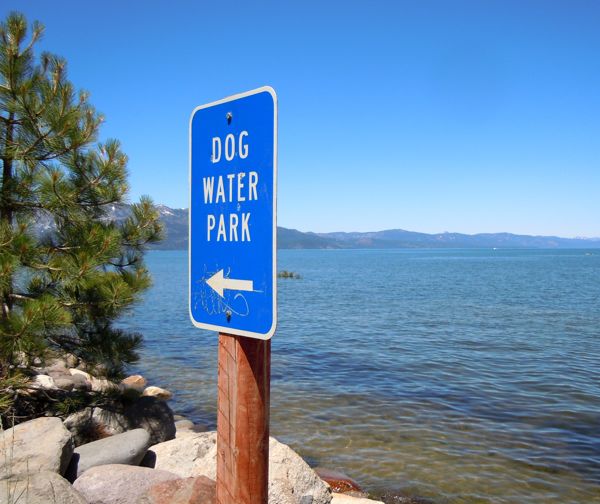
There is no sand for dogs to romp on at Regan Beach in South Lake Tahoe. Photo/LTN

There is no sand for dogs to romp on at Regan Beach in South Lake Tahoe. Photo/LTN

Rising waters have had beachgoers crowding onto smaller patches of sand all around the lake. Paul Mileo of Zephyr Cove Resort estimated there’s about 40 feet less beach than last summer.

Gradually, that situation will start to change as evaporation lowers the lake.

But not by much. Even on the hottest and windiest days, when evaporation levels are at their greatest, the lake will lower only by a quarter-inch or so per day, Wathen said.

How much the lake will lower before rain and snow start to raise levels again come winter is unknown and largely dependent on weather conditions. One projection by the Water Master’s Office suggests levels could drop about 1.5 feet between now and the end of the year.

That could expose a few more feet of beach, but maybe not before it’s too cold for beachgoers to notice.

On Tuesday, Tahoe’s water level was 6,229.41 feet above sea level — the same point it was at the previous two days, Wathen said. That’s only about 8 inches below Tahoe’s federally mandated legal limit and far above where lake levels sat prior to an epic winter.

Read the whole story


What classes would you like taught through Lake Tahoe Community College’s Community Education program?


Opinion: Using common sense in the woods

By John Heil

The national forests in California offer a variety of recreational opportunities and beauty. With the wonders of adventure, however, come certain hazards.

usfsThe most effective way to prevent mishaps is to adequately prepare for the trip. Knowledge of the area, weather, terrain, limitations of your body, plus a little common sense can help to ensure a safe and enjoyable trip. For example, be aware of hiking conditions.

If you plan to enjoy the rivers and streams, make sure you are aware of the depth and speed of the water.

Take care of yourself and your pets and be alert to changing conditions, wildlife habitat and any potential hazards.

Here are some further tips to assist you in having a safe and pleasurable visit to one of California’s 18 national forests.

* Travel with a companion. You don’t want to be by yourself in case of an emergency. Tell someone where and when you are going, when you expect to return, and how many individuals are in your party.

* Be in good physical condition. Set a comfortable pace as you hike. A group trip should be designed for the weakest member of the group.

* Stay hydrated. You, your children and your pets.

* Think about your footing while traveling near cliffs. Trees and bushes can’t always be trusted to hold you. Ensure you are on solid ground.

* Stay on developed trails or dry, solid rock areas with good footing. Wear appropriate clothing and footwear for the trail conditions and season.

* Check your equipment. Keep your equipment in good working order. Inspect it before your trip. Do not wait until you are at the trailhead.

* Be weather wise. Keep an eye on current and predicted weather conditions – for example, how hot it will be for the day. Know the signs for approaching storms or changing weather conditions. Avoid bare ridge tops, exposed places, lone trees, streams, and rocks during lightning storms. Find shelter in a densely forested area at a lower elevation. Even in the summer, exposure to wind and rain can result in hypothermia.

* Learn basic first aid so you will know how to identify and treat injuries and illnesses. Carry a first aid kit with you. Learn how to identify the symptoms of heat exhaustion, heat stroke, hypothermia, and dehydration, and know how to treat them.

* Make camp before dark. Traveling after darkness has resulted in many accidents from falls, so travel only during daylight. Set up camp well away from the edge of cliffs, and learn the terrain during daylight. If you have to leave camp after dark, stay in areas you have seen in daylight, go with a friend, and always use a good flashlight.

* Be alert for slippery areas and take your time to avoid tripping. Low-hanging branches and variable terrain makes running unsafe, and leaves can hide slippery areas underneath.

* Alcohol does not mix with cliffs or water play activities! If you drink, stay away from cliffs and from skilled water activities. Judgment, agility, and balance are all reduced by alcohol consumption.

* Think before you drink. No matter how clean or pure stream water looks, it’s likely to contain water-borne parasites and microorganisms that can cause discomfort and sometimes serious illness. Pack your water in, or purify through chemical treatment.

* Wildfires: Despite heavy precipitation in some parts of the state and late snowfall across the Sierra, forest visitors should not let their guard down for wildfires. As summer temperatures continue to dry out vegetation, the fire danger is increasing. Whether you’re car-camping or backpacking with a portable stove, know the local fire restrictions in the area in which you’re visiting.

* Campfires: In areas where open campfires are allowed, always make sure yours is completely extinguished before leaving. Drown your fire with water and stir it until it’s cold to the touch. Abandoned campfires are illegal and consistently rank as the number one cause of human-caused fires in California and the nation.

John Heil works for the U.S. Forest Service regional office in Vallejo.


Placer County campaign treasurer pleads guilty

By Cathy Locke, Sacramento Bee

Brian Jagger, who served as treasurer for Placer County District Attorney Scott Owens’ election campaign last year, pleaded guilty Monday to one count of wire fraud in a scheme to embezzle more than $20,000 from three campaign accounts of candidates who ran for political offices in Placer County in 2010.

Jagger, 32, of Roseville entered the plea in federal court in Sacramento.

The other two victims were county Auditor-Controller Katherine Martinis and county Supervisor Kirk Uhler, said Lt. Mark Reid, Placer County Sheriff’s Department spokesman.

According to court documents, Jagger worked for each candidate and had signature authority over each one’s campaign bank account.

Jagger used his position to convert their campaign funds to his own use, according to a federal Department of Justice news release.

Read the whole story


Youth poetry reading in Truckee

Adventure Risk Challenge’s annual benefit poetry reading and reception is 5:30pm Aug. 2 at the Cedar House Sport Hotel in Truckee.

Ten youth participants of ARC’s 40-day literacy and outdoor immersion program will recite their works at this event.

ARC’s interactive approach is rooted in rigorous academic instruction combined with outdoor education. Historically, summer program participants surpass their peers academically: 92 percent pass the California High School Exit Exam (compared to a 72 percent pass rate for socio-economically disadvantaged youth and 81 percent overall) and 77 percent attend a two or four-year college or university.

The reading and reception are free and open to the public.

Email Jen Gurecki at jgurecki@berkeley.edu or call (530) 416.5682 to RSVP.


Concert business on upswing after lackluster 2010

By Steve Jones, USA Today

In the first six months of 2011, total grosses for the top 100 North American tours was $1.12 billion. That’s up $157 million or 16.2% over the same period last year, according to Pollstar, which tracks the live music industry. The total number of tickets sold was 16.7 million, a 5.3 percent increase, but surprisingly, the average ticket price was up 10.2 percent, or $6.25, to a record $67.02.

Through the end of June, U2’s 360 tour was the runaway top moneymaker, raking in $85.8 million and selling 979,000 tickets to 14 North American stadium shows with an average gross of $7.8 million.

Pollstar editor Gary Bongiovanni says artists and promoters have helped the upturn by taking a more conservative approach in terms of venue size, frequency of return to certain markets and number of markets played. He says the higher prices weren’t expected coming off a year with lower grosses and ticket sales. But many of this year’s shows offer audiences good value for their dollars.

Read the whole story


S. Tahoe considers doing away with 3 fire division chief jobs

By Kathryn Reed

A fire department without upper management except for a chief who divides his time with the police department.

That is one scenario on the negotiating table in South Lake Tahoe.

sltfdThe city has a $1.5 million deficit gap to deal with before the next fiscal year begins Oct. 1. The reality is it must be closed in less than a month in order for staff to bring the budget to the City Council on Aug. 26. California cities must adopt a balanced budget.

In early spring when the council approved the five-year budget plan it included receiving concessions from the seven labor groups in the city to eliminate that $1.5 million from the books. The city wants to save $1 million in pension cost by having employees pay their share – 8 percent for non-sworn personnel and 9 percent for sworn. (Police officers currently pay 6 percent; all others have taxpayers foot the bill.) The city wants to save the other half million dollars by having employees pick up more of the health care premium costs.

Fairly regular meet-and-confer sessions between the city and bargaining units have been occurring, but not everyone is at the table to do the heavy lifting that is necessary for the budget to be balanced.

The only contract that expires at the end of this fiscal year is the General and Public Works group. However, serious negotiations are not slated to begin with that group until Aug. 12 because the union changed representatives. This gives both sides limited time to reach an agreement before the council gets involved.

Two of the six groups that have agreed to negotiate a year before their respective contracts expire are the fire unions. One represents management – or the three division chiefs; the other group includes everyone else. (The chief is not in a bargaining unit.)

At the meeting July 22 with the fire safety management group, the city floated the idea of eliminating all three of their positions.

“There are all sorts of reasons why that is monumentally a bad idea,” Ray Zachau, fire marshal and division chief, said. “People seem to have forgotten we live in a fire prone area.”

He said building inspections, fuels reduction projects and public safety would be at risk with no division chiefs on staff.

Zachau emphasized the three at his rank have agreed to the pension and health care benefit concessions the city has asked for, but they don’t understand the thought process in eliminating their jobs. This group doesn’t understand why when they’ve done what the city wants, they are being targeted for elimination.

The one known staffing change is Police Chief Brian Uhler will also oversee the fire department starting Sept. 1 when Fire Chief Lorenzo Gigliotti leaves.

Because of labor rules City Manager Tony O’Rourke is not allowed to discuss specifics about what is or isn’t being offered.

O’Rourke told Lake Tahoe News if all the groups don’t step up to the plate, jobs would be cut throughout the city. He has said this from the get-go, with the council knowing it would happen based on the five-year plan they adopted.

Just how many jobs and which ones would be eliminated if concessions are not made remains to be seen.

“Our single largest cost center is personnel. We will have no other choice but to reduce our staff,” O’Rourke said. “We are not going to raid the operating reserve.”

He said doing so to the tune of $5.2 million in the past was bad fiscal policy and allowed the city to not live within its means.

Compounding the problem is the city’s fiscal situation is worse than in March when the five-year plan was adopted because property tax values keep going down. That revenue stream is one of three key pieces for South Tahoe.

Fire management and city negotiators are scheduled to meet again Aug. 1.

As for the rest of the fire department, union representative Dan Sullivan did not return calls.

Labor and anti-trust laws prevent all of the city’s bargaining units from meeting as one to come up with a plan that would save jobs and help them negotiate as a whole.

At the Aug. 2 City Council meeting it’s possible the five will be faced with the decision whether to go to the voters about what to do regarding pensions for city employees. If voters have a say, it may not matter what is or isn’t negotiated.


Washoe County agrees to pay Incline residents tax refunds

By Susan Voyles, Reno Gazette-Journal

Washoe County Commissioners unanimously have agreed to pay 8,700 Incline Village homeowners court-ordered property tax refunds in a long-running battle that stems from prior rules used to judge Tahoe views and beaches.

But at the end of the discussion Tuesday night, County Commission Chairman John Breternitz said he is opposed to charging other taxing entities their share of $6 million of interest costs on those tax refunds.

And that vote to charge the others their share of the tax refund is required to be unanimous, setting up an interesting debate on who’s responsible for all that interest cost when then issue comes back for a vote on Sept. 13.

“From a moral standpoint, are we justified in doing that?” Breternitz said.

David Creekman, a chief deputy district attorney, said five other lawsuits pending by the Incline Village residents remain outstanding. A case before the Supreme Court filed in 2003 contends North Shore property values are pegged much higher than those at the lake in Douglas County, violating a constitutional requirement for fair and uniform taxes.

Creekman said that case has enormous fiscal impact if lost.

But the immediate question is paying roughly $40 million in taxes stemming from a lawsuit supported by the Village League to Save Incline Assets for the 2006-07 tax year.

Read the whole story


TY&FS fundraiser at Coyote Grill

Coyote Grill in Round Hill is hosting a fundraiser for Tahoe Youth & Family Services on July 28.

Proceeds from the chili feast from 5-8pm will go to the nonprofit.


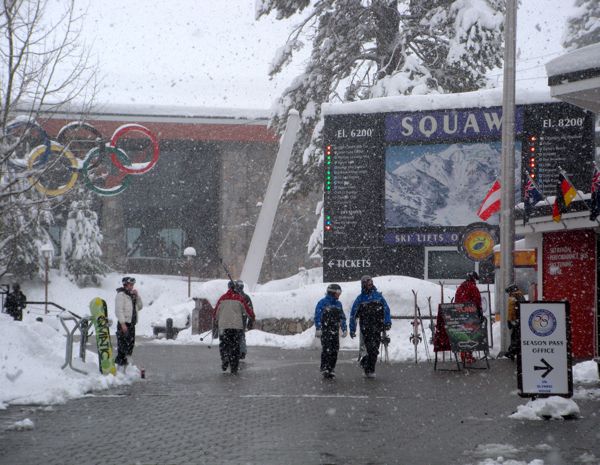
Squaw to spend $35 mil. in 2 years on upgrading resort

Squaw Valley expects to invest $15 million in the 2011-12 ski season. This is the first chunk of the $50 million that is planned to be spent in the next five years.

When KSL Capital Partners became only the second owners of the North Shore ski resort in November, the Colorado company promised an infusion of cash to upgrade the resort.

Terrain parks, while popular in the industry, have not been something Squaw has done much with. That is about to change this winter with a variety of small, medium and large features being installed.

Squaw Valley's village and mountain is about to undergo changes. Photo/LTN file

Squaw Valley's village and mountain are about to undergo changes. Photo/LTN file

The funitel stop at the top of the mountain will be upgraded to look like something other than a dungeon.

The Gold Coast area will host North America’s first ski-up coffee shop.

Signs will be added to make it easier for people to know where the are and how to get to where they want to go, along with real-time lift status boards. With this information comes revamped maps identifying before unnamed runs.

In the village, the Blue Coyote restaurant will be overhauled.

The KT-Sundeck will be completely redesigned. The entire deck will feature an indoor-outdoor bar. Other restaurants in the village will also undergo upgrades.

For beginners, the ski school is changing to focus on them.

A slopeside rental shop will open.

The bottom level of Squaw Valley’s Olympic House base lodge will be transformed into a day lodge and family recreation center.

Next to it will be the new sales and services center enabling skiers and riders to purchase lift tickets, season passes, activity products and sign up for snowsports lessons in one place.

“The removal of the resort’s ticket portals will eliminate the barrier between the village and the base area, creating a mountain ‘beachfront’ in the village providing enhanced views of Squaw Valley’s peaks,” CEO Andy Wirth said in a statement.

The following year the resort expects to spend $20 million in upgrades.

The most significant is adding two high-speed detachable lifts — one lift replacing Granite Chief and the other replacing the High Camp chairlift. The existing High Camp chairlift will be refurbished and reinstalled in a new location with improved alignment.

“These new lifts, slated to open for the 2012-13 winter season, will have an uphill capacity of 7,200 skiers per hour, allowing skiers and riders to spend less time on the lifts and more time on the mountain,” Wirth said.

— Lake Tahoe News staff report