Lack of money not stopping desire, regulations to improve Lake Tahoe’s famous clarity

By Kathryn Reed

HOMEWOOD – Money and cooperation were the overriding themes of the 15th annual Lake Tahoe Environmental Summit on Tuesday at Homewood Mountain Resort.

For the first time since then-President Bill Clinton started these summits, the governors of California and Nevada attended the event. But it was Sen. Dean Heller, R-Nev., who was the only speaker to have his speech interrupted by applause.

His desire to turn a greater amount of the regulatory control in the Lake Tahoe Basin over to the five counties and one city was met with strong approval by the few hundred people in attendance.

Govs. Brian Sandoval and Jerry Brown pledge to work together on Lake Tahoe issues. Photos/Kathryn Reed

Govs. Brian Sandoval and Jerry Brown pledge to work together on Lake Tahoe issues. Photos/Kathryn Reed

Heller and others spoke of the need for TRPA’s Regional Plan to meet its latest deadline of December 2012 for approval by the Governing Board.

A meeting on Monday between Govs. Jerry Brown and Brian Sandoval sparked a mutual desire to travel to each others respective capitals to further the dialog about Nevada Senate Bill 271 and getting the Tahoe Regional Planning Agency to function better.

(Sandoval and Heller are former TRPA board members.)

“We need a road map and certainty about what is going to happen at this lake,” Sen. Dianne Feinstein, D-Calif., said in reference to the need for the Regional Plan update’s completion.

Eye on sediment

While much was made of the need to reduce fine sediment from reaching the lake, the irony is all those people listening to the politicians on stage were sitting in fine sediment, stirring it up as they walked on the lower ski slope – which is on the other side of Highway 89 directly across from the very waters they are trying to protect.

At the summit, Brown and Sandoval, with Jared Blumenfeld, administrator for the EPA’s Pacific Southwest Region, signed the Total Maximum Daily Load document, which has a goal to substantially improve lake clarity.

The federally mandated and unfunded program says that in 65 years the white dinner plate-looking Secchi disc will be visible to a depth of 100 feet. Right now it can be seen at 64.4 feet.

In this year that saw the lake rise 3 feet from runoff, it declined in clarity by the same amount.

On the California side it’s Lahontan Regional Water Quality Control Board that oversees the TMDL, while it’s the Nevada Division of Environmental Protection on the other side of the lake.

“Ten years ago people thought Lake Tahoe’s loss of blue was because of algae. It’s about 25 percent of the problem,” Blumenfeld said. “The rest of the problem is sediment. Science has given us a road map. I like to call it a diet for Lake Tahoe.”

While Sandoval singled out the Sierra Colina project in Stateline being an example of a private entity working on eliminating 74 tons of sediment from reaching the lake each year via the project in and around Burke Creek, he skirted around the greater problem with that project in that it is held up in litigation.

Brown said, “The lake stands as a microcosm of the larger issues we face.”

He said it’s time builders and environmentalists get together to find a way to sustain the region economically and environmentally.

Where’s the money?

The problem is no one had definitive answers how to pay for that diet of reducing fine sediment reaching Lake Tahoe. Everyone talked about a greater need for cooperation, for there to be less reliance on the federal government, and a greater need for private entities to step forward.

One source of money will be the Tahoe Fund. A Monday night fundraising dinner brought in $200,000. While it’s a start, it’s a drop in the bucket – especially when one considers it costs nearly $2 million to build one mile of bike trail in the basin. And these trails are viewed as a means to reduce sediment by getting cars off the road.

Another $34 million from Southern Nevada Public Lands Management Act money has been allocated for Lake Tahoe. But that source is also drying up.

While $1.5 billion has been spent in the last 10 years on projects designed to improve lake clarity, where the money will come from in the future is an unknown.

The Lake Tahoe Restoration Act has not be reauthorized, though Sen. Harry Reid, D-Nev., is confident is will pass. He was confident last year, too, and Congress didn’t give the green light.

“We need to adapt to a new fiscal reality,” Feinstein said.

While that is true, no one is openly speaking about adapting to a possible new reality if Lake Tahoe’s clarity doesn’t improve and what that means for the eco-system as well as economy via tourists not wanting to see another brown lake.

ngg_shortcode_0_placeholder (Click on photos to enlarge.)


Writers in the Woods lineup released for Sierra Nevada College

Sierra Nevada College’s Writers in the Woods 2011 features readings and workshops by a cast of luminary literati.

Maine’s Poet Laureate Baron Wormser will kick off the series with poetry reading Sept. 16, followed by a Saturday morning poetry workshop the next day.

Kim Wyatt, writer, publisher, founder of Bona Fide Books publishing, will talk about entrepreneurship and book publishing on Oct 14, followed by a workshop on how to submit work for publication on Sept. 15.

Chris Ware, award-winning graphic novelist, cartoonist and author of “Jimmy Corrigan: The Smartest Kid on Earth,” will talk about the graphic novel as a literary genre on Nov. 4, followed by a workshop focused on experimenting with this form on Nov. 5.

Author Suzanne Roberts joins Sierra Nevada College as the Writer in Residence for 2011 and will teach poetry and travel writing classes at SNC as part of the regular curriculum.

Workshops are open to the community for a $50 registration fee, and may be taken for credit or non-credit. The Friday night readings remain free and open to all.


Landmark case could redefine mortgage mediation in Nevada

By Jason Hildago, Reno Gazette-Journal

Is Nevada’s Foreclosure Mediation Program unconstitutional?

That’s the $64,000 question in a brewing legal battle that’s poised to redefine the foreclosure mediation process in the Silver State.

The battleground is the Nevada Supreme Court, where “Wells Fargo Bank vs. Renslow” now is working its way through the system.

The case was kicked up to the state’s high court after Judge Patrick Flanagan of Washoe County’s Second Judicial District Court ruled against Wells Fargo and modified the mortgage of a Reno couple, Duke and Tina Renslow, earlier this year.

Created by the Nevada Legislature in 2009, the Foreclosure Mediation Program allows homeowners who receive a notice of default to seek a one-on-one meeting with their lender in front of a neutral mediator for a potential loan modification. The law requires lenders to negotiate in good faith or face sanctions.

The Renslow case is the first time that a Nevada District Court judge has exercised the provision in the program that allows courts to modify the terms of a mortgage when lenders or servicers negotiate in bad faith.

Flanagan declined to comment because the Renslow case is pending before the Nevada Supreme Court. But according to a court docket acquired by the Reno Gazette-Journal, Flanagan cited Wells Fargo’s egregious conduct in dealing with the Renslows as the prime reason for his ruling.

Now, Wells Fargo is appealing the decision with the Nevada Supreme Court, alleging that Flanagan’s modification of the Renslow mortgage — along with the entire Nevada Foreclosure Mediation Program — is unconstitutional.

Regardless of how the Nevada Supreme Court rules, the case will be a game-changer said legal experts such as Geoffrey Giles, a Reno lawyer with extensive experience in foreclosure cases. It also could mean a potential tipping of the scales for a system that has been criticized as being more favorable toward banks.

Read the whole story


Forest fuels reduction work in Rubicon Bay area

U.S. Forest Service fuels management crews are scheduled to resume prescribed fire operations in the Rubicon Bay area Aug. 17.

usfsOperations are expected to continue through the week. All prescribed fire operations are dependent on weather and available staffing.

Residents and visitors can expect to see smoke from prescribed fire project areas and smoke may be visible from Highway 89. Forest Service prescribed fire managers expect good dispersion of smoke based on predicted weather. Smoke management is part of every prescribed fire burn plan, and efforts are taken to reduce actual or potential smoke impacts on community areas.

This and other prescribed fire projects are designed to reduce wildfire risks to communities and critical resources.

State and local fire management agencies may also be conducting prescribed fire work during this period.


Yoga on the beach

Free yoga on Nevada Beach on Aug. 26 from 5:30-6:30pm, followed by a pot luck, wine and snacks.

This is put on by Svadhyaya Yoga Studio.

Donations will be accepted.


Fire Fest on the South Shore

Fire Fest 2011 is Sept. 24 from 10am to 3pm at Lake Tahoe Airport.


White signs with Vail; Northstar to be home resort

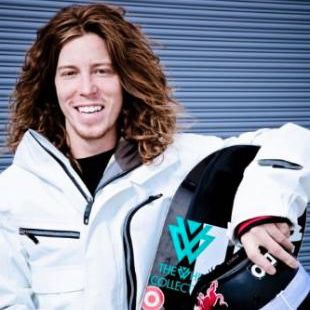
Two-time Olympic gold medalist, professional snowboarder and skateboarder Shaun White has signed a multi-year deal to represent Vail Resorts’ six mountains.

Northstar-at-Tahoe will become his home mountain and primary training site. He plans to design a 22-foot halfpipe for aspiring snowboarders.

As part of the launch of the new relationship, Vail Resorts will donate $5 for each Epic Season Pass sold to White’s chosen charity, St. Jude

Shaun White

Shaun White

Children’s Research Hospital. In addition, White will be designing a limited edition Epic Season Pass, which will be available to Epic Season Pass holders this fall through a Facebook promotion.

White was recently honored with the 2011 ESPY for “Male Action Sports Athlete” for the fourth consecutive year.

— Lake Tahoe News staff report


Yosemite deaths: Americans may have lost respect for nature’s risks

By Matt Weiser, Sacramento Bee

YOSEMITE NATIONAL PARK – Just three weeks after death laid a heavy hand on the Merced River, sweeping three tourists to their deaths over Vernal Fall, life went on for a new crop of visitors, some of them oblivious to the danger before them.

On Wednesday, children waded in a small eddy just 50 yards from the edge. Some playfully teetered on a log that separated the eddy from the river’s torrent. Upstream, a man swam across Emerald Pool and back, crossing the Merced River current and ignoring warnings and prohibitions posted nearby.

It was just another summer day at Yosemite, one of many natural wonders in California that routinely tempt people to toy with danger.

The park has seen 14 deaths this year. That is about double the average for the season, but not record-setting.

There have been dozens of other deaths across the state, including ski and snowboarding fatalities during the winter, and numerous drownings in the months since, including two professional kayakers killed separately on remote Sierra Nevada creeks in recent weeks.

It is the kind of year that causes experts and casual hikers alike to question their relationship with nature. Are we underestimating the risks of commonplace outdoor recreation? Have modern Americans – taskmasters behind a steering wheel and in front of a computer – simply lost respect for nature’s whims?

Read the whole story


Meetings set to decide projects for Tahoe National Forest

By Barbara Barte Osborn, Sacramento Bee

A bi-county advisory committee for the Tahoe National Forest has scheduled three meetings in September to discuss funding for projects that will benefit the forest.

The Nevada/Placer County Resource Advisory Committee has approximately $300,000 to allocate for projects in those two counties.

The purpose of the meetings is to review and vote on previously submitted projects that the committee will then recommend for funding.

Read the whole story


The truth about pain: It’s in your head

By David Epstein, Sports Illustrated

Cross-country skiing around a wide, icy curve, Petra Majdič slid off the course during a warmup for last year’s Olympic women’s individual sprint at Whistler Olympic Park outside Vancouver. She fell 10 feet into a craggy creek bed, her chest hitting rocks. The impact snapped her ski poles and splintered the tip of one ski.

When volunteers rushed to her aid, she screamed at them to take her to the start of the qualifying heats, which began in 20 minutes. Her coach, Ivan Hudac, and her sports psychologist, Matej Tušak, told her she could attempt to ski, and if the pain was too great, she could drop out. And so she tried. Majdič completed the 1.4-kilometer course, finishing 19th of 30 qualifiers, before collapsing and screaming in pain. She still had three more rounds of races to go.

Majdič, a 31-year-old from Slovenia, had come into the one-day competition as the favorite. She was expected to win several medals in Vancouver. Four years earlier an equipment mishap—she used cold-weather skis on an unexpectedly warm day—had kept her from a medal in Turin. Now her Olympic dream would come down to how much pain she could tolerate over the next five hours.

After the qualifier, Majdič was taken to an on-site medical tent for an ultrasound. If her ribs were broken, she wouldn’t continue. The excruciating pain from snapped ribs can stop even the toughest athletes, and perhaps no sport puts more strain on the body’s core than cross-country skiing. If it was only pain, though, maybe Majdič could go. For the last two decades she had spent hour after hour trudging through snowy woods, her legs and lungs burning, forging a relationship with pain. “The beauteous things in life are born from pain,” she says. “For example, a child is born from great pain. In summer, in autumn, in winter, I struggle with pain, so my pain level is really [high].” In 2008, when her boyfriend of six years couldn’t understand her obsessive training any longer, she chose skiing, her first love, and that too hurt. Now, in Vancouver, she couldn’t give in to “just pain.” With the quarterfinal heat less than 90 minutes away, doctors didn’t have much time to assess her condition. On the ultrasound, nothing appeared to be broken. It’s just pain, the team doctor told her.

Majdič won her quarterfinal race, but afterward, ashen and hunched, she told Hudac she couldn’t go on. It felt, as Majdič later put it, “like when somebody would all the time give you a knife” in your chest.

“She had a crisis,” said Tušak. “We tested her, and she could not go five meters up a hill and turn around. She could not sit, so she was lying down, and when she stood up she was [hunched over]. But doctors told us nothing is broken, and I told Ivan, if nothing is broken, we go on. If we let her quit, she will be mad at us. This is her last chance to get a medal.”

So Majdič continued. For the semifinals, her coaches again told her just to try. She finished fourth out of five in her heat but, based on time, qualified for the six-woman final.

During the 20 minutes between the semifinal and final, the pain got still worse. Majdič could hear a gruesome click, click in her chest—her ribs moving. “That’s when I know it was something serious,” Majdič says. She couldn’t take an injection of painkiller, though, because it would numb the muscles she needed to race. Tušak talked to her about Kerri Strug, the U.S. gymnast famous for her gold-medal-clinching vault on an injured ankle at the 1996 Olympics, and about Majdič’s 22 years of sacrifice. He reminded her that her arms and legs were still working. He talked to her about the pain she was feeling. He convinced her that it was in her head.

“I had a great team—coach, doctor, a [ski] service team,” Majdič says. “You have to understand, these are people who are coming from the same [country] as I do. We were just always poor in the cross-country skiing world. Now for four years when I’m on top, we are showing the world, don’t joke with small nations because we can beat you!”

In the final Majdič started outside but pushed through and finished third, fending off Anna Olsson of Sweden for the bronze. Five hours of pain had ended in Slovenia’s first medal in cross-country skiing.

Read the whole story