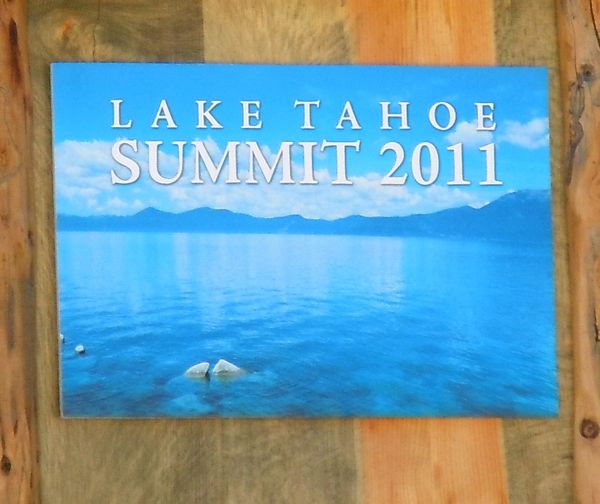
South Tahoe police increase DUI enforcement

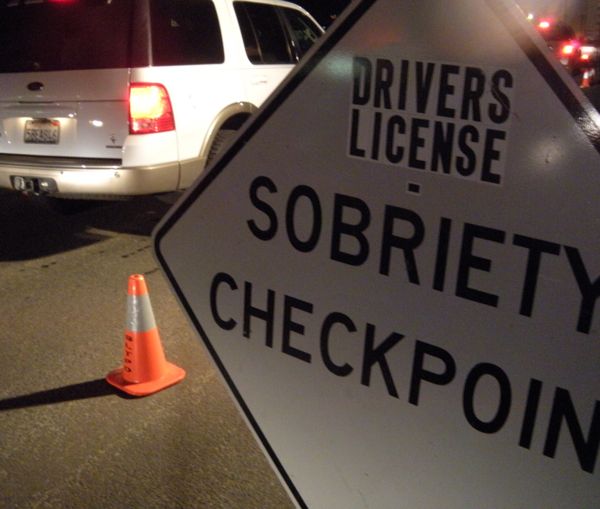
Avoid the 6 El Dorado County DUI Task Force will join nearly 10,000 other law enforcement agencies nationwide in support of an intensive crackdown on impaired driving Aug. 19–Sept. 5, known as “Drive Sober or Get Pulled Over.”

DUI-driver’s license checkpoints, multi-agency DUI task force deployments and local roving DUI patrols are schedule locally in partnership with law enforcement nationwide during the summer-Labor Day campaign.

duiImpaired driving is a serious crime. In 2009, 10,839 people died in crashes in which a driver or motorcycle rider was at or above the legal limit, according to the National Highway Traffic Safety Administration. The age group with the highest percentage of alcohol-impaired-driving fatalities in motor vehicle traffic crashes was the 21-24.

“All too often, innocent, law-abiding people suffer tragic consequences and the loss of loved ones due to this careless disregard for human life. Because we’re committed to ending the carnage, we’re intensifying enforcement during the crackdown. Since twice as many alcohol-impaired accidents occur over the weekend and four times as many occur at night, we will be especially vigilant during these high-risk times when impaired drivers are most likely to be on our roads,” South Lake Tahoe police Sgt. Shannon Laney said in a statement.

Violators will face jail time, loss of their driver’s license, or being sentenced to use ignition interlocks.

The program is funded by the California Office of Traffic Safety.


Snippets about Lake Tahoe

fireworks• Fireworks on the South Shore start at 8:30pm on Sept. 4.

• Lake Tahoe – both ends – are working together again to be part of the 2012 Tour de California cycling event that almost started on the South Shore this year.

• Eppic Studios, a media production company providing marketing, mobile media, and motion picture production services, is open in Incline Village.

• In the 60-plus degree waters of Lake Tahoe on Aug. 14, Dave Van Mouwerick of San Luis Obispo became the 19th person to swim the 21.2-mile length of the lake.

• Great Basin Brewing Co. of Sparks is selling its Ichthyosaur India Pale Ale at stores in the Reno-Sparks area.


Opinion: The bicycle is the vehicle to transform a community

Publisher’s note: The following is Ty Polastri’s speech from the Aug. 16, 2011, environmental summit at Homewood.

By Ty Polastri

How many of you have ever ridden a bicycle?

How many continue to ride today?

The No. 1 reason people no longer ride is because they don’t feel safe. They don’t feel safe riding a bicycle to work, school, running errands or going to the beach out of fear they will be injured from an automobile.

And we need to change that.

From 2005-07, over 2000 residents took magic markers to aerial photos and laid out the communities they would like to see during the lt summitplaced-based workshops of Pathways 2007 – the outcome from that process was a consensus for a more people-centric, multi-modal, and sustainable community.
What is people centric?

The way I look at it is when people ride their bike or walk they become more intimate with their surroundings:

• They become more aware of the air they breathe

• They make eye contact and connect with one another

• They move their bodies and happy neurotransmitters are released

• They see businesses for the first time and stop to shop, eat or drink.

• It’s a slower pace that allows the world to penetrate us.

How do we plan a more people centric community?

One way is to begin changing the context of how we see the downtown. What if we saw the roadway as a life-way, and the life-way as an avenue for livability? From this context we begin looking beyond the limits of the curbs and see the streetscape full of people, businesses, schools, parks and residences. There are children at play, adults at work, shoppers strolling, and elderly and the disabled moving with ease and safety. The streets are a streetscape of aliveness full of vitality and commerce, rich in color and texture, with places for people to commune with nature and each other.

Another way is at the planning table with highway engineers, behaviorists, economic development specialists and local government representatives speaking about the uses of the buildings on the streetscape and reframing the design parameters to include a more humanistic approach to the mobility of people, goods and services.

For example, an area of the streetscape has several restaurants, wouldn’t it be cool to provide space so they could set up sidewalk dinning. Or another section of the streetscape has a senior’s housing complex. We will need to consider their needs as for some of them may be hearing, sight and mobility impaired. We may need to design their streetscape to aid their safe mobility and use of public transit. What if a vacant lot was turned into a public meeting place with benches and landscaping that could provide a convenient time out from our busy lives.

When we begin to look at people’s needs and activities, and the uses of the buildings on the streetscape, we begin re-humanizing ourselves and we set the stage for reclaiming our community where the automobile no longer is the dominate user of the streetscape – but rather one element of a more multi-modal mobility plan.

Another phrase that is being used to describe this streetscape is complete streets.

Complete streets are consistent with the Tahoe Regional Planning Compact mandate to reduce dependency on the automobile and green house gas emissions, meets Pathways 2007 thresholds, the Prosperity Plan, and is under mandate by the state of California.

We know what needs to be done.

We need leadership and collaboration among federal, state, local agencies and the private sector to work together to co-design our communities, develop cost effective investment strategies, and efficient policies that enable us to begin reshaping our communities for the 50 million California residents who will descend upon us in the coming decades — with the intent of restoring their spirits, reconnecting with family and friends, and giving a go at a new challenge that may include of biking, skiing, hiking, shopping, and all the other activities that make up the Tahoe Lifestyle.

So, you see it’s not really about the bicycle alone.

But when a community accommodates for the bicycle it becomes the vehicle that sets in motion a transformation for accommodating all users on the streetscape, and sends a clear message that we care about the long-term health of our communities, the environment and the economy.

At the Lake Tahoe Bicycle Coalition we are doing our part to help promote, educate and move toward a more livable and sustainable Lake Tahoe.

Ride with us as we move to restore the heart, vitality and safety of our communities for generations to come.

Thank you.

Ty Polastri is president of the Lake Tahoe Bicycle Coalition.


School is about to start. What advice do you have for K-12 students?


Green lodging conference returns to South Lake Tahoe

Roxanna Lopez, operations manager in the U.S. for Green Key Global, will give one of the main talks at the 2nd Annual West Coast Green Lodging Conference in South Lake Tahoe Aug. 21-24.

She will address the gathering of hotel owners, general managers and engineers on Aug. 22 at 3:30pm at Embassy Suites.

Lopez will present the nuts and bolts of third-party certification for the lodging industry, with a focus on how it serves the day-to-day operational needs of properties at various stages of their particular “green” journey.

Green Key Global, the leading green hotel certification program in the world, with more than 2,700 hotel members.

In addition to Lopez, the conference will feature presentations from representatives of Marriott International, U.S. Environmental Protection Agency and W Hotels.

For more information about the conference or to register, call (775) 265.8815.


Mother Goose is on the Loose at South Tahoe library

Mother Goose on the Loose Storytime is Thursdays at 11am on Sept. 8, 15, 22, 29; Oct. 6, 13, 20, 27; Nov. 3, 10, 17; Dec. 1 and 8.

A lap sit storytime for little ones upt to age 2.

Mother Goose on the Loose is an award-winning program that combines music, movement, visual literacy and language development to help children get ready to read.

Storytime is at the South Lake Tahoe branch library – 1000 Rufus Allen Blvd.


Prosthetics blur line between disabled and able-bodied athletes

By Alexander Wolff, Sports Illustrated

Examine what military tacticians call the tip of the spear—the leading force in combat—and you’re liable to find 1st Lieut. Melissa Stockwell, U.S. Army (ret.). It’s a role she has embraced since April 2004, when a roadside bomb in Baghdad blasted off all but six inches of her left leg and made her the first female American amputee of the Iraq war. Four years later, as a swimmer, she became the first veteran of that conflict to qualify for the Paralympic Games. Now, having just passed her board exams to become a certified prosthetist, she figures to be a very busy woman, spearheading yet another movement.

Stockwell leads a generation of disabled veterans of the Afghanistan and Iraq wars who are becoming elite athletes. The combined number of vets on the U.S. teams at the 2008 Summer and ’10 Winter Paralympics jumped to 21 from a total of seven at the previous Games, in Athens and Turin. At next year’s London Paralympics, U.S. officials estimate that 20% of Team USA will be composed of veterans. That infusion has helped the U.S. creep up in the medal count, from fifth to fourth to third, over the last three Summer Paralympics.

Stockwell’s cohort stands poised to deliver more than medals, however. It’s the vanguard of a revolution in attitudes toward people with disabilities. “My prosthetic is definitely a badge of honor,” says Stockwell. “I’ll walk around in shorts and flip-flops.” At the same time, tens of millions of dollars from the departments of Defense and Veterans Affairs are funding advances in prosthetic technology so profound that they raise essential questions about what it means to be human.

To meet the growing demand from wounded warriors, the U.S. Olympic Committee is disbursing $7.5 million donated by the VA to help not only veterans but also active-duty soldiers. Since 2004 U.S. Paralympics has been hosting military sports camps to enhance the rehabilitation of veterans and active service members with disabilities. Meanwhile the USOC and the DOD are ramping up events such as the Warrior Games, which were staged for the second time, in May, in Colorado Springs, with 200 physically impaired vets and soldiers competing in seven sports.

People who work with them agree that soldiers are athletes to begin with, and injured ones are like any jock aching to get off the DL. “It’s amazing how many say to me, ‘I’m going to be your best patient,'” says Peter Harsch, director of prosthetics at the San Diego Naval Medical Center. “Their driving force is, Number 1, to get back to their division or squad. But then, this is a military where everyone had a choice whether to go into it.” (As many as 18 percent of amputees return to active duty, most of them to noncombat jobs.)

When Stockwell arrived at Walter Reed Army Medical Center in Washington, D.C., her very survival still hung in the balance. After 15 operations, 20 blood transfusions and a series of infections, she was turned over to Walter Reed’s therapists. “I looked around and saw people missing two, three and four limbs, people with traumatic brain injury and lost eyesight,” says Stockwell, who had been a rower and diver at Colorado. “It motivates and inspires.” After one year at Walter Reed and two more dedicated to swimming, she was still a long shot at the 2008 U.S. Paralympic trials, yet she lopped a staggering 17 seconds off her previous best in the 400-meter freestyle to make the team. (She did not medal in Beijing but carried the U.S. flag at the closing ceremonies.) Now a paratriathlete, Stockwell won gold in the severe leg impairment category last September at the world championships in Budapest. “I’ve done more with one leg,” she says, “than I ever would have done with two.”

Read the whole story


Evacuations in Douglas County as fire spreads

By Reno Gazette-Journal

The Ray May Fire near Gardnerville has burned close to 2,000 acres and has necessitated some people be evacuated.

The neighborhood near the wildfire was dark Tuesday night as crews turned off electricity and propane as a precaution.

Douglas County sheriff’s Capt. John Milby said though the fire is primarily threatening Pine View Estates, authorities were also keeping an eye on the Pine Nut No. 2 subdivision about five miles to the north.

At 9:10pm about 75 voluntary evacuations were in place for neighborhood near the Douglas County wildfire.

Read the whole story


Invasive smallmouth bass gain foothold in Lake Tahoe

By Matt Weiser, Sacramento Bee

Invasive smallmouth bass have become established in Lake Tahoe, posing what researchers call a “much more ferocious threat” to native fish than anything that has come before.

“We’ve had reports of smallmouth bass before, but now we’ve 100-percent confirmed its presence in Lake Tahoe,” said Kevin Thomas, environmental scientist at the California Department of Fish and Game. “The population could explode and put more stress on the native fish.”

The finding was announced Monday by the University of Nevada, Reno. It came during a UNR project with Fish and Game and the U.S. Fish and Wildlife Service, which removed 5,000 invasive fish from the near-shore aquatic zone.

Read the whole story


Learn how to start a business

As part of its Chamber EDucation program, the North Lake Tahoe Chamber of Commerce in partnership with the Sierra Economic Development Corporation is hosting a How to Start a Business workshop on Aug. 25 from noon to 1:30pm at the Mark Twain Cultural Center, 760 Mays Blvd., Ste. 10 in Incline Village. Deadline to register is Aug. 19.

This workshop, taught by Brent Smith of the Sierra Economic Development Corporation, will assist attendees in minimizing their risks and walk them through the steps in the business start-up process. They’ll also learn about free resources.

The cost is $55/person (payable in advance by mail or credit card), and participants need to bring their own lunch. To register, call the Sierra Economic Development Corporation at (530) 823.4703 or email info@sedcorp.biz. This class will also be repeated Sept. 23 in Tahoe City at the Tahoe City Public Utility District and Oct. 13 in Tahoe Vista at Mourelatos Lakeshore Resort.