Opinion: Setting the facts straight about public beach in Tahoe

By Janet McDougall

I read the recent article “Law of the Sand – Rules governing public access to Tahoe shore murky at best” that recently appeared in the Tahoe Daily Tribune and found myself deeply frustrated. I immediately sent a letter to the editor of the Tribune attempting to clear up several factual problems with the story and have not received a response, nor have they printed my letter so I am instead writing to the Lake Tahoe News, since I know Kae cares about facts and will help to set the story straight.

The beach at the Tahoe Beach and Ski Club is a public beach.

As part of the agreement to allow the developer of Tahoe Beach and Ski Club to build, he was required to convey to the city public beach rights and limited parking for beach users. Over the years the timeshare owners at the property have discouraged the public from using the area. Unfortunately, the primary access easement and parking area were eliminated in a land swap with the Redevelopment Agency that allowed Tahoe Beach and Ski to install required drainage improvements on site. Tahoe Beach and Ski management agreed to allow the public to access the area through another ingress/egress point, but over time, that understanding has apparently been eroded. The public access rights to the beach remain, so anyone accessing the beach from the Ski Run Marina area is not trespassing.

The deeds conveying ownership in the timeshare intervals include language clearly stating that the public has the right to use the beach, but owners and management at Tahoe Beach and Ski disregard this information, since it runs counter to their desire to ultimately have the beach regarded as private.

A check of the county Recorder’s Office records and the city Planning Department street file for the Tahoe Beach and Ski Club property will reveal that the public continues to have the right to use the beach. It is my hope that this issue is ultimately brought to the forefront to ensure the public is no longer ejected from beach areas it rightfully owns.

The city should erect a sign at the entrance point to the area to indicate it is public, that the public should be respectful of the boundaries of the public area, and that if the public is denied access they should immediately contact the police department, with the phone number clearly posted. The beach behind Timber Cove Lodge is also a public beach; locals and visitors should also feel free to utilize that area for their enjoyment.

If the Tahoe Beach and Ski Club continues to prevent the public from using public land, the police department should make contact and educate those who are the real offending parties — not people like Todd Snider and his family who had every right to be on the beach.

Locals, be sure to make it a point to visit the beach and assert your rights of use. And if the Tahoe Beach and Ski Club continues to eject the public from land the public has the right to enjoy, they should be made to pay the city the fair market value of the beach rights – we all know the city could use the money to help defray the costs of badly needed road repair.

Janet McDougall was a legal analyst in the city attorney’s office for 13 of the 17 years she worked for South Lake Tahoe.
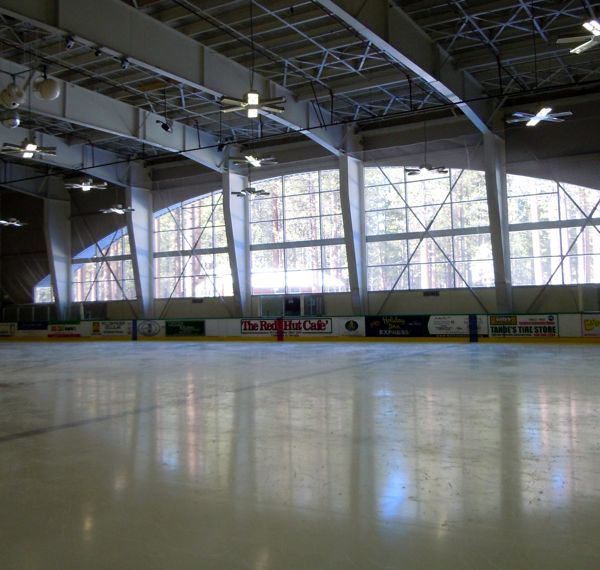



Measure S bonds to be resold to accommodate South Lake Tahoe ice rink privatization

By Kathryn Reed

Measure S bonds are going from tax-exempt status to taxable. At least that is what South Lake Tahoe wants done with them.

But the city is just one-third of the equation. The joint powers authority that oversees the voter approved recreation measure must vote on the change for it to go forward. It’s not known if the El Dorado County Board of Supervisors and Tahoe Paradise Park board as the other members of the JPA need to individually agree to the change.

“I don’t know enough of the details to be able to comment on it,” El Dorado Supervisor Norma Santiago told Lake Tahoe News on Tuesday night. She is also chairwoman of the JPA.

ice rink

Private operators are about to benefit from a taxpayer funded ice rink in South Lake Tahoe. Photo/LTN file

She said she plans to talk to Councilwoman Claire Fortier at today’s TRPA meeting – they are Governing Board members – to find out what is going on.

What is going on is the city needs to change the bonds to accommodate the IRS when it comes to having a private operator who wants to make a profit run the city-owned ice rink.

The status quo could prevail if the operators didn’t intend to make money – some to be reinvested in the property and some for themselves.

The issue is that ice rink was built with Measure S money.

The bond money is one big pot – same with the debt, according to JPA administrator John Upton. It’s not like the ice rink is paid for or has a precise number of dollars still owed. In total about $4.5 million is still outstanding, though a payment of about $140,000 on the principal is slated for Sept. 1.

IRS rules state private entities cannot make money off tax-exempt bonds. When Measure S was approved by voters who encompass the same boundaries of Lake Tahoe Unified School District it was envisioned the ice rink would always be run by South Lake Tahoe.

With the rink losing more than $100,000 a year, the City Council on July 12 voted to turn the operation over to Tahoe Sports Entertainment.  At that time it was not known the bond structure would be an issue.

At the Aug. 23 council meeting the five, with little discussion, agreed to go forward with changing the bonds.

City Attorney Patrick Enright told Lake Tahoe News after the meeting there is no downside in doing this, especially with interest rates so low.

Taxpayers will not see any changes to their $18 annual assessment on their property tax bill.

Upton, the lone paid staff member to the recreation JPA, said Tuesday night, if the debt payment schedule is higher than it is now, the city would incur those costs.

What happens is the current bondholders will be paid back. To do so prior to Sept. 1, 2012, there is a $37,500 penalty. This could be absorbed with the refinancing, according to Upton, or could be paid by the city.

Then new bonds are sold for the outstanding amount.

In the interim, an addendum to the agreement between the city and Tahoe Sports Entertainment that was sealed Aug. 23 calls for the latter to be able to take over the rink operations by the end of the week. The IRS grants a waiver that is good for 50 days.

Upton said all of the likely changes pose no threat to Measure R; the Nov. 8 ballot proposal that would redefine how the recreation funds can be spent.

In other action at the Aug. 23 council meeting:

• After much back and forth, on a 3-2 vote the ordinance governing medical marijuana dispensaries passed the first reading. Councilmembers Bruce Grego and Angela Swanson were the dissenters. It comes back for a final vote Sept. 13, with it taking effect one month after that.

On a side note, it was disclosed that no one has applied for a residential grow permit – which is necessary to have starting in December.

El Dorado County is investigating creating an ordinance that mirrors South Lake Tahoe’s.

• It was agreed a letter would be written in support of bringing the Tour de California cycling event back to the South Shore in 2012. Tour officials are expected to name host cities in October.

• Wood Rodgers Inc. is not going to receive $67,000 for work done because the council is fed up with bills presented after the fact and not being notified by staff of overcharges by contractors or professional service providers.


Embattled Placerville mayor stripped of his title

By Peter Hecht, Sacramento Bee

Placerville Mayor David Machado, facing a political scandal and criminal charges over an alleged cover-up of his property dealings, was stripped of his title Tuesday night in a unanimous vote of his City Council colleagues.

The embattled Machado was not the Placerville Town Hall as the other four members voted to dismiss him from his mayoral duties and also passed a separate, non-binding resolution urging him to take an extended leave of absence from his seat on the city council.

“Dave Machado has worked hard for this city and has made many contributions – and he has allegedly made some appalling mistakes, which he will answer for in a court of law,” said Wendy Mattson, a council colleague. “Our work is to regroup, pull together and get back to the business of the city.”

Machado, 53, was arrested last week for investigation of felony perjury and conspiracy after the El Dorado County District Attorney’s Office filed a criminal complaint accusing him of 30 “overt acts” of misconduct.

Read the whole story


Erosion issues from Douglas County fire concern officials

By Jeff Delong, Reno Gazette-Journal

As crews mop up smoldering terrain torched by one of this summer’s largest wildfires, experts are readying efforts to prevent erosion and restore a charred landscape.

More than 3,800 acres — roughly six-square miles — were burned by the Ray May Fire in southern Douglas County.

It’s a checkerboard of remote and rugged land owned by the U.S. Bureau of Land Management, Bureau of Indian Affairs and private property owners.

“We’ll determine the severity of the fire and brainstorm what needs to be done,” said Alan Bittner, a supervisory natural resource specialist with the BLM, the largest landowner in the fire area.

An early priority will be controlling erosion in the fire area — much of which is particularly steep — during the coming rainy season. Re-seeding burned areas in the fall will likely be a major focus of that effort.

“I know that’s one of our concerns — erosion,” Bittner said. “If we need to keep soil from hitting ( U.S. highway) 395, that would be more of an immediate thing.”

Crews are still digging fire lines around some isolated parts of the fire. Once it is declared 100 percent contained, the BLM has seven days to submit an emergency erosion control plan. A longer-term restoration strategy is required within 21 days, Bittner said.

“What we’ve got to figure out is where it burned hot. From there we’ll determine treatment,” Bittner said.

The BLM will discuss fire restoration needs with the Bureau of Indian Affairs, the Washoe Tribe, Douglas County and other stakeholders, Bittner said.

Read the whole story


Book publisher speaks at South Tahoe library

Meyers publisher and editor, Kim Wyatt, will be speaking about her press, Bona Fide Books, as well as workshops and special events she will be hosting.

Wyatt will speak at the South Lake Tahoe Branch Library Sept. 14. The library is at 1000 Rufus Allen Blvd., South Lake Tahoe.

For additional information, call (530) 573.3185.


Gaines will have to move to retain state Senate district

By Gus Thomson, Auburn Journal

State Sen. Ted Gaines is planning to pull up stakes in the wake of a redistricting change that places his Roseville home inside fellow Republican Sen. Doug LaMalfa’s District 4.

Gaines said that he’ll have to move at least a quarter mile to remain in District 1 and meet state Senate residency requirements. The part of east Roseville he lives in has been shifted into District 4 as part of remapping by the California Redistricting Commission. The redistricting of electoral boundaries was finalized last week.

Ted Gaines

Ted Gaines

Gaines said that he would have to move from a residence his family has lived in for 18 years and one possibility is to relocate in Granite Bay.

But Gaines added that while he believes the newly reshaped district is a good fit – it’s about a 70 percent overlap with the old District 1 lines – there’s a possibility changes could happen if a possible referendum or court battle materialize.

“It’s a good district – very similar to District 1 now – and it will be adding Siskiyou and Shasta counties,” Gaines said. “I’m looking forward to working hard and campaigning in the district in 2012.”

LaMalfa’s rural Northern California District 4 swaps in the western portion of the city of Roseville and splits off North Auburn, Penryn, Loomis, Lincoln and Rocklin into District 1. Auburn, the eastern part of Roseville and Colfax remain in Senate District 1.

Gaines said his options are to find a home and make a short move to a District 1 location. That would allow him to potentially keep his District 1 seat, which he would run for again in 2012.

Read the whole story


Plastics lobby gets positive message about industry into textbooks

By Susanne Rust, California Watch

Under pressure from the American Chemistry Council, a lobbying group for the plastics industry, schools officials in California edited a new environmental curriculum to include positive messages about plastic shopping bags, interviews and documents show.

The rewritten textbooks and teachers’ guides coincided with a public relations and lobbying effort by the chemistry council to fight proposed plastic bag bans throughout the country. But despite the positive message, activists say there is no debate: Plastic bags kill marine animals, leech toxic chemicals and take an estimated 1,000 years to decompose in landfills.

In 2009, a private consultant hired by California school officials added a new section to the 11th-grade teachers’ edition textbook called “The Advantages of Plastic Shopping Bags.” The title and some of the textbook language were inserted almost verbatim from letters written by the chemistry council.

Although the curriculum includes the environmental hazards of plastic bags, the consultant also added a five-point question to a workbook asking students to list some advantages. According to the teachers’ edition, the correct answer is: “Plastic shopping bags are very convenient to use. They take less energy to manufacture than paper bags, cost less to transport, and can be reused.”

Americans use an estimated 100 billion plastic shopping bags each year – almost all of which are thrown into the garbage. Grocery stores and other retailers spend about $4 billion a year to purchase the bags for customers.

“The American Chemistry Council obviously got engaged to protect their bottom line,” said Sen. Fran Pavley, D-Santa Monica, author of the 2003 legislation requiring that environmental principles and concepts be taught in the state’s public schools. She had been unaware of the lobby’s efforts until contacted by California Watch.

Read the whole story


California looking to curtail protests at military funerals

By Michael Doyle, Sacramento Bee

WASHINGTON – California and other states seeking to curtail funeral protests are following a politically popular but legally disputable path.

Supreme Court, here they come.

Last week, California lawmakers joined their counterparts in Arizona, Illinois and other states in passing new restrictions on protests at funerals. In particular, legislators hope to deter members of a small Kansas church who travel long distances to picket military funerals, where they often proclaim that dead soldiers are God’s punishment for America’s sins.

“I think this will survive constitutional challenge,” Air Force reservist and California state Sen. Ted Lieu, D-Torrance, said of his bill Friday, “but that’s not to say there aren’t legal issues raised.”

Politically, the bills backed by veterans groups are unassailable. The California Assembly approved Lieu’s Senate Bill 888 on a 75-0 vote, sending it back to the Senate for concurrence on amendments. Arizona’s new protest restrictions likewise won unanimous approval.

Judges, however, will have the final say on whether such legislation can survive First Amendment challenges. A review of relevant cases suggests the new restrictions may reach further than courts have been willing to go.

Read the whole story


El Dorado County fugitive back in custody after escaping 36 years ago

By Matt Kawahara, Sacramento Bee

When federal agents finally tracked down William Walter Asher III in Salida last week, the 66-year-old was going by an assumed name, retired after years working for trucking companies, and living with a woman who apparently had no idea he’d been running from the law for 36 years.

Asher, who escaped from Growlersburg Conservation Camp No. 33 in El Dorado County in 1975, was arrested Friday, agents with the Sacramento division of the FBI said Monday.

A pair of calls to a Stanislaus County home in 2005 at the behest of his dying mother, agents said, ultimately led authorities to his doorstep.

Asher escaped from the inmate camp while serving a seven-years-to-life sentence for his involvement in the 1966 robbery of a San Francisco bar, during which a bartender was shot and beaten to death, according to a California Department of Corrections and Rehabilitation news release.

Read the whole story


History: How land on the South Shore changes hands

Publisher’s note: This is from the August 1976 Lake Tahoe Historical Society newsletter.

When Matthew C. Gardner (whose name has been given to Gardnerville, Nevada and to Gardner Mountain and Gardner Street in South Lake Tahoe) was forced into bankruptcy, his railroad and lumbering operations ceased. His land holdings of approximately 600 acres were purchased by Lucky Baldwin for $400. Some years later, Gardner’s daughter, Clara Belle, bought back a small acreage near her family’s former pier in the Camp Richardson area for $3000.

history logoThis was then sold in 1899 to William S. Tevis of San Francisco for $6000. Here, he built a lavish summer home with elaborate gardens which kept twelve gardeners working full time all summer long. Included were rock gardens, pools, fountains, a waterfall, rolling lawns, an arboretum with imported trees and shrubs from all over the world, and a gazebo built of wood from the site.

When the Tevis family fortune declined during World War I, the estate came into the hands of George Pope whose heirs later sold it to the U.S. Forest Service. Although its former elegance is sadly dilapidated, the “Pope Mansion” today is one of the three once lavish summer homes still standing on the southwest shore of Lake Tahoe.

Some of the gardens will remain, though considerably reduced in size. There’s a pool filled with lily pads, a few water bugs, and a resident frog family. The rolling lawns are gone, the gravel paths are not too well defined, and most of the rockwork has either been carried away or has become overgrown over the years.

The young imported trees, the Sequoia, the Asiatic cedar, and the Norwegian Spruce, are now tall and imposing with neighboring shrubs almost obscuring the view of the lake.

The rustic bridge itself is gone, but the little arched stone bridge still leads into the lake side of the gazebo. Occasionally, a stray bit of wind flaps a loose piece of wood on the roof of the little old summerhouse. Step into the gazebo, sit at the weathered splintery table, and if you let your imagination wander, you can almost hear the murmur of voices, the rustle of crisp summer dresses, and the tinkle of fine china and sterling silver as the Tevis family and their guests enjoy their tea while the late afternoon calm descends over that big magnificently blue lake. And, even though you were never there at that time, somehow it seems you can look back and remember – the way it used to be ….