Opinion: Now is the time to prepare for a disaster

By Trista Cunningham

With this being National Preparedness Month, the American Red Cross Capital Region Chapter is calling on families, businesses, schools and organizations to take steps now to become better prepared for the next emergency or disaster.

Disasters can strike at any time – from earthquakes to wildfires to terrorist attacks like those that occurred on 9/11 10 years ago. National Preparedness Month provides our nation with the opportunity to remember the victims and honor those who responded, and to make a renewed commitment to being better prepared for the future.

“We all must do what we can to prepare our families and make our communities ready for the next emergency” said Christy Woods, director of preparedness for the Capital Region Chapter. “Everyone can take three key action steps to get started: build a kit, make a plan, and be informed.”

Emergency preparedness kits should include enough supplies for at least three days in case you have to evacuate. Water (one gallon per person, per day), nonperishable food, a flashlight, battery-powered or hand-crank radio, extra batteries, a first aid kit, a seven-day supply of medications, a multipurpose tool, sanitation and personal hygiene items and copies of important personal documents should go in every kit. The Red Cross also recommends having at least two weeks worth of supplies at home. A variety of emergency preparedness kits, first aid kits and other supplies are available online.

All members of the household should work together on an emergency plan. Designate a meeting place right outside your home in case of a sudden emergency like a fire. Each person should know how to reach other members of the household. The plan should also include an out-of-area emergency contact person, and a location where everyone should meet if they can’t go home.

People should be informed about what types of disasters are most likely to occur where they live and how local authorities will contact you in the event of a disaster. First aid and CPR/AED training empowers individuals with the confidence and skills to respond to health emergencies in case advanced medical help is delayed.

“We have learned from previous disasters that the government, communities and organizations like the Red Cross will never be big enough to do it all in every disaster,” Woods said. “Every person, business, school and house of worship must be prepared to take care of themselves and their neighbors in an emergency.”

Severe weather, power outages and water main breaks can happen anytime. Throughout the year, the Red Cross offers programs to help people be prepared. The “Do More Than Cross Your Fingers” campaign, featuring Jamie Lee Curtis, makes it easy for people to prepare for emergencies, starting with how to customize their emergency kits. The “Ready When the Time Comes” program trains employees from corporations and mobilizes them as a community-based volunteer force when disaster strikes. “Be Red Cross Ready” is a web-based interactive tutorial that teaches people how to be ready for emergencies.

In addition, because up to 40 percent of businesses fail following a man-made or natural disaster, the Red Cross developed the Ready Rating Program. Ready Rating is a free, self-paced, web-based membership program that measures how ready businesses, organizations and schools are to deal with emergencies. Members receive customized feedback on how they can improve their efforts. The program is designed for those who are in the beginning stages of planning for emergencies as well as those who have already done so and want confirmation on their preparedness level. It gives these groups ideas of what they can do to better prepare themselves for the next emergency or disaster.

No one can predict where or when the next large disaster will strike, but preparedness steps taken today can save lives and livelihoods tomorrow. People can contact their local Red Cross or go online to learn what steps they should take to be ready when emergencies strike.

Trista Cunningham works for the American Red Cross.


Fire stations provide ‘safe place’ for area youth

Project Safe Place is a communitywide effort to provide youth in the South Lake Tahoe area with safe haven and crisis intervention services.

sltfdAll the fire departments in our community are Safe Place locations. This means that kids are able to walk into any fire station, ask for a Safe Place and be connected with an on-call counselor from Tahoe Youth & Family Services.

Safe Place locations are marked by a yellow and black diamond reading “Safe Place”.

For more information on services or to become a Safe Place location please call Tahoe Youth & Family Services at (530) 541.2445.

— Sallie Ross-Filgo, SLTFD


Talk focuses on hip replacements

Health Talks, a free community health education series offered by Tahoe Forest Health System, will feature Jeffrey Dodd talking about a safer, less invasive approach to hip replacement, using the most advanced equipment.

Specializing in orthopedic surgery, Dodd is one of few orthopedic surgeons who have performed anterior hip surgery, an advanced approach to total hip surgery.

This free talk is Sept. 14 at 6pm at the Eskridge Conference Room, Tahoe Forest Hospital, 10121 Pine Ave., Truckee.

For more information, call (530) 587.3769.


9/11: Composure in tragedy despite knowing the dead

Publisher’s note: This is one in a 12-part series running from Sept. 1-12 about how Lake Tahoe is tied to 9/11.

By Lorenzo Gigliotti

During a recent interview a reporter noted a lithograph depicting the flag raising at the site of the World Trade Center following the events of Sept. 11, 2001, which led to a discussion of what I was doing on that fateful day, after which I agreed to write a brief column recounting my memory of that day in our nation’s history.

Sept. 11, 2001, I was in my third year as fire chief for the city of Grandview, a first ring suburb of Kansas City, Mo. I arrived at my office in Fire Station 1 at about 6am, and like most mornings parked behind the station and walked through the apparatus bays to the administrative wing of the building. As I was headed to my office to change into workout wear, I found the oncoming and off-going crews glued to the television set which was in the space set aside for physical fitness. Earlier that morning, at 7:59am Eastern time, American Airlines Flight 11, a Boeing 767, crashed into the North Tower of the World Trade Center.

I recall thinking what a tragic accident.

From Sept. 1-12, Lake Tahoe News is looking at 9/11.

From Sept. 1-12, Lake Tahoe News is looking at 9/11.

However, within about two minutes, a second aircraft, United Airlines Flight 175, another fully-fueled Boeing 767, crashed into the South Tower of the World Trade Center.

I recall being shocked, thinking that this was an intentional act and that we were under some sort of attack.

I contacted my boss, the city administrator, at home to discuss what had occurred. This led to a full day of meetings discussing our preparedness and security levels, not only as a small city within the Kansas City metropolitan area, but the security and preparedness level for the metro area as a whole.

Asked by the reporter if I knew anyone who perished that fateful day, it caused me to recall an experience I had 13 years beforehand.

In June 1988, I found myself standing in a long line waiting to check in at the registration desk, having just departed the bus which delivered 40 of us, fire service professionals from around the country, from the Baltimore/Washington International Airport to the campus of the National Fire Academy to enjoy the next two weeks of coursework in executive development. The National Fire Academy is contained within the National Emergency Training Center that is located on the site that was the Saint John’s College for women located in Emmitsburg, Md.

Lorenzo Gigliotti

Lorenzo Gigliotti

Before the campus was remodeled in the late 1980s, students were housed in communal dorms with anywhere from two to seven students sharing large dorm rooms; bathrooms were located in the halls; and meals were served in the “chow” hall which was and still is centrally located on the campus.

At 11 this particular evening, I completed the check-in process and was assigned a room in “C” dorm where I found myself in a double occupancy room with a gentleman from the New York Fire Department. I got to know this gentleman over the next two weeks. His name was Peter Ganci, and he was, at that time a captain with the fire department of New York. Peter’s career progressed to his appointment as the “Chief of the Department” which is the highest uniformed rank with the New York Fire Department. Chief Ganci was among the 343 firefighters killed during the terrorist attacks on the United States on Sept. 11, 2001.

I have been known to use the catch phrases like “the world is a small place” or “the fire service is a small fraternity,” but little did I know how small until I recalled this chain of events that certainly changed my life.

Lest we forget – 343.

Lorenzo Gigliotti served as the fire chief for South Lake Tahoe from January 2005 to September 2011.


Mountain bike trail work day on South Shore

The monthly TAMBA trail work day for September will be on the highly respected (and used) Toads/Saxon Creek Trail. The section of trail to be worked on is in the upper portions along the rock gardens. No new alignments will be built, but the technical downhill rock lines will be kept in place, tightened up, armored better and protected from erosion and rear wheel brake dragging.

Because this is about 3 miles from the nearest road every volunteer will need to either ride his/her bike or hike in to the work area.

Plan to start work at 10am and have everyone to the work section by 9:30am on Sept. 24.


Ravioli entries being accepted for Reno competition

Ravioli recipes are being accepted until Sept. 16 for the 30th Annual Eldorado Great Italian Festival at the Eldorado Hotel Casino in Reno.

The festival is Oct 8-9.

The ravioli winner will be a judge for the festival’s sauce cook-off, and the winning ravioli will be served during the festival at La Strada.

Go online for more information.


Cohabitation among unmarried older couples on the rise

By Anita Creamer, Sacramento Bee

The ceremony in February seemed like a traditional celebration. One of Charlotte Benedict’s sons walked her down the aisle in the Eskaton Village Carmichael auditorium, while two of Jim Jordan’s sons stood up with him. A minister blessed their union.

“We had 150 people there,” said Jordan, 85, a retired architect and engineer. “But we didn’t have a wedding license.”

It’s a quiet little fact of senior residences across the country: Grandpa is living with someone else’s Grandma.

In their 70s, 80s and beyond, older couples meet in seniors-only housing and live together unencumbered by marriage vows. Their relationships are committed and bonded, meant to last the rest of their lives, sometimes even informally blessed by clergy.

According to U.S. census figures, co-habitation numbers for people 65 and older have tripled in the past decade, jumping from 193,000 in 2000 to 575,000 in 2010.

A generation or two ago, the idea of older adults living together might have been shameful, even scandalous. That’s changed, in part because societal attitudes toward marriage have changed.

Only 52 percent of all American adults identified themselves as married in the 2010 census – and almost 60 percent of people age 50 and younger have lived with a partner without being married, the Pew Research Center says.

Read the whole story


BPA ban passes California state Senate

By Molly Hennessy-Fiske, Los Angeles Times

The California state Senate voted Tuesday to ban the plastic chemical bisphenol A, also known as BPA, from baby bottles and sippy cups sold statewide.

The Toxin-Free Infants and Toddlers Act (AB 1319) heads back to the state Assembly for a vote on Senate amendments later this year.

“(The) action by the Senate is further proof that the interests of California’s children can have a voice in Sacramento,” said Renee Sharp, head of the nonprofit Environmental Working Group’s California office.

Martha Dina Argüello, executive director of Physicians for Social Responsibility-Los Angeles, said Tuesday’s vote “is part of reasserting California’s leadership on environmental health protections.”

She said the measure was particularly important “since babies and children are most vulnerable to endocrine-disrupting chemicals” such as BPA.

Read the whole story


Study: Nevada’s rural roads not the safest place to be driving

By Anne Knowles, Nevada News Bureau

If you’re spending Labor Day weekend in rural Nevada, beware. Drivers are more than twice as likely to die in a car crash on a rural road than on other roads throughout the state.

In 2009, the fatality rate on Nevada’s rural roads was 2.33 deaths per 100 million vehicle miles traveled, compared to 0.98 deaths on other roads in the state, according to a report by TRIP, a Washington, D.C.-based group.

That statistic places Nevada 19th among all states. The state fared better than the nation as a whole, which had about three times as many fatalities on its rural roads.

The report, Rural Connections: Challenges and Opportunities in America’s Heartland, blamed several factors.

“Inadequate roadway safety design, longer emergency vehicle response times and the higher speeds traveled on rural roads compared to urban roads are factors in the higher traffic fatality rate found on rural, non-Interstate routes,” the report says.

Nationwide, head-on collisions occur more often on rural roads – 15 percent of multi-vehicle accidents versus 8 percent on other roads. Also, 34 percent of fatal crashes on rural roads involved cars or trucks leaving the road versus 21 percent on other roads. And vehicles attempting to negotiate curves on rural roads accounted for 23 percent of the accidents while curves were involved in about half that, or 12 percent, on other roads.

The report suggested improvements. Low-cost solutions include better signage and road markings, more lighting and guard rails, skid resistant surfaces and rumble strips along the center line and sides of roads. Moderate-cost improvements include adding turn lanes and median barriers, and higher-cost solutions cited are reducing the angle of curves, adding passing lanes or additional lanes and widening lanes.

According to the Nevada Department of Transportation, most fatal accidents on Nevada’s rural roads involve single vehicles running off the road.

“Problem in Nevada is we have very wide open spaces,” said Scott Magruder, public information officer for NDOT. “A lot of people fall asleep, or are on their cell phone, and they drift off the road.”

To help combat that, NDOT has installed centerline rumble strips – grooving on the road that alerts drivers when they have drifted – on about 2,000 miles of road over the last several years, said Magruder.

Many drivers in fatalities are not wearing seat belts, he says, so it’s also a matter of promoting safe driving rules.

“It’s the three E’s: enforcement, engineering and education,” said Magruder.

Magruder thinks a new law that bars phone texting while driving will help, too.

Nevada fared better in other report categories. Only 2 percent of Nevada’s rural roads were considered in poor condition while 26 percent were rated fair and 72 percent were judged to be good. At least one-fifth of the rural roads in a dozen states were deemed to be in poor condition.

Nevada also had one of the lowest numbers of fatalities with 73 deaths on rural roads and 243 on other roads for a total of 316 in 2009. Only nine other states and the District of Columbia had fewer road fatalities.


Opinion: ‘Miracle’ at STHS opens to round of applause

By Robert Schimmel

Was this a “miracle” at 6,300 feet? After all, no crash landing, no one bailed out and appearances are that continued success will follow. Can this really happen? Absolutely, and if you haven’t heard or read about it by now, then allow me to give the increasingly popular and lyrical acronym call: TADA!

This is music to the ears of everyone I’ve spoken to regarding the Tahoe Arts and Design Academy at South Tahoe High School whose grand opening Aug. 26 was clearly not the result of a miracle, though Wendy David, president of LTUSD board, may have required one given the ponderous scissors she had for “cutting” the ribbon. Well done.

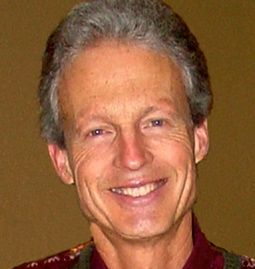
Robert Schimmel

Robert Schimmel

Let’s start from the beginning of the evening, 5pm, when refreshments were served to lots of parents, students, LTUSD folks, representatives from various agencies and nonprofit organizations, well-wishers, and other interested parties, like me, who were there to learn more, soak up the glamour and witness the unveiling and hopeful triumph of this visionary project. I have not been closely involved and wondered if this was going to turn out to be just another well-meant project that cost a bunch to start but somehow got derailed or had to settle for less. Well, from the people I chatted with during the evening and based on the tour of the facilities, nothing could be further from the truth.

The basic financial facts I gained while seated comfortably in the beautiful new theater, with lighting and stage options to die for, are that this entire TADA complex cost $9 million of which more than $4.5 million came from state grants, and what I believe were some tireless efforts by Ivone Larson, STHS principal. The balance came from the all-important Measure G (November 2008).

Wow! Now that is a miracle these days, and perhaps that’s the key – these days. According to Steve Morales, the TADA project manager and LTUSD facilities director, this huge undertaking began as a viable vision and concept more than seven years ago and benefited from some great planning as well as fortuitous economic timing plus smaller successes along the way that actually began with developing relationships and strategies as far back as 1994. He also acknowledged the very positive LTUSD board and incredible amount of work required from an equally incredible group of talented and committed staff, architects, engineers, and others.

During the initial festivities I finally met Bill Roby, the director of the El Dorado County Community Foundation, who has been so instrumental in granting funds to numerous arts and other groups in Tahoe with the help of its Lake Tahoe cabinet members. He treated me to the welcome news of EDCCF’s good year and continued growth that, in my opinion, should bode well for more involvement and help here in Tahoe for appropriately targeted grants and funding.

As I wound my way through the facilities mesmerized by the Hollywood technologies, a few “wait and watch” thoughts crossed my mind. This is a bit of a honeymoon phase now with implementation coming right up and results down the road, so this community and those on the Board must stay vigilant re all the skills our kids need to maximize this awesome facility. While emulating “a field of dreams” can be a risk, let’s hope enough vision was expended on preparing the groundwork for success inside TADA as is evident on its surface. We certainly have many talented teachers, like Bob Grant (music), Liz Niven (theater), Lyn Twitchell (fine art), on that side of the equation, but I am not familiar with those who represent what seems to me to be the emphasis on digital media arts and production management. However, what makes this such a great community enriching effort in the broadest sense is the availability of these facilities to everyone. This certainly takes a lot of the waiting out of it.

As a final note and closing kudo, “thank you!” to the Lake Tahoe Educational Foundation and its president, Nancy Ralston, for sponsoring this informative and fun grand opening (of my eyes and many others) to the possibilities of clear, committed vision and infinite, future hopes of our kids and students. This has clearly been a miraculous effort, but no miracle.

Congratulations!

Robert Schimmel is a professional artist and teacher in South Lake Tahoe, as well as host of Lake Tahoe Art Scene on KTHO radio on Thursdays at 1:15pm.