Truckee River Day

The 16th annual Truckee River Day is Oct.16.

Volunteers will have their choice of half or full day restoration projects with different levels of difficulty. There will be 13 projects including revegetation for further restoration at Perazzo Meadows, plantings to restore the former Town Corporation Yard, and surveying for fish habitat in the Little Truckee River.

A celebration at the River Fair will follow the projects. The River Fair 1-4pm at Granite Flat Campground and will include food, live entertainment, environmental activities for kids and adults, and the annual fish release at 3pm.

Everyone is invited to the fair even if you’re not participating in restoration projects.

To participate in this year’s festivities, go online or call (530) 550.8760. The deadline for registration is Oct. 7.


Autumn Fest celebrates fall in Lake Tahoe

Gardening and sustainability presentations, live music, crafts for kids and adults, games, a local artisan market, dancing, storytellers, pony rides, local food vendors and a pumpkin patch are all part of the 5th annual Autumn Fest.

Tahoe RCD is putting on the free event at the Lake Tahoe Community College Demonstration Garden in South Lake Tahoe on Sept. 25 from 11am-3pm.

Autumn Fest is the primary fundraiser for the garden.

For more information, contact Kirsten at (530) 543.1501, ext. 127, or klindquist@tahoercd.org, or go online.


Lodging properties being sought for Tahoe cycling program

Tahoe Lodging for Cyclists is a program for developing a network of lodging properties around Lake Tahoe to serve the needs of visiting cyclists.

TLC properties must meet minimum bicycle-friendly standards to become a member of the network and receive benefits in return.

Interested lodging properties may email BikeTahoe@aol.com to receive an information packet.


Snippets about Lake Tahoe

9:11 logo• Stop and remember 9/11 is a call to action for a moment of silence Sept. 11 at 10am.

• Standard & Poor’s raised its rating of the debt of Carson Tahoe Regional Healthcare from BBB-positive to BBB-positive stable.

• A benefit for Tahoe Arts Project is planned for Sept. 15 from 6-8pm aboard the Safari Rose. The sunset wine cruise costs $55/person. For tickets, call (530) 542.3632 or email tahoearts@aol.com.

• BlueGo, the South Shore bus system, is upping its fares Oct. 1. Here is the rate schedule

• The first Saturday of each month – Oct. 1, Nov. 5, Dec. 3 – there is an informal gathering of knitters and crocheters at the South Lake Tahoe branch library (1000 Rufus Allen Blvd.) from 1-3pm.


Series of writing, literary events in Tahoe this fall

Bona Fide Books’ fall line-up includes writing classes for newbies, craft classes for the experienced, and art and music for all.

On Sept. 14 at 6:30pm, Bona Fide Books Publisher Kim Wyatt will speak at the South Lake Tahoe Branch Library about starting her small press and publishing today. This talk is for writers, book lovers and creative entrepreneurs.

bona fideFor those just breaking into writing for publication, check out Publishing 101 on Sept. 19 from 7-9pm at Bona Fide Books headquarters in Meyers. Wyatt will lead a session on everything you need to know to begin submitting your work, including identifying your target market, writing a query letter that will get you noticed, preparing your manuscript and avoiding common mistakes. The cost for the class is $19. Sign up online or at the door.

On Oct. 7 at 7pm, Philadelphia poet and writer Jason Schossler, winner of the inaugural Melissa Lanitis Gregory Poetry Prize, will read from his collection “Mud Cakes,” as part of the LTCC Writers Series. The reading is at the LTCC library in South Lake Tahoe. It is appropriate for all ages.

Writer and guest instructor Nicole Banas will teach a class Oct. 8 from 10am-1pm called “Using the Techniques of Film in Your Fiction,” a how-to workshop on integrating film techniques into fiction writing. This three-hour genre-bending class is designed to strengthen your writing. The cost is $25. It is at Bona Fide Books in Meyers.

The Writers in the Woods series at Sierra Nevada College features Wyatt discussing entrepreneurship and book publishing on Oct. 14, followed by a workshop on how to submit work for publication on Oct. 15.

On site at Bona Fide Books HQ, Oct. 14-16, award-winning author Todd Borg offers his acclaimed workshop, “The Hook, The Twist, and the Cliffhanger: What Works, and What Doesn’t in Entertainment Fiction”. For details and information on how to sign up, go online.

The second annual Scary Slam wraps up the month on Oct. 29 at 7pm. Costume contest, spooky guests, and surprise emcee. There’s a $5 entry fee to slam and no cost for the audience. Prizes for best slam and literary-inspired costume. Snacks, beverages and mysterious entertainment provided.

An artist reception will be Nov. 5 from 6:30-9pm featuring the latest collection from painter Shelley Hocknell Zentner, “Written on the Body.” Music and refreshments will be provided.

Check out “Grandma Went to Woodstock: Writing the Family History” Nov. 19-20 from 10am-2 pm. This two-day session will cover creating an outline, using the techniques of fiction to bring your story to life and researching your family history. The cost is $49, sign up online or by phone. Class size is limited.

All Bona Fide Books events feature entertainment, peculiarities and wholesome libations. Bona Fide HQ is located at 1069 Magua St., No. 4, Meyers, behind the Getaway Café.

For more information, go online or call (530) 573.1513.


Opinion: It takes everyone to keep Tahoe waterways clean

By Kirsten Lindquist

On Sept. 17 from 9am to noon, dedicated volunteers around Lake Tahoe will roll up their sleeves for a clean and clear lake with the 2011 Great Sierra River Cleanup. This annual cleanup throughout the Sierra Nevada is sponsored by the Sierra Nevada Conservancy and runs in tandem with the California Coastal Commission’s Coastal Cleanup Day, the largest volunteer event in California.

Last year, more than 200 volunteers basinwide turned out to pick-up trash on beaches and riverbanks, keeping 2,642 pounds of litter from funneling into Lake Tahoe. This year the planning committee is hoping for even more volunteers — including you.

The Great Sierra River Cleanup began as a regionwide effort three years ago to protect Sierra Nevadan watersheds from easily preventable pollution — trash — and to support the cleanup efforts on the coast. The rivers of the Sierra Nevada are the headwaters which provide almost 65 percent of the state’s developed water needs before reaching their ultimate destination, the Pacific Ocean. The cleanliness of watersheds here in the mountains not only impacts drinking water quality, ecosystem health and recreation locally, it also has broader implications for the health of California’s water supply and coastal ecosystems.

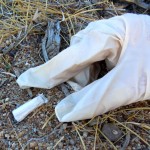
Cigarette butts are always something that fill trash bags on the cleanup day. Photo/LTN file

Cigarette butts are always something that fill trash bags on the cleanup day. Photo/LTN file

Last year, 4,500 volunteers collected about 151 tons of trash, appliances, car parts and other debris throughout the Sierra Nevada.

Residents of the Lake Tahoe Basin are known for their love of the outdoors; people choose to live here because of its natural beauty. Unfortunately, that doesn’t mean the streams and beaches are always pristine. At one Great Sierra River Cleanup site in Tahoe last year, 19 bags of trash were collected in addition to five couches.

“There’s a greater need here for vigilance against litter than people may realize,” explains Ellen Nunes, programs director of Clean Tahoe. “Even when littering is unintentional, the plastic bags, cans, the bear messes left uncleaned, they all add up. And it really takes a whole village to keep itself litter-free, even if only a few are contributing to the mess.”

Clean Tahoe, the local nonprofit responsible for numerous clean-up programs and advocacy around the lake, started the Tahoe chapter of the Great Sierra River Cleanup from the start of the campaign in 2009. This year the Sierra Nevada Alliance, Tahoe Resource Conservation District, California Tahoe Conservancy, Tahoe-Baikal Institute and California Trout have rejoined Clean Tahoe to put together the event. South Tahoe Refuse is also sponsoring the event, allowing disposal of trash collected free of charge.

“It’s exciting to see the enthusiasm for cooperation among so many groups in town—from local and state agencies, businesses to nonprofits,” says Reyna Yagi, AmeriCorps member at the Sierra Nevada Alliance.

Seventeen cleanup sites have been designated for the Tahoe cleanup this year — including locations on the North Shore as well as the South Shore. Community groups, businesses, families and individuals are all encouraged to participate. The Boys and Girls Club of South Lake Tahoe, Harrah’s, Kiwanis, Sierra Nevada College and Great Basin Institute Conservation Corps are among those already signed-on. But the cleanup committee is always in need of more volunteers.

“We’ve had volunteers from 18 months to 80 years old; every person makes a difference,” Nunes says.

To sign-up, go online. Unregistered volunteers are also encouraged to participate at the drop-in site at Regan Beach in South Lake Tahoe, where the volunteer appreciation after-party and raffle will also be located. For more details, contact Ellen Nunes at cleantahoe@sbcglobal.net.

Kirsten Lindquist works for Tahoe RCD.


Opposition to bill that would make well logs public

By Tim Hearden, Capital Press

SACRAMENTO — Farm groups are lining up against a bill in the California Legislature that would make landowners’ well logs available to the public.

Since 1949, the state has required notification from well drillers whenever a well is created, deepened, reperforated or destroyed. The well completion reports include details about the well’s depth, the type of soils encountered at each elevation and depth to water, according to a state Assembly bill analysis.

Until now, the information provided to the state Department of Water Resources has not been readily accessible to the public. State Sen. Fran Pavley, D-Agoura Hills, wants to change that, reasoning that the geophysical data is important to groundwater managers, consulting hydrologists and others.

But the California Farm Bureau Federation, the California Cattlemen’s Association and other farm groups oppose the bill, calling it unnecessary and worrying it could jeopardize the safety of drinking water.

“Number one, the information is available to the people it needs to be available to,” said Justin Oldfield, the CCA’s director of government relations. “From a public perspective, there’s a lot of concern about putting this information out there about what wells are pumping water and how much they’re pumping.

“This wouldn’t help anything,” he said. “It wouldn’t solve a problem. It’s creating a solution for a problem that doesn’t exist.”

The bill passed the Assembly Appropriations Committee, 11-6, on Aug. 18 and was sent to the Assembly floor. It passed the Senate, 25-14, on June 2.

Read the whole story


Decision on 2012 Tour de California cities just weeks away

By James Raia, Sacramento Bee

Seeking a spot for the sixth time in the event’s seven-year history, Sacramento has applied to host a stage finish of the 2012 Amgen Tour of California.

But the capital’s involvement is far from assured. Race organizers are considering several route options, including a return to the Bay Area (not included this year) as well as different mountain passes and routes in the Sierra Nevada.

amgen“We’ve submitted a bid with the hope of getting a stage finish,” John McCasey, executive director of the Sacramento Sports Commission, said Thursday. “And we’ll just have to wait and see what our chances are. There are no guarantees. We go into it with eyes wide open. What we are up against is a very creative planning organization such as Medalist (Sports).”

The eight-day race, the country’s largest professional cycling event, will begin May 13 in Santa Rosa, the home of three-time winner and 2011 runner-up Levi Leipheimer.

Davis, which hosted a stage start in 2009 and 2010 and was a pass-through city in 2007 and 2008, has bid for a 2012 stage start. Auburn, Nevada City, Modesto, San Jose and the South Lake Tahoe region also hope to be part of next year’s race.

Read the whole story


9/11: Bracing for news from family working in NYC

Publisher’s note: This is one in a 12-part series running from Sept. 1-12 about how Lake Tahoe is tied to 9/11.

By Jessie Marchesseau

My alarm went off at 6am. It was Sept. 11, 2001, five days after my sister Summer’s 24th birthday.

I was not sure if she had received the gift I had sent yet, a small gold kaleidoscope with a colorful glass wheel on the end. I had a habit of sending gifts late.

Summer lived in Elizabeth, N.J., about 15 miles from the heart of New York City, and 2,700 miles from my home in Genoa. She worked in Manhattan and would have caught the train to Penn Station more than an hour ago. I had visited her for two weeks that May and we had ridden that train several times.
From Sept. 1-12, Lake Tahoe News is looking at 9/11.

From Sept. 1-12, Lake Tahoe News is looking at 9/11.

Now, however, I was back home in Genoa and had to be to work in half an hour. I was a cart washer at the Genoa Lakes golf course, and though I hated the early hours, I did appreciate the free golf.

After dressing and grabbing a quick breakfast, I jumped in my car for the morning commute. At about a mile on a country road, it was considerably less time-consuming than Summer’s.

As I started on my way, it was clear that this morning’s radio content was different than the usual music selection. In fact, there was no music at all. Just people talking about a horrible plane crash in New York City, buildings falling, people dying and possible terrorists.

It only took a few minutes to get to work. I pulled my car into the usual space set aside for employees, but could not bring myself to turn off the engine. I sat there, frozen in my car, listening to every word they were saying on the radio, trying to comprehend.

My first thought was of my sister. She was there, in the city under attack. I knew from my trip a few months before that she worked blocks from the World Trade Center, miles even. I also knew the rest of my family did not know this.

As I sat in my car, paralyzed by the news, my parents, brother and grandparents were in Montana, glued to their televisions.

“My initial thought was that she’s not OK,” my grandmother recalls of that day. “And grandpa was just a nervous wreck. He paced the floor continually; he was just so sure something had happened to her.”

My mother, like me, retained a little more optimism.

“At first I thought, New York’s a big city; she’s probably not close by. But I couldn’t get ahold of her to find out,” my mom said. “But the more I watched the news, the more I thought she might be nearby.”

My sister had visited the World Trade Center a number of times. The ticket office there offered Broadway show tickets without waiting in line, and the restaurants had decent food. Her birthday being only a few days earlier, Summer and some friends were planning to celebrate that evening with dinner and a show.

Jessie Marchesseau, left, at her sister, Summer's, wedding.

Jessie Marchesseau, right, at her sister, Summer’s, wedding.

As soon as my mother heard the news, she tried to contact Summer, her oldest child, but to no avail. All the phone lines in the New York area were down. She tried numerous times over the next few hours, as did my grandparents.

My dad remembers calling Summer maybe a dozen times throughout the morning using his cell phone or a landline whenever there was one nearby.

“You just worry yourself sick until you find out,” he said.

Finally, I turned off the engine and walked hurriedly toward the cart barn, my thoughts racing. Did my family know what was happening? Did my boyfriend know? He was probably still in bed. Did the people at work know? And was my sister really OK?

As I walked in, five minutes late, I was reprimanded for my tardiness. I did not care. Didn’t they know I had a sister in New York? Didn’t they know what was happening? I wanted to go home and call my family and watch the news.

As the morning dragged on, I busied myself at work, and, much like my parents, kept telling myself Summer was fine. I had no access to a phone and spent the entire shift impatiently anticipating my release.

My mother and father also went to work that morning. Staying home was not going to do them any good, and Montana was not under attack.

At the office, coworkers asked my mother about Summer. They knew she lived in the New York area and wondered if she was safe.

“You always worry when your kids are not close by,” my mother said, “especially when you see something like that in their neighborhood. And you get more worried as the day goes by and you can’t get ahold of them.”

My grandparents, on the other hand, were home, watching the incessant news coverage, worrying, crying and praying.

It was not until sometime around noon or 1pm that my parents received a phone call. My sister was fine. Cell phones were still down around New York, but she had managed to get through using a payphone at a nearby school. The call was short; a line of people were waiting to use the payphone, but she wanted everyone to know she was fine.

“Oh god, it was such a relief, it was just such joy,” my grandmother said of the news. “… we had always said we were so lucky that we had never lost any of our grandchildren, and thought maybe our luck had run out.”

What the rest of us did not know that morning was that my sister had not gone to work on Park Avenue as usual. She had not gone to work at all.

“It was just one of those mornings,” she said. “One of those mornings when you get up, and nothing is going right, and you’re running late.”

In her small basement apartment in New Jersey, Summer was getting ready for work while watching the Fox 5 news. She saw the footage of the first plane hitting the World Trade Center.

“I looked at it, but I didn’t think anything of it,” she recalled. “I don’t know why. I was like, ‘god that’s horrible, but I still gotta get to work.’”

Thinking there must be some issues with air traffic control, Summer hopped in the car en route to the train station, still determined to go to work. She remembers listening to Howard Stern on the radio, a very serious, humor-free Howard Stern, covering every second of what was going on: the Pentagon, Pennsylvania, the second plane.

“That’s when I thought, ‘this is scary, I’m not going to go into the city today,’” she said.

She had already taken time off work to fly to Montana two days later. With airports shut down and the city in wounded chaos, Summer decided to start her trip early. She left that day by car.

On that cross country drive, she recalls seeing evidence of patriotism displayed everywhere and how the nation visibly banded together.

However, returning to the city the following week was when it really hit her, Summer said. As she stepped off the train into Penn Station like she had done so many times before, she stepped into a very different New York. This one had missing person posters plastered everywhere, most of them handmade. The once bustling city streets were quiet. Train station parking lots were filled with cars no one picked up for days, weeks. There was no one to pick them up.

Though she was in the city daily, my sister did not visit Ground Zero until Thanksgiving of that year. The site was still smoldering, and the smell sickening. Missing person flyers still posted.

The aftermath, she says, was almost worse than the tragedy itself: the change in the city, the somberness and those faces staring back at you from the ever present flyers.

Our family is lucky; we are all still here to tell our story of that day, to remember and to be grateful. Many were not so lucky. But whether you lost someone close to you or not, here we are 10 years later, still feeling the aftermath of that day: Sept. 11, 2001.

Jessie Marchesseau is a freelance writer living in South Lake Tahoe.


Tickets for National Cowboy Poetry Gathering going on sale

Tickets for the 28th National Cowboy Poetry Gathering go on sale Sept. 6 to members of the Western Folklife Center, which produces the event. Non-members can purchase tickets one month later, on Oct. 6.

The 28th National Cowboy Poetry Gathering — the celebration of the American West, its people, culture and traditions — is Jan. 30-Feb. 4 in Elko.

Every winter for the last 27 years, cowboys, ranchers, rural and urban people have traveled en masse to this small high desert community, to join with friends, family and others who care about the rural West. Together, they listen to poetry and music, learn about cowboy culture in the U.S. and around the world, experience great art, watch western films, learn a craft, and gather to eat, drink and swap stories.