Education association gives most Nevada lawmakers a poor grade

By Anne Knowles, Nevada News Bureau

School just started and every Republican state lawmaker has already received a failing grade from Nevada’s teachers’ union.

The Nevada State Education Association has released its 2011 Legislative Report Card card and the 16 Assembly and 11 Senate Republicans all earned an F.

“Taking away educators’ rights is not education reform, it’s union-busting,” the report said. “You cannot have proper reform unless the proper funding is in accompaniment. In this regard, the 2011 Legislature came up woefully short.”

But the report didn’t spare either political party.

“NSEA believes this unfortunate outcome lies at the feet of the leadership in both parties, along with Governor Sandoval,” the report says.

Only one Democrat, Sen. John Lee, D-North Las Vegas, received a failing mark, while the rest of the members of the Senate Democratic caucus got A or B grades. But more than half the Assembly Democrats fared little better than their Republican colleagues, accumulating eight C and seven D grades.

Assemblywoman Debbie Smith, D-Sparks, for example, the speaker pro tem, who is known for her interest in education issues, received a D.

Smith was chairwoman of Assembly Ways and Means, where two major education bills, Assembly Bill 225 and AB579 originated. AB225 changed teacher probationary rules and supersedes collective bargaining, while AB579 funded K-12 education. Smith was also a primary sponsor on two other key bills: AB222, which created a leadership council to evaluate teacher performance, and AB229, a broad reform bill.

“I’m disappointed, of course,” Smith said. “My whole adult life I’ve worked as an advocate for K-12. I understand the teachers’ union has a job to do, to represent their members on jobs and benefits. But I’m comfortable with the packages we put forth.”

Republicans lawmakers were less concerned with the report.

“I’m not really as bothered by the failing grade for all the Republicans as I am by the failing grades in our schools,” said sate Sen. James Settelmeyer, R-Minden.

Settelmeyer said the Republicans were right to work to reform collective bargaining and get rid of the so-called “last in, first out” way of laying-off teachers that protected seniority regardless of performance.

“I think the report shows how out of touch with reality the association is with both the economic situation and the desires of both parents and students,” said state Sen. Ben Kieckhefer, R-Reno.

Kieckhefer said NSEA’s stand on legislation showed it cared more about protecting its adult members than students.

NSEA disagrees.

“Kids right now are going to school with fewer services and more kids in the classroom,” said Craig Stevens, director of government relations at NSEA. “If they were truly putting kids first, they wouldn’t have done what they did.”

The NSEA says the Legislature gutted the budget, cutting $300 million from the previous budget and forcing a 9 percent pay cut on school employees.

In addition, says Stevens, the Legislature did nothing to address the state’s budget deficit.

“To truly fix the funding problem we must fix the deficit. They’re going to walk into the next session with a billion dollar hole,” Stevens said. “At least the Democrats came out with a plan to try to fund the budget responsibly. The Republicans made no effort and sat there saying ‘no, no, no.'”

Assemblywoman Marilyn Kirkpatrick, D-North Las Vegas, said she thought lawmakers did the best they could on education measures in light of the challenges of balancing the state budget.

“In my mind, we are sent up to Carson City to make hard choices,” Kirkpatrick said. “And it could have been so much worse. If the taxes that were set to sunset had not been extended, I don’t know that I would have supported deeper cuts — but they were, so we found a way. And I think the reforms were fair.”

The Nevada Policy Research Institute, a conservative think tank based in Las Vegas, characterized the report as misleading, especially on funding issues.

Victor Joecks, communications director for NPRI, said the education budget was cut in a 2010 special session by several hundred million dollars so the budget passed in 2011 actually increased funding slightly.

“It’s a false narrative that flies in the face of reform,” Joecks said of the report.

Joecks said per pupil spending will increase from $5,192 last year to $5,263 this fall and $5,374 in 2012-13.

He also said the 9 percent cut in teacher pay cited in the report includes contributions teachers will now be making to their Public Employee Retirement System accounts. Previously, teachers did not contribute to their retirement accounts.


Judge gives developer more time to deal with bankrupt S. Tahoe project

By Kathryn Reed

The bankruptcy judge in the failed South Lake Tahoe convention center debacle has given would-be developer Randy Lane another month to come up with a plan.

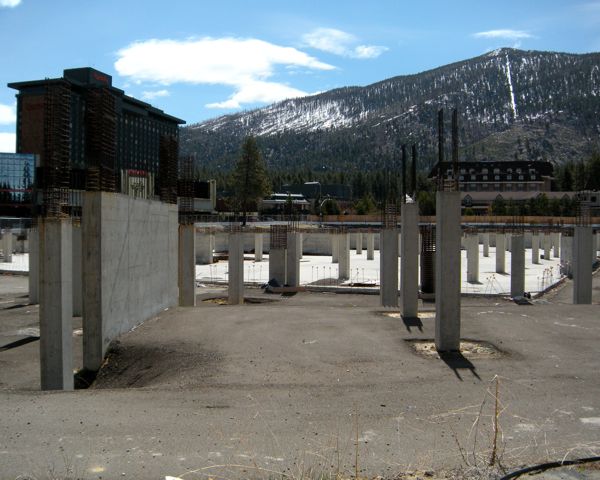
Lane, who with partner John Serpa, was to develop the 11-acre site near Stateline under their business name Lake Tahoe Development Company, still wants to be a player in all of this. Rebar and a concrete foundation are as far as they got before funding ran out.

Still no movement on the South Tahoe hole near Stateline. Photo/LTN

Still no movement on the South Tahoe hole near Stateline. Photo/LTN

This week, Lane, using the company name Tahoe Property Consultants, told the court he wants 270 days to market, sell or otherwise dispose of the property as a single development project.

This is no different than what Lane has been trying to do since October 2009 when the project first entered bankruptcy.

Lane was not available for comment.

The judge gave him until Oct. 4 to come up with an amended plan. Those holding title to some of the parcels will then have a chance to weigh-in on whatever Lane proposes.


Tahoe doc puts skills to work at Army hospital in Afghanistan

By Rebecca Wass

Kyle Swanson, orthopedic surgeon for Barton Health’s Tahoe Orthopedics & Sports Medicine, has seen and dealt with medical and hospital conditions that few people, let alone doctors, have experienced. He has operated in gated and guarded hospitals, in places far from home and treated patients with injuries, deformities and disease – many of his colleagues could hardly imagine.

Deployed to Afghanistan in 2005, just after completing the San Francisco Orthopedic Residency Program at St. Mary’s Medical Center, Swanson spent six months at Bagram Air Base. There he treated Afghan civilians, army, national police and U.S. military personnel.

“When it’s an American soldier, the intensity level increases dramatically,” he said. “So our goal is to stabilize them and get them out of there and transfer them out as quickly as possible … most were transported to Landstulh, Germany, from both the Iraq and Afghanistan theaters.”

Swanson recalls when they had 10 critical patients at once and he had treated an Afghan general that was injured in crossfire with the Taliban.

Swanson will be speaking on a panel about his time in Afghanistan at Lake Tahoe Community College on Sept. 11 at 2:45pm. This communitywide commemoration of the 10th anniversary of 9/11, will begin at 2pm.

Kyle Swanson will be on a panel at Lake Tahoe Community College on Sept. 11 at 2:45pm. This community commemoration of 9/11 begins at 2pm.

“We donate our time and technology when we cross seas and as these patients had very little money, the general felt like he should pay me in some way, so he gave me an Afghan rug that was in his family for generations …,” he said.

They never turned anybody away.

“It didn’t matter who they were,” Swanson said. “It was very gratifying because the local civilians just loved that we were there. They were receiving treatment that was not available to them. The medical care in their major cities is probably about 100 years behind.”

Besides providing emergency treatment, Swanson and a fellow orthopedic surgeon held a civilian clinic twice a week where they took care of all kinds of orthopedic conditions.

“These are people who have never had health care their whole lives, so you would see things you never saw in the United States for the most part,” he said. “A lot of limb deformities and infections.

“Many of the injuries we saw were from landmines. When the Russians pulled out of Afghanistan they left “one land mind behind for every man, woman and child,” he said. “There are approximately 25 million land mines in Afghanistan today.”

Along with medical care, the Army provided everything from education to nutritional food to toys.

“A lot of the military families would send toys over to the kids,” Swanson said. “It was great to see the smiles on their faces. It makes you feel really privileged to live in this country.”

Lake Tahoe doctor Kyle Swanson spent time in Afghanistan with the U.S. Army. Photo/Provided

Lake Tahoe doctor Kyle Swanson spent time in Afghanistan with the U.S. Army. Photo/Provided

“I went right after my residency and its something you literally get thrown into. Initially it’s very overwhelming and nothing can prepare you for the injuries you see. You have to rely on your training and apply it.”

Swanson believes his experience in Afghanistan made him a better surgeon.

“Going overseas and treating people in underserved areas reaffirms the reasons one goes into medicine. I hope to be able to volunteer my services again sometime in the future since my experience was so rewarding both personally and professionally. “

Rebecca Wass is the communications specialist for Barton Health.


Mixologists test their prowess — raise money for Barton Foundation

By Kathryn Reed

With a full moon just days away and a chill in the air signaling the change of seasons, shooting the “Winter Skyy” seemed like the appropriate thing to do Thursday night.

Instead of sipping the cocktail, guests were told to knock it back in one gulp – like a shooter. That’s how Christina, a waitress at Blue Water Bistro, was instructing people to drink the restaurant’s libation.

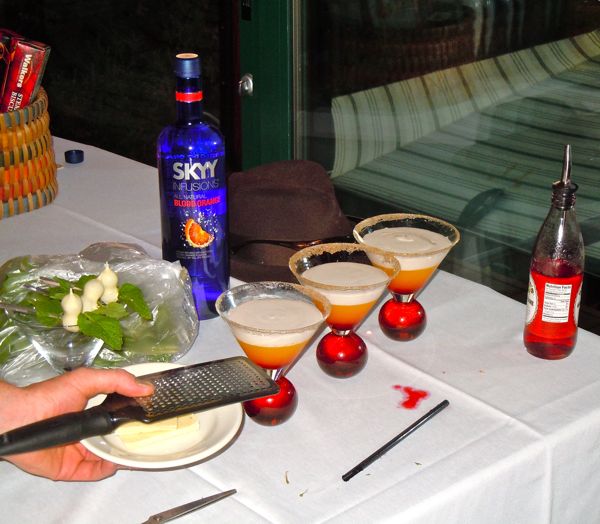
This mix of vodka, Grand Marnier, cream, vanilla, nutmeg and organic white chocolate shavings – plus a few other ingredients – was the winning cocktail of the night.

Blue Water Bistro's Winter Skyy won the Sept. 8 cocktail contest. Photos/Kathryn Reed

Blue Water Bistro's Winter Skyy won the Sept. 8 cocktail contest. Photos/Kathryn Reed

The sold-out fundraiser at Riva Grill is the kick-off fundraiser for Barton Foundation’s Festival of Tree and Lights. That event is all about raising money for the community clinic while providing (primarily) locals with a weekend worth of holiday fun the first weekend in December.

The Sept. 8 cocktail event pitted eight restaurants and their bartenders against one another to come up with either a new drink just for the evening or bring a signature sensation.

Winter Skyy is a drink Blue Water has on its menu. At the lakefront restaurant it is served to sip, but with such small portions doled out Thursday night the best way to get the mix of flavors was to down it in one swig.

Coming in second was Naked Fish’s “Naked Nectar”, while last year’s winner – Edgewood — came in third with “Over the Edge-wood”.

Other competitors included Fresh Ketch, Lakeside, Riva Grill, Capisce?, and Chart House.

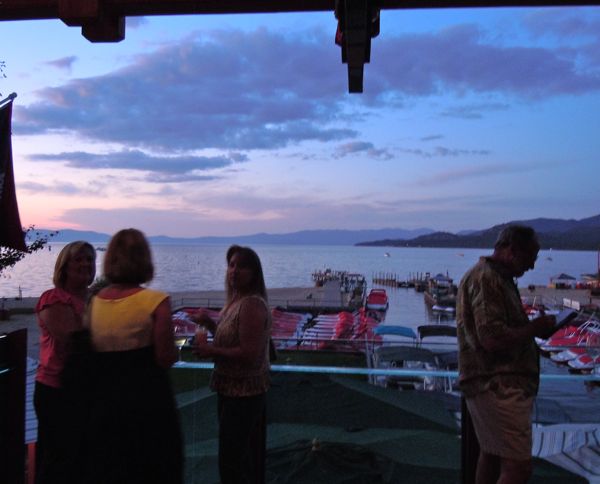
Attendees enjoy the deck at Riva Grill and the Tahoe sunset.

Attendees enjoy a Tahoe sunset from Riva Grill's deck.

Organizer Laurie Brazil said with the 150 tickets selling out, a larger venue may need to be found next year. This was the second year for the cocktail fundraiser.

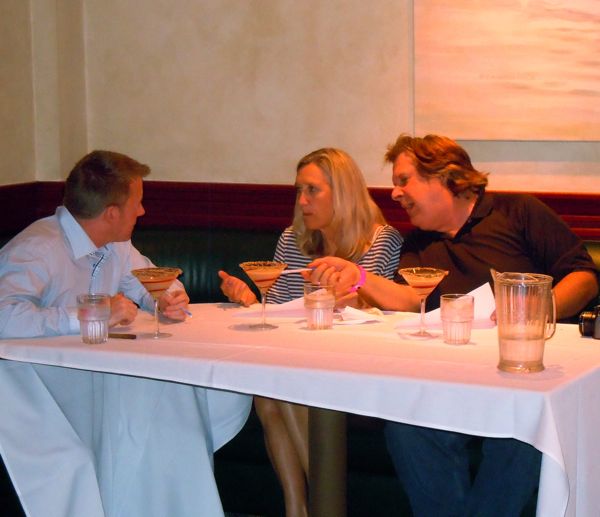
Judges Chris Larson, from left, Carol Chaplin and Howie Nave confer about cocktails.

Judges Chris Larson, from left, Carol Chaplin and Howie Nave confer about cocktails.

Judging the drinks were weather dude Chris Larson of Channel 8 in Reno, LTVA head honcho Carol Chaplin and KRLT radio guy-Improv comic Howie Nave.

Before the judging, Larson told Lake Tahoe News, “I like beer.”

Chaplin said, “I drink martinis and tequila so the vodka is absolutely the right ingredient for me.”

Nave, the only judge invited back from last year, seemed to be enjoying everything put in front of him.


Opinion: We may never know what spurred Carson City rampage

Publisher’s note: This editorial is from the Sept. 8, 2011, Reno Gazette-Journal.

In the face of unthinkable tragedy, it is the nature of humans to want answers.

Surely, there must be a reason why a man would walk into a restaurant and start shooting, eventually killing four people he apparently had never met before taking his own life.

How could a coffee shop in a strip mall turn so quickly into a killing zone?

How could a such a typical, simple, everyday decision as the one made by members of the National Guard in Carson City to “get away from the tyranny of the inbox” (as Brig. Gen. William R. Burks explained it on Wednesday) and meet over breakfast at the nearby IHOP end in their deaths?

How could this happen in small-town Nevada?

Is it really possible that there is no explanation, that there was nothing anyone could have done to foresee — and to prevent — the tragedy that occurred on Tuesday morning in Carson City?

Yes, it is possible.

On Thanksgiving Day in 1980, Priscilla Ford suddenly swerved her Lincoln Continental from North Virginia Street into a crowd in front of the Club Cal Neva in Reno, killing six people and injuring 23. Two years later, she was convicted of murder. She died in prison in January 2005.

Ford had been diagnosed with schizophrenia with violent tendencies, but no one could have imagined that she would one day go on the rampage that would stun Truckee Meadows residents and visitors that day.

Similarly, family members of Eduardo Sencion said the man accused of opening fire on patrons in the restaurant Tuesday was “mentally troubled.” In 2009, he’d filed for bankruptcy protection. None of that explains what happened in Carson City, however.

Read the whole story


Budget cuts leave California with fewer hands to fight wildfires

By Peter Hecht, Sacramento Bee

Just north of Highway 180 in Fresno County, a wildfire in mid-June ate through thick grass, burning into oak woodlands and roaring up steep hills.

For firefighters, it appeared to be a routine event. Six engine teams, including five from Cal Fire and one from Fresno County, attacked from two sides. Firefighters carrying heavy, 300-foot hose extensions ascended the rocky terrain. They doubled back for additional hose, stretching their water lines and attempted to circle the fire before it leaped a ridge.

But, under state budget cuts, Cal Fire was battling the blaze with three firefighters per engine instead of the normal four-man crews used in the wildfire season. They couldn’t get water around the fire in time. It jumped the ridge and devoured the next canyon.

The incident on what one fire captain called “a standard wildfire” stoked fear over whether staffing cuts are affecting first-strike capabilities of firefighters to stave off severe wildland events.

“I really thought we could catch it,” Cal Fire Capt. Doug Freeman said. “Basically, with the fatigue factor (of using a three-man crew), we just couldn’t.”

Freeman summoned reinforcements as the blaze that he thought could have been kept to less than 10 acres spread to 133 acres and cost $300,000 to put out.

As California closed a gaping budget deficit this year with sweeping cuts to numerous agencies, it saved $34 million by cutting 750 seasonal Cal Fire firefighters. That means one less person per engine unit to haul thousands of feet of hose lines and share the exhausting physical rigors of battling wildfires.

In the Sacramento region, the cuts mean a total of 29 fewer Cal Fire firefighters in El Dorado and Amador counties and 44 fewer firefighters assigned to the Nevada, Yuba and Placer County region.

Read the whole story


Meet some of the LTN team at the Bijou Bash

ltn bijoouLake Tahoe News will be at Bijou Bash on Saturday.

The 11am-4pm event at Bijou Community Park in South Lake Tahoe is free – geared toward families, locals and those who want to spend time seeing friends.

Swing by and say hi to the folks of LTN.


9/11: A world-changing event experienced outside the U.S.

Publisher’s note: This is one in a 12-part series running from Sept. 1-12 about how Lake Tahoe is tied to 9/11.

By Kathryn Reed

Machu Picchu. It’s what I think of when I hear 9/11.

Throughout the day on Sept. 11, 2001, I kept being drawn to the most sacred temple at these historic Inca ruins in Peru. Pages of my journal talk about the experience.

Later that night and still today, I am compelled to believe that stone brought me a source of spiritual energy that resonates calmness when I think of her and of 9/11.

From Sept. 1-12, Lake Tahoe News is looking at 9/11.

From Sept. 1-12, Lake Tahoe News is looking at 9/11.

I had taken a six-month sabbatical from my job as an editor of the San Francisco Chronicle, with four months of it spent in South America. I was finishing week one of the trek when the cowards leveled the Twin Towers.

Being out of the country during this momentous time has left me not sharing the intense feelings of those who were on U.S. soil that morning. In reflecting back on my memories – aided by my journal and emails to my parents – I can honestly (and selfishly) say I’m glad I was where I was, doing what I was doing.

Getting back to Cuzco that night was a bit harrowing because of the transportation strike, not speaking Spanish, and fires burning in the road. I thought I had a great story to write home about.

Somewhere along the way word came that a plane had hit the towers. We thought it a Cessna or something small, no surprise there would be deaths associated with it. But somehow I knew it was bigger than that by the time I got back to my hotel. I just didn’t know how big.

I asked a hotel employee to put CNN on in English. He looked at me with an expression that said, “Oh, god, she doesn’t know.”

Kathryn Reed at Machu Picchu Sept. 11, 2001.

Kathryn Reed at Machu Picchu Sept. 11, 2001.

It didn’t take long to see what I hadn’t known until that moment. The videotape of the planes hitting the World Trade Center kept playing. It was surreal. It was like a bad B movie that wouldn’t end.

The next day was spent watching CNN and emailing family and friends. People filled the Internet café. Wallpaper on one computer was of four panel photos of the WTC collapse.

My journal on Sept. 12, 2001, says, “I’m not thrilled to have in my possession a ticket on American to JFK in December. I really want to be at home to see-hug all my family [and] friends – but at the same time staying on track may be best – and for now that’s what I’ll do. Last night was restless because of this news – today I was a bit numb – I just wanted to be around English speaking people – ah – how we migrate to people like ourselves.”

A few days later I’m at Lake Titicaca where I meet a couple from Philadelphia traveling with their adult daughter. They have black armbands as a symbol to those who died in New York City, Washington, D.C., and Pennsylvania. We cut one in half and I wear mine with honor.

Eventually I tie it to my backpack – where it stayed for the entire trip.

I’m getting word from friends in Vegas about lines for gasoline. I read about people in the United States being fearful. I don’t comprehend these feelings.

I feel a sense of loss and loneliness – but not of fear.

On Sept. 17 I write to my parents, “It is so weird being out of the US … it is [as] though nothing really has changed. I do not have any constant reminders of all of the East Coast tragedies and the domino effect.”

It’s Sept. 18, I’m outside the U.S. Embassy in La Paz, Bolivia. I can’t stop staring at our flag at half-staff. I’m told not to hold onto the fence. I’m told I have to get permission to a take picture of the flag. Now I’m angry. It’s my flag.

On Sept. 18 I write a group email saying, “People down here do care. Though it was a bit weird the other day crossing form Peru into Bolivia and waiting in the line at the Bolivian immigration office and having a young shoeshine boy come up and ask me where I was from. The United States I responded. Oh, and then he makes a gesture with his hands of a plane going through a building. I had nothing more to say. A woman with a Netherlands passport in front of me said what a way to greet you. I smiled. She said the tragedy has affected the whole world.”

Mom writes back about the continual pit in her stomach.

To this day it’s something I don’t relate to.

It’s Jan. 2, 2002, and in my journal I write, “On Sunday [Dec. 30] we went to Ground Zero. They opened a viewing platform that day. It was hard to believe that the World Trade Center once stood there. It looked like a construction site. Had there not been other buildings boarded up [and] w/canvas hanging down it would not have been so dramatic. What got me the most were the views from the Empire State Building [and] Statue of Liberty ferry. And on the city map it just has a white space for the WTC – with no written designation. It is still hard for me to comprehend all that the Untied States [and] its people have [and] are going through and perhaps having been in S. America on Sept. 11, 2001, will make it impossible for me to ever grasp the magnitude of the loss [and] fear.”


Incline Village focus of Stewardship Day

Join hundreds of Tahoe basin community members to improve forest health at the League to Save Lake Tahoe’s 14th annual Tahoe Forest Stewardship Day on Saturday from 9am-2pm in Incline Village.

This year’s Stewardship Day partners with the Incline Village General Improvement District, and will focus on fuels reduction, native vegetation rehabilitation, trail restoration, stream restoration, biomass clean-up, and educational outreach. The event will also include a volunteer appreciation lunch with a guest speaker.

For more than a decade, Stewardship Day has provided hundreds of Lake Tahoe volunteers the opportunity to restore public lands and discover how forest restoration can complement fire risk reduction.

Volunteers help at a previous stewardship day. Photo/League to Save Lake Tahoe

Volunteers help at a previous Stewardship Day. Photo/League to Save Lake Tahoe

Previous Stewardship Day events have helped restore the Angora Fire area, the Heavenly Gondola area, Meek’s Creek Meadow, North Tahoe Regional Park, Skylandia Park, and Sugar Pine Point State Park.

All volunteers should wear sturdy shoes and long pants, and bring a water bottle and snack. Tools are provided, but volunteers who already have work gloves, hardhats, rakes, hand-saws, loppers, and shovels are encouraged to bring them (no axes or chain saws).

For more information or to sign-up, contact Flavia Sordelet at (530) 541.5388 or events@keeptahoeblue.org. Registration is required.

Volunteers will meet for orientation at 8:30am at the Village Green Park (960 Lakeshore Blvd., Incline Village).


Toy drive for Christmas Cheer

The 21st annual Lake Tahoe Toy Run on Oct. 1 benefits Christmas Cheer.

Line up at Horizon Casino in Stateline at 10am. Expect to depart at noon for Flight Deck at Lake Tahoe Airport.

There will be music, food, drinks and a raffle from noon-8pm.

Entry fee is one new toy.

For more information, call Mary Luckel at (530) 541.4332 or (530) 416.4166.