South Shore chamber offering 2 business workshops

Lake Tahoe South Shore Chamber of Commerce is partnering with Mann, Urrutia, Nelson, CPA & Associates on two workshops.

The first is Oct. 26 at 10am on QuickBooks, with the other being about incorporation on Dec. 7 at 10am.

Both will be in the conference room at the Stateline office of the chamber. Cost is $10 for nonmembers, $5 for members. It includes one hour of consultation for new clients.

For questions or to register, contact Emily@tahoechamber.org or (775) 588.1728, ext. 303.


Foam Fest in Truckee

Foam Fest – the event with more than 40 microbreweries that raises money for the Disabled Sports USA Far West – is Oct. 15 from 7-10:30pm in Truckee. More information is online.


History: Chef’s daughter recalls life at Tallac Hotel

Publisher’s note: This is reprinted with permission from the January 1976 Lake Tahoe Historical Society newsletter.

One day, late in September, 1975, Mrs. Meier phoned to inquire as to the whereabouts of Gladys and Velma Comstock. Mrs. Meier explained they were her playmates during several summers she spent here 65 years ago. I seized the opportunity of Mrs. Meier’s brief vacation to corner her into an interview. Pat Amundson and I spent a delightful October morning coaxing memories of her early childhood summers at Tallac House from Mrs. Meier. Mrs. Meier was here celebrating her 75th birthday with her husband, and daughter and son-in-law, Joan and Mike Leeches. So in addition to our visit, we enjoyed coffee and birthday cake.

history logoMrs. Meier was born Meliba Lorraine Vallet, one of three daughters of French Swiss Mother and Bordeaux Father, who immigrated here in the late 1800’s. Louis Vallett was a chef with a grand reputation stretching from Phoenix, Arizona to Florida. His profession took him to the playgrounds of the wealthy, each by season, and necessitated long separations from his family. His wife’s objections to these separations finally prompted him to ask Harry Comstock if he might bring his family to stay the summer at Tallac. Meliba’s sister, Alice, stayed with Harry and Virginia Comstock and the remainder of the family were housed in an apartment near the kitchen at Tallac House.

Alice did a lot of sewing for Virginia Comstock, who Meliba remembers as a very pleasant woman, but quite sickly and in bed frequently. Harry Comstock is remembered as tall, with curly black and graying hair and quite distinguished looking. He was very earthy and insisted upon being called “Harry” by everyone around him. Meliba and Gladys Comstock shared the same interests and were inseparable through the three summers she spent here. They specially enjoyed horseback riding and with the absence of trails and roads, enjoyed the young son of one of the nearby-camped Washo families as a guide.

Gladys and Meliba began “snitching” foodstuffs from the Hotel sideboard and trading for pinenuts with the Washoes. They were put on restriction when Mr. Vallett caught them. Meliba remembers an older woman named “Mary” who seemed in charge of the Waho encampment. Mary greeted the girls enthusiastically when they came to trade Meliba can best recall the Indians camped in two huge tens, probably a half-mile from the Tallac House. With the absence of roads, there was no landmark to better pinpoint their locations. The Washoes would come with huge baskets, filled with assorted smaller baskets, to sell at Tallac. Mr. Vallett was usually obliged to ask them to leave, which they did with no hint of offense.

Mrs. Meier remembers the trip from the family home in Los Angeles to Tahoe as beginning with the train ride to Truckee, then by stagecoach to Tahoe Tavern, finally by steam to the Hotel. The steamer brought passenger, mail and supplies every day. She also remembers the motor boat Harry Comstock bought to accommodate twelve to fifteen guests who cared to make side trips back to the Tavern. Although she recalled seeing stagecoaches in front of the Hotel frequently, Mrs. Meier said there were no road, hence no cars and she was too busy being a ten-year-old to take note of what other mode of travel the guests used and by what route they arrived. She did recall frequent guest came form the East Coast, but did not remember any visitor form foreign countries. The summer was passed in leisurely fashion, with fishing expeditions, boating, swimming and card games such as Bridge. Professional entertainment was brought into the huge ballroom for the guest who were seated about theatre style.

Queried about the fabled tents along the beach, Meliba had no recollection of them, though picnics were apparently frequent as her Father made up sumptuous lunch baskets for many of the guests. Teas was always served at 4;00 P.M. in what was known as the “side dining room”, with finger sandwiches, cookies and pots of tea set out. Certain waitresses were honored with the tea-serving duty and wore all white, rather than meal-time uniforms of black and white. There was no organized child care provided, although the waitresses occasionally doubled as sitters when called upon, sand were paid separately for this duty.

Mrs. Meier remembers Velma Comstock as a nature lover. Velma didn’t join Gladys and Meliba in their wanderings, but preferred going into the forest, and with a wide range of whistle styles, calling the native birds near her.

Mr. Brockway was a frequent visitor to Tallac. Mrs. Meier remembers him as short and stocky with light colored hair. But he is best remembered as only a child could associate him, with offerings of candy with friendship.

Meliba’s other sister, now Louise Maillot, was a waitress at Tallac, and now resides at Half Moon Bay on the California Coast, South of San Francisco.

Another found memory was of all flavors of soda pop made on the Tallac premises. Outstanding in Meliba’s mind was her favorite, strawberry.

Mrs. Meier also remembers a power plant near a waterfall at Tallac. Although it probably supplied electricity to the Hotel, at ten she had no particular interest in its function. She recalls no heat in the Hotel rooms, but plenty of warm bedding. The lobby of the hotel had a large cozy fireplace.

After three memorable summers at Tallac, Chef Vallett accepted a position with Castle Hot Springs in Arizona. Meliba graduated from elementary school in Phoenix during the period, before moving to San Diego.

Mrs. Meier believes she may have disposed of menus or any other memorabilia form Tallac during her last move from Los Angeles to Redondo Beach. However, she offered to check with her sister, Louise, for any items which might be of interest to the Society. She regretted that Alice is no longer living, as she was the oldest sister and had more intimate memories of Harry and Virginia Comstock.

— Linda Mendizabal



Seasonal dog ban intact for Upper Truckee Marsh

By Kathryn Reed

Dogs are allowed in the Upper Truckee Marsh area – for now.

Unless the California Tahoe Conservancy board suspends the summer seasonal ban, it will remain in effect indefinitely. For now, that appears to be what will happen.

Blame it on locals.

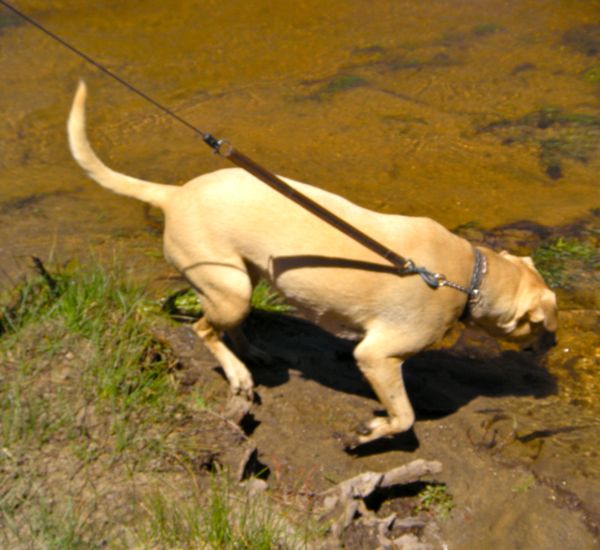
Dogs like AJ are allowed in the Upper Truckee Marsh area if on leash. Photo/LTN file

Dogs like AJ are allowed in the Upper Truckee Marsh area if on leash. Photo/LTN file

“Eighty-five percent of citations and warnings issued by law enforcement were issued to local residents, with local being defined as a resident in the South Lake Tahoe-Stateline area,” Dana Dapolito, associate environmental planner with the CTC, told the board last week.

The Conservancy owns the 311 acres in South Lake Tahoe. Trout Creek, which flows into Lake Tahoe, runs through the property. This is prime habitat for wildlife, mainly birds.

Dogs off-leash are the problem. They ruin habitat, destroy nests, kill birds and stress out the birds. To protect the area, the CTC board in July 2010 approved the temporary dog ban from May 1-July 31.

While this has caused much controversy with people in the Al Tahoe neighborhood and others who access the land, no one from the public spoke at the meeting.

With winter lingering into June this year, about six weeks of data was collected. In that time period, El Dorado County sheriff’s deputies issued 86 warnings or citations and the county’s Animal Control officers handed out 21 citations.

Even though dogs are now allowed to be on the property, all must be on leash. That is not happening, according to Dapolito.

She told the board that in August the agency’s land stewards said 75 percent of dog walkers were complying with the law, with locals accounting for nearly 100 percent of those violating the rule.

The Conservancy wants multiple years of data on avian counts in the marsh and to study shorebirds to know if fewer (ideally no) dogs in the habitat area help the birds. About three years is also the time period law enforcement says it takes to change human behavior – as in following the rules or going elsewhere.

This was an informational item for the board, with no action proposed.


Wilderness expert to give lecture on backcountry skiing

David Reichel, wilderness education coordinator for the Wilderness Education Department at Lake Tahoe Community College, will give a presentation on Skiing the High Sierra Route.

He will also discuss the Wilderness Education Program at the college.

The free event is Oct. 18 at 1pm at the South Lake Tahoe Branch Library, 1000 Rufus Allen Blvd.


Opinion: Outlining importance of school superintendent

By Stephen A. Jennings

As we begin a new school year, I’m filled with a sense of enthusiasm and nostalgia. As you know, I have announced my retirement, which will be effective at the end of February, so I won’t be completing the year with all of you. But that certainly doesn’t change the fact each new school year is an exciting time for us all.

The search process for my replacement has begun in earnest, and as we go through this procedure it has come to my attention that many of you may not know exactly what a superintendent’s job entails. I thought I’d take a few minutes to let you know what I do – and what my successor will be doing – in this very important position.

I think of a superintendent position as very similar to a CEO of a corporation. In the business world, a CEO is responsible for everything that takes place in his or her organization. So it is with the superintendent, and in our case, this corporation has a $50 million budget with more than 400 employees. Our business and our passion is learning.

While every day brings a variety of tasks, encounters and challenges, my primary responsibility — in everything I do — is to ensure student learning, so that students may discover their abilities, embrace their talents, and explore their passions.

There are several key components to managing a school district. First and foremost of course is the educational and programming component, my primary focus each and every day. This is closely related to the financial factor: ensuring we have the appropriate resources to support our educational programs is of utmost importance. Closely connected is the Human Resources component: we must ensure that we have the most highly qualified staff members and that they have proper working conditions and the appropriate environment to ensure learning at the highest level possible.

I also oversee many additional factors, such taking care of students who have special needs, as well as facilities, transportation, and other district departments—all components that relate to or support our learning community. Finally, ensuring that the district is following the appropriate procedures and regulations is perhaps as important as anything else I handle, because if this is not done, the educational and financial components can be compromised. It is a tightly interrelated system.

The school board is in place to set the policies for the district; this governing board – in our case a group of five people – hires the superintendent to make sure the policies are appropriately followed and that learning is taking place every day.

In many ways the superintendent is the face of the district, both within the community as well as outside the community as county or statewide business is conducted. Every day, a superintendent must focus on meeting the evolving needs of the students while providing the tools and the leadership for staff to provide the highest quality education. It’s a challenging job but also extremely rewarding, and I’m honored to spend the last six months of my career in education here with you all at TTUSD. Let the school year begin.

Stephen A. Jennings is superintendent of schools for Tahoe Truckee Unified School District.


If standardized test scores went away at the K-12 level, how would you propose assessing student achievement as well as how teachers and administrators are doing?


Mixed bag for LTUSD on mandated standardized tests

By Kathryn Reed

Students in Bijou Community School’s Two-Way Immersion Program scored substantially better on standardized tests than their peers. And they were taking it in Spanish.

In grades 2 and 3 the immersion program has 90 percent of the curriculum delivered in Spanish. Half of the 20 students in each class speak Spanish as their primary language, the other half speak English as their primary language. Kids are chosen by lottery, as opposed to hand picked.

Bijou's TWI students test higher than the rest of the school. Photo/LTN file

Bijou's TWI students test higher than their peers. Photo/LTN file

When it comes to the Academic Performance Index, or API, scores show the TWI kids scoring at a 48 proficiency level in English language arts compared to the other second- and third-grade classes at 19 percent. In math, the scores are 73 and 44 percent, respectively. This chart illustrates those results.

With Bijou having a predominately Hispanic student population, the number of English learners is more pronounced here compared to the other elementary schools. However, even South Tahoe High School has just more than a quarter of its students considered English learners – aka, those who have learned English as a second language.

The statistic that is unknown is how the non-TWI students who speak Spanish as their first language would do on the tests if they were given in Spanish. That might better test comprehension of the subject; while current results may only be showing they lack an understanding of the language.

But state tests don’t dig that deep. Instead, all of this testing – still part of President George W. Bush’s legacy of No Child Left Behind and President Obama’s Race to the Top – calls for all students to be at the proficient or higher level by 2013-14.

It’s a goal most educators say was never nor will ever be attainable. The magic number to hit is 800.

“I like assessments to tell me how a kid learns so I can reinforce and re-teach so they are engaged and excited about learning,” Lake Tahoe Unified School District Superintendent Jim Tarwater said. “This is their one ticket. If they lose this ticket, it is tough finding a job.”

LTUSD, still considered a program improvement district, has implemented policies to follow students so individualized growth or lack of growth is monitored. This contradicts the state and feds which compare one third grade class to the next and so on – making test scores about the grade level and not the particular class or student.

“Some schools, if students do well, they will change your grade. To me that means this test controls everything. I think you should learn more than a test,” Tarwater said.

The latest results compared to the previous year:

• Bijou: 2010 — 718; 2011 – 701 = decrease of 17

• Environmental Magnet: 2010 — 939; 2011 – 935 = decrease of 4

• Tahoe Valley: 2010 – 788; 2011 — 808 = increase of 20

• Sierra House: 2010 – 813; 2011 – 826 = increase of 13

• South Tahoe Middle: 2010 — 792; 2011 – 778 = decrease of 14

• South Tahoe High: 2010 – 758; 2011 – 755 = decrease of 3.

“We want growth, but not everyone is going to be in top 5 percent,” Tarwater said. “Overall, we are teaching the standards and hopefully teaching more than that.”

A report is expected to be made to the school board at the Oct. 11 6pm meeting.


S. Tahoe moves ahead with staffing changes without budget

Even though South Lake Tahoe has not approved a budget for 2011-12, which means jobs have not definitively been axed, officials are going forward with finding replacements for people.

sltOn CareerBuilder.com the listing posted Sept. 19 is for temporary snow removal operators who would make between $15.15 and $21.07 an hour

Temporary snowplow operators are expected to go from seven to 15. City Manger Tony O’Rourke at the Sept. 15 budget meeting said this will provide for an initial savings of $256,000 a year, with long-term benefits of a half million dollars a year.

The next budget meeting is Sept. 27 at 6pm. The document is expect to be approved that night because the fiscal year begins Oct. 1.

— Lake Tahoe News staff report


Opinion: Financial acts of kindness help LTCC students

By Melonie Guttry

Philanthropist Jessica Ledbetter continues to support Lake Tahoe Community College programs and students with her recent gift of scholarships. Un 2008, Jessica gave a major gift to create the Ledbetter Terrace in memory of her parents Bev and Bill Ledbetter. She continued with a second major gift to revitalize the Lake Tahoe Demonstration Garden. The much-needed improvements included a refurbishment of the Interpretive Center, which is now named in memory of her sister Erica Faye Ledbetter.

Ledbetter’s support didn’t stop there as she came forward in August with third major gift, a scholarship also in the name of her sister Erica Faye.

Melonie Guttry

Melonie Guttry

Jessica wanted to help LTCC students. Ledbetter’s gift will provide scholarships to 12 women. This comes at a particularly good time with community college fees increasing from $17 to $24 a unit this fall. For a full-time student enrolling in 12 units, that’s an $84 per quarter increase not including books and class materials. For many students, this increase could be the difference between graduating on time or putting school off to work and save money.

“I was very excited because I can finish my degree in sociology this year,” said Ana Guzman, an Erica Faye Ledbetter Memorial Scholarship recipient. “I am very thankful for this scholarship and so is my family. I feel very honored that I was chosen.”

Karen Jaimes said, “I was actually very surprised and kind of relieved because I needed the money. I wasn’t sure I could enroll in the fall. If I met Jessica in person I would tell her it’s a great honor to meet such a generous person who helps the community and after I am finished I would like to give back to the community.”

Ledbetter’s commitment in supporting Lake Tahoe Community College and our students is a shining example of investing in our community. The 12 students she is helping this fall will enroll in classes knowing they have support from someone who cares about their future. Not only does an education last a lifetime, but to many students a scholarship is also the gift of a lifetime. Imagine the motivation Jessica has created with her gift of education.

For more information or do make a donation to the annual fund, contact Melonie Guttry at (530) 541.4660, ext. 245, email guttry@ltcc.edu or via regular mail: LTCC Foundation, One College Drive, South Lake Tahoe, CA 96150.

Melonie Guttry is executive director of the LTCC Foundation.