Police dog finds suicidal S. Tahoe man in woods

Argo, one of South Lake Tahoe’s police dogs, tracked down a suicidal man in the forest on Friday.

Argo led officers to a forested area near the intersection of Keller Avenue and Markofer Way where the subject was found lying on the ground in the tree line. Paramedics treated the subject for his injuries and transported him to Barton Memorial Hospital.

— Lake Tahoe News staff report


Brown OKS college aid for undocumented immigrants in state

By David Siders, Sacramento Bee

Gov. Jerry Brown signed legislation Saturday allowing undocumented immigrant college students access to public financial aid, marking California’s relatively liberal ground in a bitter row over immigration nationwide.

The California Dream Act allows undocumented students who came to the country before age 16 and attended California high schools access to public financial aid, including Cal Grants. Those students already are eligible for in-state tuition, and Brown in July signed a companion measure affording them access to private financial aid.

“Going to college is a dream that promises intellectual excitement and creative thinking,” Brown said in a prepared statement. “The Dream Act benefits us all by giving top students a chance to improve their lives and the lives of all of us.”

Brown, a Democrat, supported the act during last year’s gubernatorial campaign, and his signature was all but certain. He had negotiated amendments to the bill, Assembly Bill 131, to reduce costs, excluding graduates of technical and adult schools and delaying implementation until January 2013.

But anticipation was high, and news spread among students and young people via Twitter and text message within minutes of Brown’s announcement.

Read the whole story


Chamber mixer, bat lecture

UC Davis is hosting a Haunted Halloween Chamber Mixer with Masters of the Night bat lecture immediately following at Historic Fish Hatchery.

The event is Oct. 20, with the mixer from 5-6pm and lecture from 6-7pm.

The cost is $10. There will be a no-host, cash-only bar. All proceeds go to UC Davis Tahoe Environmental Research Center Education Center and the Nor Cal Bats foundation.

The UC Davis Tahoe City Field Station (Historic Fish Hatchery) at 2400 Lake Forest Road, just east of Tahoe City off the bike path.

This event is open to the public and intended for adults.


Snippets about Lake Tahoe

edc• Here is the agenda for the Oct. 11 9am El Dorado County Board of Supervisors meeting in South Lake Tahoe.

• Lahontan Regional Water Quality Control Board has canceled its November meeting. The next meeting is Dec. 6-7 in South Lake Tahoe, with exact location to be determined.

• Maybe the third time is the charm. South Lake Tahoe Mayor Hal Cole’s state of the city address has yet another date and time. Now it’s slated for the beginning of the regular council meeting on Oct. 18 at 9am.

• South Lake Tahoe City Council is having a special closed session meeting Oct. 11 at 9am to discuss labor negotiations. It’s slated for the regular room at Lake Tahoe Airport, but that is also when the county has the room reserved for the supervisors’ meeting.

• Several El Dorado County wineries are offering deals to people who present a Nevada ID from Oct. 28-30 in celebration of Nevada Day.

• Here is the El Dorado-Tahoe roadwork schedule for this week.


Opinion: State Parks is off-base changing Washoe Meadows land designations

By Lynne Paulson

Park users and conservation groups plan to protect the legal, environmental and cultural foundations of Washoe Meadows State Park by protesting a proposed downgrading and appropriation of significant parcels with the park. The California State Parks is bringing its proposal to reclassify portions of Washoe Meadows to the Oct. 21 meeting of the California Park and Recreation Commission. The reclassification would downgrade the land from “State Park” to “State Recreation Area”. There is no other purpose for the scheme other than to pave the way for a development of up to nine holes of the Lake Tahoe golf course onto land that was set-aside in 1984 to save it from exploitation.

Lynne Paulson

Lynne Paulson

Although there are notices posted about this meeting, what State Parks has not said is how unusual and debatable its action is.

In 2010, California State Parks proposed to reclassify a portion of Tolowa Dunes State Park, located near Crescent City, to a “State Recreation Area” in order to allow waterfowl hunting. As is the case with Washoe Meadows State Park, Tolowa Dunes contains wetlands with unique cultural and biological resources. Like Washoe Meadows State Park, the affected portion of Tolowa Dunes State Park is a favorite spot for hikers, bicyclists, horseback riders, birdwatchers, wildlife viewers and others. Because the reclassification would have an adverse impact on the Park — as it would with Washoe Meadows — there was a huge public outcry, and State Parks withdrew its proposal, at least temporarily.

During the Tolowa Dunes controversy, the spokesperson for State Parks was quoted in the Crescent City paper as saying that he “was unable to find anyone that knew an instance of a California State Park being reclassified down to a state recreation area.“ Instead of a down-classification, parks are sometimes upgraded to “wilderness” or another designation that provides additional degrees of protection.

One of the refrains used by State Parks to justify the reclassification in Washoe Meadows is that the targeted land is on “less-environmentally sensitive” parcels. However, a walking tour of the proposed redesigned golf course shows significant incursion into fragile and unspoiled areas as well as important Native American cultural sites.

Even though the State Park has been in existence for 27 years, State Parks has ignored it to the extent that it has not provided signage directing visitors to Washoe Meadows State Park. There are no trail signs showing visitors the way to the river or other points of interest. In addition, questions and complaints continue to arise about aggressive maintenance projects in the past few years that have resulted in damage to land and wildlife habitat.

No general plan has been prepared for the park. Instead, all attention has been on the golf course /State Recreation Area on the east side of the river. In the draft “Lake Valley State Recreation Area General Plan Amendment and Classification Adjustment and Washoe Meadows State Park Classification Adjustment” the focus is again on the golf course with quotations of the purpose statement for the recreation area but no mention of the purpose of the park.

In its descriptions of the proposed land exchange and reclassification, State Parks fails to mention that its own documents indicate that the park land is more suited to wildlife viewing because it is farther from the highways and airport than the present recreation area.

The draft reclassification document also fails to cite Washoe Meadows’ tremendous natural resources that are described in the 1984 California Statute as well as in the 1984 Legal Settlement Agreement that explained the reasons for the state purchase of the land. Instead the document focuses only on the general plan for Lake Valley State Recreation Area.

Those who don’t agree with this scheme by State Parks should attend the Oct. 21 meeting of the California Park and Recreation Commission to protest this outrageous proposal to steal a significant part of Washoe Meadows State Park from the people of California. The meeting will be at 9am at the Lake Tahoe Golf Course clubhouse.

If you can’t attend the meeting, or even if you can, write to the California State Park and Recreation Commission to let them know what you think. Contact the Commission at: California State Park & Recreation Commission, P.O. Box 942896, Sacramento, CA 94296-0001, Attn. Louis Nastro, Assistant to the Commission; or email Nastro at: LNastro@parks.ca.gov.

Lynne Paulson is a member of the Washoe Meadows Community. The group is also on Facebook.


Recognizing concussion key to getting proper treatment

By Jonathan Finnoff

Approximately 2 million to 3.5 million sports related concussions occur annually in the United States. While this number is significant, it probably underestimates the true number of concussions because athletes frequently don’t realize they’ve sustained a concussion or do not report concussion symptoms to their coaches, parents or physician.

What is a concussion? A concussion is a brain injury that occurs when the brain, which is a soft, Jell-O like structure, is shaken around inside of the hard skull. When this occurs, the nerves in the brain are stretched and injured. A majority of the injury is functional, meaning that the nerve isn’t killed but rather temporarily doesn’t work. With proper treatment, these “stunned” nerves gradually recover. However, based upon brain autopsies of former athletes, concussions also cause some permanent nerve damage in the brain.

How do I recognize a concussion? One reason concussions are so difficult to recognize is due to their varied presentation. Many people think concussions only occur when the athlete is knocked out. Although it is true that any athlete who is knocked out certainly sustained a concussion, concussions rarely present themselves with a loss of consciousness. Most of the time, the athlete remains conscious but develops concussion symptoms such as a headache, dizziness, confusion, and memory problems. These symptoms are referred to as “post-concussion symptoms.” By definition, any athlete who receives a hit that could cause a concussion and subsequently develops any of these symptoms has had a concussion.

Post-concussion symptoms: Headache, drowsiness, nausea, sensitivity to light, vomiting, sensitivity to noise, balance problems, irritability, dizziness, sadness, fatigue, nervousness, trouble falling asleep, feeling more emotional than usual, sleeping more than usual, numbness or tingling, sleeping less than usual, feeling slowed down, feeling mentally foggy, difficulty concentrating, difficulty remembering, visual problems.

Jonathan Finnoff

Jonathan Finnoff

How serious are concussions? Most concussed athletes recover over a week or two with proper treatment. However, some athletes may develop persistent, disabling post-concussive symptoms referred to as post-concussion syndrome (PCS), or long-term brain problems such as chronic traumatic encephalopathy, early onset dementia, movement disorders, psychiatric disorders or potentially motor neuron disease. The most significant potential injury is second impact syndrome (SIS). SIS occurs when a concussed athlete who is still experiencing symptoms returns to athletics and gets another injury to the head. In this case, rather than just experiencing post-concussion symptoms, the blood vessels in the athlete’s brain rapidly dilate, increasing the pressure inside the head, causing either death or severe brain injury.

What should I do if I think someone has a concussion? The first thing to do is have the person evaluated immediately. Any person who you suspect has concussion should not be allowed to return to competition the same day. The athlete should rest physically and cognitively, avoiding any activity that would increase the athlete’s heart rate or blood pressure. Cognitive rest means avoiding any activity that requires significant amounts of concentration such as school work, video games or texting. The person also should avoid loud or bright environments. They will need to be seen by a sports medicine physician who will monitor their recovery and direct their return to sports..

Key points for sports concussions:

1. Concussions usually occur without a loss of consciousness.

2. The most common symptom is a headache.

3. Inappropriate management of concussions can result in serious complications

including disabling post-concussive symptoms or death.

4. No athlete who sustains a concussion should return to play the same day as their injury.

5. The initial treatment for concussions is physical and cognitive rest, and avoidance of loud, stimulating environments.

6. Anyone who sustains a concussion should be evaluated and treated by a sports medicine physician experienced in concussion management.

Tahoe Orthopedics and Sports Medicine is developing a comprehensive sports concussion program with the assistance of physician Jonathan Finnoff, an internationally recognized concussion expert and former co-director of the Mayo Clinic Sports Medicine Center Concussion Program. He recently joined the team of sports medicine clinicians at Tahoe Center for Orthopedics. To learn more about Tahoe Center for Orthopedics concussion program, go online.


Stadium food undergoes healthy dose of inspections

By Chris Murray, Reno Gazette-Journal

Wolf Pack football fans consumed almost 13,000 hot dogs and more than 3,200 plates of nachos and sucked down nearly 27,000 sodas and waters last season at Mackay Stadium.

But just how sanitary is that food?

Almost one-third of professional sports arenas had “critical” or “major” health violations in at least half of their concession stands in 2009, according to a recent national report.

Local sports fans can breathe — or eat — easy. The Wolf Pack’s Mackay Stadium and Lawlor Events Center; the Triple-A Reno Aces Ballpark; and the Reno Events Center, where the NBA D-League Reno Bighorns play, all earned good grades from food safety agencies.

Through open record requests, the Reno Gazette-Journal obtained the past two years of health inspections conducted by the Nevada State Health Division and Washoe County Health District, which found only one “critical” violation at the more than 40 individual concession stands at Wolf Pack, Aces and Bighorns facilities. The majority of concessions received scores of 100 and no operation scored lower than 90 (on a 0-100 scale).

The largest violation in that two-year span occurred when an inspector observed an employee handle paper money with a gloved hand, then proceed to prepare a hot dog at Aces Ballpark. That, combined with a non-working hand sink, led to a temporary closing of the concession.

Other minor violations included: hot dogs being cooked at 112 degrees rather than the mandatory 140 degrees (Bighorns); a dirty deflector plate on an ice machine (Bighorns); missing thermometers in holding units (Aces); lack of running water at a hand sink (Aces); observing an employee eating while operating a concession stand (Wolf Pack); and not properly labelling items stored near a concession stand (Wolf Pack).

Read the whole story


South Shore’s Measure S bond action taking place illegally

By Kathryn Reed

South Lake Tahoe has begun the process to refinance Measure S bonds without the proper authority to do so.

The city is one of three entities that is part of the South Lake Tahoe Recreation Facilities Joint Powers Authority. The others are El Dorado County and Tahoe Paradise Resort Improvement District. It would take a vote of the JPA board for the bonds to be legally changed. That has not happened. Nor is there a JPA meeting planned in the next month.

City Attorney Patrick Enright told Lake Tahoe News that John Upton told him to start the process. Upton is the lone staff member of the JPA.

John Upton and Norma Santiago have not publicly discussed refinancing Measure S bonds. Photo/LTN file

John Upton and Norma Santiago have not publicly discussed refinancing Measure S bonds. Photo/LTN file

(The JPA’s sole job is to oversee the spending of the money collected from the 2000 voter approved recreation measure.)

“I assumed John had the power to do this,” Enright said.

Upton, who did not return multiple calls, could only get that authority by speaking with the three JPA board members individually. To do that would have been an egregious violation of the Brown Act, completely circumventing the public process through an open meeting. Without a vote by the JPA board, it makes the city’s actions illegal.

Upton, who has held multiple elected positions representing the South Shore, knows what the Brown Act is and could not say he was unaware of the process.

South Tahoe wants to refinance the tax-exempt bonds and change them to taxable bonds in order to accommodate IRS rules regarding having a private operator who wants to make a profit run the city-owned ice rink.

(Measure S paid for the ice rink in South Tahoe, but as of August is has been run by a private company.)

“The contract with those guys is contingent upon this. I’m not sure what is going to happen with the ice rink,” South Lake Tahoe Mayor Hal Cole and the city’s rep on the JPA board said. “We have to adhere to the conveyance of the bond that was sold. If that means we renegotiate the contract for the ice rink, so be it.”

Debbie Henderson, Tahoe Paradise’s JPA board member, is out of the state on vacation and not reachable for comment. However, as finance manager for South Tahoe Public Utility District, she would be well versed in how the bonds work as well as public meetings.

In August, El Dorado County Supervisor Norma Santiago, who chairs the JPA board, told Lake Tahoe News she did not know enough about the bond issue to comment.

In October, she is refusing to return multiple calls to discuss the matter.

But she is aware of the issue because she has spoken to county Auditor-Controller Joe Harn about it. He referenced that conversation in a letter dated Sept. 27.

In the letter to Santiago that was copied to Cole, Henderson, Enright and Lou Green (El Dorado County counsel), it says, “I believe that it is in the best interest of residents and property owners in CFD [community facilities district] 2000-1 to pursue a tax exempt refinancing of the bonds at this time.”

Harn told Lake Tahoe News it is better for the property owners, who are mostly in the boundaries of Lake Tahoe Unified School District, for the bonds to stay tax-exempt. He said refinancing the existing bonds could create a larger pot of money for recreation needs or help pay down the debt.

“They are going to have to demonstrate to me why this is in the best interests of (residents) and I know of no benefit at this time,” Harn said of South Lake Tahoe’s desire to switch the bonds to taxable.

The city is going forward on the wrong assumption that Upton has the power to make that decision.

Enright is working with Mark Northcross, who was involved with the original bond sales.

“We have a couple proposals back. We are taking a look at those,” Enright said.

It’s possible all the hours Northcross has put into this bond action could end up being donated time because state law says he doesn’t get paid unless the work to be done was authorized by the board that has the ultimate authority. In this case, that would be the JPA board. And the board has taken no action regarding refinancing the bonds or changing them from tax-exempt to taxable.


Old Tahoe City fire station topic of discussion

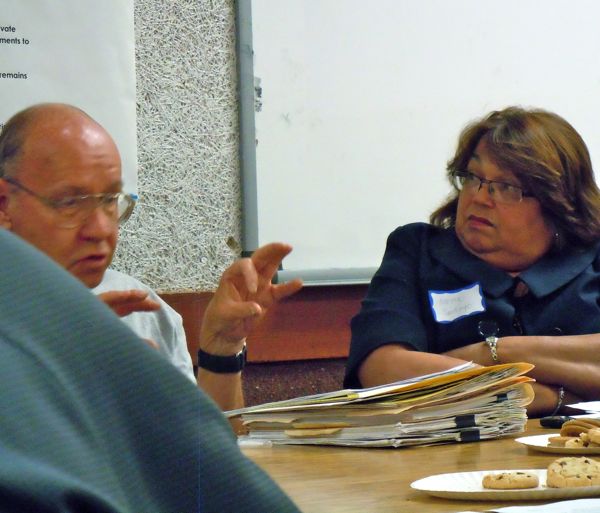
The community workshop to talk about changes in Tahoe City will be Oct. 17 at 6pm at Granlibakken.

Later this year the North Tahoe Fire Protection District will be moving into a new Tahoe City station located on Fairway Drive. This will leave the existing building, located in downtown Tahoe City at West Commons, vacant.

A group of community members representing various agencies and organizations including the North Lake Tahoe Historical Society, the Tahoe City Downtown Association, the North Lake Tahoe Resort Association, the North Tahoe Fire Protection District, the Tahoe City PUD and Placer County formed the West Commons Steering Committee. This committee commissioned a small study to come up with several alternatives for the site.

This is what the meeting is all about, as well as to find out what the public would like done with the site.


Putting green spin on Halloween with costume exchange

By Edward Ortiz, Sacramento Bee

Few may give it much thought, but Halloween may be the least eco-friendly of holidays.

Last year, Americans spent $2 billion on Halloween costumes. Typically, such costumes are discarded the following day. The materials, many of which are made of polyester and plastic, eventually find their way to landfills.

But a movement is under way to stem that tide. It’s called National Costume Swap Day, which took place Saturday. Locally, the eco-event was celebrated at the Roseville-based nonprofit reCreate.

Swapping only half of children’s costumes normally discarded would reduce annual landfill waste by 6,250 tons, according to the U.S. Census Bureau and Department of Transportation. That amount is the equivalent to the weight of 2,500 midsize cars.

Read the whole story