TACCD fund raiser at Ernie’s

Five restaurants are helping increase TACCD’s funding base to make sure it is around for another 30 years.

Ernie’s Café owners Paul and Judi Bruso will donate a percentage of their proceeds Oct. 11 to Tahoe Area Coordinating Council for the Disabled.

The next restaurants on the fund raising list are:

• Oct. 18 Passaretti’s

• Oct. 25 Taqueria Jalisco

• Oct. 27 Coyote Grill.


Opinion: How California can legally opt out of the war on pot

By Steve Kubby

Federal officials have declared war on California, insisting that any resistance to their Controlled Substance Act is futile. Like the Red Chinese attempting to crush Tibetan culture and autonomy, our own federal government is fraudulently asserting its authority to crush California’s vibrant cannabis economy and culture.

However, this is not Tibet, it is America. Freedom-loving Americans shed blood and sacrificed lives to provide us with a Constitution and Bill of Rights that secures our freedoms and allows us to enjoy the blessing of life, liberty and the pursuit of happiness.

Incredibly, the federal government alleges that under the Commerce and Supremacy clauses of the U.S. Constitution, federal law supersedes state law. Furthermore, we find there is an endless stream of legal experts and constitutional scholars who all mindlessly parrot this nonsense. Regardless of their legal standing or academic credentials, all these officials, experts and scholars are full of bongwater and do not know what they are talking about.

Steve Kubby

Steve Kubby

The notion that the federal government can use these clauses to impose federal law on cannabis produced and sold within California’s borders is absolutely false.

The government relies upon a bogus Supreme Court decision in Gonzales v. Raich, which found that consuming one’s locally grown marijuana for medical purposes affects the interstate market of marijuana, and hence that the federal government may regulate—and prohibit—such consumption. This argument stems from the landmark New Deal case Wickard v. Filburn, which supposedly held that the government may regulate personal cultivation and consumption of crops, due to the effect of that consumption on interstate commerce, however minute it may be. That may be true, but only under certain circumstances.

Lost in all the arguments presented in Gonzales v. Raich was the fact that Roscoe Filburn was a farmer who accepted New Deal federal money to limit how much wheat he grew. Filburn was caught violating his contract with the federal government by producing wheat in excess of the amount permitted. The government then sued Filburn for violating the terms of his contract, Filburn objected on constitutional grounds and the case went to the Supreme Court.

Now for a brief history lesson. During 1941, producers who officially enrolled in the Agricultural Adjustment Act of 1938, received an average price on the farm of about $1.16 a bushel, as compared with the world market price of 40 cents a bushel. Filburn signed up for the federal program and was paid to not grow over an allotted amount of wheat. In July 1940, pursuant to the Agricultural Adjustment Act, Filburn’s 1941 allotment was established at 11.1 acres and a normal yield of 20.1 bushels of wheat per acre. Filburn was given notice of the allotment in July 1940 before the fall planting of his 1941 crop of wheat, and again in July 1941, before it was harvested. Despite these notices and a signed contract with the federal government, Filburn planted 23 acres and harvested 239 bushels from his 11.9 acres of excess area.

Filburn argued that because the excess wheat was produced for his private consumption on his own farm, it never entered commerce at all, much less interstate commerce, and therefore was not a proper subject of federal regulation under the Commerce Clause. Unfortunately, Harvard educated attorney Robert Raich failed to point out that once Filburn accepted Federal money and violated the terms of his contract, then and only then, did it become a Federal matter. Had Raich argued that Wickard v. Filburn only applied in cases where farmers had enrolled in Federal programs, signed contracts and accepted Federal money, the Supreme Court would not have had any basis to render the defective decision that they did.

These same ignorant federal officials and legal experts will also tell you that the Tenth Amendment is ignored by the courts and has no real power. More bongwater. I call your attention to Bond v. United States in which the Supreme Court ruled this year to unanimously uphold the powers reserved to individuals and states by the Tenth Amendment. In that decision, all nine justices agreed that the Tenth Amendment means that “State sovereignty is not just an end in itself: ‘Rather, federalism secures to citizens the liberties that derive from the diffusion of sovereign power.’”

The Supreme Court further limited the role of the federal government in their decision by proclaiming:

Some of these liberties are of a political character. The federal structure allows local policies “more sensitive to the diverse needs of a heterogeneous society,” permits “innovation and experimentation,” enables greater citizen “involvement in democratic processes,” and makes gov­ernment “more responsive by putting the States in com­petition for a mobile citizenry.” Gregory v. Ashcroft, 501 U. S. 452, 458 (1991). Federalism secures the freedom of the individual. It allows States to respond, through the enactment of positive law, to the initiative of those who seek a voice in shaping the destiny of their own times without having to rely solely upon the political processes that control a remote central power.

The time has come to stand up for liberty and insist upon our 10th Amendment right to opt out of Federal laws that violate the sovereignty and safety of our state. Fortunately, California voters will have a chance on Nove. 6, 2012, to adopt a revolutionary new initiative that authorizes California to legally opt out of the Controlled Substances Act. That initiative is the Regulate Marijuana Like Wine Act and it was specifically written to invoke the full power and protections of our precious Constitution and Bill of Rights.

Steve Kubby is CEO of Strategic Campaigns LLC and serves as chief officer and campaign chairman for a new California voter initiative to Regulate Marijuana Like Wine.


10,000-acre thinning project may start in 2012 on S. Shore

By Kathryn Reed

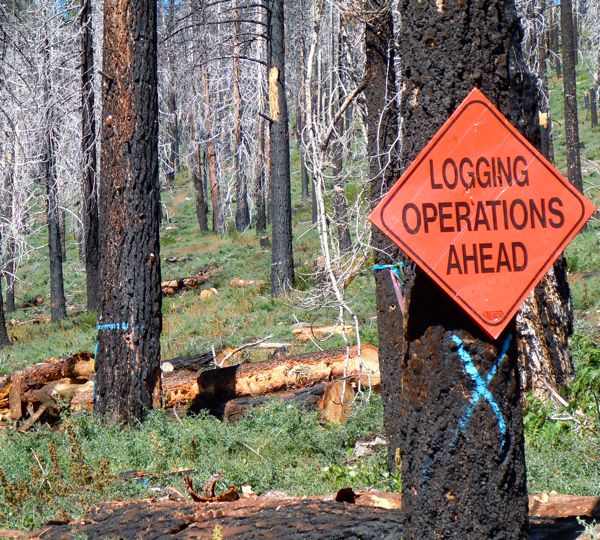
With parts of the forest near developed areas being in prime condition for a wildland fire much like in June 2007 when the Angora Fire consumed more than 3,000 acres, the U.S. Forest Service is ready to do something about that land.

Once the long-awaited South Shore Fuel Reduction and Healthy Forest Restoration Project gets under way – which could be next summer — 10,112 acres will be treated.
The 10,000-plus South Shore fuels project could begin in 2012. Photo/LTN file

The 10,000-plus South Shore fuels project could begin in 2012. Photo/LTN file

Duncan Leao, U.S. Forest Service forester, calls the wildland urban interface (this is where the forest abuts development) on the South Shore one of the areas in the basin that most needs treatment.

“It’s important work to do. We don’t want another Angora Fire. The conditions we are looking at in many places on the South Shore are conditions we saw in Angora before the fire,” Leao told Lake Tahoe News.

It will take about four years to thin the trees, with another four years for follow-up treatments. In all, it is roughly estimated to cost $40 million. The U.S. Forest Service, mostly through the Southern Nevada Public Lands Management Act, has secured three-quarters of that figure.

Before a single branch is limbed or tree felled, comments on the project will be taken until Oct. 28 from anyone who submitted a comment when the environmental impact statement was first released. If anyone files an objection to the final EIS, it triggers a 30-day resolution period.

Ultimately it is up to the forest supervisor to sign off on the document, allowing the project to go forward.

Then comes the process to obtain the necessary permits. The one from the Lahontan Regional Water Quality Control Board is the biggie.

However, Lauri Kemper, No. 2 at the regional water board, said the draft of the permit has been on hold since February 2010. But it takes more than a signature to make it valid.

California Environmental Quality Act regs are what Lahontan is going by. Lahontan officials must certify the EIS addresses CEQA concerns.

The project will involve working in stream environmental zones – that’s a main sticking point for the water board. It doesn’t mean no permit; it means a thorough review and not just taking the Forest Service at its word that the EIS is complete and addresses those concerns.

“We’re all for fuels reduction,” Kemper said.

What could hold up the project is the Lahontan board may not grant a permit until its May meeting. The Forest Service cannot go out to bid until all the permits are in place. This could delay work in what is already a limited season for thinning because dirt in the basin, per TRPA rules, can only be disturbed between May 1-Oct. 15.

A combination of mechanical and hand treatments are likely to be used.

Whether hand thinning could begin without the Lahontan permit depends on what type of permit Lahontan decides to issue. There are three possible ways it can permit the project.

Trees 16-inches and less in diameter are likely to be felled by hand, while those up to 30 inches would be taken out by machines. Most likely the process will be similar to what is being done in the Angora area in terms of the machines used. The forest pattern will be different because Angora is mostly about removing dead trees.

“A lot of hand work goes pretty quick. Then (people) would see piles. Those may last a couple years,” Leao explained. “With the mechanical you do not see as many piles because most of it is removed.”

Trails used by recreationists will either be off-limits at times or rerouted to ensure no one is hurt as the work is being done.

“It will be a combo of biomass and merchantable material — stuff that could go to a mill will depend if there is a mill nearby. The market is very difficult to predict,” Leao said. “If no sawmill is open, then contractors would have to determine what to do with that. It’s very helpful to have both biomass and saw log markets.”

The USFS decides which trees to thin first based on size – taking out the smallest at the get-go. Then the health of the tree and species are determining factors.

Jeffery and sugar pine, incense cedar and larger trees are ones Leao said the Forest Service wants to keep.

Diseased trees, including ones with mistletoe, will be on the chopping block.

“Ideally, you want a forest with multiple sizes and age classes. You can’t do that with thinning alone,” Leao said. “As we get the WUI stuff done, the forest still has an even age to it. Fire and planting trees, and other methods could be used to get it into a healthier condition. That is more long term.”

To view the South Shore final EIS, go online.


Reno woman represents U.S. in world tennis competition

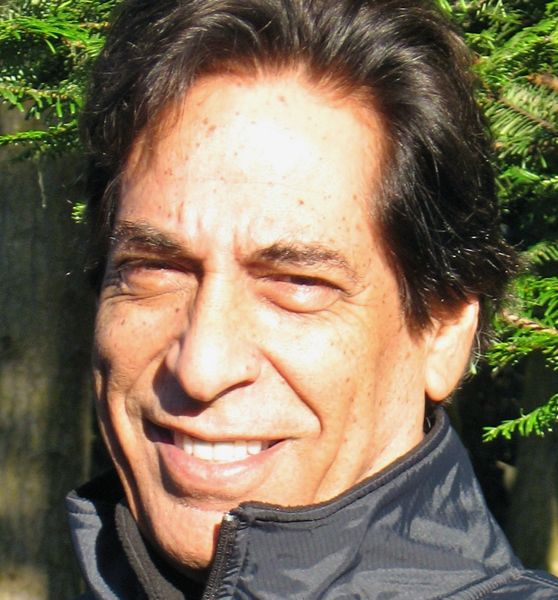
This is year 15 that Doris DeVries of Reno has competed in the World Team Championships.

DeVries and her 75s Queen’s Cup teammates are in Turkey now through Oct. 15 for the tennis tournament.

DeVries is the reigning European Champion in 75s singles and doubles.

— Lake Tahoe News staff report


TVES to be part of Guinness world record attempt

Students at Tahoe Valley Elementary School are going to be a part of a world record jumping jack attempt Tuesday.

The entire school will be on the field at 12:30pm to be a part of it.

First lady Michelle Obama kicks it off in front of the White House.

If enough people are certified, the South Lake Tahoe school will be a part of an official Guinness Book of World Records record.

For more information, go online.


Chamber meeting featuring ski industry execs

The North Lake Tahoe Chamber of Commerce is hosting its annual chamber membership lunch Oct. 27 at noon, with registration beginning at 11:30am, at the North Tahoe Event Center in Kings Beach.

This year’s presentation is titled “The Changing Face of the North Lake Tahoe Ski Industry” with a guest speaker panel that includes General Manager Bill Rock of Northstar, Chief Executive Officer Art Chapman of JMA (co-owner of Squaw-Alpine, and sole owner of Homewood Mountain Resort) and Chief Executive Office Andy Wirth of Squaw-Alpine.

Attendees will learn about the new ownership of the larger ski resorts, the future of skiing in North Lake Tahoe, what’s new on the mountains and what does the merger of Alpine Meadows and Squaw Valley mean for employees and guests.

Bella Affair will cater the luncheon. Cost is $35/per person for chamber members and $45/per person for non-chamber members before Oct. 24, and $40/members and $50/non-members after Oct. 24.

For more information about the lunch or to register, call Kym Fabel, North Lake Tahoe Chamber of Commerce manager, at (530) 581.8764 or kym@puretahoenorth.com.


Remains found in Washington may of S. Lake Tahoe woman

By Abby Sewell, Los Angeles Times

Human remains that may belong to a missing California woman who attended the countercultural Rainbow Gathering have been found in a Washington forest, officials said Monday.

Marie Hanson, 54, of Lake Tahoe, disappeared in July after attending the event in Gifford Pinchot National Forest. The countercultural event is held each year in a different national forest.

The Skamania County Sheriff’s Office released a statement Monday saying searchers had found skeletal remains and jewelry Sunday afternoon in the area where Hanson had disappeared.

Officials were still combing the area Monday for evidence.

Read the whole story


Sugar pine seedlings ready to be put in the ground

The Sugar Pine Foundation plans to plant 15,000 young sugar pines and other native tree seedlings throughout the Lake Tahoe region now through November. During this time, the soil is naturally moistened from rainfall and conditions are ideal for giving young seedlings a good start.

On the South Shore, there will be two community plantings. The first is Oct. 22 from 10am to noon at the U.S. Forest Service’s Dreyfus Estates property. The site is located off of Highway 50 between Zephyr Cove beach and Skyland. South Lake Tahoe Rotary will be assisting in the planting, but more volunteers are needed. SPF plans to put 1,200 trees in the ground at this site.

The second planting is Oct. 29 in the Glenbrook community – also from 10am to noon – and volunteers are needed. Glenbrook Homeowners Association, the Forest Service and Nevada State Parks are also hosting planting events with South Tahoe Middle School students throughout the fall. All sixth-graders from South Tahoe Middle School will plant trees and learn about forest and fire ecology, watershed health and acquire basic orienteering skills on their field trips to Glenbrook, the Dreyfus Estates and Van Sickle Bi-state Park.

The sugar pines SPF is planting need all the help that they can get because they are the progeny of white pine blister rust resistant sugar pines. White pine blister rust is a nonnative, invasive fungus that is killing sugar pines, Western white pines, and whitebark pines in the Tahoe area. Between 3 and 5 percent of sugar pines are genetically resistant to the fungus. The goal of the SPF is to help save Tahoe’s sugar pines by planting blister rust-resistant seedlings throughout the basin and surrounding areas.

Fall 2011 planting schedule:

Oct. 16, 9am-1pm: Truckee River Day Planting. Park at Glenshire/Devonshire Clubhouse at 15726 Glenshire Drive — sign up with Truckee River Watershed Council.

Oct. 22, 10am-noon: Community Planting at Dreyfus Estates. Park along Highway 50 between Zephyr Cove Beach and Skyland.

Oct. 29, 10am-noon: Glenbrook Community Planting. Get directions to China Gardens at the gate.

Nov. 5, 11am-1pm: Waddle Ranch Community Planting. Meet at Truckee Airport to carpool or 4WD needed.

For more information, go online or email admin@sugarpinefoundation.org.


LTCC art instructor’s work to be shown in Reno

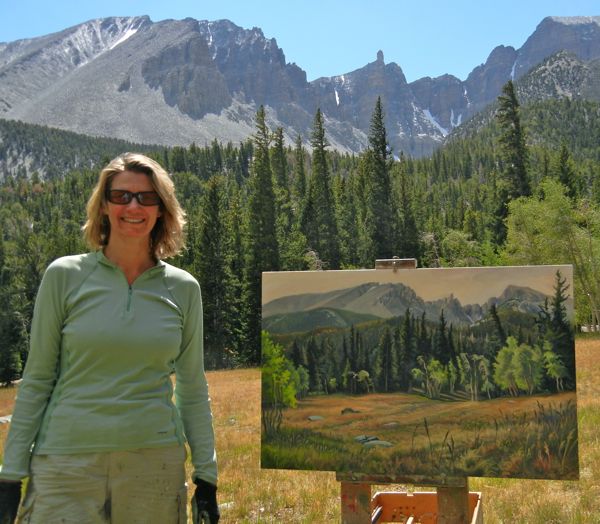
Phyllis Shafer, Lake Tahoe Community College’s art department chair, will have a solo exhibition of her recent paintings at Stremmel Gallery in Reno.

The opening reception is Oct. 20 from 5:30-7:30pm at the gallery at 1400 S. Virginia St.

Phyllis Shafer at Great Basin National Park in September. Photo/Linda Ruckdeschel

Phyllis Shafer at Great Basin National Park in September. Photo/Linda Ruckdeschel

Shafer’s work will be on display through Nov. 19.

This series of paintings representing two years of work, focuses on the landscape of Northern Nevada.

For more information, go online.


Career counseling at LTCC not just for students

On Wednesdays from 1-3pm at the Lake Tahoe Community College library is a drop-in career clinic with consultant Michael Donahoe.

The clinic is available to anyone.

Donahoe is a consultant with more than 30 years experience helping individuals and organizations increase their effectiveness. He’s conducted leadership workshops for thousands of employees, supervisors and managers in both the public and private sector both here and abroad, and focused on workplace communications, accountability and maximizing individual strengths.

Talk about major or career goals, work on interview skills, and resume building are possible topics.

Personality assessment is also available.

Call (530) 541.4660, ext. 232 to make an appointment, or sign up in the library, 0r just drop in.