N. Shore man’s BASE jump lands him in a tree, then jail

By Cathy Locke, Sacramento Bee

A parachutist who took a moonlight leap off the Foresthill Bridge on Wednesday night landed in jail after a Placer County sheriff’s helicopter crew had to pluck him from a pine tree.

Scott Liske, supervising ranger for the Auburn State Recreation Area, said Nicholas Frey, 34, of Olympic Valley jumped from the bridge 730 feet above the American River canyon. Frey intended to land near the east side of the north fork of the American River, but his parachute became caught in a gray pine.

Liske said Frey dangled there for about an hour – possibly while companions tried to figure out how to get him down – before calling 911 shortly after midnight.

Frey was hanging about 60 feet above a roadway, on the end of a branch that extended about 45 feet out from the trunk of the tree.

“It was not an easy rescue,” Liske said.

Read the whole story


Snippets about Lake Tahoe

northstar• Northstar is the only California resort on Forbes magazine’s list of most kid-friendly ski areas.

• Mark Williams, music department chairman at Lake Tahoe Community College, will be staring in Western Nevada Musical Theatre Company’s production of “Phantom of the Opera” in November.

• Squaw Valley and Alpine Meadows auctioned off the first combined season pass on eBay, with all proceeds benefiting the Humane Society of Truckee Tahoe. Tahoe Super Pass number 00001 sold for $1,294.69.

• The new Uranus record label just released its first CD containing Elvis Presley’s previously unreleased Dinner Show from May 11, 1973, in Lake Tahoe.

• Kate Bush’s latest album is called “50 Words for Snow” and one of the tracks is called “Lake Tahoe”.


Poetry plus Halloween makes for a ‘scary slam’

Bona Fide Books’ second annual Scary Slam and literary costume contest is Oct. 29 at 7pm at Bona Fide HQ in Meyers.

The event is free and open to the public.

Come prepared to scare with a short story or poem of your creation, or choose a spooky classic to enthrall the crowd. From Edgar Allen Poe to Stephen King, all things scary are game.

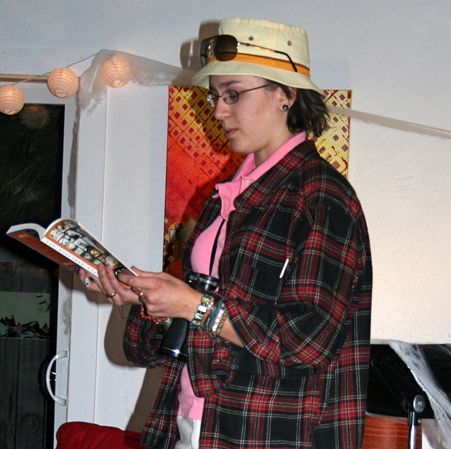
Holly Beck won the 2010 costume contest as Hunter S. Thompson. Photo/Suzanne Roberts

Holly Beck won the 2010 costume contest as Hunter S. Thompson. Photo/Suzanne Roberts

There is a $5 entry fee to slam, with the pot going to the most terrifying. Prizes will also be awarded to the crowd’s choice for best literary-inspired costumes.

Reno-based poet and slam organizer Benjamin Arnold will be the evening’s otherworldly emcee. Tarot readings, campy horror flicks, villainous victuals, and haunting company will also be on tap at your local small press.

Bona Fide HQ is located at 1069 Magua St., No. 4, behind the Getaway Café in Meyers.

For more information, contact Kim Wyatt at editor@bonafidebooks.com, call (530) 573.1513 or go online.


Opinion: Sense of community means giving back as a company

By Stephanie Grigsby

Anthony J. D’Angelo wrote, “Without a sense of caring, there can be no sense of community.” I have been a member of the Lake Tahoe community for over 11 years, but still I find myself astounded at the passion and efforts our members put into making Tahoe an enjoyable, successful, vibrant city. Our area is full of people who inspire me with their constant striving to make Tahoe a better place for us all.

This sense of spirit is no more evident than within the walls of my office. I work as a principal at Design Workshop, an international landscape architecture and land-planning firm with an office right here in Tahoe. I feel compelled to recognize the extraordinary dedication and talents of my co-workers, and how their sense of community betterment has impacted our firm. I am continually impressed by the quality of design they produce but also by the fact that each person donates his or her time and talents to give back to the area that has fostered and supported our business success.

Stephanie Grisby

Stephanie Grisby

This team understands the important need to sustainably improve the quality of life for its neighbors and friends and to provide an enriching experience to those who visit the area. Whether we are in the office, working on client projects, or volunteering our time to initiatives such as alternative transportation improvements, we are committed to the community.

Ben Fish, operations manager at Design Workshop, also serves as board member and trails director of the Tahoe Area Mountain Biking Association. He has a passion for making Tahoe a year-round destination for adventure seekers who want to explore the city’s natural environment by bike. This spring, he brought together over 40 people, including land managers and resort operators, for a three-day workshop put on by the International Mountain Bike Association to focus on techniques to build and design trails that benefit communities socially and economically.

Steve Noll, my fellow principal at Design Workshop, focuses on volunteer efforts that advance alternative modes of transportation and recreational improvements in Tahoe. Noll assisted in the initial design for the field renovations of the South Tahoe track and soccer field and is a charter member of the Lake Tahoe Bicycle Coalition, promoting the development and maintenance of bike lanes and paths.

Micah Langdon, an associate at Design Workshop, organized a volunteer effort to design and construct a kids’ garden at Western Nevada College’s Child Development Center, using tires that had been dumped in vacant lands. His son and schoolmates learn how to help plants grow while the greater community enjoys a cleaner landscape.

In addition to these specific efforts, many members of the Lake Tahoe team of Design Workshop regularly spend time serving on boards, planning committees and business cooperatives as well as contributing to the community arts and organizations.

Over the past 11 years I have been fortunate not only to work on important projects that better our community, such as the South Tahoe Greenway, but to also work alongside a team of talented individuals who are committed to bettering Tahoe. This spirit of dedication is the reason I enjoy coming into my office every day. I work directly with a number of these neighborhood-oriented members, but I am delighted that there are numerous others whom I read about or see in action, cleaning beaches or building trails. So here is a big thank you to my colleagues at Design Workshop and to the many residents of Lake Tahoe who continually work to make our city great.

Stephanie Grigsby is a principal at Design Workshop.


Enrollment flattening in Douglas County

ZEPHYR COVE — Enrollment has done something at Douglas County School District’s lake schools that it hasn’t done in years – it’s gone up.

The increase from last year is 1.9 percent – which is eight students – but it is a sign things may be starting to level off.

Enrollment was on such a dramatic decline that Kingsbury Middle School closed a couple years ago, making Zephyr Cove Elementary a K-6 and Whittell High a 7-12.

Overall, enrollment in DCSD is down 1.1 percent from 2010 or 68 students. Valley schools are down 76 students or 1.9 percent.

The peak enrollment at the Lake Tahoe schools since 1990-91 was in 1997-98 with 942 students. This year there are 439 students at the lake.

Holly Luna, CFO for the district, at Tuesday’s meeting said, “Overall, grade levels are getting smaller.”

However, Luna cautioned, “One year does not make a trend.”

— Kathryn Reed


Bodie balancing gold interests with wilderness enthusiasts

By Mike Anton, Los Angeles Times

BODIE — On a day when the price of gold soared above $1,700 an ounce, Jack Shipley drove past tourists strolling through this historic Eastern Sierra mining camp and up a rutted road to where a new breed of prospectors have set their sights.

The Bodie Hills hug the California-Nevada line in Mono County — thousands of acres of jagged volcanic summits, thick sagebrush, dry lakes and plunging canyons lined with aspens.

The hills are a paradox: Empty and wild yet shot through with hundreds of untapped mining claims dating to the 19th century.

“I fell in love with this place the first time I saw it,” said Shipley, 66, who lived in Bodie, a ghost town turned state park, for a dozen years as its resident ranger. “But some of the most beautiful places here happen to be in the most concentrated mining zones.”

A bumpy 10 miles west of Bodie, Shipley stops at such a place — one he wishes would be left to heal. The Paramount Mine yielded mercury for two decades, the last big haul in the Bodie Hills.

Left behind are rusted oil drums and pipes, piles of wood and a spooky open pit — signs of abandonment that belie the vast gold deposits some believe remain underground.

With gold prices up more than 600% in the last decade, corporate prospectors are revisiting dormant mines worldwide: a South Carolina mine that funded the Confederacy; abandoned mines in the hills of Transylvania; Roman mines that haven’t been active for 2,000 years.

Among the seekers is Thomas Kaplan, a New York billionaire who’s a paradox himself, a shrewd commodities investor with gold mining ventures on five continents and co-founder of a conservation group that seeks to preserve big cat habitat in China and India, among other countries.

“If I’m given a choice between conservation and business, conservation wins, always,” Kaplan, an Oxford-educated historian, told Bloomberg BusinessWeek last year. He once spent $12 million to relocate a Bolivian village — its people, buildings, church, cemetery — to make way for a silver mine.

One of Kaplan’s companies, Cougar Gold, is eyeing the Paramount claims in the Bodie Hills, a mix of private and federal land. The interest has reignited a debate in Mono County over whether this raw swath of high desert is more valuable as protected wilderness than as a source of mineral wealth.

The split can be seen in the county seat of Bridgeport, whose fortunes have been tied to the area’s mining camps for 150 years.

Some in town see today’s gold rush as a lifeline to good-paying jobs. Others sense a rerun of the past when the boom times were relatively brief, the bad times drawn out and the environmental damage lasting.

“There’s a reason Bodie is a ghost town. Mining is a boom-and-bust industry,” said Stacy Corless, executive director of the conservation group Friends of the Inyo. “There’s still pollution up there left behind from mining 100 years ago. I’m worried about the legacy that’s left to future generations when this boom goes bust.”

Read the whole story


Workshop helps farmers bring food to consumers

Challenged by today’s industrial food system, many small farms are looking for new and creative ways to sell their products directly to consumers.

Western Nevada College Specialty Crop Institute offers a workshop on “Direct Marketing for Small Farms” on Nov. 5, 9am-5pm, at WNC Carson City campus, 2201 West College Pkwy.

Cost is $35 when registering by Oct. 27 and $45 after Oct. 27. Lunch is included.

Participants will learn how to develop and execute a simple, effective marketing plan to fit their small farm enterprise. Industry experts will present sessions that include branding and authentic messaging, media relations, effective signs and displays, Facebook and social media, and more. They will discuss sales options including farmers markets and farm stands, restaurants, subscription farms, u-pick, and other direct-marketing opportunities.

Featured speaker Vance Corum of Farmers’ Markets America is a direct marketing specialist who has assisted small farm entrepreneurs and farmers markets for more than 30 years. He is coauthor of the book “The New Farmers Market”.

Jonathan Wright, food and drink editor for the Reno Gazette-Journal and RENO Magazine, will present ideas on how to make friends with the media, learn interview skills and get pertinent messages to the public.

The WNC Specialty Crop Institute is an innovative program that teaches alternative farming methods. Funding for this project is provided by the Washington State University Western Center for Risk Management Education and the USDA National Institute of Food and Agriculture.

For information/registration, contact Ann Louhela at (775) 351.2551 or louhelaa@wnc.edu.


Washoe Meadows golf course drives wedge between users

By Kathryn Reed

A river runs through it – and that’s one of the problems as well as one of the things that make this area on the outskirts of South Lake Tahoe so beautiful.

Washoe Meadows State Park and Lake Valley Recreation Area are places even residents of the South Shore can’t locate on a map. This is one of the few state parks that is undeveloped – no signs, no trail markers – definitely no camping or concessionaire. The recreation area is better known as home of Lake Tahoe Golf Course in Meyers.
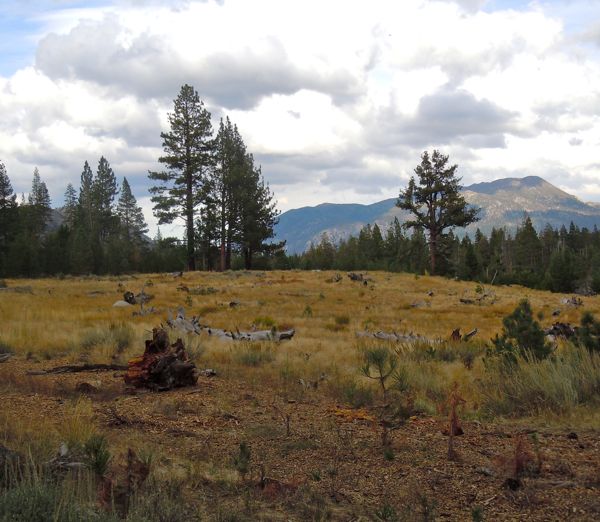
Part of Washoe Meadows State Park may be turned into a golf course. Photos/Kathryn Reed

Part of Washoe Meadows State Park may be turned into a golf course. Photos/Kathryn Reed

The areas are side-by-side, with no true indication of any property line. They share the Upper Truckee River running through the landscape. Therein lies the problem.

Various sections of the river have been or are slated to be reconfigured to restore the Upper Truckee to its natural meander. The goal is to reduce sediment reaching Lake Tahoe and to create a natural flowing river that floods its bank, which in turns restores meadows and provides appropriate habitat.

It’s the 1.5 miles of river belonging to the State Parks system that is taking center stage this month.

State Parks commissioners are slated to vote on the final environmental impact report Oct. 21. Alternative 2 is the preferred course of action. This would likely mean moving nine of the existing holes of the 18-hole course onto what is now State Parks property from the Recreation Area.

The original 1984 statute that came out of the lawsuit that resulted in State Parks owning the land says 777 acres were acquired by the state – which includes the state park and recreation area. The final EIR says the existing acreage in Lake Valley Recreation Area is 173 acres and would go to 211 if alternative 2 were approved; and Washoe Meadows has 608 acres and would become 570 in alternative 2. That’s from Volume V Page 5-3. However, Appendix K contradicts those numbers, saying what exists in the recreation area are 155 acres and it would go to 195; while the state park acreage is 628 and would go to 588.

An economic study indicates keeping the golf course a full 18-holes is preferable than reducing it to nine holes or making it an 18-hole executive course like Tahoe Paradise, which is on the other side of Highway 50.

It would be the concessionaire who would pay to essentially rebuild the golf course, but in turn it would be less income for State Parks at the get-go because the contract would be for less per year. State Parks contends in the long run it would be a financial gain for the state agency.

(A year-to-year lease is in place now until a decision about the river and golf course’s futures are decided.)

There are disagreements about whether river restoration is needed. There is no argument the river has been changed by man – mostly to accommodate logging and grazing needs from decades ago. But with the runoff from urban areas being the primary cause of the decline of lake clarity, some question why millions of dollars in taxpayer money is continuing to be spent on restoring Upper Truckee River.

Cyndie Walck, State Parks hydrologist, said that no one is mandating her agency restore the river, but at some point her agency must comply with Lahontan Regional Water Quality Control Board’s total maximum daily load standards. That unfunded mandate is being passed from the federal EPA to the state board to landowners in the Lake Tahoe Basin to reduce fine sediment from their respective properties that reach Lake Tahoe.

Walck told Lake Tahoe News that without funding to restore the river and to rebuild the golf course, neither would happen. Money does not exist at this point, but often becomes available once environmental documents are in place.

“The EIR lays out what we think the conceptual design of the river and golf course would be,” Walck said. “If approved, then we [get a] design contract to get grades right and river meander right.”

But there is a vocal group that believes the conceptual aspects of the preferred alternative are all out of whack.

Two members of the Washoe Meadows Community, a group dedicated to not altering the state park, this month gave this reporter a tour of what would be changed if alternative 2 were approved. On their website is a map that may printed to walk the route where changes are likely to occur.

This was a much different tour compared to what Walck led reporters on a year ago. That tour is the one parks commissioners will be given next week.

A notable difference is the State Parks tour enters from the golf course, shows the deteriorating banks of the river, goes into what looks like disturbed area and convincingly makes the point – why not make this area look better with a golf course?

The private tour that starts from a trail off Grizzly Mountain Road is equally convincing of their point-of-view – that this land should remain untouched.

“Where is the holistic view of the ecosystem?” asked Krissi Russell, who lives near the park.

“This provides a wildlife corridor,” Russell said as she walked near a fen.

The EPA defines a fen as, “… peat-forming wetlands that receive nutrients from sources other than precipitation: usually from upslope sources through drainage from surrounding mineral soils and from groundwater movement. Fens differ from bogs because they are less acidic and have higher nutrient levels. They are therefore able to support a much more diverse plant and animal community. These systems are often covered by grasses, sedges, rushes, and wildflowers. Some fens are characterized by parallel ridges of vegetation separated by less productive hollows.”

Walck says two studies have been done that say the fen will not be disturbed.

Lynne Paulson with the Washoe Meadows Community is enlisting the aid of a UNR professor to dispute the State Parks view.

Paulson’s group says the proposed changes will reduce public access to the Upper Truckee River in this area, while Walck says the opposite.

“It’s not fair for them to say we are trying to keep it for ourselves when they keep (the park) a secret,” Paulson said. “It is unusual to downgrade a state park.”

She believes if State Parks had put money into Washoe Meadows in the last 27 years then maybe it would be better known, used more and others would not want it to go from a natural environment to pristine grass for golfers.

They are not against the river restoration, but against a golf course on what is now State Parks land. Their preference is alternative 3 – making the course a nine-hole or executive course.

Moving the course will bring it to within 200-feet of some homes which now boarder a state park.

It would not go into the meadow where the Celio barn is, but it would bring it closer to that icon.

The Washoe Meadows Community is concerned other relics of Tahoe’s past will be disturbed as well, like the grinding rocks used by the Washoe Indians (which are part of their tour) and the old spring house (outside the tour) area.

Walck points to the two projects restoring Angora Creek on State Parks land as evidence of improvements to the property and her agency’s ability to do successful waterway upgrades.

In a week the State Parks commissioners will be asked to:

• Adjust the classification of certain land areas at Washoe Meadows State Park and Lake Valley State Recreation Area by modifying the boundary of the two units.

• Amend the General Plan for Lake Valley SRA.

• Certify the Upper Truckee River Restoration and Golf Course Reconfiguration Project environmental impact report.

The final EIR is in volumes four and five, which are downloadable, and are each about 1½ inches thick.

Dates to know:

• Oct. 20 at 1:30pm at the clubhouse of the Lake Tahoe Golf Course state parks commissioners will tour the proposed changes. Members of the public are requested to contact Louis Nastro at lnastro@parks.ca.gov prior to Oct. 17 if planning to attend.

• Oct. 21 9am at the clubhouse of the Lake Tahoe Golf Course state parks commissioners will vote on the environmental documents regarding swapping Washoe Meadows State Park and Lake Valley Recreation Area land. Here is the meeting agenda.

• Dec. 7 9:30am, Tahoe Regional Planning Agency APC votes on the EIR at the Stateline office.

• Dec. 15 9am TRPA Governing Board vote on certification of final EIR at Stateline office.

ngg_shortcode_0_placeholder (Click on photos to enlarge.)


Caltrans ready to cease work in South Lake Tahoe

Caltrans this weekend expects to wrap up year one of its three-year Highway 50 project in South Lake Tahoe.

Crews will be paving conforms – or entries to the side streets – on Friday and Saturday. The support work for the operation is part of the stormwater and water quality improvement project.

Motorists can expect east and westbound No. 2 lane closures at various locations from Fremont Avenue to Edgewood Circle between 7am and 7pm on Friday and Saturday.

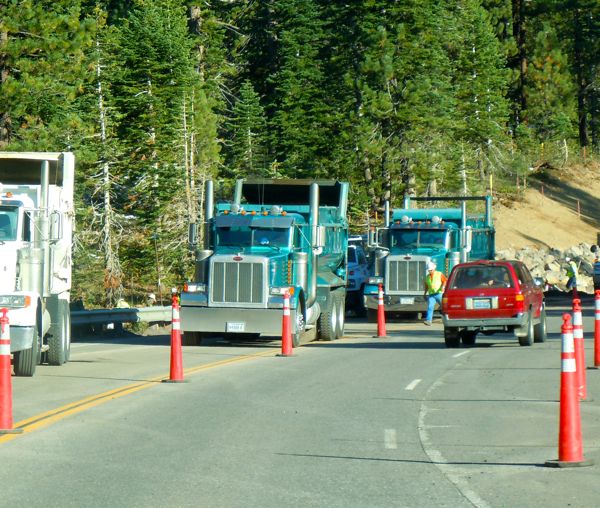
Lanes on Highway 267 between Northstar and Kings Beach are reconfigured. Photo/LTN

Lanes on Highway 267 between Northstar and Kings Beach are reconfigured. Photo/LTN

Caltrans says 15-minute delays are likely on Highway 267 on Oct. 14 between 7am-3pm and on Oct. 15 from 7am-6pm.

Crews are grinding and paving from shoulder to shoulder as part of a maintenance project.

The one-way traffic controls are from one-quarter mile south of Upper Horse Coral to the Brockway Summit.

The state transportation department is also in the middle of its every seven-year review of whether the 35mph speed on Highway 50 on the South Shore is appropriate. A conclusion is expected in the spring.

— Lake Tahoe News staff report


Fall festival, corn maze in Fallon

Lattin Farms’ 14th annual Fall Festival and Corn Maze in Fallon is under way.

This year’s maze was inspired by Tractors & Truffles, a small farm agriculture and arts event that will be celebrated in Fallon on Oct. 15. Visitors going through the maze will find a trail quiz filled with tractor trivia questions.

The fall festival is a jubilee of family activities. Visitors can take a hayride to the pumpkin patch to find the perfect pumpkin, build a life-size scarecrow at the Scarecrow Factory, or treat the little ones to a cow train ride or a trip through Critterville.

The fall festival is open throughout October from 5-8pm on Fridays and 10am-8pm on Saturdays. The maze will close at 6pm on Oct. 29.

Lattin Farms is located at 1955 McLean Road in Fallon. For more information, call 866.638.6293.