Assembly speaker uses money to control members

By Jim Sanders, Sacramento Bee

Assembly Speaker John A. Pérez single-handedly doles out millions in public funds each year to his 80 members: No vote, no committee, no debate.

Like speakers before him, the Assembly Democrat gives and can take away, handing out or withholding leadership posts that can boost office budgets by six-figure sums. Assembly rules give him sole authority to control purse strings, with no appeal.

The power of his position differs from operations in the smaller state Senate and can be necessary in wrangling votes from an unruly house.

Yet the public’s inability to monitor the speaker’s financial decisions came into sharper focus this year after a dispute between Pérez and one of his own caucus members. When The Bee and Los Angeles Times asked that records of Pérez’s budgetary deals with individual lawmakers be made public, the Assembly said no.

Former and current members, some of whom will only speak privately, note that other speakers have used the powers of the office to impose party discipline. But Pérez, they say, mishandled the public records controversy and is an especially demanding leader.

Assemblyman Tony Mendoza concedes that he has felt the speaker’s wrath.

The Artesia Democrat’s office allocation was cut by about $80,000 last December when Pérez demoted him from Rules Committee member to alternate. Mendoza declined to discuss why, saying simply, “things happen for a reason, it’s only obvious.”

Mendoza, a five-year legislative veteran, said Pérez is aggressive with Democrats in imposing his will on key votes – sometimes demanding caucus unanimity when it isn’t necessary.

“I’ve worked with a few other speakers, and I don’t think they’ve taken it to this extreme,” Mendoza said.

Robin Swanson, Pérez’s spokeswoman, said he operates honorably within an Assembly system that has existed for decades. He was elected speaker by members from both parties and bases his decisions on public benefit, she said.

“The speaker makes decisions about who will serve in positions of leadership and chair committees in the Assembly based on what he thinks is best for the people of California,” Swanson said.

Read the whole story


Halloween at Kahle Community Center

Celebrate the spirit of make believe, a sense of community and “Spooktacular” happenings all under one roof at Kahle Community Center on Halloween.

Festivities include carnival games, ooey gooey station and lots of treats for a “bootiful” fun, safe and “ghoulishly” good time for all ages.

The event is Oct. 31 from 4-6:30pm. Come dressed in a costume and bring an empty bag for treats.

Kiwanis of Lake Tahoe Sunrisers sponsors this event.

To volunteer to help or for more information, call Kahle Community Center at (775) 586.7271.


Barton undertaking needs assessment study

By Kathryn Reed

By mid-2012 Barton Health expects to have completed a needs assessment study that will show its strengths and weaknesses when it comes to reaching actual and potential clients.

All nonprofit hospitals will be required to do these studies every three years as part of the Patient Protection and Affordable Care Act in the health care reform passed by Congress.

barton“This assessment will be led by Barton in 2012 and will identify the health issues that should be addressed in the South Lake Tahoe area. Barton plans to identify barriers to access to healthcare services, preventative healthcare needs, modifiable health risks, quality of life issues and overall health status of our community,” Monica Sciuto, spokeswoman for Barton Health, told Lake Tahoe News.

Phone interviews, focus groups and working with agencies on the South Shore will enable the health care provider to collect demographic and health data that is required by the feds.

One benefit is the quantitative data will allow Barton to know where it should focus efforts with programs and money.

A consultant will be hired to do the study to keep any biases out of the data collection.

“I foresee an increase in wellness programs for our community. The idea is to keep people out of the hospital. I know it’s confusing to people to say that,” Sciuto said. “The new health care model is focused on keeping people healthy.”

Keeping them healthy also keeps them out of the emergency room – which comes with a higher price tag for all involved.

Part of the assessment will also include determining what Barton can afford to provide. A small population does not allow all the specialists to be hired that a metropolitan area can employ.

The study, though, will also focus on specific needs to the South Shore.

“We keep seeing some of the same people come through our emergency department,” Sciuto said. “We need to talk to the police force, CASA, Tahoe Youth & Family Services, public health to see what are they seeing so we circle around in a real way and address their issues.”


Food swap in Truckee

Truckee River Winery with Slow Food Lake Tahoe is hosting a food swap Oct. 30 from 2-4pm.

A food swap is where your homemade, homegrown, and foraged creations become your own personal currency for use in trading. All swap items must be homemade, homegrown or foraged by you.

Jams, pickled anything, honey, olive oil, backyard eggs, baked good, fruits, pasta – get creative. This is an opportunity to bring in a large amount of something you love to create, and leave with an array of new items from your neighbors. You can bring as little or as much as you like.

Feel free to bring a combination of items (loaves of bread and spice blends).

If possible, bring a few samples for participants to try.

Make sure to package well. We encourage earth-friendly packaging whenever possible.

Also, leaving an email address on a label is a great way to stay in contact with anyone you may meet throughout the trade.

This event is open to everyone, however you must register for the event. To register, click here.

The winery is at 11467 Brockway Road, Truckee.


Tahoe Cross County Ski Swap

The 11th annual Tahoe Cross County Ski Swap is Nov. 12 form 10am to 3pm.

Skate ski equipment, classic, light touring, backcountry, snowshoes, kid’s sleds, kid’s ski gear, clothing and accessories will be available. Also for sale will be used rental gear, demos, samples, everything you need for the season.

Selling? Register your sale items Nov. 11th from 2-9pm. Commission on sold items is 15 percent.

For more information, call (530) 583.5475.


Tahoe Tails — Adoptable Pets in South Lake Tahoe

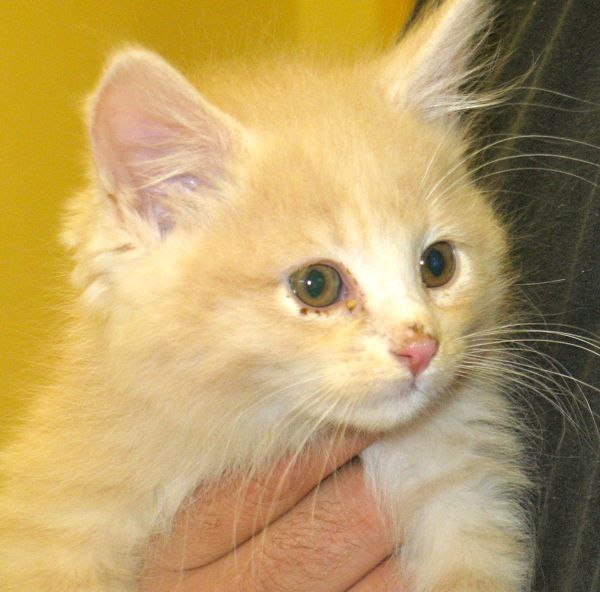
Calvin is just one of nine 2- to 4-month-old kittens at the shelter right now. They are all cute and playful, and ready to go home.

catWith the reduced fee for cats and kittens is due to expire Oct. 31, now is the perfect time to adopt a new friend.

Calvin is neutered, microchipped, and vaccinated. He is at the El Dorado County Animal Services shelter in Meyers, along with many other dogs and cats who are waiting for their new homes.

Call (530) 573.7925 for directions, hours, and other information on adopting a pet.

For spay-neuter assistance for South Tahoe residents, go online.

— Karen Kuentz


Caution urged when having fires inside

The colder days and nights of autumn remind us to get ready for indoor fire safety. Be extra cautious with wood stoves and fireplaces and keep anything that will burn at least 3 feet away.

sltfdHave your chimney inspected or cleaned every year. Don’t use large amounts of paper or cardboard to build a fire in your fireplace or wood stove.

Never burn charcoal indoors because burning charcoal gives off the poisonous gas carbon monoxide.

Finally, don’t use flammable liquids to start or add to a fire that is already lit.

— Sallie Ross-Filgo, SLTFD


Tahoe Rim Trail celebrating 30 years

Tahoe Rim Trail Association’s 30th anniversary annual meeting celebration is Nov. 5 at the North Tahoe Event Center in Kings Beach.

The event includes an online auction as well as a silent auction, buffet-style dinner, membership meeting, and presentation of volunteer awards.

The meeting begins at 5pm with a silent auction and cocktail hour. After the cocktail hour will be a buffet-style dinner, presentation of volunteer awards, and a historical presentation of the association’s 30-year history. Space is limited.

The online auction is open Oct. 24-Nov. 12.

The cost for the annual meeting/dinner is $35 per person $60/couple through pre-registration online.


Photographer shares techniques in 6-week class

The Technique and Art of Photography is designed to allow the student to learn the fundamentals of photography as well as to deepen their creative inner self. More specifically the student will learn about the basic functions of a camera and different size lenses, as well as f-stops, shutter speeds, and ISO, and how to control and combine each to control movement, depth of field and composition in an image.

Students will learn about light and also a bit about postproduction, i.e.: processing the digital image.

The artistic portion of the course will familiarize the student with techniques designed to increase creativity. Skills such as meditation, visioning and journaling will be taught, as well as concepts such as The Artist’s Date (taken from Julia Cameron’s “The Artist’s Way”).

This six-week class is Thursday evenings 5-8 starting Dec. 1.

Karen Linsley is the instructor. Classes will be at Image Angels Photography Studios, 3665 Tamarack (off Ski Run Boulevard), across the street from Cafe Fiori and Nepheles restaurants in South Lake Tahoe.

Cost is $120.

Call (530) 544.9336 for more information or to register for the class.


Opinion: Why Nevadans do nothing about wildfire threat

By Ed Smith

University of Nevada Cooperative Extension, in collaboration with Nevada’s firefighting organizations, recently hosted the Nevada Wildland-Urban Interface Fire Summit. The summit’s purpose was to discuss ways to reduce the wildfire threat to Nevada’s wildfire-prone communities. This year’s summit theme addressed the concept of creating fire adapted communities, or FACs.

A FAC is a community that can survive wildfire with little or no assistance from firefighters. This is possible because of the way the homes are built, the manner in which vegetation is managed and the knowledge possessed by its residents. To accomplish this, community members must be proactive. Unfortunately, many Nevadans living in high-fire-hazard areas fail to take action before the wildfire occurs.

Why? What prevents them from taking the steps necessary to protect their families, homes and possessions? At the summit, we asked approximately 80 community leaders and firefighting agency representatives from 30 high-fire-hazard communities in Nevada those questions. Presented below are some of the popular responses.

Cost and time: The perception that reducing the wildfire threat (e.g., creating defensible space, replacing untreated wood roofs, etc.) would be too costly, in terms of money and time, was identified as a major obstacle to taking action. This is also a question of priorities. Some property owners living in high fire-hazard areas have discretionary income and leisure time. They choose to spend this extra money and time on things they consider to be more desirable than creating a fire-safe environment.

Ed Smith is a natural resource specialist with University of Nevada Cooperative Extension.