Snippets about Lake Tahoe

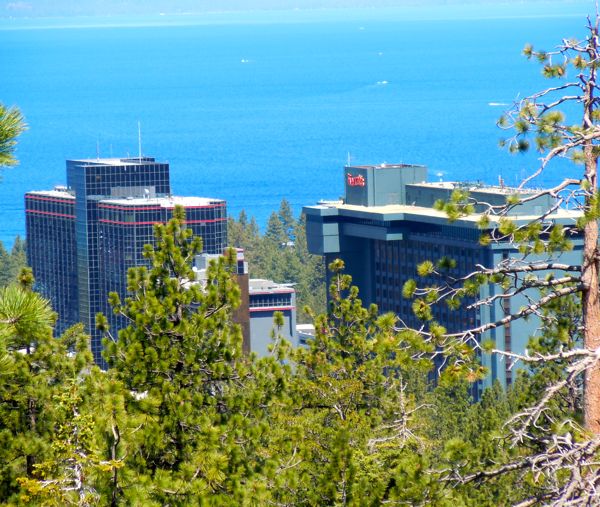
harrahs• Caesars Entertainment Corp., owners of Harrah’s Lake Tahoe and Harveys, is planning to become a public company again. Expect an IPO next year. In 2008, private equity firms Apollo Management Group and Texas Pacific Group bought the Las Vegas-based company for $30.7 billion.

• More than 50 people applied for the superintendent job at Tahoe Truckee Unified School District. Nine candidates will be interviewed starting next week. Finalists will be interviewed in early December, with the appointment made in early January.

• Tahoe Maritime Museum in Homewood is having a free open house Nov. 19 from 10am-5pm.

• Kingsbury General Improvement District’s board on Nov. 15 agreed to seek a $5 million general obligation bond to pay for improvements of the water system.

• The League of California Cities appointed South Lake Tahoe City Councilwoman Angela Swanson to the Policy Committee on Transportation, Communication and Public Works as well as the Sacramento Valley Division Committee.


History: Rise and fall of Tahoe through geological lens

Publisher’s note: This is reprinted from the Fall Quarterly 1977 Lake Tahoe Historical Society newsletter.

Temperamental weather failed to discourage 75 friends of the Lake Tahoe Historical Society who turned out to enjoy the 1977 opening of the Log Cabin Museum, Star Lake Road off Highway 50, on May 22.

history logoMuseum Director Henry Newburgh greeted visitors and discussed museum displays.

Board members Pat Amundson, Ron Porter, Carolyn Nagy, Martha Reinholdt, Brooke Laine, and Linda Mendizabal served refreshments and assisted with brisk sales of memberships, books, and posters. This year’s poster, printings of two of the Society’s most popular photos, were well received.

Visitors adjourned to the school district board room for a slide presentation by Dr. Jonathan Davis of the University of Nevada. Davis recently completed his doctoral thesis in geology and archeology at the University of Idaho.

An enlightening question and answer session followed the presentation. Some of the group ignored the spring rain and accompanied Davis to archeological sites at Kiva Beach and Fallen Leaf campground.

Davis highlighted the prehistoric activity of the area. He noted volcanic evidence predates formation of the lake. Millions of years ago, the Sierra Nevada Mountains were uplifted in a single block with “slivers” breaking off at the northern end. One such sliver is the Carson Range. The Tahoe Basin is a result of faulting, Davis explained.

Either the area never uplifted with the batholith or it fell back again. More than 100 year ago, an icecap covered Glen Alpine and Desolation Valley. Glen Alpine is a classic glacial valley with Emerald Bay and Fallen Leaf Lake glacial imprints, the geologist said.

The present Tahoe landscape is about 6,000 years old and a few radio-carbon dates go back 8,000 years, Davis said.

The Washoe Indians summered at Lake Tahoe, establishing fishing camps at the lake’s edge. Those sites older than 6,000 years presumably drowned with the natural rise in the lake level.

The South Shore is a drowned coast, evidence by the muddy shoreline waters and meadows bounded by Taylor and Tallac Creeks, the geologist said. The weather was hotter and dried up to 4,000 years ago.

The Washoes rarely wintered in Tahoe, dispersing after the fish runs, from Honey Lake to Topaz Lake. Some groups lived near the hot springs in Carson Valley, hunting and gathering plants in early fall, he said.

They gathered pine nuts from the Virginia Mountains for winter food stores in late fall.

Tahoe is symbolic because it was the only place the entire Washo nation gathered during their annual cycle, Davis said.

— Linda Mendizabal


Opinion: Legal and political analysis of Regulate Marijuana Like Wine

By Steve Kubby

Medical marijuana is under assault like never before. Multiple federal agencies including the IRS, DEA, and DOJ all have their own proprietary programs to end California’s experiment with the medicalization of cannabis.

Furthermore, an increasing number of voters are fed up with what they perceive as abuses of the MCDs and the easy access to cannabis for young people who otherwise appear healthy. For many in California, “medical marijuana has become a joke.”
kubby

Steve Kubby

In addition to the federal assault, two recent decisions in state appellate courts have ruled that local jurisdictions can ban dispensaries. In Riverside v. Inland Patients, the court ruled that nothing in state law prevents cities or counties from banning dispensaries. In a similar case in Long Beach, the court went even further and ruled that only the federal government can regulate marijuana and any attempt by a local jurisdiction is illegal and a violation of the Controlled Substance Act.

California laws “do not provide individuals with inalienable rights to establish, operate or use” dispensaries, nor do they say that dispensaries “shall be permitted within every city and county,” wrote Justice Carol Codrington for a unanimous court in City of Riverside v. Inland Empire Patients Health and Wellness Center. California law expressly allows localities to regulate dispensaries and restrict their locations, Codrington wrote, adding that a total ban is “simply a means of regulation or restriction.”

In the days since the ruling was announced, a number of localities have already either moved to enact bans or halted plans to regulate dispensaries.

Fortunately, our campaign team saw this coming a year ago when Michele Leonhart was confirmed as Obama’s choice to head the DEA. During her confirmation hearing in the Senate, she was asked if she intended to uphold Obama’s promise to respect state laws on medical marijuana and she didn’t hesitate to say no, it’s illegal under federal law and that she intended to enforce the law. We knew then that current laws would not protect dispensaries, growers or patients and we needed to create new laws, as well as a new legal strategy to overcome the many hurdles that we now face.

To understand the revolutionary and widespread benefits of the Regulate Marijuana Like Wine Act, we must begin by asking, “Why didn’t Prop. 215 protect patients from arrest? After all, we specifically said that 215 Exempts patients and caregivers.”

The biggest problem is that we assumed “exempts” meant “protects from arrest,” but we didn’t say that. Instead, by saying “exempts” we laid the groundwork for prosecutors to define the “affirmative defense” as our “exemption”. So it is clear that any future initiative needs to specifically and clearly spell it out. This is exactly what we do in RMLW2012:

(b)(6) This Act enjoins the search, arrest, prosecution, property seizure, asset forfeiture, eradication costs, and/or any criminal or civil penalty, or sanction, for activity authorized herein.

(Note: “enjoins” is a legal term that means legally prohibited from doing something)

The next major problem with 215 is that it failed to remove bad laws from the books. California’s medical marijuana laws are not in conflict with the CSA or federal drug laws, as they merely decriminalizes possession and cultivation of marijuana statewide, for certain individuals, in a defined medical class. Nothing in the CSA or federal law requires California to pass any state laws outlawing marijuana use, possession, sales or cultivation. However, by stopping at decrim, instead of repeal, we left the door wide open for police and prosecutors to find ways to charge bona fide patients, who were compliant with 215, with criminal activity nevertheless. RMLW fixes this problem by repealing all those terrible marijuana laws:

(b) This act does all of the following:

(1) Repeals California Health and Safety Code sections 11357, 11358, 11359, 11360, 11361, 11485, Vehicle Code section 23222(b). Marijuana is removed from Health and Safety Code sections 11364 through 11375, 11366, 11366.5, 11469 through 11495, 11532(b)(7), 11590, 11703, and 11999. Adults 21 years of age and older, and approved business entities shall no longer be prohibited from association, use, possession, trade, processing, packaging, gifting, vending, sales, distribution, storage, transportation, production, or cultivation of marijuana. This act establishes rights not defenses.

Notice that in the last sentence, we state that RMLW is establishing actual civil rights, not just affirmative defenses.

The final major problem with 215 is it didn’t prohibit the Feds from simply buying the cooperation of local police and prosecutors. For example, last month the Feds gave California $72 million to arrest and prosecute marijuana growers and sellers. That money goes directly to police and prosecutors who understand they are being paid to make marijuana arrests and to obtain convictions. RMLW puts an end to this bribery under color of law and specifically forbids any cooperation by state officers with federal agents:

(e) State, local, elected, appointed, hired employees, officers, and officials shall not directly or indirectly cooperate with or assist federal, state, local officers or officials, volunteers, or employees who eradicate marijuana, act for seizure or forfeiture, or to defeat any liberally construed purpose of this Act, nor may any state or local agency contract to eradicate marijuana that is being grown, manufactured or stored under the provisions of this act.

Another important feature of RMLW is that no longer will kids get a criminal record or be locked up with career criminals for minor marijuana crimes, since we remove all criminal penalties and replace it with a stiff civil fine of $2,500 instead.

Of course, we expect the feds to challenge RMLW in the courts once it passes. We welcome such legal challenges. According to William McPike, “The law is all about challenge. A good initiative should challenge the law and even be prepared to lose a few clauses in court battles. Because of the Severance Clause we would still have enough rights and protections under our new initiative, to block the feds from enforcing their laws. For example, our non-cooperation clause, just by itself, is a powerful tool for ending Federal raids and prosecutions.”

Mr. McPike also points out the the attorney general must defend these cases, as specifically required by RMLW, so we won’t have any big litigation costs and we can still submit our own amicus briefs to ensure we make good arguments in court.

We believe that once this voter initiative passes, we will have the upper hand in court. Firstly, we believe the recent unanimous U.S. Supreme Court decision in Bond v. US can be used to argue the Tenth Amendment provides states with sovereign powers:

“Some of these liberties are of a political character. The federal structure allows local policies “more sensitive to the diverse needs of a heterogeneous society,” permits “innovation and experimentation,” enables greater citizen “involvement in democratic processes,” and makes gov­ernment “more responsive by putting the States in com­petition for a mobile citizenry.” Gregory v. Ashcroft, 501 U. S. 452, 458 (1991). Federalism secures the freedom of the individual. It allows States to respond, through the enactment of positive law, to the initiative of those who seek a voice in shaping the destiny of their own times without having to rely solely upon the political processes that control a remote central power. True, of course, these objects cannot be vindicated by the judiciary in the ab­sence of a proper case or controversy; but the individual liberty secured by federalism is not simply derivative of the rights of the states. Federalism also protects the liberty of all persons within a State by ensuring that laws enacted in excess of dele­gated governmental power cannot direct or control their actions. See ibid. By denying any one government com­plete jurisdiction over all the concerns of public life, feder­alism protects the liberty of the individual from arbitrary power. When government acts in excess of its lawful powers, that liberty is at stake.”

Secondly, we note that NORML is currently mounting a legal challenge to the Federal raids, by relying upon the same Ninth and Tenth Amendment arguments that we do. Finally, like the NORML attorneys, we are eager to set the record straight regarding Gonzalez v. Raich to show that the Commerce Clause can only be applied where there is a contract between an individual and the Federal government in which they are paid by the government not to grow more than an agreed upon amount of a crop.

But wait. How will voters respond to such a radical and far-reaching measure as RMLW2012? According to our latest poll and analysis, voters absolutely love this new initiative. Here’s the report from Angelo Paparella, CEO of PCI Consultants:

PCI Consultants Inc. has collected over 47 million signatures, qualifying 250 plus measures across the country, and we have provided analysis for measures over the past 20 years.

This past week we put the new Regulate Marijuana Like Wine petition in play with five of our primary coordinators statewide. They in turn distributed it out to approximately 150-165 or so circulators throughout California. At the time of this report (Nov. 13) we’ve amassed 10,421 signatures in six days. Approximately 7,000 of these signatures have been validated to date and we are running at 75.3 percent valid rate thus far.

We did a simple categorization of responses by having petition circulators ask the public to grade the petition on an A, B, C basis whereby A was the best grade – meaning the petition was of great importance as a topic that deserved a statewide vote – on down to C as the lowest. Note that in the past the only petitions to get an “A” rating have been the slam‐dunk issues at the ballot, such as increasing the minimum wage or support local governments or medical marijuana when it first came out.

About 75 percent of the circulators said the public rated the petition as an “A”. About 20 percent rated the petition a B – either the Marijuana petition was duly deserving, but other matters like resolving California’s pension system were probably more urgent. The other 5 percent fell into the indifference C category, “I signed to help you make your rent, buddy.” Those 5 percent are typical of any petition drive, people signing just “because” with no affinity for the issue.

One interesting response that we did not anticipate and we heard numerous times, especially from the better educated (and therefore the most likely voters), is the “medical dispensaries are such a mess, let’s just legalize it and be done.” Other responses were quick and to the point, “yeah, it’s time” or “let’s collect taxes on marijuana sales”.

My reading of the notes from the five statewide coordinators is that a marijuana petition would probably be a stopper (an issue the public goes out if its way to sign) – a lead issue amongst a majority of circulators. That is typically a really good sign for success at the ballot.

Also, we have this report from our statewide volunteer field coordinator, M. Barnes:

“In our experience, drawing someone to the table is as easy as asking, ‘Will you help us legalize marijuana this year?’ The simple question stops people in the tracks and the signature is usually as easy as asking what county they are registered to vote in. Several paid petitioners have asked to use our petition as a leader for the death penalty one they were circulating. It was a much easier draw for them. Public opinion in this state seems to expect legalization as a given, they seem tired of the complications. Most signers do not have questions until after they sign. When they want details it seems like what they really want is talking points.”

That’s right, paid petitioners are asking to carry our petition for free, just because RMLW is such a powerful magnet for drawing voters to come and sign our petition, so that these petitioners can then get signatures on their paid petitions.

The latest Gallup Poll, which shows support for legalization has soared in just two years from 46 percent to 50 percent, with 55 percent support documented for the West. Just look at the graph and you can see that we have clearly reached a tipping point:

The November 2012 presidential election affords proponents of a ballot initiative to change state law concerning the regulation of marijuana a strong opportunity for success. The most significant consideration is that the California electorate for the next presidential election will be considerably younger. Our analysis indicates that 21 percent of all voters will be under the age of 35, compared to just 16 percent in the November 2010 election. Also, in November 2010, 27 percent of voters were ages 65 and older but in November 2012 seniors are expected to comprise 20 percent of the electorate. As the table below shows, the composition of the electorate will be more advantageous for our initiative, as a greater share of the electorate will be under the age of 40.

Age Group

Prop. 19 Yes Vote
(Field Poll-10/31/10)

Percent of
Nov. 2010 Electorate

Percent of
Nov. 2012 Electorate

Difference

18-39

54%

21%

30%

+9%

40-49

39%

17%

20%

+3%

50-64

47%

35%

30%

-5%

65+

29%

27%

20%

-7%

Steve Kubby is CEO of Strategic Campaigns LLC and serves as chief officer and campaign chairman for a new California voter initiative to Regulate Marijuana Like Wine.


Summer activities at ski resorts expected to grow

By Kathryn Reed

When the National Forest Ski Area Permit Act of 1986 was adopted, the assumption was Nordic and Alpine skiing were the only activities a ski resort would ever want or need to offer its users.

Clearly, things have changed.

But for resorts that operate on U.S. Forest Service land, the act is a bit prohibitive and some activities that are going on don’t truly comply with what’s allowed.

That all changed this month with President Obama signing the Ski Area Recreational Opportunity Enhancement Act of 2011. One day “ski area” may have to be removed from the act’s name and that of resorts to better reflect all that they offer.

The federal law will provide the opportuntiy for more hiking trails at Heavenly. Photo/LTN file

The federal law will provide the opportunity for more hiking trails at Heavenly. Photo/LTN file

“The 2007 master plan said what (Heavenly) could look at in the future. There were things before that they didn’t go forward with because we didn’t know if it was allowable at a ski area. This will give us a way to consider summer activities and additional winter if they request,” Cheva Heck, local USFS spokeswoman, said.

She would not elaborate on specifics so as not to violate proprietary information. A spokesman for Heavenly did not respond to questions about how the act will affect the resort.

Heavenly already offers a number of things for guests to do during the summer – hiking, tubing, a rock wall, as well as a year-round lodge.

Sierra is keeping its options open for summer fun.

“We at Sierra have no plan to expand summer activities,” Steve Hemphill, resort spokesman, told Lake Tahoe News. “It’s a definite possibility in the future. It opens doors.”

The new law does not allow a free-for-all. Parameters are still in place.

“The key is harmonizing with the natural environment,” Heck said. “Tennis courts, swimming pools and golf courses will not be allowed.”

Master plans must be adhered to, the Forest Service must sign off on changes and the Tahoe Regional Planning Agency will have a role at resorts with property in the basin.

“Trail building has come a long way recently and the industry is sensitive to disturbance and erosion concerns. Our goals and policies specifically support outdoor, non-motorized recreation,” TRPA spokesman Jeff Cowen said. “When Heavenly began drafting their master plan, mountain biking wasn’t even considered. As far as recreation allocations, there are plenty available for the use.”

Kirkwood doesn’t have TRPA to deal with because it is part of the Eldorado. Even so, Michael Dalzell, spokesman for Kirkwood, said the changes will not have an immediate impact at his resort.

“We already have a successful summer operation with mountain biking, hiking, disc golf, Zip Tahoe, events, etc. We are looking at potentially expanding our bike park,” Dalzell said. “This new legislation may have a positive impact on how quickly any new plans will be approved by the Forest Service.”

Even though much of Squaw Valley’s land is privately owned, meaning the act doesn’t have a substantial impact, the resort is happy to see the passage of the legislation.

“I think the act has wonderful implications for the ski industry as a whole. Offering summer activities allows resorts to remain operational year-round, meaning that families can enjoy our terrain throughout the year,” Amelia Richmond, spokeswoman for Squaw, told Lake Tahoe News. “It also means that resorts can employ more members of the local community on a year-round versus a winter seasonal basis, which benefits the local economy and employment.”

In California, there are 25 ski areas on 11 national forests.

Regionally they include:

• Eldorado National Forest: Kirkwood and Sierra

• Lake Tahoe Basin Management Unit: Heavenly

• Tahoe National Forest: Donner Ski Ranch, Boreal Ridge, Alpine Meadows, Squaw Valley and Sugar Bowl.

Diamond Peak, Homewood Mountain Resort and Northstar operate mostly on private property and therefore don’t come under the umbrella of the two acts.

The Forest Service manages 193 million acres of public land, with recreational activities contributing $14.5 billion annually to the U.S. economy. But that isn’t just at ski resorts.

There are 122 ski resorts on national forest land. The Forest Service averages 27 million visits annually to ski areas, which pumps $4 billion into the economy, and provides 80,000 job.

Officials believe increasing summer recreation could add $40 million more collectively to ski towns.


Train to be a weather spotter

The National Weather Service is hosting a Weather Spotter training course at the North Lake Tahoe Fire Protection District on Nov. 30 from 6-7:30pm.

The training will highlight how spotters help the National Weather Service issue life saving weather warnings and includes topics such as severe thunderstorms, flash floods, winter storms, and other extreme weather.

Anyone interested in becoming a volunteer weather spotter is encouraged to attend.

The training will be in the Incline Station Training Room, located at 863 Tanager, Incline Village.

For more information on the class, contact Rhett Milne at the National Weather Service, (775) 673.8100, ext. 223 or Rhett.Milne@noaa.gov.


South Tahoe Officer Poland under federal investigation

By Kathryn Reed

South Lake Tahoe police Officer Johnny Poland turned in his badge and gun Nov. 15, with Wednesday being his first day on paid administrative leave.

“He is under federal criminal investigation. It would be inappropriate for him to continue to serve in a day-to-day capacity,” City Manager Tony O’Rourke told Lake Tahoe News. “It doesn’t reflect any guilt. It reflects the process that needs to run its course so we can determine if there were any serious violations of the law.”

South Tahoe police Officer Johnny Poland is on paid administrative leave. Photo/LTN file

South Tahoe police Officer Johnny Poland is on paid administrative leave. Photo/LTN file

Poland was not available for comment. Nor was Police Chief Brian Uhler.

O’Rourke would not elaborate on what Poland is being accused of. He said the investigation is being handled by the Department of Justice. He said the allegations are “criminal in nature.” And he said whatever might have happened occurred was while Poland was “in the capacity of a police officer.”

“It’s just an investigation. It reached the point and time that it would be awkward for both the department and Johnny for him to be an active police officer,” O’Rourke said.

Poland, who has been with the department for 12 years, was fired by the department in 2007 for an incident stemming from 2006. He fought that case and eventually was reinstated.

The full cost of the Poland case from 2007-09 has never been disclosed.


Sugar Pine Point park receives donation from Hellman family

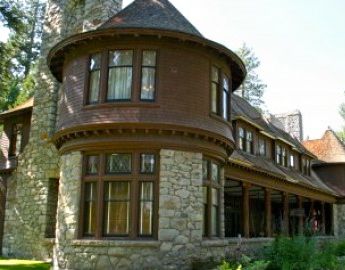
The Hellman Family of San Francisco has presented California State Parks with a $100,000 donation to support the restoration efforts of the Hellman-Ehrman Estate at Lake Tahoe. The mansion is located within Ed Z’berg Sugar Pine Point State Park on the west shore of Lake Tahoe.

ehrman mansion“The leadership and vision of the Hellman family is a prime example of Californians taking an active role in the future of our State Parks,” Ruth Coleman, director of California State Parks said in a press release. “We thank them for their generous donation which will significantly help with our restoration efforts.”

In the late 1800s, internationally known West Coast banker Isaias W. Hellman visited the promontory location on the West Shore known as Sugar Pine Point. In 1903, he constructed his majestic estate, the mansion known as Pine Lodge, as a summer retreat for his family. After his death, his daughter Florence Ehrman enjoyed the property for many more years. In 1965, Pine Lodge and its surrounding estate were sold to the California to become Sugar Pine Point State Park. Today, about 108 years after the mansion was built, Hellman’s descendants have become an instrumental factor in ensuring the legacy of the historic property continues for the people of the California.

In recent years, due to severe funding cutbacks, California State Parks has not been able to finance the critical repairs and restoration needs for the Pine Lodge Estate. These repairs include electrical system upgrades, installation of a fire alarm system, repair and plastering of deteriorating ceilings and walls, window replacements, and foundation repairs. This critical grant will allow the much needed restoration efforts to proceed and assure that the Hellman-Ehrman Estate will continue to be an important part of our California landscape for generations to come.

The Sierra State Parks Foundation, the nonprofit established to promote the interpretive, educational and restoration efforts of the California State Parks in the Tahoe/Truckee region, will be managing the grant and is looking for other private partners to join with the Hellman family in fully funding the restoration efforts.

For more information of the restoration efforts of the Hellman-Ehrman Estate and other historic properties in stewardship with California State Parks in the Lake Tahoe region, contact Heidi Doyle at (530) 583.3074 or hdoyle@parks,ca.gov or the Sierra State Parks Foundation at (530) 583.1017 or info@sierraspf.org.

Tours of the home are offered daily from Memorial Day weekend through September.


Doctor trading care for canned foods

South Shore chiropractor Joshua Welch is working for food.

Safe Haven Chiropractic in Meyers is conducting a food drive now through Nov. 23 to help the community.

Welch is exchanging chiropractic care for five non-perishable food items that will be given to a local charity. Current, new or reactivating patients and families will receive a chiropractic adjustment for their donation.

This support is near and dear to Welch because during college, living on school loans and supporting a wife and three kids, he was offered help.

“You never know how much your community support means until you one day you have to take care your family but have no way to do it,” Welch said in a press release.

Call Welch at (530) 577.5433 to schedule an appointment.


No vote on transparency bill lets lobbyists in Nevada keep paying tab

By Ed Vogel, Las Vegas Review-Journal

CARSON CITY — Tonight if you see your state senator and a lobbyist dining on Châteaubriand and drinking red wine in a fine Las Vegas restaurant, it’s a safe bet they aren’t going Dutch treat. The lobbyist will pick up the tab and no one ever will know he did.

With much fanfare in April, legislative leaders called for approval of a plan to make government more transparent to Nevadans. A few weeks later, the Senate unanimously passed a bill to require lobbyists to report their year-round expenditures on legislators.

But the Legislature adjourned without taking final action on that transparency bill. An Assembly committee let it die without a vote. Not taking a vote on a bill is an old technique to keep the voters in the dark when their legislators oppose bills popular with the public.

The nondecision kept in effect the current open season for lobbying. Lobbyists can hunt legislators without any outside interference through the 2012 election cycle — when all Assembly members and half the state senators will be elected — and until the beginning of the next session on Feb. 4, 2013. State law requires them only to report what they spend on legislators during the four months the Legislature is in session every other year.

“Once the session ends, there are no rules,” said state Sen. Sheila Leslie, D-Reno. “Some legislators like it that way, legislators of both parties. I am not impugning anyone’s integrity. All I am saying is these expenditures should be disclosed.”

Leslie vows to introduce her Senate Bill 206 again in 2013, but doubts it will pass then, or anytime in the near future. Too many legislators of both parties like the status quo where they can be treated like royalty in between sessions by lobbyists without anyone knowing, she said.

“Until there is more of a public uproar, this bill is not going to pass,” Leslie said. “Public distrust of government is at all-time high. This would help win back the public trust.”

Read the whole story


Company takes carpooling to Tahoe from Bay Area to a new level

Zimride, the largest online ride-sharing service in North America, announced its San Francisco-Lake Tahoe route today, with service beginning Thanksgiving Day.

The idea is to bring Bay Area residents convenient, inexpensive access to the basin. To celebrate the launch, Zimride is giving away a free tank of gas ($40 value) to the first 500 drivers who successfully book a ride along the Tahoe route between Thanksgiving and the end of the year.

Zimride allows drivers to sell the empty seats in their car to passengers who need a ride along popular routes, like San Francisco to Tahoe. As part of their mission, the company facilitates monetary transactions and connects individuals.

Zimride is used by university students and corporations in 30 states. The first public route was launched in August between San Francisco and Los Angeles. The Tahoe route will be Zimride’s ninth public route; all of which are on the West Coast.

“We’ve been looking forward to opening the Lake Tahoe route all fall because we know it will be a popular destination for our Bay Area users — from college students to weekend travelers, skiers to snowboarders,” Logan Green, co-founder and CEO of Zimride, said in a statement. “Tahoe has over 3 million visitors every year, and over 20 percent of the people headed to the South Shore come from the Bay Area. Even more important, nearly 80 percent of North Shore visitors arrive by car. So that’s a lot of potential for Zimriders to save money and gas, while making friends.”

For the drive between San Francisco and Lake Tahoe, Zimride is suggesting $25 per seat, each way. Drivers selling their empty seats, however, can name their price.

Before a rider accepts a seat in a car or a driver accepts a passenger, he or she can view the person’s profile information to ensure he or she is comfortable with the match.

Sign up online.