Business leaders, politicians want collaborative approach to economy

By Sean Whaley, Nevada News Bureau

RENO – Officials and business leaders attending a regional summit on economic development here on Thursday emphasized the need to work together regionally to bring in new employers and create jobs.

The summit, called ReCharge Nevada, was attended by about 300 government officials and business representatives to help create a unified front on efforts to help reverse the state’s highest-in-the-nation unemployment rate.

Reno Mayor Bob Cashell said his hope is that all the western Nevada communities will learn to work together on economic development and diversification. It’s not just Reno-Sparks anymore, but job creation efforts have to encompass the counties and cities from Fernley to Yerington, he said.

“Businesses have to quit undercutting each other,” Cashell said. “And we need to work together. Businesses need to work together. Because what’s good for your business is good for my business. There’s a lot of hard work in front of us now.”

Mike Kazmierski, the newly appointed president and CEO of the Economic Development Authority of Western Nevada who came to the job from Colorado Springs, said the meeting is an important first step to getting everyone to work together.

“The first thing we need to do as a region is accept the fact that together we’re going to be stronger,” he said. “And it’s really not just an agency’s responsible to do economic development, it’s every single person’s responsibility.

“And people while they are flying, while they are talking to friends, and neighbors and businesses, need to talk about why they live here,” Kazmierski said. “That’s all they need to say because they live here for a reason.”

At the same time officials were gathered at the Reno-Sparks Convention Center to work on economic development strategies, Gov. Brian Sandoval was in Las Vegas making a similar pitch to the Nevada Development Authority.

The emphasis on diversification and job growth come just as a new report on how to achieve the state’s goals was released Monday to Sandoval and the members of the newly constituted Board of Economic Development, created with bipartisan support from the 2011 Legislature.

The report, a joint effort by the Brookings Institution and the Stanford Research Institute, now known as SRI International, identifies seven economic sectors, some already in existence such as gaming and tourism, and some emerging such as clean energy, where Nevada should focus its efforts.

The state has put some green, in the form of cash, into the effort as well.

Steve Hill, executive director of the Governor’s Office on Economic Development, said the state has established a $10 million Catalyst Fund to help firms relocated or expand in Nevada. The money will be used to provide grants to local governments for economic development projects.

Hill said it is important the money be spent efficiently and strategically to pursue the types of economic sectors the state is targeting.

Sandoval and local government officials around the state are focusing on economic development and job creation as Nevada continues to suffer from the recession that first emerged in December 2007. The state has lost 170,000 jobs in that time.


K’s Kitchen: Carrot soup too good to share

By Kathryn Reed

I’ve become addicted to homegrown carrots. But my supplier says I’ve been cut off. The season is over. I’m not sure what I’m supposed to do.

k's kitchenI don’t want to share the soup I made with my last bag of those luscious orange veggies. I had good intentions to do so before I made it. I thought it would be a nice thank you to Pat for being my carrot supplier. You know, a little bribe to keep them coming from Reno next year.

Then I thought I could take some to my friend Joy who is living off soup right now as she deals with some medical issues. Then I thought I could get away with not taking her any because it’s not completely organic.

The recipe came to me via another friend when I told her I had all these carrots to use. Should I share with Kim, too?

It’s so hard to decide which I want to be – nice and share or selfish and piggish.

Something about soup on a cold day tastes so good. I’m glad to have another recipe in my rotation.

I don’t think I had ever had carrot soup before. Oh, my, is this tasty. And it is so incredibly simple to make. I’m sure the homegrown carrots added to the flavor because they are so much sweeter than any store will ever sell you.

I didn’t bother to peel them. They were so dang small that it would have taken forever. And I didn’t really care to have part of my finger shaved off either. I seasoned mine with course garlic salt.

Carrot Soup, by Alice Waters “The Art of Simple Cooking” (8 servings)

4 T (1/2 stick) butter

2 onions, sliced

1 thyme sprig

2.5 lbs carrots, peeled and sliced (about 6 cups)

6 cups broth

Melt butter in a heavy-bottomed pot.

Add onions. Cook over medium-low heat until tender, about 10 minutes.

Add carrots. Cook for 5 minutes. Cooking the carrots with the onions for a while builds flavor.

Bring to a boil, lower the heat and simmer until the carrots are tender, about 30 minutes. When done, season with salt to taste, and puree.

Serve with chopped fresh herbs and crème fraiche.


Opinion: Ecological restoration critical on forest lands

By John Heil

California’s landscapes are under siege from a host of threats. Catastrophic wildfire, climate change, invasive species and increasing human population put these delicate ecosystems at risk. The U.S. Forest Service has recognized and battled these threats for decades, but recently the agency recognized the need for a more focused approach on ecological restoration as the primary goal for all land management actions.
usfsThe goal is to retain and restore ecological resilience of the National Forest lands to achieve sustainable ecosystems that provide a broad range of services and value. Ecologically healthy and resilient land­scapes, rich in biodiversity, have greater capacity to adapt and thrive in the face of natural disturbances and large scale threats.

The Forest Service recognizes that it cannot achieve its goals alone.

“The emphasis will be placed on expanding and developing partnerships to increase organizational capacity and the use of large-scale stewardship contracts operating at the landscape level to achieve restoration goals,” said Randy Moore, Pacific Southwest Regional Forester.

In Northern California, the Eldorado and Mendocino national forests and the Lake Tahoe Basin have been working hard on various ecological restoration projects.

On the Eldorado National Forest, restoration activities continued this year in the Bassi Falls-Millionaire Camp area on the Pacific Ranger District. In the past, vehicles drove across a web of user-created roads on public and private lands to access Bassi Falls. In 2002, the Pacific RD coordinated with the adjacent land owner, Sierra Pacific Industries, to improve watershed conditions by closing user-created roads, blocking access and replanting denuded areas. A non-motorized hiking trail was constructed to allow access to Bassi Falls and a parking area was identified in the Millionaire Camp for access to a popular dispersed camping area along Big Silver Creek. Shortly after the original restoration project, the private land in the area was acquired by the Forest Service through the Silver-Pearl land exchange.

Restoration efforts on this project have continued over the past several years with a focus on improving conditions on those lands acquired through the land exchange. There are several areas where large amounts of soil have eroded away from motorized vehicle impacts, and are still eroding despite the removal of motorized vehicles. In addition, much of the hiking trail, which is made up of old user-created roads have poor drainage and erosion issues.

Current restoration activities include repairing hillsides that have old roads that are currently causing problems in various streams and rivers. The work includes a variety of activities primarily to prevent water running down the middle of roads. In some cases, small dams will be constructed to catch sediment before it gets to streams and rivers. Water quality problems will be resolved by removing some dirt roads and returning the hillside to a more natural state. To do this, some roads will be plowed with heavy equipment so trees and other vegetation will grow where the road was located. We will also repair some streams in meadows that are eroding along the streamsides.

The Mendocino National Forest has a variety of ecological restoration projects, including marijuana site restoration and fuels reduction.

Illegal marijuana cultivation not only poses a risk to public and employee safety, it also directly harms the environment. The illegal use of pesticides can cause extensive long-term damage to natural resources. For example, the supply of public drinking water for hundreds of miles may be impacted due to one marijuana growing site. Overall, the negative impact of marijuana sites on natural resources is severe. Human waste and trash are widespread, contamination from sites affects fish and wildlife habitats, and soil erosion is common. In addition, water usage is extreme because each marijuana plant is estimated to require a gallon of water per day – water that is critical to native vegetation, wildlife and public drinking water sources.

“Reclaiming sites damaged by illegal marijuana cultivation is an important part of Ecological Restoration efforts,” said Mendocino National Forest Supervisor Lee Johnson. “All resources are touched by this activity – water, soils, wildlife and the overall health of the forest. Restoration efforts help not only the forest resources, but also benefit the public that uses the National Forest System lands for recreation, as well as for clean water and clean air.”

Another ecological restoration project on the Mendocino National Forest is the Alder Springs Fuel Reduction Project which was begun to thin the dense second-growth conifer stand that developed after a fire in the 1920s. The intent was to improve forest health and reduce the risk of a stand-replacing fire in the future. The Alder Springs project also included prescribed burning of adjacent non-conifer vegetation to expand the fuels reduction work and to maintain fire processes. A carbon budget study was integrated into project implementation in partnership with Wheelabrator and Winrock International.

“The Alder Springs Project is an example of how Ecological Restoration has been essential to managing the resources on the Mendocino National Forest,” said Johnson. “Ecological Restoration on the Forest includes an integrated approach across all resources, utilizing opportunities on a broader landscape for better results, working with partners, finding opportunities for research for further understanding and development, and continuing the project through maintenance and developing a unified vision for future management.”

The Lake Tahoe Basin Management Unit recently completed the latest phase of tree thinning aimed at restoring the health of meadows, aspen groves and forest uplands near Big Meadow Creek. Contract crews worked to thin conifers on 55 acres surrounding the popular Scotts Lake Trail, off Big Meadow Trailhead near Luther Pass on Highway 89. In all, the Forest Service expects to treat about 640 acres, piling the material to burn later.

The tree thinning is part of a larger project, the Big Meadow Creek Watershed Fire Regime Restoration, which will continue for several years. Prior to the recent practice of actively suppressing fires, ground fires occurred naturally. The Washoe Tribe also deliberately used fire to encourage the growth of desired plant and tree species, such as willow and aspen, and attract the wildlife that depend on this vegetation. Without periodic fires that destroy conifer seedlings, the trees overtake aspen stands and meadows and can lead to forest die-off from insect infestation, drought or fire.

Once the initial thinning and pile burning are complete, the Forest Service will begin meadow burns that more closely simulate the natural role fire once played in the ecosystem.

“Thinning trees reduces competition for water, nutrients and sunlight, which helps meadow vegetation and aspens thrive and allows the remaining trees in forested area to grow larger,” said Forest Supervisor Nancy Gibson. “This work, funded through the Southern Nevada Public Land Management Act, will help to restore the Big Meadow ecosystem, providing important wildlife habitat and preserving one of our special places in the Lake Tahoe Basin.”

“Ecological Restoration crosses land boundaries and includes many different projects,” said Moore. “Ultimately we want to create landscapes that survive and thrive in a changing environment and provide goods, services and recreation opportunities now and for generations to come.”

John Heil works for the U.S. Forest Service in the regional office in Vallejo.



Valhalla fair provides unique holiday gifts

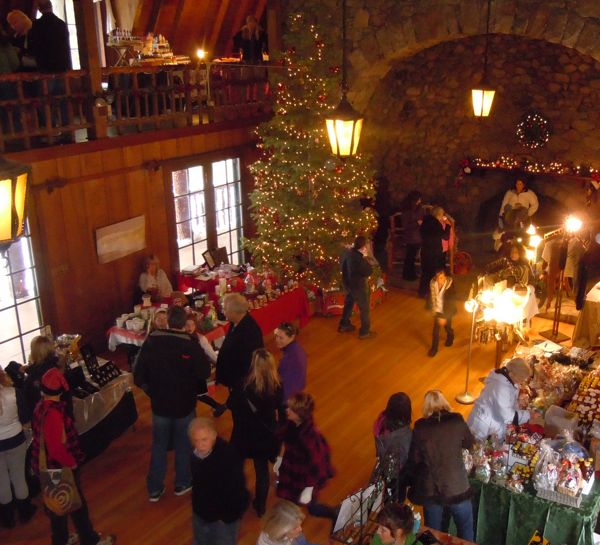
A steady stream of people flowed into the Valhalla Grand Hall on Nov. 19 for the first day of the 16th annual Holiday Faire. Plenty of shopping was being done, as most everyone was leaving with at least one bag.

The fair is open today from 10am-4pm with 23 vendors selling everything from strudel to soaps to wine racks made from skis.

People chat, browse and shop at Valhalla Holiday Faire on Nov. 19. Photo/LTN

People chat, browse and shop at Valhalla Holiday Faire on Nov. 19. Photo/LTN

Santa Clause is on hand as are local school choirs and other musical groups.

The South Shore event is free.

Overflow parking is available near the gate on Highway 89. A shuttle is available for people who don’t want to walk in.

— Lake Tahoe News staff report


Discovering thanks this holiday season

By Rebecca P. Coniglio

It is November, the leaves are falling, the days are getting shorter, and families are making their Thanksgiving plans. For me, I can close my eyes and the aroma of my mother’s house on Thanksgiving Day rushes over me. She always makes her famous mushy-mushy, what she calls stuffing and more food than our small family could ever eat, but just that is enough to spark a feeling of gratitude deep within my heart.

I am a child of divorce, a title I have worn reluctantly since I was 10. Now, as a grown woman with a family of my own, holidays and divorce still stir-up a complex set of emotions. On one hand I remember the challenges my family faced when I was a child, especially during the holidays. On the other hand as an adult, I am full of gratitude for my past, present and hopeful for the future.

After my parents’ divorce, my mother tried to keep some of our family traditions alive, such as watching the Thanksgiving Day Parade in our pjs, but there was the nagging feeling of an empty chair at the table along with a helping of guilt and divided loyalties. That has subsided now, and I am better equipped to “find my lucky.”

This is something I have been practicing a little each day. To me it means stopping, taking a deep breath, and thinking about all the people and things I feel so lucky to have in my life. I believe this is a valuable exercise to do everyday and not just on Thanksgiving, but since on this holiday, most people slow down long enough to reflect on what they are grateful for, it can be a wonderful day to start, with the hope of carrying it forward throughout the year.

I happened to have married a man who loves Thanksgiving, so I am grateful for that. He reminds me that the day is not about giving or receiving gifts or material things, but about family and food of course.

Here are some simple steps you can follow to help you and your family find what makes you feel lucky this Thanksgiving:

1. Define what it means to feel lucky. Help your children focus on all the positive things they have in their lives and not dwell on what they do not have.

2. Define what gratitude means and explore ways to express gratitude. For example, telling people how you feel about them, saying thank you, helping others who are less fortunate.

3. Write or draw with your children about the special people in their lives that they feel grateful for.

4. Call or write letters to special relatives that may live too far to visit this Thanksgiving.

5. Go around the room and tell each family member what he or she means to you and why. Parents model this for your children and then encourage them to give it a try.

For parents who are separated or divorced, pay close attention to your children’s feelings and needs this Thanksgiving. Children can sense their parents’ anxiety and it can increase their feelings of anxiety. The best advice I can give based on personal and professional experience is; make sure the adults are acting like adults and allow the children to be children. As much as possible leave them out of any holiday stress. Help your children to understand that even though things are not necessarily the way they want them to be, you are still a family, and there will be days full of joy ahead. Your children may not be at the same Thanksgiving table as you or their other parent due to a divorce, but the day has the same meaning for all of you. You as parents can let your children know that you are grateful for them and be very assured that they feel the same way about you.

Take it from me, hold onto old family traditions and create new ones. Bridge your past and your present. That is why you will find me watching the Thanksgiving Day Parade, eating mushy-mushy, expressing my gratitude, and feeling every bit of my lucky.

Rebecca Perlman Coniglio is a licensed clinical social worker in private practice and works with children, adolescents and young adults, ages 5-25, who are facing such issues as loss, anxiety, divorce and depression.


Charter schools impress half of California voters

By Howard Blume, Los Angeles Times

Charter schools have won over about half of California voters, but these independent, non-traditional public schools are not widely viewed as the solution to the state’s education problems, according to a new poll.

Among those surveyed in the USC Dornsife/Los Angeles Times poll, 52 percent had a favorable opinion about charters; only 12 percent had an unfavorable impression.

Asked whether charter schools or traditional schools provided a better education, 48 percent gave superior marks to charters; 24 percent considered traditional schools more effective.

“As people learn more about what charter schools are, they tend to like the idea of choice,” said USC professor Priscilla Wohlstetter, who directs the university’s Center on Educational Governance.

The charter model appealed to Latino parents in particular. Overall, 52 percent of parents — those who have a child or grandchild age 18 or under living at home — said they would consider enrolling their children in a charter, compared to 38 percent who said they would not. Among Latino parents, 56 percent were in favor and 30% disinclined. More than half the state’s public school students are Latino.

Read the whole story


Heavenly Mountain lives up to its name on opening day

By Kathryn Reed

Seven months was a long wait. And when the wait was finally over at 8:30am Saturday, cheers reverberated throughout the plaza at Heavenly Village.

Heavenly Mountain Resort opened for business for the 2011-12 ski season Nov. 19 with the gondola, Tamarack and Dipper running. As more snow falls, more lifts and runs will be accessible.

Heavenly Mountain Resort provides some of the best views of Lake Tahoe. Photos/Kathryn Reed

Heavenly Mountain Resort provides some of the best views of Lake Tahoe. Photos/Kathryn Reed

Mostly snowboarders were playing in the Ante Up terrain park.

Plenty of snow covers runs. With the roar of snowmaking guns, more terrain is likely to open soon.

It took about 10 minutes to load the more than 100 people who stood in line to catch first tracks. Of course, many more riders came throughout the day. These were just the die-hards who needed to their fix first thing.

Casey Bedell and Megan Hickel of South Lake Tahoe were two of the many with smiles on their faces as they made their way to the front of the gondola line. They said having all summer off made them eager to get back on the slopes.

Yungjin Choi came up with his 12-year-old daughter Eura and 10-year-old son Brendon to snowboard. Even though the San Ramon family had never been to Heavenly, they were in line to buy the Tahoe Value Pass.

Eura, according to her dad, is the one who wanted to come opening day. With Heavenly having to delay opening a day because of weather, it worked for them not to have to skip school to be at the resort Nov. 19.

Leaning on a rail, watching the skiers and boarders getting on the gondola, some guy came up and said, “What do you do here, Pete.” “I’m the general manager,” Pete Sonntag said. “That’s cool. I just bought the Epic Pass.” To which Sonntag said something like, “Have a great time.”

That friendly interaction among employees of all levels and riders was evident all morning.

Ron Thompson, who spends about 30 percent of his time in Meyers and the rest in Fremont, commented on how much better the conditions were this opening day compared to 2010. Not only is the snow better, but also more runs are open. Plus, it was a bluebird day for much of the morning.

“It’s just that feeling of getting back on the snow. It’s incredible,” Thompson said. He added that skiing on California Trail before anyone was there gave him chills. He caught the 10th gondola chair up the mountain.

While Thompson has been skiing 43 of his 47 years, John Gianotti of Stateline has him beat. The 83-year-old has been schussing down slopes throughout the world for 78 years.

“I ski practically every day because I’m old and I don’t have anything else to do,” Gianotti said as he took the gondola down after skiing for a couple hours. “Look at what you see. It’s absolutely one of the most beautiful places in the world.”

ngg_shortcode_0_placeholder (Click on photos to enlarge.)


Placer County continues hearing on Homewood appeal

At a special meeting in Tahoe City on Tuesday, the Placer County Board of Supervisors had a public hearing on a third-party appeal of a Planning Commission decision to approve the Homewood Mountain Resort project.

The board heard from approximately 40 people representing both sides of the issue.

At the conclusion of the hearing, supervisors decided to allow the appellants to submit documents until Nov. 28. That information will be considered by the board at its Dec. 6 meeting. At that time, the board will again take up the project at a regularly scheduled meeting in Auburn.

The project had previously been unanimously approved by the Planning Commission and the North Tahoe Regional Advisory Council.


Power being restored to area impacted by Reno fire

By Reno Gazette-Journal

5:16pm update: Utility crews have nearly finished restoring power and gas to homes impacted by Friday’s Caughlin Fire in southwest Reno.

Only 15 homes on Feretto Lane are still without power but are expected to have electricity restored by about 7pm, said NV Energy spokeswoman Faye Anderson.

Only about 50 homes still are without natural gas service, Anderson said.

Homeowners have to be home before utility workers can turn pilot lights back on, Anderson said.

Anyone needing that to be done should call the utility at (775) 834.4100. Anyone that still has power problems should do the same, Anderson said.

3:15pm update: Gov. Brian Sandoval and Rep. Mark Amodei are now touring the neighbors burned during Friday’s fire.

Sandoval said he was surprised at the number of homes firefighters were able to save, considering the conditions.

“It’s hard to have words for all this — the proximity to the homes,” Sandoval said. “It’s so amazing.”

Sandoval and Amodei met with homeowners as well as firefighters still conducting mop up operations.

Dick Rottman had his home leveled by fire.

“I’m sorry. Anything you need, just let us know,” Sandoval told him.

Read the whole story


‘Pedal-Driven: a bike-umentary’

The Tahoe Area Mountain Biking Association is presenting “Pedal-Driven: a bike-umentary”, a new documentary film from Jamie Howell at Moon Productions.

The screening will take place at Mo’s Place in South Lake Tahoe on Nov. 30 at 7pm. It will be preceded by a social hour starting at 6pm. The movie screening is in conjunction with the TAMBA End of Season Party.

The one-hour documentary examines the long-standing confrontation between mountain bikers and federal land management agencies such as the U.S. Forest Service over bikers’ access to public lands.

“Pedal-Driven” was created as a nonprofit project in affiliation with International Mountain Bicycling Association and with the cooperation of the Forest Service.

TAMBA is hosting this screening as a membership drive for 2012. The event is free to all new or renewing TAMBA members. TAMBA dues are $10 for individual memberships and can be purchased online or at the event.

TAMBA is the largest mountain bike organization in the Tahoe region and focuses its efforts on volunteer trail work, cooperation with land managers, and education of trail users.

For additional information, go online.