Opinion: Should Nevada switch time zones?

By David McGrath Schwartz, Las Vegas Sun

We’ve been told over and over that there’s no quick fix for Nevada’s grinding unemployment and underwater mortgages. So how about an extra hour of daylight to brighten these dark days?

From the Internet comes a provocative idea: Nevada should part ways with the Pacific time zone of the coastal states and join Arizona, Idaho and Utah in the Mountain time zone.

It would not, of course, increase the amount of daylight in a 24-hour period. But on a day like today it would push sunset from 4:32pm to 5:32pm — ending the depressing late-fall phenomenon of leaving work — for those of us still with jobs — at 5pm only to find night has fallen.

More would be awake for the early sunshine — sunrise would on a day like today go from 6:16am to 7:17am.

Nevada rides at the rear of the parade that is the Pacific Time Zone, a fact that becomes apparent after daylight saving time ends and darkness arrives an hour earlier.

Consider Los Angeles at the western edge of the time zone: Sunset today is at 4:49pm, according to the U.S. Naval Observatory Astronomical Applications Department. They get the beach and 17 minutes more of evening light.

Then consider Phoenix, in the Mountain time zone. There, the sun will not set until 5:25pm.

It would be a stretch to describe the idea of changing time zones a movement. It’s mostly the griping of co-workers and one man ranting on a blog.

When the state moved its clocks back this month, Hugh Jackson, proprietor of lasvegasgleaner.com, opined: “Lickety-split it’s going to be getting dark around here at, oh, 4:14 in the afternoon. Dreary, depression-inducing, soul-sucking darkness and it’s not even cocktail time … isn’t that what North Dakota is for?”

While a lone voice, Jackson, a liberal commentator, raises an interesting question: Why is Nevada time-tethered to California?

Getting a state or county’s time zone changed is uncommon, but not unprecedented.
Read the whole story


Lawsuit filed to stop Washoe Meadows State Park from becoming golf course

By Kathryn Reed

A month after the California State Park and Recreation Commission voted unanimously to move Lake Tahoe Golf Course into Washoe Meadows State Park, a group has filed a lawsuit to prohibit that from happening.

“I would like people to know this has consequences for the entire state,” Lynne Paulson, who is part of Washoe Meadows Community, told Lake Tahoe News. “The Parks and Recreation Commission has done something that is unprecedented. They downgraded a property where they want to move the golf course. Usually they upgrade classifications to give more protection to land.”

Some cycling and hiking trails would become a golf course if the project continues. Photo/LTN file

Besides reclassifying state land, the Washoe Meadows Community – the group that filed the lawsuit Nov. 23 in Alameda County Superior Court – believes the California Environmental Quality Act has been violated.

Lake Tahoe News was notified of the lawsuit Sunday and therefore unable to immediately speak with State Parks officials.

The state acquired the 777 acres in Meyers in 1984 for $5 million following a lawsuit between developers and the Tahoe Regional Planning Agency.

Part of that decision says, “The unique subject property is scientifically valuable, environmentally sensitive, vital to the maintenance of riparian habitat and to the maintenance of water quality in Lake Tahoe, and is, therefore, highly suitable for public acquisition in order to preserve and maintain these natural resource values ….”

Reclassification came about because water quality experts believe the Upper Truckee River must be reconfigured to near its original meander to best prevent sediment from reaching Lake Tahoe, as well as to restore meadows along the banks, and to create a more robust ecosystem.

In order to change the segment owned by State Parks the golf course on Lake Valley Recreation Area land must be touched. What the state commission approved in October was moving nine holes to what is now state park land and reclassifying it to a recreation area because a golf course cannot be built on park land.

Opponents, including those behind the lawsuit, don’t advocate for the golf course to go away. Instead, they support Alternative 3 – which would take the 18-hole course down to nine holes or convert it to an 18-hole executive course.

“We hope a better solution is brought up,” Paulson said. “We are in favor of Alternative 3. It’s the best balance of the extremes.”

Paulson and her group would welcome new ideas that have not been brought up or consideration of ones not part of the environmental documents.

This is not the first time the state has tried to reclassify land it owns. In 2010 part of Tolowa Dunes State Park near Crescent City was slated to become a state recreation area to accommodate waterfowl hunting. After several public workshops, the commission voted to keep all of the property a state park.

Washoe Park proponents believe if this South Shore park is downgraded, that it’s possible it will happen up and down the state.

The December hearings before the Tahoe Regional Planning Agency on the river restoration/state park/golf course project have been moved to 2012, though specific dates have not been set.

More information about the Upper Truckee River restoration project is online.


Markleeville holiday fair

Markleeville will come alive with all the lights and decorations of Christmas on Dec. 4 from 11am-4pm.

There will be handcrafted gift items, jewelry, pottery, wreaths, pillows, coloring books, and much more, available all over town, in businesses, event on a porch or two.

There will be carolers gathering around the Christmas Tree at the Court House at 1pm for a performance before they stroll around town.

Santa and Mrs. Santa will be in the Wolf Creek Restaurant by the fireplace at 11am.

The General Store has tree cutting permits for $10. There will be cobbler prepared by Little Antelope Pack Station in front of Intero Real Estate.

The Markleeville Art Gallery will have glass ornaments, wool hats, soaps, and jewelry.

The museum will be open and free for the day.

If there is enough snow, there will be a snowshoe tour and people may make a snowman in the park.

At 2pm the Library will have story time, cookie decorating and Santa promises to visit.

For more information, go online.


‘Norway’s Wild West’

Alpenglow Sports’ second installment of its annual Winter Film Series is “Norway’s Wild West” on Dec. 8 at 7pm at the Sawtooth Ridge Café in Tahoe City.

Join Salt Lake City ski mountaineering icon Andrew McLean for a three-part trip to Norway’s Spitsbergen archipelago. Situated in the Arctic Circle, the area provides world-class skiing, trekking, sailing and adventure. Tour through abandoned Russian ghost towns, dodge Polar Bear tracks in the fog, and savor the world’s most expensive snowmobile ride in a land where the sun never sets.

McLean and a host of other ski mountaineers descended on the region in the spring.

The show is free and is designed to motivate, inspire, and educate.

The Sawtooth Ridge Café will serve dinner specials beginning at 5:30pm. Call Alpenglow Sports at (530) 583.6917 with questions.


Opinion: People have a right to know what they are eating

By Gary Hirshberg and Eric Schlosser

An unprecedented agricultural experiment is being conducted at America’s dinner tables. While none of the processed food we ate 20 years ago contained genetically engineered ingredients, now 75 percent of it does – even though the long-term human health and environmental impacts are unknown. The Food and Drug Administration doesn’t require labeling of genetically engineered foods. But as the current drive to get labeling on the ballot in California confirms, consumers want to know whether our food contains these revolutionary new things.

In 1992, the FDA ruled that genetically engineered foods didn’t need independent safety tests or labeling requirements before being introduced. But one of its own scientists disagreed, warning there were “profound differences” with genetically engineered foods. Genetically engineered seed manufacturers were allowed to sell their products without telling consumers. A 2006 survey found that 74 percent of Americans had no idea that genetically engineered foods were already being sold.

Biotech companies have fought labeling, claiming genetically engineered crops are “substantially the same” and produce larger yields – both unproven claims. But genetically engineered crops have led to the increased use of pesticides, often sold by the same companies that make genetically engineered seeds.

About 94 percent of U.S. grown soybeans are genetically engineered and contain a gene that protects them against glyphosate, now the nation’s most widely used pesticide. But glyphosate is becoming ineffective as “superweeds” become resistant to it, forcing farmers to use even stronger herbicides. Widespread adoption of genetically engineered corn has also led to pesticide resistance.

Gary Hirshberg is the president and CE-Yo of Stonyfield Yogurt. Eric Schlosser is the author of “Fast Food Nation” and co-producer of the documentary “Food, Inc.”

Read the whole story


Travelers leave some expensive items in hotels, on airplanes

By Gary Stroller, USA Today

Frequent business traveler Joyce Gioia forgot more than $20,000 worth of jewelry in her hotel room in Italy last year.

Luckily for Gioia, the jewelry was in a room safe, and staff at the Rome Marriott Grand Hotel Flora shipped the items to her home in Austin, Texas.

“I had done such a dumb thing, and I was very happy to get the jewelry back,” said Gioia, a management consultant.

Travelers annually leave millions of personally important items such as wallets, keys, cellphones and eyeglasses behind in hotels, airports, airplanes and rental cars. Fortunately for the forgetful, many belongings — including very valuable and unusual ones such as Gioia’s jewelry– are returned.

Many, however, aren’t, and they are given away or sold if their owners don’t retrieve them, or their owners cannot be found.

Gioia and other travelers scold themselves for their forgetfulness, but psychologists say it’s commonplace even among the most veteran of travelers.

“When traveling, people tend to have lots on their minds, and there are often many unexpected distractions,” said David Meyer, a University of Michigan psychology professor. “The combination of too much to keep track of, limited attention for doing so and being in relatively unusual circumstances outside familiar work and home locations promote forgetting about the small stuff being carried along the way.”

USA Today contacted several airlines, airports, hotels and car-rental companies and, among other things, asked how many items are left behind by their customers yearly.

Southwest Airlines, which carried 88 million passengers last year, reported the largest number. The airline takes possession of up to 10,000 items a month that are left behind at airports and in planes, said spokeswoman Katie McDonald.

Books, cellphones, clothing and reading glasses are the most common items left behind, she said.

The most valuable items? A $10,000 diamond engagement ring, an NFL Super Bowl ring and professional video equipment — which all were returned to their owners.

Read the whole story


Tips for keeping Christmas trees fresh

Select a fresh tree with good color and firm, flexible needles that do not easily pull from the branches.

Place the tree in plain water immediately after recutting the trunk at least one-half inch above the old cut. The container you use for your tree should hold 2 to 4 quarts of water.

The longer you wait to place your tree in water, the greater the chances are that it will lose the required moisture content to keep it fresh through the holiday season.

Never place your tree on a wooden stand.

Locate the tree away from sources of heat. Avoid placing the tree near heaters, wood toves, fireplaces, large appliances such as TVs, and direct sunlight.

Be careful not to block a door or other exit with the tree or rearranged furniture.

Use mini-lights on your tree and never place candles on or near your tree. Remove your Christmas tree as soon as possible after the holiday. Never burn your Christmas tree or wrap-ping paper in the fireplace. The rapid burning and excessive heat can damage the firebox and chimney, creating a serious fire hazard.

— Sallie Ross-Filgo, South Lake Tahoe Police Department


Study: Dogs help detect lung cancer

By Science Daily

Sniffer dogs could be used for the early detection of lung cancer, according to new research published in the European Respiratory Journal.

The study, carried out by researchers from Schillerhoehe Hospital in Germany, is the first to find that sniffer dogs can reliably detect lung cancer.

Lung cancer is the second most frequent form of cancer in men and women across Europe with over 340,000 deaths per year. It is also the most common cause of death from cancer worldwide.

The disease is not strongly associated with any symptoms and early detection is often by chance. Current methods of detection are unreliable and scientists have been working on using exhaled breath specimens from patients for future screening tests.

This method relies on identifying volatile organic compounds (VOCs) that are linked to the presence of cancer. Although many different technological applications have been developed, this method is still difficult to apply in a clinical setting as patients aren’t allowed to smoke or eat before the test, sample analysis can take a long time and there is also a high risk of interference. Because of these reasons, no lung cancer-specific VOCs have yet been identified.

Read the whole story


Soroptimist meeting in South Lake Tahoe

Soroptimist International of Tahoe Sierra meets every Thursday at 7:30am at the South Lake Tahoe Senior Center, 3050 Lake Tahoe Blvd.

All are invited with breakfast and coffee served.

Call (530) 409.2791 for more information.

Jonathan Finnoff, director of Sports Medicine and Rehabilitation for Barton Health, will be the speaker Dec. 8.


Jelly Belly tour is more than a sugar rush

By Kathryn Reed

FAIRFIELD – Free tour, free candy. Count us in.

I don’t know how many times I’ve driven past the Jelly Belly factory in Fairfield off Interstate 80, but it was finally time to stop. I had been there once before, but this was Sue’s first venture into this world that is more than just Jelly Bellys.

The only downside to visiting on a Sunday was the workers were all at home, so the real operation can’t be seen. Nevertheless, the 40-minute walking tour is still fun and informative.

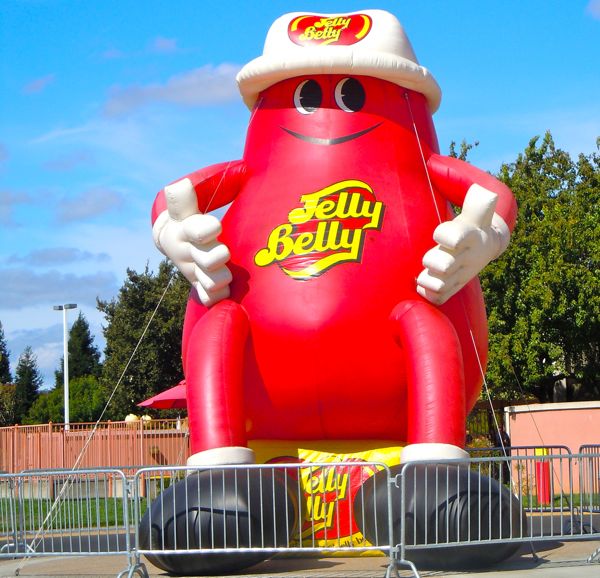
The Jelly Belly factory has free tours in Fairfield. Photo/LTN

The Jelly Belly factory has free tours in Fairfield. Photo/LTN

While President Ronald Reagan made Jelly Belly a household world, the candymakers’ roots go back to Germany. Brothers Gustav and Albert Goelitz immigrated to the United States in 1867, starting their businesses here two years later.

It was 1976 that the Jelly Belly was born, so to speak. The initial flavors were Very Cherry, Lemon, Cream Soda, Tangerine, Green Apple, Root Beer, Grape and Licorice.

In addition to the 50 official flavors, there are sugar-free, sours and chocolate dipped beans.

We bought Belly Flops at the store. These are rejects – sort of. They taste great; just look a little funky in shape and color. The flavors can be original and not likely to be created again.

Then there are the ones that make you scratch your head as to who developed the bean and another scratch for who would buy them. Flavors like Pencil Shavings, Skunk Spray and Booger.

What I think is fun is using the recipes to come up with a new flavor. It takes two Blueberry beans and one Buttered Popcorn to come up with what tastes like a Blueberry Muffin.

According to Jelly Belly, the difference between their product and regular jelly bean is “their authentic and intense flavors, the number of flavors, the smaller size, the brilliant colors and, of course, the Jelly Belly name on every bean. … most Jelly Belly flavors use fine natural ingredients, whenever possible, to flavor the beans, i.e., chocolate, coconut, fruit juice concentrates and fruit purees like strawberry, pear and banana. These ‘true-to-life’ flavors are mixed into the center and the shell.”

More information about tours all things Jelly Belly is online.