Why medical marijuana reduces traffic fatalities

By Maia Szalavitz, Time

States that legalize medical marijuana see fewer fatal car accidents, according to a new study, in part because people may be substituting marijuana smoking for drinking alcohol.

Sixteen states and the District of Columbia, have legalized medical marijuana since the mid-1990s. For the new study, economists looked at 1990-2009 government data on marijuana use and traffic deaths in the 13 states that had passed legalization laws during that time period. The data were from the National Household Survey on Drug Use and Health and the National Highway Traffic Safety Administration.

Comparing traffic deaths over time in states with and without medical marijuana law changes, the researchers found that fatal car wrecks dropped by 9 percent in states that legalized medical use — which was largely attributable to a decline in drunken driving. The researchers controlled for other factors like changes in driving laws and the number of miles driven that could affect the results.

Medical marijuana laws were not significantly linked with changes in daytime crash rates or those that didn’t involve alcohol. But the rate of fatal crashes in which a driver had consumed any alcohol dropped 12 percent after medical marijuana was legalized, and crashes involving high levels of alcohol consumption fell 14 percent.

Read the whole story


Opinion: Adaptive strategies, money needed to keep studying Tahoe

By Geoff Schladow

Scientists at TERC have just submitted what will be the final set of research proposals under the Southern Nevada Public Lands Management Act, better known as SNPLMA. For the last 10 years these funds, approximately $3.5 million per year, were available on a competitive basis to fund research that was deemed both scientifically rigorous and important to the efforts to restore Lake Tahoe.

Over the years, the UC Davis Tahoe Environmental Research Center and its collaborators have been able to write proposals that received substantial funding from these SNPLMA funds. The results of that funding has led to the development of a range of products including tools for modeling lake clarity and quantifying pollutant inputs from urban areas, a better understanding of nearshore water quality using remotely sensed data, and the impact of the Angora Fire on the lake. Many other projects are still under way, and will be completed in the next two years. Many of the actions that will be undertaken at Tahoe in the coming years will be based on the findings of this research.

Geoff Schladow

What happens in the coming years, as conditions change and new questions and new threats to Lake Tahoe arise? That is difficult to know. Traditional science funding, from sources such as the National Science Foundation, is usually targeted at generalized questions. If the research is addressing a Tahoe-specific question, NSF will expect local entities to fund it. Locally, however, funding for most everything is in short supply, and likely to remain so for some time to come. Private and philanthropic funding has always been an important part of TERC’s budget, and our hope is that this will remain strong.

My concern, as we use the science conducted to date to guide the restoration of Lake Tahoe, is that we stay mindful of the fact that our knowledge is always incomplete. What seems in 2011 as the best strategy may in time be found wanting. We will only know this if monitoring and focused research is continued, and ways to conduct that in affordable ways are found. The other essential ingredient is the willingness of management agencies to continue to work with scientists to assess progress and, if necessary, to adapt the strategies.

In more robust economic times, this is how things happened and how progress was made. The challenge is to ensure that it continues to happen. As 2011 draws to a close, I want to thank all those who helped us with the many things we were able to accomplish this year. This ranges from our incredibly dedicated staff, our volunteer docents, the many students and interns that work through TERC, our partners in other research institutes and in the numerous Tahoe agencies, those who visit our education centers, and those of you who have helped fund our research and education programs. I wish you all a safe and peaceful holiday season, and look forward to seeing you in 2012.

Geoff Schladow is director of the UC Davis Tahoe Environmental Research Center.


Control of invasive species in Lake Tahoe remains a struggle

By Geoff Schladow, Heather Segale, Allison Gamble and Andrea Wilkins

Research efforts to control invasive aquatic species from around the world continue to threaten the Lake Tahoe Basin. Work to identify the most effective mechanisms for controlling the populations of Asian clams continues. Current projects are focused on controlling the spread of the Asian clam population in Emerald Bay. Researchers are working collaboratively to experiment with different methods of eradication.

Research is also being done in the southern part of the lake on Curlyleaf pondweed. Curlyleaf pondweed is an invasive aquatic weed that is increasing in density in Lake Tahoe. It reproduces via vegetative shoots called turions, which are extremely resilient and hard to kill. Researchers are working on identifying possible means for controlling the spread and reproduction of this invasive species using bottom barriers of several materials (jute, rubber, and polyethylene). Three sets of these barriers are currently out in Lake Tahoe.
Scientists continue to discover new things about Lake Tahoe. Photo/LTN

Post-doctoral researcher Allison Gamble is also studying the effects of Mysis shrimp on Tahoe’s food web. Mysis were deliberately introduced into Lake Tahoe in the 1960s. Mysis are a big predator on smaller zooplankton, and also an important food source for fish. They undertake a diel (within 24-hours) vertical migration every night, where they migrate from the bottom of the lake to close to the surface, one of the longest vertical migrations in nature. If we scaled the Mysis to the size of a human, it would be equivalent to moving 50 miles (or 1,700 laps of a pool) vertically up and back down in a single night.

Gamble is comparing the historical densities of Mysis shrimp to current densities in Lake Tahoe, Emerald Bay, Fallen Leaf Lake, and Donner Lake, and addressing how ecosystem characteristics influence food web dynamics. Her research will provide new insights into the evolving Tahoe food web.

PARASOL

The lake was buzzing with scientists from around the world at Tahoe for a weeklong research project called “PARASOL” (PARticulates And SOlutes in Lakes). Scientists and students from TERC, the EPA National Health and Environmental Effects Research Laboratory in Duluth, and the University of Kyoto completed a circumnavigation of the lake, taking measurements of all the physical properties and the suspended particles and organisms that comprise the lake’s ecosystems. These measurements will allow us to know how the near shore water quality changes around the lake.

In addition, the team devoted extra effort to studying conditions in Marla Bay and Emerald Bay. The work was exhausting, often starting before 6am, and usually ending well after dark. TERC supporters allowed research vessels to be moored at their private docks around the lake, saving valuable time and gas.

Hundreds of samples went from lake to the lab all week.

The data from this project is still being analyzed at Tahoe, Davis, DRI, Duluth and Kyoto.

Microbial plankton survey

Three weeks following PARASOL, a new group of collaborators filled TERC’s laboratories to conduct a preliminary survey of the microbial plankton of Lake Tahoe. This time the visitors were from Laval University in Quebec, and UC Santa Cruz. Most of what lives in Lake Tahoe is invisible, and it has only been in the last few years that tools such as flow cytometry and DNA sequencing have allowed us to see this hidden world and learn about how it is impacting the features of the lake that we do see. The results of this experiment are being used as the basis of new proposals to the National Science Foundation.

Input of sediment

TERC post-doctoral researcher Alexander Forrest and graduate student Paul Stumpner deployed a current-measuring instrument in Lake Ohau in New Zealand in November 2011. This collaborative project with Richard Levy of GNS Science will provide information on the input of sediment to this glacial lake. What we have learned at Lake Tahoe is being applied in many parts of the world. Conversely, what we learn in New Zealand will help us to better understand Lake Tahoe.

Geoff Schladow, Heather Segale, Allison Gamble and Andrea Wilkins are with the UC Davis Tahoe Environmental Research Center.


NLTRA looking for members for Infrastructure, Transportation committees

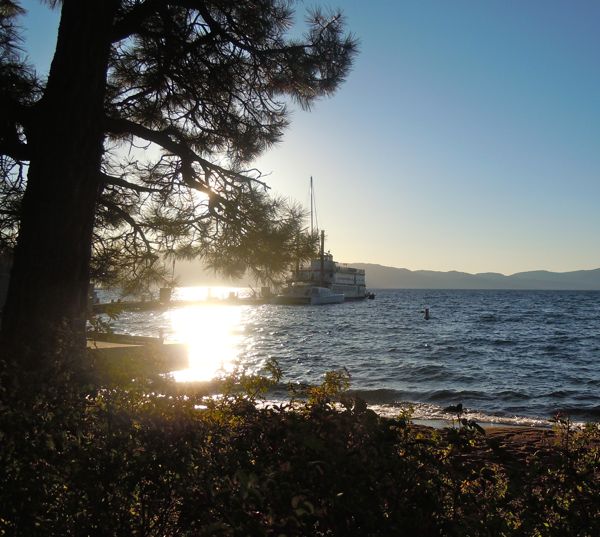
The North Lake Tahoe Resort Association has open seats on its Infrastructure and Transportation committees.

These committee seats are two-year terms with appointments being made by the board of directors at its January meeting. To apply or request more information, contact Ron Treabess at Ron@PureTahoeNorth.com.

The NLTRA operates the North Lake Tahoe Chamber of Commerce and the Tahoe North Convention and Visitors Bureau, and is a partner with the Incline Village Crystal Bay Visitors Bureau in the North Lake Tahoe Marketing Cooperative. The NLTRA also serves as a partner with Placer County and other public agencies in the development and funding of infrastructure, transit and community mobility projects designed to enhance tourism and community quality of life for the benefit of all in the North Lake Tahoe region.


Analysts: Nevada casinos will do better in 2012

By Steve Green, Las Vegas Sun

Analysts at accounting firm PwC have boosted their growth projection for Nevada’s casino industry.

In the PwC (PricewaterhouseCoopers LLP) annual gaming forecast distributed this week, the firm projected Nevada gaming win of $10.4 billion in 2010 to reach $10.7 billion this year and then expand to just shy of $13 billion by 2015.

Predictions are for more traffic to Nevada casinos in 2012. Photo/LTN file

The 2015 projection would about equal the level reached in 2007 — the high-water mark for Nevada casinos before the recession.

That figure represents an annual growth rate of 4.9 percent. By comparison, PwC a year ago projected an annual growth of 4.1 percent over five years.

“The momentum generated in 2010 (a 0.1 percent increase) is carrying over in 2011 and we project that the market will increase by 2.8 percent for 2011 as a whole,” PwC said in its report.

The PwC forecast for Nevada gaming revenue in the next few years is aggressive, with its analysts expecting growth of 4.1 percent in 2012 and 4.6 percent in 2013. Projections for gaming taxes in the state budget, in comparison, are for growth of 2.5 percent in fiscal year 2012 and 2.7 percent in fiscal year 2013.

Despite the higher projected growth rate in Nevada casino revenue, PwC expects Nevada’s share of the $57.5 billion U.S. gaming market to decline slightly through 2015 because of competition from Asia and as regional casinos pop up in populous U.S. markets such as Massachusetts and potentially Florida.

Read the whole story


Opinion: Ways to prevent being scammed during the holidays

By Armando Avina

The Washoe County Sheriff’s Office would like to warn people to be aware of scams in which dishonest people pose as friends, family, respected companies and government agencies to get people to send money immediately. Already this holiday season, fraudulent activities have been reported about persons representing themselves as working through reputable organizations by telephone.

Scammers lead a person to believe that money needs to be sent immediately in order to help out a loved one or persons in urgent need. Scammers commonly receive information from social networking sites, where people frequently post excessive personal information about themselves and their loved ones. It is important that everyone know and understand the risks involved when posting information online. Most of these predators are from outside the United States.

Here are a few safeguards:

With caller ID, don’t answer a call if you don’t recognize the telephone number. That goes for restricted, private and unknown numbers as well. Allow the unfamiliar caller to leave a message.

If you don’t have caller ID or a message system, answer the phone and request the person identify themselves and provide you with a call-back number. This pertains to people that are unrecognizable. Don’t allow the caller to dictate the conversation. Simply hang up the phone on unidentified persons.

If the unwanted calls persist, tell the caller that you have already called your local law enforcement agency and they are investigating.

Do not post personal information on social networking sites. Advise your acquaintances’ to do the same. Never post addresses, telephone numbers and places you are visiting or planning to visit.

Be skeptical of individuals representing themselves as members of organizations or officials asking for donations via email or social networking sites.

Be aware of whom you are dealing with when providing your personal and financial information. Providing such information may compromise your identity and make you vulnerable to identity theft.

Do not send money through electronic services if you’re called regarding a loved one that has been incarcerated in another county, state or country without verification of that family member’s status. Example, “Your loved one is in jail and you need to send $2,000 through Western Union, in order to bail them out.”

A “con artist” is someone who makes a living by swindling kindhearted people. These criminals will lie, distract or persuade people into making split-second decisions. Use good judgment and confirm information before taking action. A “con artist” constantly looks for new ways to defraud the public. Do all you can to protect yourself from these thieves.

The sheriff’s office encourages the public to report these fraudulent scams to law enforcement immediately by calling (775) 832.9276.

Armando Avino is a deputy with Washoe County Sheriff’s Departmennt.


Specialty Tahoe license plates comes with lift tickets

Twelve Lake Tahoe-area ski resorts are offering two free Alpine or Nordic tickets for every purchase of a California or Nevada Lake Tahoe license plate between Dec. 12 and April 15.

More than 96 percent of Lake Tahoe license plate fees go directly to Tahoe recreation and restoration projects of the California Tahoe Conservancy, the Nevada Division of State Lands, and the Tahoe Fund. Lake Tahoe specialty plates generate about $1.5 million annually.

The special resort ticket deal is available only through the Tahoe Fund website, where buyers can receive their two free tickets by purchasing a new California Tahoe plate for $50 or a new Nevada Tahoe plate for $61.

Participating resorts include: Squaw Valley, Alpine Meadows, Homewood, Heavenly, Northstar, Kirkwood, Sugar Bowl, Boreal, Tahoe Donner, Royal Gorge, Tahoe Cross Country, and Sierra-at-Tahoe.


Opinion: State’s future depends on adapting to climate

By Dan Cayan

Maybe it is the fact that in 1862 massive floods from 45 straight days of rain transformed the Central Valley into an inland sea that drove the California Legislature to relocate to San Francisco.

Or maybe it’s because sunny beaches, cool Sierra slopes and expansive deserts can be seen and felt, all within a half-day’s drive. Santa Ana winds and San Francisco fog figure prominently in our culture. For many reasons, Californians have a heightened sense of their special relationship to climate, an appreciation for how it changes from year to year, and a high awareness of the extremes that come with it.

On the national level, however, climate change science has been a challenging message to convey in the political arena. Politicians respond to immediate, often emotional, issues and are especially tuned to the timetables of legislative terms and news cycles.

Climate change is in many ways the opposite – a plodding sequence of events, dominoes falling one at a time only every 10 years or 100. Warnings of temperature rises that may amount to only a few degrees in 50 years do not inspire angst. The climate trend that is set in motion today might be recognized as serious only by a voter two generations hence.

But Californians have shown that they understand how important it is to understand climate and invest in research. Even through years of unsigned budgets, shutdowns and IOUs, we have still managed, wisely, to take the long view on one thing that really matters.

Dan Cayan is a researcher at Scripps Institution of Oceanography, UC San Diego and the U.S. Geological Survey.

Read the whole story


Tahoe’s Kashima on podium in freestyle World Cup

By USSA

RUKA, Finland — Olympic champion Hannah Kearney of Vermont opened defense of her FIS Freestyle World Cup title with a strong win in Ruka as three Americans made it to the podium. Eliza Outtrim was second behind Kearney while Sho Kashima of Stateline finished runnerup to Canada’s Michael Kingsbury for his first career podium.

“It was kind of a surprise, but a really nice finish. I didn’t go to Zermatt camp and competing from the C team and the way I skied last year, the confidence wasn’t there,” Kashima said. “But starting off this season healthy and being able to train this summer full on – hopefully this will be a great season.”


Elegant Evening

Elegant Evening is Soroptimist International Tahoe Sierra’s annual fund raiser.

It is April 21 from 6-11pm at Harrah’s Lake Tahoe.

Tickets are $50 and may be purchased online.