Part-time Legislature in California?

By Jim Sanders, Sacramento Bee

California’s Legislature would become part-time under a constitutional amendment proposed Friday by a Republican lawmaker and the head of a political watchdog group.

The measure calls for the nation’s most populous state to meet three months per year – and for lawmakers’ pay to be cut from $7,940 per month to $1,500 per month – or $18,000 annually.

Republican Assemblywoman Shannon Grove of Bakersfield is teaming with Ted Costa of People’s Advocate in hopes of gathering 807,615 voter signatures to qualify the measure for the November ballot.

The proposal was filed Friday with the state attorney general’s office, a first step toward launching a campaign.

California has had a full-time Legislature since voter passage of a constitutional amendment in 1966.

Costa said the Legislature is dominated by advocates for organized labor and “if that’s the game you want to play, we’ll just send you home.”

“We’ll see if you can make it on $1,500 a month. … I imagine there will be an awful lot of crying in the Legislature when they realize this will be on the ballot,” Costa said.

John Vigna, spokesman for Assembly Speaker John A. Pérez, said California has one of the world’s largest economies and deserves full-time leadership. He also took a jab at Grove’s job performance.

“This is an irresponsible proposal coming from someone who hasn’t put forward any real solutions to our long-term challenges,” Vigna said.

Read the whole story


El Dorado County rape suspect arrested in N.J.

By Melody Gutierrez, Sacramento Bee

An El Dorado County man who fled while being investigated for allegedly raping a 14-year-old in 1998 was arrested today in New Jersey.

Pasquale Patrick Senatore, 45, has been on the run since 2002, when investigators attempted to question him about allegations he forcibly raped a girl repeatedly over a three-month period.

Read the whole story


Members needed for Measure R committees

With the passage of Measure R – the rewriting of the South Shore’s Measure S recreation legislation – comes the need to create committees that will recommend to the board how the money for ball fields and bike trails should be spent.

Seven people will be on each of the two advisory committees. All meetings will be open to the public and subject to California’s open meeting law.

The deadline to apply is Jan. 13 at 5pm.

Applications are available at:

• South Lake Tahoe City Clerk’s office, 1901 Airport Road, (530) 542.6004 or email eapalazzo@cityofslt.us

• John Upton at (530) 541.0525 or e mail rkupton@aol.com

• El Dorado County Supervisor Norma Santiago’s office at (530) 621.6577, or bosfive@edcgov.us.

Members are expected to be chosen at the Jan. 20 JPA board meeting. It starts at 9am at Lake Tahoe Airport. Applicants are encouraged to attend the meeting. If unable to attend, applicants should advise Upton.


Bring Out the Barrel wine event tickets on sale

El Dorado Winery Association’s is having people hunt for their next favorite wine during the annual Bring Out the Barrel event Jan. 28-29.

Bring Out the Barrel is a self-guided tour of 27 wineries in El Dorado County. Wines can be tasted straight from the barrel before they are blended or bottled.

Each winery will be offering wine tastings, light hors d’oeuvres, and the opportunity to learn more about wine and wine making.

For the Good Wine Hunting-Treasure Hunt, a drawing will be conducted after the event, and five winners will be selected to receive Passport event tickets and other prizes.

To purchase tickets, go online. They are $35 for the weekend if bought before Jan. 1.


Zephyr Cove library closed Christmas Eve

The Douglas County Public Library in Zephyr Cove will be closed Dec. 24.

The library will resume its regular schedule Dec. 28 at 11am.

For more information, call (775) 588.6411.


Smart phones, Internet create smart energy revolution

By Fiona Grahma, BBC News

Alan Woodham is enjoying an enviable retirement.

Aged 60 he and his wife like to travel as much as possible. In the mean time their home is left empty – which in the winter could mean burst pipes, and an insurance nightmare to return home to.

Not exactly the après ski experience they look forward to.

All this changed, says Woodham, when he joined a field trial for a new smart home energy system called PassivEnergy.

“The benefit to us is that I can control it remotely.

“While we’re travelling in Australia or something like we were last winter when the winter was very hard, then clearly being able to check occasionally that the house is OK, the heating system is functioning and checking what the temperature is inside the house is pretty good.”

Andy Woodham Andy Woodham on PassivEnergy: “You just touch the icon, it loads the application, and it just automatically links through.”

The system lets you to control your heating and hot water from a touchscreen interface at home, online or from an app on your smartphone.

First you set a few basic rules. Then the system will learn how long your home takes to heat up and cool down, when you are most likely to need hot water, and act accordingly.

Passiv Systems founder Colin Calder says the platform has been designed with a simple interface, on top of a back end that can be adapted to manage all energy needs including air-conditioning, solar installations, and heat pumps.

He started the company in 2008 while building a zero carbon home.

“I stood back and thought, this is completely unmanageable.

“If we’ve got the Kyoto treaty driving us towards a zero carbon house, how can we possibly expect consumers to manage those homes efficiently if we’ve got all these different systems and they’re not integrated.

“If you can’t find the solution on the market, go and create it.”

Company research found 47 percent of people have no idea how their heating works. Calder decided making his system accessible from ordinary consumer devices could help.

“Almost everyone has a mobile device. People like to be able to control things with that mobile device.

“So if you’re going to be home late because you’re going to be out for a meal then you can control your energy consumption on the phone.”

Data is sent to company servers – the cloud – every 10 minutes, for analysis and to help with grid and supply balancing.

The intelligence behind the system stays behind.

“To do proper control in the home then the intelligence needs to be in the home.

“We firmly believe that the home can go offline, there are all sorts of security issues, it would be dangerous for people to be in the home when the temperature goes below a certain level.”

Critics point to the fact that data held on systems like this could potentially allow hackers to work out when your are most likely to be away from home, leaving it vulnerable to thieves.

But Calder says data is fully encrypted, and as inaccessible to prying eyes as possible. He also says the system can slice up to 23% off your energy bills.

“It’s the sort of – why wouldn’t I want that? I’m better off, I’m more comfortable and I’ve got control.”

He’s not alone in harnessing consumer devices, cloud computing and the internet to create smart energy products.

Across the Atlantic iPod designer Tony Fadell found himself having a similar moment of clarity while designing a green home in Lake Tahoe.

Read the whole story


Opinion: New law will better help athletes who sustain concussions

By Jonathan Finnoff

In October 2006, a 13-year-old Washington football player named Zack Lystedt hit his head on the ground at the end of the second quarter of a football game. He grabbed his head and was in obvious distress. An injury timeout was called and Zach’s coaches helped him off the field. After resting during halftime, Zack’s coaches allowed him to return to the game. No medical personnel were on site to evaluate Zack and help decide whether he should or shouldn’t return to the game.

During the remainder of the game, Zack’s headache increased and he had difficulty remembering plays. At the end of the game, he collapsed and was airlifted to a trauma center where emergency surgery was performed on his brain. Although Zack survived, he was left with significant physical and cognitive disabilities that will severely limit him for the rest of his life.
Jonathan Finnoff

Thankfully, when managed appropriately, a majority of concussions resolve without significant medical complications. But, when mismanaged, the results can be devastating.

The Centers for Disease Control and Prevention estimates that 1.4 million to 3.8 million concussions occur each year in the United States. Concussions are more common in younger athletes, females, those who are physically fatigued (ie: later in the game), and those who have sustained a prior concussion. The most frequent symptom of a concussion is a headache, but other symptoms can occur such as dizziness, confusion, memory difficulties, sleep disturbance, emotional changes, and difficulty concentrating. A common assumption is that an athlete doesn’t have a concussion unless they are knocked out, but concussions are rarely associated with a loss of consciousness.

Any concussed athlete should immediately be removed from the game and evaluated by a healthcare provider. The primary treatment for concussions is physical and cognitive rest until the athlete’s concussion symptoms resolve. Physical rest involves avoiding any activity that might increase the athlete’s heart rate or blood pressure. Cognitive rest means avoiding activities that require a lot of concentration such as schoolwork or video games. After the athlete’s symptoms have resolved, they should gradually increase their physical and cognitive activities over a period of approximately five days under the direction of a healthcare provider.

Most athletes who sustain a concussion feel better within a week. However, some athletes take far longer to heal and experience persistent concussion symptoms referred to as post-concussion syndrome. Other concussion complications include an increased risk of future concussions, chronic traumatic encephalopathy, or a catastrophic injury such as second impact syndrome that may cause persistent disability or death.

Chronic traumatic encephalopathy is seen in athletes with a history of concussions and usually begins around 43 years of age. It is characterized by emotional problems such as depression and violence, memory difficulties similar to Alzheimer’s disease, and movement disorders similar to Parkinson’s disease.

Second impact syndrome occurs when an athlete returns to activity before their symptoms resolve and subsequently sustain another concussion. This second injury can result in diffuse swelling within the brain, which results in severe disability or death.

Getting back to Zack, his tragic injury led the Brain Injury Association of Washington to team up with the CDC to launch a “Heads Up” concussion awareness program for youth athletes in the state. This program focused on educating athletes, parents, coaches, and health care providers about concussions. Despite their efforts, the program had limited success for a variety of reasons, the primary one being the lack of standardized and required concussion education and management. With this in mind, a youth sports concussion bill was drafted, unanimously approved by the Washington State House of Representatives and Senate, and subsequently signed into law by Gov. Christine Gregoire on May 14, 2009. The Zackery Lystedt Law was the first of its kind and required all athletes and their parents or guardians to sign a concussion information sheet prior to initiating practice at the start of each season. Any athlete with a suspected concussion was required to be removed from play and a written medical clearance was required prior to returning to sports. After this bill was enacted, for the first time in five years, there were no deaths or operable brain hemorrhages in Washington state during the high school football season.

Shortly after the Zackery Lystedt Law was enacted, the American College of Sports Medicine, the largest sports science and sports medicine professional organization in the world, issued a national call for similar bills to be passed in all 50 states and the District of Columbia. Roger Goodell, the commissioner of the National Football League, also declared their support for the law and made it a primary objective of the NFL to assist in the passage of similar legislation throughout the United States. Every state-based chapter of the Brain Injury Association of America also endorsed the principles of the Zackery Lystedt Law. To date, 27 states and the District of Columbia have passed Lystedt-like laws, and several more states are working to introduce similar legislation.

In California, Assembly Bill 25 takes effect in January 2012. It mandates similar rules to those of the Zackery Lystedt Law, including yearly concussion education, immediate removal from athletic activity of any individual suspected of sustaining a concussion, and requiring that the athlete be evaluated by a licensed health care provider and receive written clearance prior to returning to athletic activity. These requirements improve concussion awareness and safety for our youth athletes.

In our region, Tahoe Center for Orthopedics has already instituted a multi-faceted program to address sports concussions including pre-season baseline concussion testing in athletes who participate in high risk sports, providing medical coverage for high risk high school sporting events, establishing a multi-disciplinary team of concussion experts to evaluate and treat concussed athletes, and educating the local sports and medical community about the sports concussions through lectures, live interviews, and articles.

While sports are an incredibly important part of social, cognitive, and physical development and provide a variety of long-term health benefits, it is important to be aware of the risks associated with sports, and to identify and treat sports related injuries appropriately. As previously described, sports concussions are common in the United States and the potential complications associated with concussions are severe. Therefore, a better understanding of concussion identification and management among the public and health care providers is important, and standardization of concussion treatment is imperative to minimize the risks associated with this injury. I believe this bill is a major step in the right direction.

Tahoe Orthopedics and Sports Medicine is developing a comprehensive sports concussion program with the assistance of physician Jonathan Finnoff, an internationally recognized concussion expert and former co-director of the Mayo Clinic Sports Medicine Center Concussion Program. He recently joined the team of sports medicine clinicians at Tahoe Center for Orthopedics. To learn more about Tahoe Center for Orthopedics concussion program, go online.


Tahoe Tails — Adoptable Pets in South Lake Tahoe

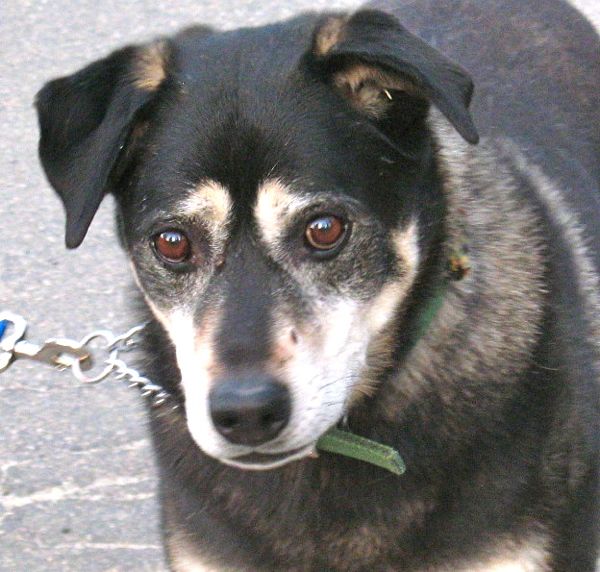
Rocco is an energetic 8-year-old husky mix who has very good manners.

He likes to sleep in bed with his people at night, and he likes other dogs and small children, but his new home shouldn’t have any small animals or cats.

He loves to go for hikes and car rides.

Rocco is neutered, microchipped, and vaccinated.

He is at the El Dorado County Animal Services shelter in Meyers, along with many other dogs and cats who are waiting for their new homes. Call (530) 573.7925 for directions, hours, and other information on adopting a pet.

For spay-neuter assistance for South Tahoe residents, go online.

— Karen Kuentz


Winter businesses need snow so season can go full throttle

By Kathryn Reed

When visitors come to the South Shore, especially for activities that involve snow, there will be plenty of things for them to do. A rundown on all things winter was the topic of this month’s South Lake Tahoe Lodging Association meeting.

Lodging guests can often take advantage of discounted rates for lift tickets, snowmobiling, rentals and boat cruises. Sometimes it comes part of a package deal with a night’s stay, other times the front desk sells the lower priced tickets.

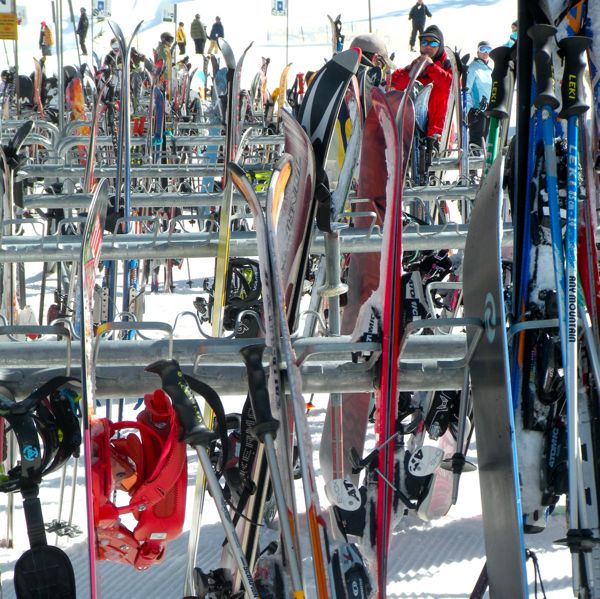
Lake Tahoe is ready for winter business. All that's missing is snow. Photo/LTN file

These incentives are nothing new in the hospitality business. It’s all about providing the guest with the best experience, the most fun and ideally at an affordable rate.

Deals are also given to frontline staff so they may experience the different activities in the area. The rationale is the best salesperson is someone who actually knows the product. If someone hasn’t skied one of the resorts, how can they authentically answer a guest’s question?

Representatives from the three South Shore resorts gave a spiel about what’s new and the same for this season, as did other outdoor vendors.

Kirkwood’s Powder Express bus starts service Dec. 26; taking people to the resort for $15/day. If booked online in advance, the price drops to $10.

The resort will keep operating on a limited basis on weekends until enough snow accumulates to open more terrain on more days.

Heavenly’s rep said lower Stagecoach should open soon. Ante Up terrain park reopened last week with 25 features.

A shuttle between Heavenly and Northstar costs $15.

Starting Dec. 17 the Tamarack Lodge will have an après ski party from 3:30-6pm with music and happy hour specials.

Sierra-at-Tahoe is waiting for Mother Nature to start doing her snow dance. With temps hitting 59 degrees at the resort last week, it’s still hiking season many places in the mountains.

The shuttle taking skiers and boarders to Sierra is free.

Heavenly Village is celebrating 13 days of holiday fun staring Dec. 19 and culminating Dec. 31 with a lighted (more so than last year) gondola drop at 9pm (the New York New Year) and what is being touted as a substantially better fireworks display compared to 2010.

Tony Lyle with Aramark talked about Santa being on board the Tahoe Queen between now and Christmas Eve.

The Queen will cruise New Year’s Eve to celebrate the West Coast New Year, while the M.S. Dixie II will party on East Coast time.

The Queen’s ski shuttle between Ski Run Marina and the pier at the Hyatt starts Jan. 17 and will run Tuesdays and Thursdays through April 5. While the Queen is in Incline, a 90-minute cruise will be offered that goes by the CalNeva, Thunderbird Lodge and other locales.

The Queen will also have après ski cruises every Wednesday starting at 6pm from Jan. 4-April 4 for $19.

Dwight and Diana Borges have added an hour sleigh ride to their offerings. In the past a 30-minute tour was all that was available from the open field near MontBleu.

Two new sleighs allow groups of about 50 people to go out at once.

Before the snow falls the sleigh with wheels is taking people on excursions and the horse carriages are at Stateline.

While the emphasis of the meeting was for winter businesses to let lodging entities know what’s going on, all of these things are available to locals, too.

In other action:

• Some lodging board officer positions changed. The full board includes: president, Jim Blossey, Motel 6; vice president, Rich Bodine, Inn by the Lake; treasurer/secretary, Jerry Bindel, Aston Lakeland Village, representative 1-80 units, Douglas Williams, Cedar Pines; representative 80-plus units, Dell Dellinger, Forest Suites; property management/time share, Tom Davis, Tahoe Keys; at-large rep, Pat Ronan, Tahoe Lakeshore Lodge; associate rep, Darcy Nealis, Vail/Heavenly. The redevelopment seat is open, though Mike de Laet, resort sales manager for Kirkwood, wants it.

• The board agreed to give $1,000 to Christmas Cheer – which is feeding 780 families a month instead of the “usual” 300.


Budget gift: Soap made in Lake Tahoe

Publisher’s note: Lake Tahoe News is looking for gift ideas that are less than $20. Find out how to make a suggestion.

Tahoe Mountain Soap Company has locally made, handcrafted natural soaps, natural sea sponges and more — all for less than $20.

Soaps come in so many scents it may be difficult to choose just one.

More info is available online.