Opinion: Keep the Clean Water Act strong

By William K. Reilly

Next year will mark the 40th anniversary of the Clean Water Act, a milestone for a series of landmark environmental laws that began with the creation of the Environmental Protection Agency in 1970. Those actions set our nation on a course to restore our damaged natural resources, but today, because of political pressures and court rulings, the extent and durability of some of those key protections are at risk.

Since its enactment in 1972, the Clean Water Act has encountered resistance from powerful business interests that have tried to fill wetlands, drain marshes, develop shorelines and allow pollution to flow off their property. One approach these developers have used to weaken the law has been to try to limit its jurisdiction, to say it shouldn’t apply to this or that water body. The rationale has always been to argue that the water on the particular property in dispute didn’t connect with interstate bodies of water and therefore should be exempt from federal regulation.

When the act became law, two-thirds of our nation’s lakes, rivers and coastal waters were unsafe for fishing or swimming, and untreated sewage and industrial waste was routinely dumped into our waters. The law was partly a response to the shock the nation experienced when the filthy Cuyahoga River in Cleveland erupted in flames. Since then, industrial pollution has declined significantly. Fish have returned to countless water bodies that were once all but lifeless. Progress has come in fits and starts — despite more litigation filed than the law’s proponents expected or wanted — but it is real and evident.

Still, there are reasons for concern.

William K. Reilly was the administrator of the Environmental Protection Agency from 1989 to 1993 and was the co-chairman of the National Commission on the BP Deepwater Horizon Oil Spill and Offshore Drilling.

Read the whole story


Homewood to enter 21st century with mega-upgrades

By Kathryn Reed

TAHOE CITY – What’s another 10 hours when five years had already been spent on the revitalization plan of Homewood Mountain Resort? For Art Chapman, sitting in a room all day Wednesday listening to people praise and rip apart his plan was worth it.

Chapman is president of JMA Ventures, the San Francisco-based development company that bought Homewood in summer 2006.

The Tahoe Regional Planning Agency Governing Board on Dec. 14 did not cast a dissenting vote on the multiple motions needed to adopt the final environmental impact statement, Regional Plan amendments and phase 1 of the Homewood Mountain Ski Area Master Plan.
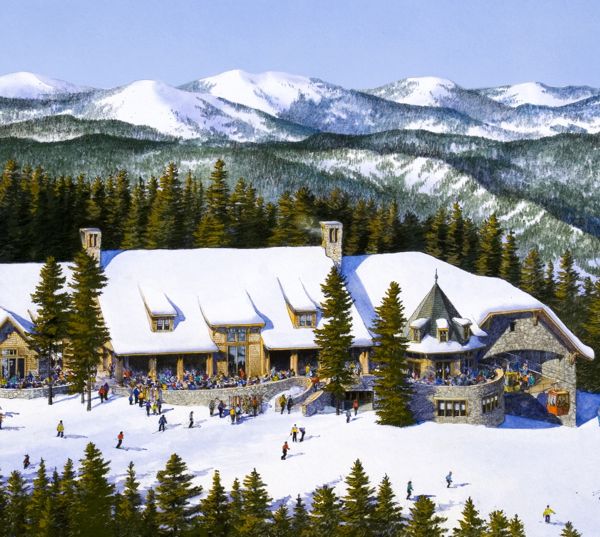
Homewood will be getting a mid-mountain lodge with a public swimming pool.

Despite the approval after the marathon meeting at Granlibakken resort, a lawsuit was filed Dec. 8 to stop the project based on California Environmental Quality Act violations. The California Clean Energy Committee filed the suit against Placer County and JMA.

“The committee’s supporters on the West Shore will be directly and adversely impacted by the implementation of the project and by the failure of the Homewood Mountain Resort Ski Area Master Plan EIR/EIS to adequately evaluate the impacts of the project and to propose mitigation as required pursuant to CEQA,” according to the Homewood CEQA writ.

People who would be on the defendants’ side at the meeting told Lake Tahoe News they believe the final EIS addresses the concerns brought forward in the lawsuit and are not concerned.

Chapman after the meeting spoke one-on-one with Lake Tahoe News.

“If this thing were to work, it had to be embraced by the locals. And that’s why we will be successful when we build it,” Chapman said of the Homewood project.

Of the 22 people who spoke against it, most were in favor of doing something, but on a much-reduced scale.

Fifty people spoke for the project, while two others fell in the neutral category.

Of the people who spoke, more full-time residents want the project, while part-time/second homeowners don’t want things to change. It was obvious the economic situation in the Lake Tahoe Basin – loss of jobs, little or no public-private investment, and declining school enrollment – has taken its toll on locals. They are the ones welcoming JMA – its money, jobs and goal of revitalizing the West Shore.

Much was said of how this project will be good for the economy and good for the environment. It will create 500 construction jobs and 180 year-round positions.

Chapman expects to add nearly $7 million to the tax rolls, and between $16 million and $20 million to the West and North shore economies on an annual basis.

“I hope it rejuvenates the local economy,” Chapman said.

He and his wife have lived in Placer County for the last eight years. When the residences are built at Homewood he intends to move there.

As a skier, Chapman told Lake Tahoe News one day he hopes to be able to ski between Homewood, Alpine Meadows and Squaw Valley. As it is, with JMA entering a partnership with KSL Capital Partners to create Squaw Valley Holdings so the two entities jointly operate Alpine and Squaw, putting Homewood into the mix could be easy.

“It’s not that far from the top of Homewood to the backside of Alpine,” Chapman said. He likes the idea of making Tahoe be like European ski resorts with linking terrain.

The environment

Environmental gains beyond what is required are part of the plan. At the meeting Chapman agreed to monitor for 10 years how well the impervious materials are working.

By the time it’s built Chapman expects to have secured an LEED gold certificate for construction.

Improvements have begun, with 88,000 fewer pounds of sediment reaching the lake. By build out that number will rise to 154,000 pounds a year.

TRPA standards are that filtration systems must sustain a 20-year event, or 1 inch of rain in an hour.

Homewood’s plans call for twice that standard.

Generators will be able to be used on the snowmaking equipment if there were ever a wildfire, so firefighters have an added mechanism to put out the flames.

Coverage – a concept unique to the basin that stipulates how much land can literally be covered – will be reduced by 235,000 square feet. The TRPA regulation has to do with erosion.

Project concerns

Issues brought up at the TRPA meeting included how much traffic the development will create. The lawsuit also takes issue with the numbers Placer County approved which are the numbers JMA cites.

JMA says winter vehicle miles traveled will decrease based on providing free dial-a-ride service to local residents and the idea guests will be staying longer than a weekend visit. The bus will run from the Y in Tahoe City to Emerald Bay. Ten will run in the winter, three in summer. Beaver Creek is the model being used.

“Upon completion, traffic will be less than five years ago,” Chapman told the board. He also said state statistics show traffic along that stretch of Highway 89 has decreased by 30 percent in the last 10 years.

Board member Mara Bresnick liked the League to Save Lake Tahoe’s idea to have rigorous monitoring of traffic. That was agreed to. The number of vehicles coming to Homewood will be tracked. Tracking use alternative transportation and surveys of guests about how they got to the resort are also part of the conditions.

Concerns are traffic on busy weekends will be even worse going through Tahoe City at the Y. While plans are in the works to reroute Highway 89 so it no longer goes over Fanny Bridge, construction of a bypass is years away and at this rate is likely to occur after Homewood breaks ground. (The TRPA Advisory Planning Commission is scheduled to discuss Fanny Bridge on Jan. 11, 9:30am at the Stateline office. JMA is required to pay for part of the bridge bypass.)

Added on Wednesday was the agreement to monitor traffic for 20 years.

Board members Clem Shute and Bresnick insisted if vehicle numbers are higher than what’s expected, there must be some sort of mitigation requirements and that phase 2 doesn’t get approved without addressing vehicle issues.

Everyone agrees summer vehicle trips will increase because the resort as it is today is used for one season.

A water taxi will be operated by Homewood in summer. Free bikes will be available. Completion of the West Shore bike trail is being paid for by JMA. Access to hiking will be allowed — whereas now people would be trespassing. The pool at mid-mountain will be open to the public. And the mid-mountain lodge will be open year-round.

The goal is Homewood will be a year-round destination.

But not everyone is thrilled with that. One of the 74 speakers talked about how it’s ridiculous to build a five-star resort at a three-star mountain.

Chapman, on Wednesday and at the multitude of meetings he’s spoken at, said if the project he wants to develop wasn’t approved, he would have to shutdown the ski resort which will be 50 years old in 2012.

The tiny West Shore town with its population of 744 residents could grow if and when the project is developed. A late revise by JMA was to eliminate the fractional ownership units and make them whole ownership.

The development

Chapman expects to break ground on the $500 million project in summer 2014. Final designs and permits need to be secured between now and then.

The plan calls for 56 residential condominiums, 47 multi-family condominiums, 48 ski-in/ski-out chalets, 13 workforce-housing apartments and a 75-room hotel.

Chapman made no bones about the real estate portion being the financial driver for everything else. He said with Homewood having about 100,000 skier visits a year, the average skier spending $6.48 on food and beverage, and no profit in ski school, it will take the real estate to drive on-mountain improvements. Even with an estimated increase of 18,400 skiers a year upon build out, Chapman said it wouldn’t substantially move the bottom line.

“Before we can borrow money for real estate, we need to prove the ski area is viable. This little ski operation can’t afford to spend $12 million on lifts or $10 million on a mid-mountain lodge or $13 million on (a base) lodge,” Chapman said. “Real estate is the golden goose.”

The EIS/EIR and amendments that were voted on can be found on the TRPA’s website.


It’s not easy being Santa Claus

By Siobhan McAndrew, Reno Gazette-Journal

It’s hard to be Santa Claus.

The commercialization, the money-making department store Kris Kringles and the people who don’t realize the greatest gift you can give a child comes from the heart might make even the jolliest man in a bright red suit want to scream, “Bah humbug.”

And then there are the commercials that endlessly use Santa to encourage spending. The worst is by electronics retailer Best Buy.

In the ad, an overzealous and vindictive shopper, played by “Parks and Recreation” actress Jama Williamson, mocks Santa. Santa tries to fit a simple wooden toy into a stocking. The shopper looks on, proud that she outdid Santa by scoring great deals.

“Oh, I guess I didn’t leave any room for you,” she says, as a frustrated Santa stands in front of her family’s Christmas stockings. “Maybe you can fill his,” she smirks, as she points to the dog, who is holding an empty stocking in his mouth.

The commercial ends with the line, “Game on, Santa.”

“Gifts are not what the holiday is about,” says Santa Claus, an Incline Village man who legally changed his name from Patrick O’Conner to Claus in 2005.

Read the whole story


Beneficiary of 2012 Truckee wine event being sought

The Downtown Truckee Wine, Walk & Shop is seeking beneficiary request applications from area nonprofit organizations, with the hope of creating a partnership that will benefit the selected organization.

The Downtown Truckee Wine, Walk & Shop has established itself as one of Truckee’s preeminent events. Set for Oct. 6 from noon to 4pm, this annual favorite, brings more than 1,000 locals and visitors to historic downtown Truckee to sip wine, taste scrumptious food samples and enjoy shopping.

The event, which has steadily grown since 2004, not only benefits the community through marketing efforts and a boost in tourism during the shoulder season, but also benefits a different local nonprofit each year. In years past, $3,000-$5,000 has been donated to the chosen nonprofit partner. Past beneficiaries have included Girls on the Run Sierra, Sierra Senior Services, Tahoe Women’s Services, Truckee and Glenshire Elementary Schools’ Special Friends Program, Truckee High School music program, Truckee-Tahoe Humane Society, Lake Tahoe Music Festival and InnerRhythms Dance Theater.

Organizations may pick up an application at the Switchback Public Relations + Marketing Inc. office (10075 West River St., Ste. 206) or call (530.550.2252) to request a copy to be sent via email, mail or fax. Applications are due Jan. 13 by 5pm.


Fragrance chemicals: What’s the stink?

Many people experience unpleasant physical effects from scented products, such as perfumes and colognes. Sometimes it might be a headache or nausea when passing by a department store’s fragrance counter or riding in an elevator with someone wearing a certain fragrance.

However, there is a growing number of people who suffer more severe reactions to these and many other types of products and chemicals. This condition is known as multiple chemical sensitivities and involves people who have developed an acute sensitivity to various chemicals in the environment.

People with MCS experience a range of debilitating physical reactions, some even life-threatening, to chemicals used in a variety of products, including fragrances and personal care products, deodorizers and cleaners, pesticides, wall and floor coverings, and building materials. It’s a complex issue with a variety of triggering agents and physical reactions. Different people are affected by different products in different ways. The common factor is that the reaction, whatever the type, is very strong and disabling.

To better understand what drives people to use (or not to use) fragranced personal care products, a group of UC Davis researchers conducted a nationwide survey on this and other emerging environmental issues. They will share the results of the survey, what science can tell us about fragrance chemicals and environmental and human health, and where you can go to learn more about the ingredients in your favorite personal care products.

Fragrance chemical research will be presented Jan. 26 from 6-7pm by UC Davis graduate students Carmen Cortez, Jessica Abbott, Jennifer Balachowski, Susan Chen, and Meredith Niles of the UC Davis Responding to Rapid Environmental Change Integrative Graduate Education and Research Traineeship (REACH IGERT) program, a multidisciplinary group of graduate students who work on issues related to rapid environmental change.

A $5 donation is requested. No host bar opens at 5:30pm. Tahoe Center for Environmental Sciences is at 291 Country Club Drive, Incline Village.


Holiday traditions include purchasing millions of dollars in goods from China

Retail sales by the nation’s department stores (including leased departments) in December 2010 hit $27. 2 billion, according to the U.S. Census Bureau. This represented a 44 percent jump from the previous month (when retail sales, many holiday-related, registered $18.8 billion).

Value of retail sales by electronic shopping and mail-order houses in December 2010 was $34 billion ─ the highest total for any month last year.

The value of U.S. imports of Christmas tree ornaments from China between January and September 2011 was $983 million. China was the leading country of origin for such items. Similarly, China was the leading foreign source of artificial Christmas trees shipped to the United States ($79.7 million worth) during the same period.

California led the nation in 2009 by having 15 of the 88 U.S. locations that primarily manufactured dolls and stuffed toys.

China was the leading country of origin for stuffed toys coming into this country, as well as for a number of other popular holiday gifts. These include roller skates ($24.6 million), sports footwear ($253.8 million) and basketballs ($38.9 million). China leads Thailand as the leading supplier of ice skates ($17.7 million vs. $9.8 million), with Canada ranking third ($4.2 million).

Place names associated with the holiday season include North Pole, Alaska (population 2,117); Santa Claus, Ind. (2,481); Santa Claus, Ga. (165); Noel, Mo. (1,832); and — if you know about reindeer — the village of Rudolph, Wis. (439) and Dasher, Ga. (912). There is Snowflake, Ariz. (5,590) and a dozen places named Holly, including Holly Springs, Miss. (7,699) and Mount Holly, N.C. (13,656).


Western U.S. becoming a bit of a dust bowl

By Kirk Johnson, New York Times

DENVER — Oh say, can you see across the Grand Canyon? Not as well as you used to on some days.

A dust storm that covered Phoenix in July dramatically attested to Western air quality concerns.

The question of how clean the air is in the American West has never been an easy one to answer, strange to say. And now scientists say it is getting harder, with implications that ripple out in surprising ways, from the kitchen faucets of Los Angeles to public health clinics in canyon-land Utah to the economics of tourism.

It is at least partly about dust, something that has been entwined with Western life for a long time, and now appears to be getting worse.

In the 1800s, the high deserts stretching west and south of the Rockies became a famed destination for respiratory sufferers like “Doc” Holliday, the gunfighter-dentist (and tuberculosis patient), who came to take what was called the desert cure.

But cattle and sheep by the tens of thousands were at the same time trampling across those fragile landscapes, loosening once stable soils to the four winds and creating a kind of parallel — but equally true — Western mythology around the tumbleweed and the dusty trail.

The region’s air quality, then as now, was partly pristine and partly poor depending on when and where you looked and which way the wind blew.

But now a new and even more complicated chapter appears to be unfolding, researchers in many different fields say. From off-road vehicle use, which has in some places replaced the clumping trod of the old cattle herds, to drought’s impact on plants with their soil-anchoring roots, more dust appears to be up and moving.

And scientists say they are also understanding for the first time the deep connections between the dust’s main source — a vast high-desert region called the Colorado Plateau, which stretches through four states and is home to national parks like the Grand Canyon and Arches — and the economic, environmental and demographic life in cities and suburbs far removed.

“Changing conditions on the Colorado Plateau affect high-elevation water sources, commerce and population centers with tens of millions of people,” said Richard L. Reynolds, a research geologist who has been studying dust at the United States Geological Survey. And with climate models suggesting a hotter, drier future in much of the West, potentially compounding dusty conditions, the dust is also opening a window on how the region is changing. “It’s giving a glimpse of what we can expect,” Reynolds said.

In the last few years, winter dust storms on the high peaks of the Rocky Mountains in Colorado have sharply increased in number, affecting the rate of melting snows into the Colorado River, a main source of water for agriculture and for the drinking supply for more than 20 million people. Of 65 so-called dust-on-snow events since 2003, when tracking began, 32 have struck in just the last three years, according to the Center for Snow and Avalanche Studies, a nonprofit research group based in Silverton, Colo. Dust can accelerate how fast snow melts because it absorbs heat.

Read the whole story


Tahoe Snowcial agenda set for January

The worlds of digital storytelling, snowsports and technology will converge at Heavenly Mountain Resort Jan. 18-21 for the fourth annual Tahoe Snowcial, a one-of-a-kind winter festival that celebrates the global community who live their passion on the snow and tell their stories online.

The speakers for Jan. 19 are:

· Joe Fernandez, CEO and co-founder, Klout

· Hope Frank, CMO, Webtrends

· Porter Gale, former-CMO, Virgin America

· Rob Katz, CEO, Vail Resorts

· Jonathon Crowley, director of media partnerships, foursquare.

The topics for Jan. 20 are:

· Creating Engagement

· Social Media and Action Sports

· Location-based Applications

· Igniting Advocacy

· The Science of Social Media.

The on-mountain activities are highlighted by the Saturday scavenger hunt powered by EpicMix.

Young the Giant has signed on to headline the Jan. 21 entertainment lineup.

Early bird rates for Snowcial end Dec. 16.


How are you spending your time in Tahoe without much snow to play in?


Change in leadership in South Lake Tahoe government

By Kathryn Reed

In a bit of a power play, Claire Fortier was voted by her colleagues on the South Lake Tahoe City Council to be mayor for the next year, but moments later stripped her of two committee appointments she coveted.

It’s fairly routine for the mayor pro tem to become mayor the following year. This is what happened this year. And now Tom Davis is the mayor pro tem.

In South Lake Tahoe much of what the mayor does is ceremonial. A big part of her job is to help set the agenda and run the meetings.

But as the city keeps raising its collective voice to be heard in Sacramento and Washington, D.C., the role of the mayor is becoming a bit more important than years past. In large part this has to do with how others view the words “mayor” and “councilmember” – the former carries a bit more clout.

Claire Fortier is mayor of South Lake Tahoe for the next year. Photo/Kathryn Reed

Fortier said she is ready to lead South Lake Tahoe by building an innovative team, helping reshape the region, and making Tahoe an affordable and fun place to live.

But one person cannot do it alone.

Along with the reorganization of council leadership came changes to committee assignments. This past year Fortier and Councilwoman Angela Swanson were on the Legislative Committee. Now it will be Swanson and Davis.

The Strike Force Committee, something that evolved out of the CEO club, will now have Councilman Hal Cole instead of Fortier. Swanson and Councilman Bruce Grego each lobbied for the appointment, too.

Fortier retains her seat on the Tahoe Regional Planning Agency Governing Board. But she wanted the other committee appointments.

Her colleagues said she couldn’t do it all and the responsibilities of the city needed to be shared.

While clearly a bit of politics was being played during the committee appointments, the five practically had a group hug at the end of meeting – saying how wonderful it is to work together.

Later that night they all took time to celebrate Fortier’s ascension to the post of mayor at a reception at the Black Bear Inn.