Opinion: Shenanigans fuel distrust of Wall Street

By Robert Reich

Wall Street is its own worst enemy. It should have welcomed new financial regulation as a means of restoring public trust. Instead, it’s busily shredding new regulations and making the public more distrustful than ever.

The Street’s biggest lobbying groups have just filed a lawsuit against the Commodities Futures Trading Commission, seeking to overturn its new rule limiting speculative trading in food, oil and other commodities.

The Street makes bundles from these bets, but they have raised costs for consumers. In other words, a small portion of what you and I pay for food and energy has been going into the pockets of Wall Street. Just another redistribution from the middle class and the poor to the top.

The Street argues that the commission’s cost-benefit analysis wasn’t adequate. At first blush, it’s a clever ploy. There’s no clear legal standard for an “adequate” weighing of costs and benefits of financial regulations, since both are so difficult to measure. And putting the question into the laps of federal judges gives the Street a huge tactical advantage because the Street has almost an infinite amount of money to hire so-called “experts” who will say benefits have been exaggerated and costs underestimated.

The Street used the same ploy last year, when the Securities and Exchange Commission tried to make it easier for shareholders to nominate company directors. Wall Street argued that the commission’s cost-benefit analysis was inadequate. Last July, a federal appeals court – inundated by Wall Street lawyers and hired-gun “experts” – agreed with the Street. So much for shareholder rights.

Robert Reich, former U.S. secretary of labor, is professor of public policy at UC Berkeley and the author of “Aftershock: The Next Economy and America’s Future.”

Read the whole story


Incline woman accused of possessing stolen property

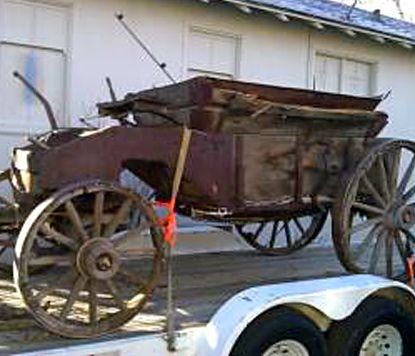
Washoe County sheriff’s detectives on Dec. 22 arrested Tavia Toussaint, 34, of Incline Village on possession of stolen property charges after she alleged negotiated the sale of an antique wagon to detectives.

A trailer, which the wagon was sitting on, was also seized pending further investigation into possessing additional stolen property. The trailer had recently been repainted and the identification plates were removed, deputies said.

The wagon, reportedly one of the first center dump wagons to be used in early road construction, had been on property in Reno which is owned by an older woman. A similar wagon, believed to be the only other wagon of its type in the area, sits on the Nevada Department of Transportation grounds.

The caretaker of the property conducted his own research on a local Internet private party sales site, located the wagon for sale in Reno. The ad indicated the wagon was prepared for sale and delivery, with the ad being posted the day prior.

Sheriff’s detectives and the All Threats All Crimes Unit conducted an undercover sting operation, posing as potential buyers for the wagon. The caretaker was able to positively identify the old wagon, valued in excess of $1,000.

Detectives are following several leads in an effort to identify the suspect(s) who stole the wagon. Anyone with information regarding this investigation is urged to call (775) 328.3326, or anonymously through Secret Witness at (775) 322.4900.


Opinion: Tahoe’s mantra should be ‘haste makes waste’

By Garry Bowen

Although this column could easily be my swan song, given the dearth of opportunity here for anyone beyond a South Shore job description, as a long-time local I am hardier than that, especially in a hometown which desperately needs to upgrade their entry into the 21st century, if they ever hope to flourish again.

First of all, thanks go out to all those who have noticed the continual contradictions between what our “powers-that-be” profess to do on our behalf, and what the rest of us observe as reality, starting with the idea that as Lahontan wants to use pesticides to solve the invasive species issue, a western Nevada entrepreneur has approval from another agency to harvest 220 million crayfish as a “cash crop”.

Garry Bowen

The gratitude rests with the idea that this exposes a perfect example of the continual expression that the left hand doesn’t know what the right hand is doing with our institutional guidance. The idea that there might be a harvest of crayfish from a lake that uses pesticides to combat other biologic forms has already turned off those intuitive enough to notice the conflict, even absent any biologic knowledge, with this very ironic development.

The EPA considers any additive to our water supply, whether organic or chemical, to be pollution, so it will be interesting to see what happens to Lahontan’s supposed July approval for such an idea.

The word “cumulative” is now in play, as too much of either cannot assimilate back into nature – that would be a fundamental for the EPA position, as by definition this is what toxicity is, and a foundation for the proposed TMDL.

As we already know, with Tahoe water columns recirculate only every 700 years (it averages 989 feet deep), this development needs serious scrutiny, and much deeper understanding than prevailing board approval would imply.

Conversely, anyone (from Yerington?) who thinks that they are to invest in equipment, facilities, marketing, and distribution with an approval-in-hand is just as off-balance as are agencies, as their entire product line is now in serious jeopardy, unless they indulge in one of those illegitimately spun PR campaigns extolling “succulent Tahoe shrimp”.

The Swan Song theme doesn’t stop there, as apparently other powers-that-be have announced a misdirection in wanting to change any South Shore reference to Tahoe South. In the alternative, they may be right, as toxic crayfish will perhaps be associated with Tahoe North by default, to mitigate any further damage to our current flat economy – but a divided Tahoe identity will easily counteract that idea.

This is a fertile period for naysayers when you also consider the latest city escapade, and add it to the situations above, upon realizing that any sincere attempt to offset a municipal loss by “outsourcing” its operation with a business proposal that pays the city less than a dime per square foot for a very sophisticated building of almost 40,000 square feet is unworkable. Note that a serious reworking of the original bond takes $75,000 worth of consultancies to effectuate, not to mention a lifespan that may result in several hundred thousand dollars of additional interest.

How long will it take to recoup $75,000, or several hundred thousand, at less than 10 cents a square foot? I know, I know – the private proprietors were to pay a percentage of their profit, but above a certain amount – an amount that the city never reached themselves – what did they think the possibility of that actually was?

I submit that they will be losing way more than the previous $100,000.

Does the idea of “haste makes waste” govern all conduct in the basin? Or, are we going to continue to “shoot ourselves in the foot” in “rearranging the deck chairs on the Titanic” – sorry for the obvious clichés, but they are now very apt.

This is where the Swan Song theme bears fruit, as in the aggregate of the above initiatives; no leeway exists for any thing new, as unfortunately there is only so much daylight to burn. This is the danger of being overly preoccupied with trying to prop up a status quo, especially a declining one, while not allowing any way for necessary sustained transformation to emerge. Time is of course the essence.

It is indeed a sad commentary for the natural beauty of Tahoe to be squandered by trying to maintain ideas that are not even understood by those trying so hard to protect them, while not trying very hard to engage those providing very real and understandable solutions.

You don’t have to believe in the problems to believe in solutions – something apparently lost on those who continue to dwell on the avoidance of problems by creating more of them. None of the above is sustainable to any quality of life here.

Even a Swan Song can be off-key — Tahoe will simply have to do better than this.

Garry Bowen has a 50-year connection to the South Shore, with an immediate past devoted to global sustainability, on most of its current fronts: green building, energy and water efficiencies, and public health. He may be reached at tahoefuture@gmail.com or (775) 690.6900.



Cowboy poetry festival more than just words

The 28th National Cowboy Poetry Gathering is Jan. 30-Feb. 4 in Elko.

The event is as much about the music of the West as it is about its poetry. This year’s event includes musical icons including Ramblin’ Jack Elliott, Ian Tyson, Michael Martin Murphey, Mike Beck and the Bohemian Saints, Martha Scanlan, Stephanie Davis, Wylie & The Wild West, Canada’s Tim Hus and the Rocky Mountain Two, Austin’s Hot Club of Cowtown and many more.

Every winter for the last 27 years, rural and urban people have joined with cowboys and ranchers in the small high desert community of Elko to listen to poetry and music, learn about cowboy culture in the U.S. and around the world, experience art, watch Western films, learn a craft, play music, gather to eat, drink, swap stories and dance the night away.

Open-mic sessions, music jams, dances and dance lessons offer opportunities for everyone to participate. The 28th National Cowboy Poetry Gathering will feature nearly 50 poets, musicians and musical groups from the U.S., Canada and Australia performing on seven stages at four venues.

Programs this year will focus on the Southwestern United States, specifically Arizona and New Mexico — which are celebrating their centennials in 2012.

Tickets to the 28th National Cowboy Poetry Gathering can be purchased online or call (775) 738.7508.


Nevada approves regulations for Internet poker

By Richard N. Velotta, Las Vegas Sun

The Nevada Gaming Commission approved the nation’s first regulations for Internet poker play Thursday, opening the door to the licensing of companies to offer online play within the state.

Play across state lines still wouldn’t be allowed because of restrictions imposed by the U.S. Department of Justice.

Representatives of the industry applauded the unanimous vote and companies already licensed by the state can apply to expand their current status. Companies that haven’t been licensed in Nevada would undergo the same investigative scrutiny required by state gaming regulations.

The new regulations require applicants to prove their ability to maintain controls on player registration, prevent underage play and establish the location of players before being licensed.

Regulations also address what information must be presented on their websites, record keeping, dispute resolution, fees and taxation and problem gambling notifications.

Six companies already have applications in the regulatory pipeline for licensing: Cantor Gaming, Shuffle Master, International Game Technology, Bally’s Technology, Caesars Entertainment and the South Point.

Read the whole story


Art and history are woven throughout the Christmas story

By Robert Schimmel

Here’s a trivia question for you: What do 476 AD, Gentile da Fabriano, auras, cloisonné, and the Grinch have in common? I’ll bet if you weren’t asked this at this time and with “the Grinch” as a clue, you’d have been challenged. But you’re right; they are all significant in the history and imagery of Christmas.

We all know Jesus Christ’s birth is the reason for the season, but who of you know how the dates or the icons evolved that we’ve come to observe and love? I certainly didn’t until I had David Foster, retired Lake Tahoe Community College art professor, on my radio program. We got into more detail than I can share here.

Robert Schimmel

So in the interest of being succinct, let’s start with the invasions and fall of the Roman Empire in 476 AD and applaud the fact that the Romans, by Constantine the Great’s decrees in the early 300s AD, established Christianity throughout their domain. This, coupled with administrative expertise and advanced documentation in manuscript form done by monks and scribes, led to the formalized dating of the life of Christ, which ultimately is reflected on our calendars today, including Christmas Day.

In addition, these invaders burned most of the churches and new, durable stone edifices were built in the Roman style with the influences of Christendom: Gothic arches in threes that referenced the Trinity and the structural, cruciform (footprint) design and structure that reflected the crucifixion and became the most prevalent symbol of the faith. Cloisonné, which resulted in stained glass (prime example is in Notre Dame Cathedral, Paris) accompanied the barbarians and blossomed during this same period.

But in spite of growing documentation, literacy still lagged and artists continued to tell the narratives of life pictorially. We can see how the use of symbols, for example halos (or auras), progressed from solid disks behind the saints’ heads to hollow circles over them and finally to just an apparent vapor. Gentile da Fabriano of Italy created the best known and arguably most involved image of Christ’s birth, “Adoration of the Magii”, in 1423 at the end of the late Gothic period, and one can see all the influences of the day plus many of the traditional Christmas images including shepherds, halos and the manger.

Then in the Renaissance great advances occurred, such as art materials (like oil paints), tools (including the use of linear perspective), anatomical accuracy (Michelangelo the chief instigator), and the printing press that opened the doors to huge expansions of the artists’ imaginations and capabilities for realism and expression. This in turn with the incumbent Age of Industrialization (that followed after the Baroque, Impressionism, post Modern ages, among others, and introduced a plethora of new materials and styles but not images), brings us to the “Here and Now Age” with such icons as the Christmas Tree and Santa Claus. Believe it or not, the Christmas tree is truly an adaptation of a Roman times celebration around the evergreen tree or Tannenbaum to which annual tribute was paid in the form of gifts.

And St. Nicholas really was a man named Nicholas who, through his conversion and dedication to the faith and selfless acts, became a revered and honored saint imprisoned in the 1800s and ultimately the icon known as St. Nick or “Santa Claus”. Artists all along the way and in myriad cultures and styles promulgated these and other images we cling to in our modern communities of faith and secularism.

Certainly a significant case in point regarding creativity and artists’ license is the film “The Grinch Who Stole Christmas” and its tale of evil seeking to eradicate the joy of Christmas by stealing the Christmas trees and gifts of a town’s people. When the people’s spirit wasn’t broken and the true meaning of Christmas lives on in their hearts and relationships, we witness the power of hope, joy, and giving. So, as you look at and touch your ornaments, gifts, wreaths, trees and favorite elements, listen to all genres of music, and probably watch various celebrations of this unique day, please take it to the next step. Quietly note the incredible history and sacrifices that have brought this celebration to you and all the various forms of art that have made it as ornate, elegant, multi-cultural and real as any Blu-ray TV possibly could, then give thanks and share your most precious gifts of all, you and your time and treasures.

Merry Christmas!

Robert Schimmel is a professional artist and teacher in South Lake Tahoe as well as host of “Lake Tahoe Art Scene” on KTHO radio on Thursdays at 5:15pm.


Recycle Christmas trees in Incline

The North Lake Tahoe Fire Protection District has partnered again with Incline Village General Improvement District’s Waste Not Program, to offer the annual free community Christmas Tree Chipping program.

Incline Village/Crystal Bay residents may drop off their Christmas tree anytime between Dec. 24 and Jan. 25 at Preston Field, 700 Tahoe Blvd., Incline Village located off Highway 28 near Highway 431.

This Christmas Tree Recycling service helps save our natural resources, landfill space and protects the clarity of Lake Tahoe. All trees dropped off at Preston Field will be chipped and used as mulch for local erosion control projects. Residents should be aware that Christmas trees left curbside will be taken to the landfill. This program recycles an average of 14 tons of trees each year.

Remove all ornaments, tinsel, nails, wire and other items which may cause harm to the tree chipper or operator. The chipper will not accept stumps, wreaths or yard waste and is not designed to accept cut up trees, branches or bushes – only Christmas trees.

For more information, contact Rebecca Sawyer at (775) 832.1284 or go online.


Extended hiking season in Tahoe worth braving the cold

By Kathryn Reed

Conflicted between wanting to go slow enough to embrace the beauty and fast enough to ward off the biting cold – such are the hazards of hiking in Lake Tahoe in December.

Hiking in the basin this time of year feels so foreign. But with no snow at lake level to snowshoe or cross country ski on, hiking becomes the default sport. The positive thing about the current weather is being able to visit trails I usually reserve for another season.

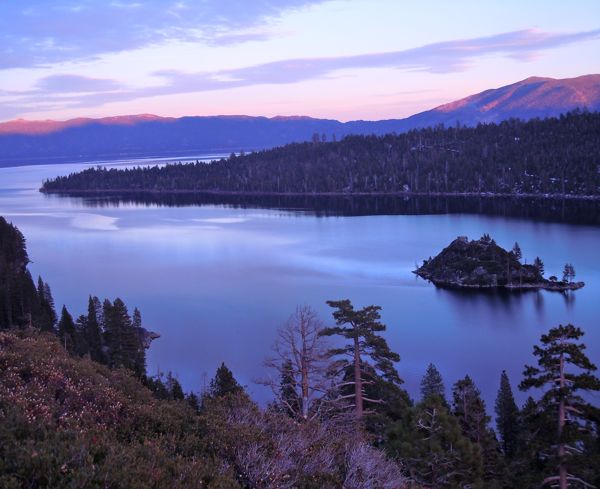
Emerald Bay at sunset on Dec. 18. Photos/Kathryn Reed

Our intent was to do a one-way between the parking lot for Vikingsholm and D.L. Bliss State Park. While the distance to drive the route is two miles, the hike is more than four miles. On a warm summer day it’s great to start at one end (we’ve always started at Emerald Bay because it’s closer to home), have lunch at the beach, and then traipse back to the starting point.

Not starting until the afternoon last Sunday we knew we didn’t have enough daylight to do a roundtrip. But we didn’t want to start sooner because being out in the cold any earlier could have meant excessive whining.

The problem was when we got to the stream-waterfall (I use those words extremely loosely) crossing. With ice having formed on either side of the path and the amount of water just deep enough to get my boots wetter than I wanted on this day, the rocks looking slippery, and the fall (if there were to be one) treacherous, I called “uncle”.

It became an out-and-back hike.

Still, it was worth it.

The Rubicon Trail has some of the most stunning views of the lake. San Francisco Chronicle outdoor writer Tom Stienstra calls it one of the most spectacular hikes in the U.S.

The only bad part about it is the one-mile trek from the parking lot to the Vikingsholm castle feels like at least three miles going up.

Few people are on the trail compared to the number of cars in the lot. All I could think is “no wonder California State Parks is broke” when I saw the parking was free and the lot was full.

My dismay subsided as we got to the bottom and we started walking along the north side of Emerald Bay. Hikers going in the opposite direction saying hello sporadically break up the solitude.

No campers at the boat in campsites. If only it were warmer, the bay is like glass. On the way back the only ripples on the water are from the mallards.

Shades of emerald dot the shoreline in the bay as well as along sections of the trail paralleling Lake Tahoe.

This is what makes this hike so stunning – the varied colors of the water, cedars too large for Sue and I to wrap our arms around, boulders seeming to bob, distant peaks without snow belying the time of year.

Much of the trail to the point is flat. Then it goes up a bit, with some granite staircases of sorts in a few spots.

Starting at the hour we did meant seeing the sunset. With clouds strewn across the sky, it made for a dramatic ending to an already spectacular hike.

Getting there:

From South Lake Tahoe, take Highway 89 north past Camp Richardson and to the far side of Emerald Bay. Park to the right in the lot for Vikingsholm.

Descend the path, then go the to left before reaching the castle.

ngg_shortcode_0_placeholder (Click on photos to enlarge.)


Setting the geographical record straight in the greater Sierra Nevada

By Guy Rocha

Padre Pedro Font, during an expedition to Spanish-controlled Northern California in 1776, named and mapped the Sierra Nevada for the first time.

Sierra means saw-toothed mountain range in Spanish, and Nevada means snow-covered. How many times have TV and radio commentators referred to the Sierra Nevada as the Sierra Nevadas or the Sierra Nevada Mountains? National news accounts — most recently CBS News’ Sunday Morning airing on Nov. 27 — rank among the worst offenders. Reporters, too often, make a plural out of Sierra Nevada akin to the Rocky Mountains becoming the Rockies (that’s acceptable in English).

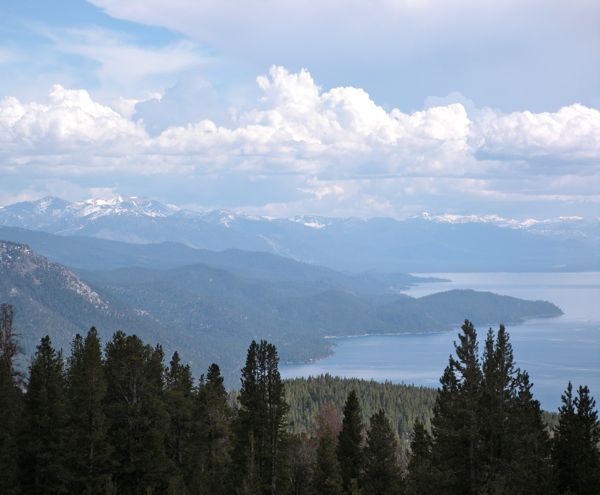
From Mount Rose -- the Carson Range -- looking down on Lake Tahoe. Photo/LTN file

Many times, a journalist or writer mistakenly referring to the Sierra Nevadas or the Sierra Nevada Mountains has compounded the problem by geographically placing nearby Carson City in the Carson Valley (it’s in Eagle Valley) and situating Reno in Washoe Valley (it’s in the Truckee Meadows).

Here is something that might surprise people who have lived in the area for some time and know to call the Sierra Nevada the Sierra Nevada or just the Sierra: Technically the Sierra Nevada crest line and the mountains descending to the west and east are wholly and solely in California. It’s true that the 19th century California-bound immigrants crossing the Great Basin upon seeing the huge mountain range looming in front of them assumed it was the Sierra Nevada.

An 1874 map of Lake Tahoe describes the feature as “Sierra Nevada (eastern Summit).” Another common name for the feature at the time was the “Eastern Slope.”

Guy Rocha is the former Nevada state archivist.

Read the whole story


Photography tips for travelers

By Rick Steves

If my hotel was burning down and I could grab just one thing, it would be my digital camera with its memory card filled with photos.

Every year I ask myself whether it’s worth the worry and expense of mixing photography with my travels. Then, after I see my images and relive my trip through them, the answer is always “Yes!” Here are some tips and lessons that I’ve learned from the photographic school of hard knocks.

Most people are limited by their skills, not their camera. It helps to understand your equipment before you travel, but ultimately your most valuable tool is a sharp eye connected to a basic understanding of how your camera works. Work through the manual. Then make a point to be creative in your photo safari: Capture striking light, contrasting shades, repeating patterns, interesting textures, bold colors, and intimate close-ups.

Look for a new slant on an old sight. Postcard-type shots are hard to resist, but boring. Everyone knows what the Eiffel Tower or Big Ben looks like. Find a different approach to sights that everyone has seen. Instead of showing the Leaning Tower lean, climb to its top and try a shot of the piazza below you. Shoot up at the snowy face of the Matterhorn…through the hind legs of a cow.

Capture the personal and intimate details of your trip. Show how you lived, who you met, and what made each day an adventure (a close-up of a picnic, your favorite taxi driver, the character you befriended at the launderette). Those moments — your moments — are the ones you’ll want to remember.

Read the whole story