Opinion: Humanity fumbles its way toward a world without war

By Joshua S. Goldstein

“Peace on Earth.” It is each year’s Christmas wish and indeed the great wish of the world’s religions across history.Of course, any realist or cynic can tell you that this wish is an empty hope that will never come true.

Oddly, the idealists who march in the streets for peace seem to agree: Peace on earth seems further away than ever.

Except, actually, it isn’t. While TV images will always show us the most horrible parts of the human experience, the big picture has changed dramatically in our lifetimes. Worldwide, wars today are fewer, smaller, and more localized than at any time in living memory.

Start with the bloodiest form of violence in history — wars between the world’s regular national armies, head-to- head with tanks, artillery, airplanes, missiles, and currently 20 million soldiers worldwide. For centuries, these armies fought regularly, several times a year on average, and the worst of these wars killed millions at a time.

Today, nowhere in the world are these armies fighting each other — a historic development that has received almost no notice. Countries are still armed to the teeth and still have conflicts, but they don’t go to war to solve them, mostly because it’s insanely expensive and doesn’t work very well. Exhibit A is the recently ended U.S. war in Iraq.

In Europe, where major interstate wars followed one after another for centuries, a continent has become a Union where (despite monetary troubles) fighting is unthinkable. China, wracked by wars and revolutions throughout history, has not fought a battle in 25 years. Its leadership derives legitimacy from trade-based prosperity, and follows a “peaceful rise” strategy in the world system. The U.S.-Soviet rivalry no longer exists, and the world’s arsenals of nuclear weapons have shrunk by three-quarters in the past 30 years, again with no hoopla.

Goldstein is professor emeritus of international relations at American University and author of “Winning the War on War: The Decline of Armed Conflict Worldwide”.

Read the whole story


No guarantee of finding work out of state

By Phillip Reese, Sacramento Bee

Escape isn’t easy.

As California buckled under layoffs and hiring freezes last year, tens of thousands of residents saw lower unemployment rates in other states and decided to move.

Many couldn’t find jobs near their new homes either. The unemployment rate in 2010 among former Californians who had left the state during the previous 12 months was 19 percent, according to a Bee analysis of new U.S. census data. By comparison, the unemployment rate in the state they left behind was 12 percent.

Those figures partly reflect the dismal job markets in other places. Moving from California to Nevada, which has the nation’s highest unemployment rate, isn’t the safest bet, but 30,000 people tried it anyway last year.

Texas looked safer. It has added roughly 150,000 jobs since the start of the recession, and 50,000 Californians moved there last year, a higher number than moved to any other state.

But 15 percent of those former Californians couldn’t find jobs when they got to Texas, according to The Bee analysis.

The statewide unemployment rate in Texas is 8.1 percent – about half a percentage point better than the national average, but still high by historical standards.The contradiction in Texas – more jobs but relatively higher unemployment – is largely due to movers, particularly from California. More than 160,000 Californians have moved to Texas since the start of the recession.

“We have produced lots of jobs but, despite that, our unemployment rate is about as high as everywhere else,” said Daniel Hamermesh, professor of economics at the University of Texas at Austin. “The reason is simple: We attract migrants.”

Read the whole story


Opinion: Wrong thinking on jobless benefits

Publisher’s note: This editorial is from the Dec. 15, 2011, Los Angeles Times.

The fight in Congress over whether to extend the temporary payroll tax cut has focused in part on the unrelated issues that House Republicans have tied to the measure — most notably the proposed Keystone XL pipeline — and in part on how to make up for the lost revenue. Democrats want to cover the estimated $121-billion tab mainly by raising taxes on the wealthy; Republicans want to cut spending, mainly by reducing federal workers and freezing the pay of those who remain. In a nod to the Democrats’ populism, however, the House GOP has also proposed to claw back the unemployment benefits paid to people with income of $1 million or more. It might sound like common sense, but it’s bad policy.

Unemployment insurance is financed primarily by taxes that employers pay, the cost of which is typically passed on to workers in the form of lower salaries. States determine how much to pay laid-off workers (the average is a little less than half their previous weekly wage, up to a cap of $450 a week in California) and how long to provide benefits (26 weeks is the norm). The federal government offers extra weeks of benefits during periods of high unemployment. If the demand for benefits outstrips the supply of tax dollars, Washington kicks in money from the general fund.

Read the whole story


History: Tourist accommodations used to be less inviting

Publisher’s note: This is reprinted from the May 1988 Lake Tahoe Historical Society newsletter.

It was never the most exclusive, the grandest or the most beautiful resort on Lake Tahoe but it had a prime location. The first hotel on the lake was built in 1860, a two and one-half story hewn log building with only eight rooms and saloon. It was the first in a long line of tourist establishments in this area. Writer J. Ross Browne described it as “tolerably good-sized shanty” with an unsavory reputation. It sat in its grove of yellow pine, drawing teamsters, drovers, gold and silver seekers more for its wide open saloon than for its Spartan overnight accommodations.

This hotel came to be known as Lake House as changes in ownership were frequent in the early days. The property was used for farming, cattle, lumbering, shops and other businesses as well as hotel operations in the ensuing years. In 1866 it was bought by Tom Rowland who expanded it, rebuilt the hotel and turned the saloon into a dance hall and casino. This over-the-water Pavilion was opened in August of 1870 with a ‘thoroughly wet and highly successful ball’ as reported in the Carson City Appeal.

In 1907, Al Sprague purchased the property, including the dance pavilion which had collapsed in the heavy winter of 1889-90. Choosing a site a bit further inland, he built a well-equipped hotel in what was said to be the healthiest spot in the basin. He drew a more stable and genteel clientele than the original Lake House had, though they were usually neither wealthy nor in need of ostentatious accommodation. Al Sprague dubbed the place Al Tahoe, forever identifying it with himself especially when a post office was established here in 1910.

Fifteen years later the developing complex, including hotel, bungalows, lots and dance hall, was bought by Frank and Esther Globin and called Globin’s Al Tahoe. This was the most stable and lasting of the resorts on this site, continuing in operation for over thirty years. It was a comfortable place, homey and not too expensive, the small separate cabins underscored the feeling of being surrounded by nature and the forest. The summer visitor could swim, fish, sail or horseback ride in the daytime and dance in the evening to live music at the over-the-water Chalet.

The Al Tahoe Inn is gone yet the name persists today as a large street, a post office and an area in the middle of the town of South Lake Tahoe. On part of its grounds are Regan and El Dorado Beaches, several businesses and small resorts as well as boat ramps and camping grounds. On what was once Rowland’s eight hundred acres, there are now private homes. All traces of Lake House are gone, as are the chalet, the casino and the saloon. Yet is it still being enjoyed by people of modest means. It has remained a truly egalitarian area.


Chef insists kitchen be stocked with locally grown products

By Kathryn Reed

Having the food source close by has always been important to chef-restaurant owner Mark Estee. Now it’s even closer.

With the opening of Campo in Reno this fall, this is where he spends the bulk of his time.

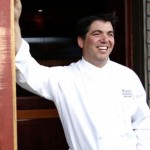
Mark Estee

Estee made a name for himself when Moody’s opened in Truckee nearly 10 years ago. That eatery has since been sold to the owner of the Truckee Hotel, and is undergoing a remodel and a bit of a menu change.

Then came Baxter’s at the Village at Northstar in fall 2008. With Vail Resorts taking over operations of the ski resort and village, Estee walked away from that venture. The folks at Vail now run it.

(That’s too bad, because the experience at the restaurant last week left two Lake Tahoe News reporters wishing we’d eaten elsewhere. The food was average, the service so-so. But that was better than the service the family next to us got. Their server up and quit, kids didn’t get fed, and the adults took everyone elsewhere.)

While Lake Tahoe News has not been to Campo, Moody’s under Estee’s leadership was this reporter’s favorite restaurant in the greater Lake Tahoe area.

Estee’s philosophy toward food is to bring the freshest products – aka locally grown – to the tables of his restaurants. Being in Reno gets him even closer to growers.

“I’m active as I’ve ever been in the farming community,” Estee told Lake Tahoe News.

He is working with Great Basin Food Coop and is fighting to save Wolf Pack Meat. The latter, on the campus of UNR, is threatened with closure by the university. It is the only meat processing plant run by students.

“I think things are moving toward casual, more price friendly dining,” Estee said of how things have changed in the restaurant business through the years.

Campo is following that trend. And with the desire to use local ingredients, the menu is always changing. Estee also owns Burger Me!, which has locations in Truckee and Reno.

Estee’s prowess in the kitchen will be on show during the annual Chefs’ Holidays at the Ahwahnee in Yosemite. He will give demonstrations Jan. 11-12.


Opinion: Court’s decision reinforces public’s right to information

Publisher’s note: This editorial is from the Dec. 21, 2011, Reno Gazette-Journal.

Many Nevadans may not care about the specific contents of the more than 100 emails that former Gov. Jim Gibbons tried to keep secret, but the principle set forth by the Nevada Supreme Court in last week’s decision on the controversy is critical to everyone in the state.

Ruling in a lawsuit brought by the Reno Gazette-Journal, the court rejected Gibbons’ attempt to simply declare the emails private without offering any proof.

The unanimous decision written by Chief Justice Nancy Saitta requires that Gibbons, who lost a bid for re-election in 2010, provide the newspaper with a log of the emails, including a “general factual description” of them and a specific explanation of why he believes they aren’t public.

In other words, the court said that the burden of proof is on an official when he or she wants to prevent the public — not just a newspaper, but all of us — from seeing a document. Otherwise, it’s public.

The Supreme Court’s decision has implications well beyond the governor’s emails, written on a state-owned computer and sent to staffers, family, friends and political campaign contributors.

The principle espoused by the Nevada Public Records Act is rather simple: Unless there’s a specific exemption in law, all government records are considered public.

Read the whole story


South Shore’s 2 best known lakes on 1 easy hike

By Kathryn Reed

CAMP RICHARDSON – Tahoe’s past, present and possible future unfold along the shore of Lake Tahoe and Fallen Leaf Lake on an easy five-mile trek that never gets old.

Meandering through the estates of the Tallac Site on the South Shore, the buildings of yester-year dot the landscape. If only they could talk. Life in the basin was much different when the Baldwins, Hellers and Popes called this lakefront oasis home.

Looking across the meadow toward Taylor Creek. Photos/Kathryn Reed

Now it’s a historic site on land owned by the U.S. Forest Service. In the summer it’s more populated with tourists and the buildings are in use. The old boathouse is a theater. The grand hall is used for weddings and other functions.

Markers along the way tell the story of how these buildings came to be.

Walking close to the shore, the lake looks cold and uninviting in December. With the abundance of snowfall last year, the water level is 2½ feet higher than it was a year ago at this time.

We come to Taylor Creek Visitors Center and walk through the Rainbow Trail. The dead foliage looks otherworldly.

The stench of decaying fish fills our nostrils. A couple months ago the creek was teeming with kokanee salmon on their annual migration to spawn.

The four of us cross Highway 89 to go up Cathedral Road. The Forest Service is looking at making this a safer crossing, along with a slew of other improvements to the trail system in the area.

Signage is lacking. It’s a good thing we know where we are going. Plus, this is a common running loop for Brenda so she is our leader this afternoon.

We cross the dam at Fallen Leaf Lake. That too is old. In 1934, Anita Baldwin put up the money for it to be built.

We come out at the campground, then head across the highway again, headed back to our vehicles parked at the Beacon restaurant.

No wildlife to be seen on this particular day. But the scenery is ever changing with the lakes, meadow and forest.

If you can do five miles of walking, this is one of the best routes on the South Shore for ease, beauty and history.

Getting there:

From South Lake Tahoe, take Highway 89 north to Camp Richardson. Turn right to park at the Beacon restaurant.

Begin walking to the left of the restaurant at the beach and into the Tallac Site. If you see signs for Taylor Creek Visitor Center, follow those. Then take the Rainbow Trail. Cross the highway on the other side of the stream profile center.

Go up Cathedral Road. A dirt trail juts off from the road to the left. From there, well, stay to the left and hopefully you will find the dam. (There are no signs.) Keep walking and you’ll hit the campground. That leads you to Fallen Leaf Lake Road, which goes to Highway 89. Cross the highway and follow the bike path to Camp Rich.

ngg_shortcode_0_placeholder (Click on photos to enlarge.)


Writing workshop taps into creativity

The Monday Night Creative Writing Workshop is designed to revitalize creative juices.

Learn writing techniques and tips. Meet other writers and strengthen your writing practice. Play with language and meaning in longer writing prompts. Use the workshops to develop new material or to deepen your writing on a current writing project. Each workshop is different and involves much writing.

The workshop meets for six Mondays from 6:30–8pm in downtown Truckee. Next session is Jan. 9-Feb. 27 (no classes on Jan. 16 or Feb. 20). Cost is $100.

Contact Karen Terrey at (530) 386.3901 or tangledrootswriting@gmail.com.


Sandoval reflects on past year and what lies ahead

By Ray Hagar, Reno Gazette-Journal

Brian Sandoval, a former Nevada attorney general, federal judge and chairman of the Gaming Commission, was elected governor of Nevada in November 2010, handily beating Rory Reid of Las Vegas in the general election and former Gov. Jim Gibbons in the GOP primary.

Sandoval, a Reno resident who graduated from Bishop Manogue High School and the University of Nevada, Reno, inherited a state that led the nation in unemployment foreclosures and bankruptcies. He said during the campaign and after the election that job creation and economic development were his top priorities.

Now, Sandoval is nearing the end of his first year in office and has weathered a budget battle in the Nevada Legislature, his appointment of Dean Heller to Nevada’s open U.S. Senate seat, a court-ordered redistricting process and numerous tragedies that hit Northern Nevada. Reno Gazette-Journal political reporter Ray Hagar sat down with Sandoval for a one-on-one interview recently, looking back at his first year in office and looking forward to his future plans.

Read the whole story


Truckee’s Finch to spend time promoting China Peak resort

By Marek Warszawski,Fresno Bee

Andy Finch, the world-traveled snowboarder and recent reality TV contestant, will be spending more time at his old stomping grounds. Finch, who grew up riding at China Peak, will be a larger presence at the Huntington Lake resort this winter through personal appearances, ad campaigns and videos.

The Fresno native also plans to host snowboarding events and offer suggestions for the new terrain park.

China Peak began daily operations this month with four chairlifts in operation, even though most of the white stuff so far this season is man-made.

“It’s really cool to be a part of the local mountain that I grew up riding on,” Finch said. “China Peak is so familiar to me. I know where every little hit is.”

Finch said he wants to pass along some of his experience by helping younger snowboarders reach their potential as well as promoting the sport’s “fun side.”

China Peak owner/operator Tim Cohee praised Finch for choosing to help promote snowboarding in Central California when he could lend his name to any number of resorts.

Read the whole story