Travelogue about pandas

Tahoe local Jenn Mendonca will share the details of her recent journey deep into the mountains of China’s Sichuan Province to visit a secluded panda sanctuary with her daughter.

Join members of the South Lake Tahoe branch of the American Association of University Women for this heartwarming glimpse into the lives of these rare and endangered animals on Jan. 14 at 10am in the Aspen Room at Lake Tahoe Community College. This event is open to the public.

An optional continental brunch will be available for a small donation and an RSVP is requested.

For more information, call Candy Kelly at (530) 541.2799 or email Christy Slocum at slocumsrus@msn.com.

And if you can’t attend the event, you can relive Lake Tahoe News’ experience with pandas from earlier this year.


Vail Resorts beefing up safety at its 6 ski areas

Vail Resorts is introducing an enhanced slope safety campaign across its six resorts called “Play It Safe, Play All Season”.

The announcement came the same week it was announced Heavenly Mountain Resort was being sued by skier who alleges having been severely hit by an employee on a snowboard.

“Our guests have been telling us that safety is a key component of their mountain experience, and their comfort level on the mountain relative to safety is one of the most important things we can affect,” Blaise Carrig, co-president of Vail Resorts’ mountain division, said in a statement. “Because of this, we’re launching the Play It Safe campaign across our resorts to encourage locals, destination guests and employees alike to ski and snowboard responsibly so that everyone can have fun on the mountain all season long. While everyone is ultimately responsible for their own behavior on the slopes, we can absolutely do our part in encouraging and enforcing responsible behavior and are committed to doing that.”

The Play It Safe campaign is a multi-faceted, comprehensive campaign aimed at addressing slope safety by communicating how guests can ski and snowboard more responsibly and still have a great time. All six of the company’s resorts, including Heavenly and Northstar, are implementing enhanced on-mountain Play It Safe messaging across a variety of channels and in critical locations, such as terrain park exits and areas where trails merge, to reach skiers and snowboarders of all ages.

Vail Resorts is also working on video communications with sponsored Olympic and world champion ski and snowboard athletes Lindsey Vonn and Shaun White.

Guests can also expect to see a greater presence of mountain safety and operations personnel at all six resorts.

In addition to the Yellow Jacket program, management teams across all six mountain resorts are also being provided with additional training to support the slope safety efforts and will have a larger on-mountain presence particularly on busy days.


Opinion: Nevada should feel threatened by gaming expansion

Publisher’s note: This editorial is from the Dec. 23, 2011, Reno Gazette-Journal.

If we learned anything from the Great Recession, it’s that gambling can’t save anyone’s budget from the effects of a severe economic downturn.

Nevada is the poster child for what happens when state government is too reliant on the gaming industry to keep the revenues flowing.

The Silver State, which once believed that gaming is a recession-proof industry, has suffered the highest unemployment rate in the nation for the past couple of years. The once booming construction industry has nearly disappeared, and the state’s foreclosure rate is also highest in the nation. Government at every level is suffering. Three years after the recession, the state is only now showing a few hopeful signs of recovery — too late for many jobseekers, who are pursuing jobs elsewhere.

The recession has had a similar impact on Atlantic City, N.J., the first jurisdiction outside of Nevada to allow casino gaming. The state recently took over Atlantic City’s casino district in hopes of breathing some new life into the suffering industry.

The lesson: The market for casino gambling isn’t infinite.

Read the whole story


Conditioning helps ensure muscles are ready for the slopes

By Alan Barichievich

Winter is finally here and while we’re waxing our skis or boards, dusting off our goggles and making sure our boots are still comfortable, many of us tend to forget about pre-season conditioning. It’s easy to just “click-in” and jump on the slopes. But if you don’t take the time to get in exercise, increase your strength and flexibility and work on your balance — you could be in for a rough winter.
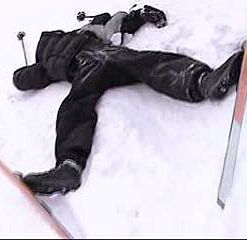
Proper conditioning can ease the pain the skiing.

By taking time and working on conditioning your body, it’s possible to decrease your risk of injury or sore muscles and joints.

Endurance

Any popular aerobic activities are in the spectrum of endurance training, such as running, biking, swimming, the elliptical trainer and jumping rope. I recommend picking two of these endurance activities to give you a cross training effect and minimize the potential for overuse injuries (3-4 days/week for at least 30 minutes).

Strength

Obviously, strengthening exercises will focus on the lower body; however, you must include core strengthening to really be prepared. (3 days/week, 2 sets of 60 seconds each exercise)

• Squats (free standing and/or against the wall)

• Lunges (forward and to the side)

• Bridges (double and single leg)

• Heel raises

• Hamstring curls

• Planks

• Sit-ups

Flexibility

Stretching should include both static and dynamic stretches and should only be performed after warming up with an aerobic activity. Two sets of 60 seconds each for static stretches; dynamic stretches should be a repeat of the static stretch motion but in an active manner, i.e., swing your leg from the hip forward and backward / side-to-side 5 to 10 times, marching in place with high knees (5 to 10 times each leg).

Stretches:

• Hamstrings

• Calves

• Quadriceps

• Sky reaches

Balance

If you have a solid single-leg balance stance on level surface for 60 seconds, you can progress to harder balance activities (daily, 2 sets of 60 seconds).

• Single-leg balance

• Single-leg balance with mini squats

• Single-leg balance playing catch or bouncing a ball

• Single-leg hop, hold landing for five seconds, repeat hop (straight up and down, forward and back wards, side to side)

Specificity Principle

One thing to keep in mind is that all of these exercises have their place in a pre-season ski conditioning program; however, in order for them to be a truly effective ski/snowboard conditioning program the “Specificity Principle” must be put in place. This principal states “sports training should be relevant and appropriate to the sport for which the individual is training and move from highly general to highly specific skill or sport.” The principle of specificity also implies that to become better at a particular exercise or skill, in this case skiing or snowboarding, you must actually perform the exercise.

Ski boot exercises

With specificity training in mind, Barton Rehabilitation encourages skiers who are treated in physical therapy to bring their ski boots into the clinic in the later stages of their therapy to perform several of the above exercises. Outside of actually skiing, performing these exercises in your ski boots is the best way to prepare your legs and trunk for the forces that will be placed on your legs and body when normal foot and ankle motion has been taken away and the weight of your ski boots has been added to your legs. In regards to snowboarding, the boots are generally not quite as stiff, weigh less and both feet are attached to one board; however, the four components, endurance, strength, flexibility and balance still apply.

Exercises to be done in ski boots include, but are not limited to:

• Squats, free standing and against wall

• Lunges, forward and side

• Single-leg balance, balance with ball toss or ball bounce

• Bridges

• Planks

• Hamstring and quad stretches

The ultimate goal of a pre-ski season conditioning program is to minimize the amount of time it takes for you to “get back into it” and reduce the risk for injury.

Remember, for the first few days when you go out on the slopes, your body will readjust as you start to move with the skis or board. It’s just like riding a bike – physically and mentally the muscle and brain memories come back slowly as you take to the hill. Be sure to take your time and enjoy.

Have fun this winter season and I’ll see you on the mountain!

Alan Barichievich is a Barton Health physical therapist and director of rehabilitation.


Could this be the end of cancer?

By Sharon Begley, Newsweek

By all rights, Shari Baker should have said her final goodbyes years ago. In 2005, more than a year after three doctors dismissed a lump under her arm as a harmless cyst, she was diagnosed with stage IV (metastatic) breast cancer, which takes the lives of at least 80 percent of patients within five years; it killed Elizabeth Edwards in 2010. Half of those diagnosed with breast cancer that has spread—in Baker, it had reached her spine—die within 39 months. But the 53-year-old jewelry designer in Scottsdale, Ariz., wasn’t ready to die. “I’ve been a competitive athlete and a body builder, I take care of myself and eat right,” she says. “I was going to fight this.”

Click here to find out more!

Baker began searching for a clinical trial, and through the International Cancer Advocacy Network (ICAN) found an intriguing possibility: a cancer vaccine. In May 2006, she traveled to the University of Washington. The vaccine was injected into her upper arm; she got five more shots over the next five months. Today, with scans detecting no cancer anywhere, Baker seems to have beaten some extremely stiff odds.

Short of a sci-fi nano-camera to capture what was going on at the cellular level, it’s impossible to know exactly what the vaccine did. But based on studies of lab animals and cells in petri dishes, scientists have a pretty good idea. The vaccine contained fragments of a molecule called her2/neu, which, perched on the surface of tumor cells, fuels the growth and proliferation of some breast cancers. Baker’s immune system treated the flood of injected her2/neu like an invading army and mounted a counterattack. Cells called CD4, acting like biological Paul Reveres, sounded the alarm, rousing white blood cells called T cells. The body’s Minutemen, they invaded Baker’s tumor, summoning reinforcements called cytotoxic (“killer”) T cells, which destroyed the tumor cells in Baker’s breast as well as her spine. Enough of the other 21 women who received the experimental vaccine against metastatic breast cancer are doing so well that its inventor, immunologist Mary (“Nora”) Disis of UW, dares to envision a future in which vaccines “control or even eliminate cancer.”

Read the whole story


‘The Two Gentlemen of Verona’ to be summer show at Sand Harbor

The Lake Tahoe Shakespeare Festival has chosen Shakespeare’s comedy “The Two Gentlemen of Verona” as the headlining production of its 40th anniversary season.

Tickets are on sale for the 2012 festival that will be July 13 through Aug. 26 at Sand Harbor State Park.

Two sections have been added to the amphitheater’s seating charts. Cabaret Table Seating will offer café style tables with seating for four in comfortable chairs located in the popular premium seating area.

Side Gallery seating is conveniently located just inside the gates and offers one of the most affordable ticket price points.

Tickets range from $15 to $85, are on sale now and can be purchased online.


Opinion: Why TMDL is good policy for Lake Tahoe

By Harold Singer

Recent news articles and guest opinions have raised questions about the science behind the Lake Tahoe Total Maximum Daily Load (TMDL) and the decision to implement it in a recently adopted stormwater discharge permit. While some may take exception to how science is used in policy and regulatory decisions, it is important for those of us who enjoy this wonderful place to evaluate the TMDL based on the facts.

In the late 1960s, the average depth of clarity at Lake Tahoe was measured at over 100 feet. For many years, the lake’s clarity has declined at a troubling rate of one foot per year. In 2010, it was 65 feet.

Harold Singer

As disturbing as those numbers are, there is little doubt that without the efforts of all levels of government, as well as the private sector, the rate of clarity loss would have continued at that alarming rate. Fortunately, the rate of loss is slowing, although it has not yet stabilized or started to recover. In addition, over the last decade, algae growth has increased along the lake’s shoreline, causing unsightly conditions.

To stop the decline and begin the restoration of clarity, the California Lahontan Regional Water Quality Control Board (Water Board) and the Nevada Division of Environmental Protection have developed a plan – The Lake Tahoe Total Maximum Daily Load. The research supporting the development of the plan found that very fine sediment particles have a more significant role in the loss of clarity than algae.

Stormwater, which drains into the lake from the developed areas around the lake, contributes more than 70 percent of these fine sediment particles, which are also a source of harmful phosphorus. Since many storm water pipes discharge near shore, reductions in the amount of sediment flowing into the lake will have the added benefit of reducing the amount of phosphorus in the near-shore areas, which, along with other factors, contribute to algae growth.

This scientific peer reviewed TMDL was adopted by both states and was ultimately approved by the U.S. Environmental Protection Agency in August 2011. The TMDL is the adopted regulatory framework for controlling pollutants from various sources, including both the urban and forested areas in the Lake Tahoe basin.

The loss of clarity did not happen overnight and will not be reversed overnight. The TMDL sets a goal to reverse the decline in clarity and achieve an average clarity in the mid-to-high 70-foot range between 2026 and 2031. This goal is technically feasible, but it will take an amount of money similar to that put forth in the last decade to achieve it.

Nationwide, cities, counties, other local jurisdictions, along with state highway departments have responsibility for ensuring that storm water runoff does not pollute our lakes, rivers and oceans. The TMDL, based on its supporting science, concluded that efforts must focus on reducing fine sediment and nutrients from urban storm water if there is any chance of stabilizing or improving the lake’s clarity.

The TMDL includes many tools that will aid in focusing and refining the next steps in addressing lake clarity. Governmental and private entities can use these tools to quantify the benefit of their actions, allowing them to focus limited funds on those management practices, including stormwater infiltration or treatment, or road maintenance activities, such as street sweeping, that remove the most pollutants from stormwater. Local government understands its roads and watersheds and is best suited to decide how to use available funding to implement the most beneficial management practices. The recently adopted stormwater discharge permit provided local government with broad flexibility in this area, and the Water Board is committed to working with our partners to make effective and efficient use of those limited funds.

The Water Board and the Nevada Division of Environmental Protection are also working with the Tahoe Regional Planning Agency to ensure consistency between the approved bi-state TMDL and the upcoming Regional Plan update. Ongoing monitoring and further scientific efforts will be considered when the TMDL is reviewed at five year intervals or more frequently, if warranted. The Water Board is committed to adjustments in the TMDL, based on science and fiscal considerations.

The Lake Tahoe TMDL is not a “new” program. Rather, the science behind the TMDL provides significant insights about how to adjust current programs to control pollutants affecting the clarity of the lake. Because of its national and international significance, decisions concerning Lake Tahoe’s environment have always had the benefit of cutting edge science.

It is in the best interest of the long-term health of the lake that we embrace the opportunity to apply the most current science to make optimal use of available funding. Ongoing monitoring at both the federal, state and local levels will allow us to adaptively and continually fine-tune our efforts to improve lake clarity. The TMDL provides the science-based tools to hold government accountable at all levels.

For more information about the Lake Tahoe TMDL, or the science supporting the TMDL, please visit the Lahontan Water Board website, which contains a recently released film on the plan along with supporting science.

Harold Singer is executive director of the Lahontan Water Board.


Families create holiday memories on the ski slopes

By Kathryn Reed

For those dreaming of a white Christmas, they had to leave the lake behind. But only for a short time and even then Lake Tahoe could still be in full view.

“The lack of natural snow has not put any damper on our fun,” Joe Hilliard of Corpus Christi, Texas, said.

Skiers and snowboarders schuss down the slopes of Heavenly on Christmas Day. Photos/Kathryn Reed

Three generations of Hilliards are on the South Shore for the Christmas holiday. With Joe Hilliard’s parents enjoying gambling, and his wife and kids wanting to ski, Lake Tahoe was the perfect vacation spot.

Six-year-old Savannah said the best part about skiing at Heavenly was going fast. She and 4-year-old brother Hunter spent two days in the kids’ ski camp at Heavenly Mountain Resort learning the sport. This was the first time both kids had been on skis.

Based on the apparel in line for the gondola as well as at Tamarack Lodge on Christmas Day, it was obvious this was not an ordinary ski day. The number of ski or snowboard boots seemed to equal that of those clearly not participating in either sport.

Fun hats, and bright colored jackets and pants filled the lodge and slopes. Pink, at least this day, was one of the dominate colors.

Steve from Sacramento came dressed in a Santa outfit. He had no trouble negotiating the runs off Dipper despite the crowded slopes.

Twenty-seven-year-old Brenton could be enjoying a much warmer holiday if he were home in Australia. Instead, he’d rather travel with his snowboard. This year Tahoe, last year Japan.

While his Aussie accent was easy to discern, plenty of foreign languages and accents could be overheard in the lodge. The lodge felt like it was more full of out-of-towners than locals on this holiday.

Jayashre Tanbon brought her 3½-year-old daughter Aishwerya to enjoy the snow. The duo from San Jose comes to Tahoe about once year.

The little one likes to make snowballs, while mom said it’s the weather and scenery that captivate her.

A family of six from Oahu wanted to go tubing, but it was sold out for the day. Still, the mom, dad, daughter, son, cousin and niece all took the ride up the gondola to check things out.

“It’s beautiful,” Antonio Manrique, 14, said of the resort and Tahoe in general. “We like the cold.”

Coming from a much warmer climate meant some long-sleeve articles of clothing were under the tree.

Rhonda Kadokawa, the cousin in the group, said it had been about 30 years since she was last in Tahoe. She remembers snowmobiling then. While ski resorts can accommodate riders with manmade snow, the same cannot be said of businesses that operate the gas-powered sleds.

A family from Monterey was in line early enough to buy tubing tickets. This was the first time for any of them to visit Tahoe. While they said it was fun, it tired the kids out so they were all getting a bite to eat at the year-old lodge.

Chanel Sims, 12, said she liked how fast the tubes go on the snow; while Javionce Proctor, 13, said he was ready to up again.

Bags of ice sat on the table next to Linda Doller of Los Altos. On the first run of the day she tweaked her knee. With an elevated leg, she waited for her husband and two college-age daughters to get off the slopes. It had been 10 years since she last skied. She’s hoping whatever she did to her knee won’t keep her off the slopes for long.

ngg_shortcode_0_placeholder  (Click on photos to enlarge.)


Free guided New Year’s Day hikes in Nevada state parks

The Nevada Division of State Parks is sponsoring free, guided hikes in seven state parks on New Year’s Day as part of America’s State Parks First Day Hikes initiative.

First Day Hikes offer individuals and families an opportunity to begin the New Year rejuvenating and connecting with the outdoors by taking a healthy hike on Jan. 1 at a state park close to home.

Spooner Lake at Lake Tahoe Nevada State Park is offering free hikes in Northern Nevada. In Southern and Southeastern Nevada entrance fees are waived for the hikes at: Cathedral Gorge, Spring Valley, Spring Mountain Ranch, Kershaw Ryan, Valley of Fire and Old Las Vegas Mormon Fort.

Go online for a list of locations and times of the hikes.

First Day Hikes originated 20 years ago at the Blue Hills Reservation, a state park in Milton, Mass. The program was launched to promote healthy lifestyles throughout the year and year-round recreation at state parks. Many other states have offered outdoor recreation programs on New Year’s Day, but this is the first time all 50 state park systems have joined together to sponsor First Day Hikes.

Park staff and volunteers will lead the hikes, which average one to two miles or longer depending on the park.


Zillow study: Home value decline slows

By Tim Mullaney, USA Today

After years of pain and a market free fall that has shaved $6.8 trillion off the value of the nation’s 104 million homes, the decline in U.S. house prices may be nearly over.

U.S. homeowners lost $681 billion this year, according to a study by real estate website operator Zillow that was released this week.

That’s less than the $1.1 trillion drop in value in 2010, let alone the $2.7 trillion in losses in 2008, Zillow said. And a Zillow survey of 109 economists said U.S. home prices will stop falling late next year or early 2013, with the most optimistic quarter of economists predicting an 18 percent rebound by 2016.

The reason is that the economy is slowly turning around, as prices have come into balance with buyers’ incomes and how much they’d pay to rent comparable homes, said David Blitzer, chairman of the index committee at Standard & Poor’s, which publishes the S&P/Case-Shiller national home price index. The negatives are that consumer confidence is low, and there’s an overhang of foreclosed homes whose owners will discount them for resale, economists said.

Read the whole story