When the food isn’t right on the night shift

By Nancy Shute, NPR

Working the night shift is bad for your health. But what if that’s because the food is so lousy?

That’s the provocative question raised this week by the editors of PLoS Medicine, an online medical journal.

Scientists have been making the case that shift work increases a person’s risk of obesity, cancer, and sleep disorders. And then earlier this month, researchers at the Harvard School of Public Health reported that nurses who worked the night shift were more likely to have Type 2 diabetes. Being overweight accounted for part of that, but normal-weight nurses also faced a greater risk of diabetes if they worked nights.

“Although some of the effects of shift work are probably unavoidable,” the journal editors wrote in this week’s editorial, “others, such as eating patterns, are obvious targets for intervention.” Translation: You can’t change the fact that night work messes with your body, but you can change what you put in your mouth.

The scientists who study the health effects of the graveyard shift haven’t yet chronicled what those people eat. And since about 15 million people work nights in the United States, it’s no small question.

But we can guess. Options for dining out at 3 a.m. pretty much begin and end at convenience stores and fast-food joints. Health-care workers, office cleaners, and others workers who don’t have time to leave the building are stuck with vending-machine food if they don’t bring something from home.

Read the whole story


2 Incline pedestrians killed; Grass Valley man arrested

Two Incline Village residents were killed in a crosswalk by a driver who officers say was under the influence of drugs.

After the 8pm Dec. 30 accident, Christopher Torii Smith, 25, of Grass Valley was booked into the Washoe County Jail on two counts of driving under the influence causing death and failure to yield to a pedestrian. Bail was set at $60,200.

Nevada Highway Patrol officers said the two pedestrians, whose names have not been released, were crossing Highway 28 just south of Village Boulevard when they were struck by the pickup driven by Smith, who was headed south.

The male pedestrian was pronounced dead at the scene and the female pedestrian died en route to Renown Medical Center in Reno.

Highway 28 was closed in both directions for nearly four hours.

Trooper Mike Stapledon is the lead investigator for this incident. Witnesses or anyone with additional information is asked to contact him at (775) 689.4623.

— Lake Tahoe News staff report


Snippets about Lake Tahoe

• The Nevada Hotel & Lodging Association awarded Harrah’s Reno, Harrah’s Lake Tahoe and Harveys for their sustainability efforts with the installation of low-flow showers, drought-tolerant vegetation and energy-efficient lighting.

• Placerville woman makes history with kiss.

• U.S. News and World Report ranks Sierra Nevada College in Incline as the fourth best college for winter enthusiasts.

• North American Freeskiing Championships are at Kirkwood Feb. 22-27.

• Sand Harbor, Lake Tahoe-Nevada State Park will begin accepting 2012 group reservations at 8am Jan. 3.


Rent your life — a quick way to make a buck or two

By Rob Baedeker, Newsweek

There’s a strange woman in our shower.

She and her boyfriend arrived late last night, and she’s slipped into our bathroom, which adjoins the office where my wife, Laura, and I are working. We can hear her flossing.

“Did you meet them?” Laura whispers. “Are they nice?”

I don’t know if they’re nice — but does it matter? They’re paying $135 to stay with us!

Meanwhile, I’m waiting for a nurse named Amy to return my electric sander. She paid me $4 to rent it for a day and said she’d be back this morning.

I’ve got lots of other deals cooking, too: $5 to rent my 4-year-old’s bike; $150 for a weeklong rental of our 1992 Saab. I’m renting my old guitar to the tune of $50 a month.

This is huge. The fact that complete strangers are willing to pay me to rent my belongings-—the fact that I can make money from stuff I wasn’t using anyway—is a breakthrough discovery on par with penicillin, the second law of thermodynamics, or the Snuggie.

Did I mention I’m making money from renting stuff I wasn’t using anyway? And that I can continue to cash in, again and again, on the same stuff? Take our backyard deck and barbecue. I’m charging a group of people $18 to use it while I’m not even home. I’ll be away meeting someone who’s renting our dog for $3 an hour.

Call me a rentrepreneur, one of the growing ranks of Americans who, in a postbinge economy, are finding creative ways to make a quick buck by hiring out their personal belongings. The movement is being fueled by a slew of new startups catering to what some are calling “collaborative consumption.” There are now sites to connect people who want to rent out their cars, couches, personal services, dinosaur costumes or clay-pigeon launchers ($12 per day on Zilok.com). For renters, the sites offer goods and services for a relative bargain (weekly rates for a rental car where I live in Berkeley, can be twice what I charged). More than that, they’re a chance to bypass corporate America at a time when corporate America is in the dog house. Why endure the long waits, high prices, and surly staff at your big-box tool-rental counter when you can pick up Rob Baedeker’s electric sander for a song—and go home with a smile?

There’s a virtue in this business, too, part of a postrecession shift from a throw-away society to a new economy of reuse. My customers might be in the 99 percent, but they’re not broke or unemployed. Same goes for my fellow rentrepreneurs. Yet after witnessing the fallout from a half-century-long frenzy of conspicuous consumption, a whole generation of us is now reexamining the long-forgotten “waste not” maxim exemplified by the sugar-packet-saving thriftiness of our grandparents. I can almost hear my Depression-hardened Nana speaking to me from the grave: “You’ve got all this crap lying around, man. Put it to use!”

Read the whole story


Age requirement for children in booster seats changes Jan. 1

By Cathy Locke and Tony Bizjak, Sacramento Bee

A new state law requiring children younger than 8 to use car booster seats will become effective Sunday.

Children younger than 8 also must be properly buckled into a car seat or booster seat, and in the back seat, according to a news release from the California Office of Traffic Safety. In addition, children 8 and older who are not tall enough for the seat belt to fit properly must ride in a booster seat or car seat.

Previously, the law required that children remain in a booster seat until age 6 or until they weighed 60 pounds. The law change comes after several years of political debate. Safety officials hail it as critical catch-up moment for California.

“It’s been national practice for several years now,” said Jennifer Rubin, an instructor with the Cosumnes Fire Department. “Normally, California is a trendsetter, but we were pretty far behind.”

Safety officials say the law is needed because most 6- and 7-year-olds are still too small to fit safely in adult seat belts.

Read the whole story


Lahontan-issued stormwater permit being appealed to state

By Kathryn Reed

A joint appeal to the state Water Resources Control Board is being crafted by South Lake Tahoe, and El Dorado and Placer counties regarding the stormwater permit the Lahontan Regional Board approved earlier this month.

El Dorado County initiated the process. Legal counsels for the three jurisdictions with the assistance of outside attorneys in Sacramento are finalizing the paperwork. All three are sharing in the nearly $20,000 it will cost to file the petition.

The deadline to file is Jan. 5.

Lahontan Executive Director Harold Singer, third from left, told the board Dec. 6 the stormwater permit should be approved. Photo/LTN

Because the petition is not expected to be finalized until the deadline, the exact language and specific arguments are not yet public.

“We hope to get some modifications to the permit which will at least modify the tools used and get the costs down somewhat,” El Dorado County Chief Counsel Lou Green told Lake Tahoe News.

The three jurisdictions don’t believe the regional board on Dec. 6 understood their concerns or listened well. They also don’t understand why the disagreements couldn’t be talked through before the board approved the permit.

Lahontan Regional Water Quality Control Board gets to tell the three government entities on the California side of Lake Tahoe what to do when it comes to water issues. Nevada does not have an equivalent layer of government.

“We have always approached water quality on a regional level and we aren’t anymore,” South Lake Tahoe Mayor Claire Fortier said. “We need a concerted and collaborative effort to reach the goals. If the problem is roads, then let’s put money into roads.”

No one is arguing stormwater should not be treated or that lake clarity is not important. What they disagree with is the language and requirements in the permit. This also then puts another layer of responsibility on two-thirds of the lake, instead of taking a basinwide approach to the sediment issue. Monitoring and costs associated with it are huge stumbling blocks for the local entities.

“For some reason the money doesn’t matter (to Lahontan). Boy, if I ever thought of a time when money mattered, it’s now with how bad the economic times are,” Ken Grehm, Placer County public works director, told Lake Tahoe News.

“I would like to focus on cleaning up water, not so much on monitoring. Let local agencies provide services and let scientists do what they do. The real concern is I don’t know if this will work,” Grehm said of Lahontan’s rules.

He would prefer a slower, more calculated approach instead of jumping in with both feet to unchartered processes like Lahontan has mandated.

All jurisdictions call the permit an unfunded mandate. They are told to do something and no money is provided. Lahontan uses a state definition for “unfunded mandate” that differs from conventional wisdom.

Equality is an issue as well. The state water board is working on the overdue stormwater permit for Caltrans that will likely have a special section for highways in the basin. That permit, according to Lahontan, is likely to resemble what the city and counties are being asked to do.

The U.S. Forest Service, which owns about 75 percent of the land in the Lake Tahoe Basin, falls under the federal Clean Water Act instead of a municipal stormwater permit.

Lauri Kemper, second in charge at Lahontan, said she didn’t realize an appeal was in the works, but was not surprised. She said the process is the people in the petition unit do not work with the regional board on permitting issues, but are more independent. The petition unit has the authority to dismiss the petition or have a public hearing before the state board.

“If it goes to a public hearing, we would prepare a rebuttal then,” Kemper explained.

The South Lake Tahoe City Council will discuss the issue in closed session at the Jan. 3 meeting. (The full City Council agenda is online.)

The Placer County Board of Supervisors will have the petition on closed session Jan. 10. Placer County Counsel Anthony La Bouff said staff has authority from the board to go forward with the petition.

“There are a lot of moving parts in Lake Tahoe all the time. This is just one of them,” La Bouff said of the stormwater permit issue.


Pesticide use in California on the increase

By Western Farm Press

Pesticide use in California rose in 2010 after declining for four consecutive years, according to data released by the Department of Pesticide Regulation (DPR). More than 173 million pounds of pesticides were reported applied statewide, an increase of nearly 15 million pounds – or 9.5 percent – from 2009.

The increase reflected a 15 percent jump in acres treated with pesticides – up 9.7 million acres to a total of 75 million acres in 2010. The Summary of Pesticide Use Report Data 2010 is online.

As in previous years, sulfur was the most highly used pesticide in both pounds applied and acres treated. By pounds, sulfur accounted for 27 percent of all reported pesticide use. Its use grew by 4.4 million pounds, or 10 percent, and 141,826 acres, or 9 percent.

Sulfur is a natural fungicide favored by both conventional and organic farmers mostly to control powdery mildew on grapes and processing tomatoes. Other pesticides with high use in 2010 treated a variety of diseases and pests that affected rice, walnuts, oranges, almonds, grapes and strawberries.

“The winter and spring of 2009 and 2010 were relatively cool and wet, which probably resulted in greater fungicide use to control mildew and other diseases,” DPR Chief Deputy Director Chris Reardon explained.

“Summer and fall temperatures were also below average, which led to late harvests, more insect damage to some crops and additional treatments.”

Read the whole story


X Games medalist returns to slopes after near-fatal accident

By Austin Murphy, Sports Illustrated

No one was sure what to expect—least of all Kevin Pearce himself. But two years after suffering a traumatic brain injury on a halfpipe training run in Park City, Utah, the 24-year-old snowboarder decided he was again ready to take a ride down the mountain.

Until that afternoon in December 2009, Pearce was a medal contender for the ’10 Vancouver Olympics. In the aftermath of his accident, in which he hit his head on the edge of a halfpipe, it wasn’t clear, however, whether he would again be able to walk or speak, let alone snowboard. “I’ve had to relearn everything from ground zero,” he says. But on Dec. 13 at Breckenridge in Colorado, Pearce—accompanied by several hundred well-wishers—went snowboarding for the first time since his accident. “I was hoping it would be like [riding a bike],” he said the next day. “But I didn’t really know how it [would] go.”

Read the whole story


Opinion: Stop using 911 for noise issues and realize this is a tourist town

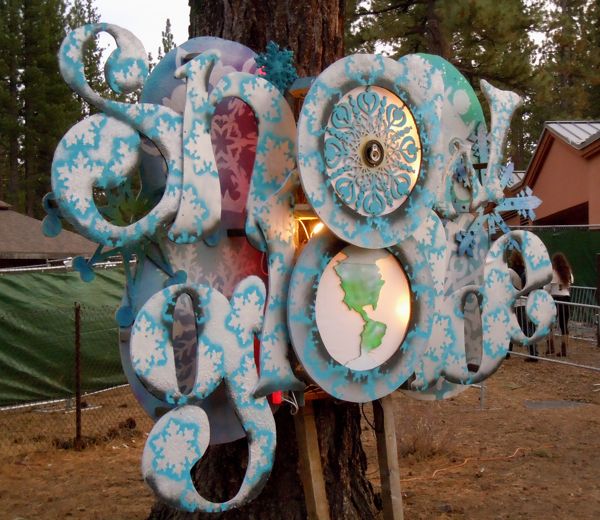
The noise is not going away. Day 2 of SnowGlobe is under way. But concert promoters and South Lake Tahoe officials are taking steps to deal with people’s concerns.

The number to call to complain about noise involving SnowGlobe (or any loud event) is (530) 542.6100. Calling 911 for noise issues could endanger the life of someone not able to receive timely care because people were tying up 911 for a non-emergency. People — get a grip — noise can be a nuisance, but it’s not an emergency. Be responsible.

SnowGlobe officials are working on noise issues. Photo/LTN

Friday between 9:15-11pm the bass levels from the headliner BassNectar are expected be the loudest of the festival. After all, “bass” is in the name.

“While the overall sound levels have been reduced, the bass levels will continue to cause some vibrations. The producers have agreed to end Saturday evening’s concert earlier than scheduled and will be concluding the events at 12:30am (New Year’s Day),” said Nancy Kerry, spokeswoman for the city. (South Lake Tahoe City Manager Tony O’Rourke is out of town.)

SnowGlobe Music Festival producers have repositioned some of the equipment and are offering those with noise sensitivities to go to Murphy’s Irish Pub on Emerald Bay Road between 9-11pm Friday for drinks and appetizers on behalf of the SnowGlobe team. Just mention SnowGlobe sent you.

City officials report other festival operations have been successful, shuttles and parking operations are running smoothly and many businesses are reporting retail sales above expectations.

Remember, this is not the only event on the South Shore that produces noise. It just so happens the Al Tahoe neighborhood is experiencing unwanted noise presumably for the first time. Plenty of residents have learned to put the greater good of the South Shore tourism economy before themselves by putting up with noise from Harveys outdoor concerts, Street Vibrations, five days of constant airplanes during the celebrity golf tournament, and other events.

Maybe it’s time you decide if you want to live in a tourist town. We all depend on them. Now get out there and make some money off these people.

Noise happens.

— Kathryn Reed, Lake Tahoe News publisher


National Ski Patrol needs members at Kirkwood

Kirkwood Mountain Resort is with the National Ski Patrol for the 2011-12 season.

The National Ski Patrol is a federally chartered nonprofit membership association dedicated to serving the public and the mountain recreation industry. With more than 27,000 members nationwide, NPS represents 96 percent of the nations ski patrollers.

Kirkwood Mountain Resort and the National Ski Patrol are currently recruiting NSP members and non-members to join the Kirkwood team. Only advanced or expert skiers comfortable in all types of conditions are eligible. Having medical and first aid experience is an asset, but not required.

The NSP is hosting an orientation and ski check weekend Jan. 7-8. Pre-registration is required. For more information or to sign up, contact Dore Bietz at dorebietz@aol.com.