Businesses count SnowGlobe cash; concert divides locals

By Kathryn Reed

While the South Lake Tahoe City Council was prepared to get an earful from residents Tuesday about the three-day SnowGlobe Music Festival, only 10 people spoke during the public comment session about the concert.

The consensus from those folks is something has to be done about the sound level – the bass and subwoofer in particular. It shook walls and physically agitated people.
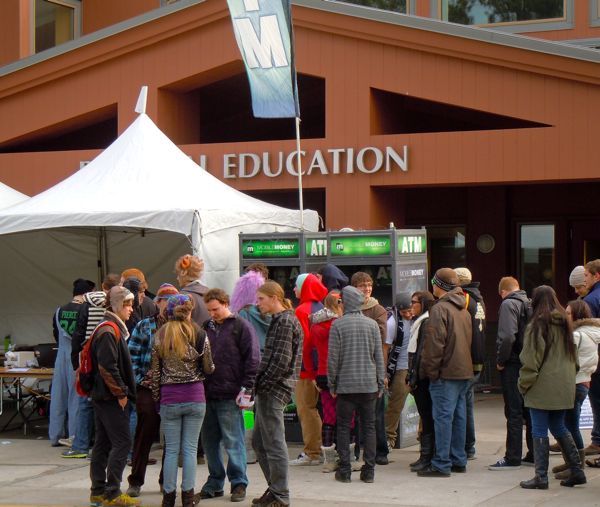
SnowGlobers -- about 10,000 strong each night -- line up at Lake Tahoe Community College to get in. Photo/LTN

Others said this town needs to bring in tourists and that events like SnowGlobe are good for the economy.

Some talked about moving the event off the campus of Lake Tahoe Community College. City officials and promoters considered all open spaces – including Lake Tahoe Airport. With talks about SnowGlobe starting early last spring, that did not allow enough time to work with the FAA to stage the event at the airport.

City officials recognize that area, too, could impact a neighborhood.

The college’s perspective is the event was successful, but that they would work on better trash containment in future years. Trails that locals use had litter on them. The college also wants to ensure the promoters end the event at the time specified.

The South Lake Tahoe Police Department cited the promoters after the second night when the concert ran long.

Representatives from both South Shore chambers of commerce were at the Jan. 3 meeting, saying they will be taking surveys of members and anyone who wants to participate.

South Tahoe Chamber of Commerce is asking people eight questions related to SnowGlobe’s impact on businesses. Anyone may take survey.

The Nevada-based chamber is still putting its survey together.

Here are comments the city has received from area businesses:

• Richard Bennett, manager of Rite Aid, “SnowGlobe saved jobs. Sales were up 15 to 20 percent.”

• Jim Warlow, owner Cork and More, “Very positive impact.”

• Rude Brothers Bagels, “Best sales in 15 years.”

• Tyler Cannon, owner of Sprouts, “Sales hit historic highs for the time period.”

• Ross Stores manager, “Sales were huge.”

• Sno-Flake Drive In, “SnowGlobe brought in a lot of business.”

• Jazz Kat Cafe owner said she stayed open late once she saw SnowGlobers walked right by her door. She saw business at “completely unexpected volumes,” “slammed” and “sold out of items each day.”

• Freshies said sales were “huge.”

• Mike Donavan, MontBleu general manager, reported huge increases in business after 11pm when the after-parties began.

The city has a survey on its website, too. The majority, to date, want to bring the event back.

As for exact numbers, transient occupancy and sales taxes figures for December won’t be available for a while. Those will be the two biggest indicators of how the area did financially. However, extrapolating the direct impact on the economy compared to a year ago when record snowfall brought people to the area will be more difficult.




What is your New Year’s resolution?


Tahoe, Reno celebrate Elvis Presley’s birthday

By Mel Shields, Sacramento Bee

A celebration next weekend of Elvis Presley’s birthday allows a few lucky and select people to recall when the King performed in northern Nevada.

His live appearances at the Las Vegas International (now the Las Vegas Hilton) are the most famous, but his concerts at Del Webb’s Sahara Tahoe (now the Horizon) between 1971 and 1976 were equally as noteworthy, selling out at fantastic speeds for the time.

Long lines awaited what few seats may have become available after the show’s start, featuring an Elvis not in the best physical shape – but few cared. Depending on the concert, he could be extremely dynamic or strangely detached.

The showroom where he performed is no longer – replaced by a movie multiplex. The suite where he stayed is still available but little remains of the ephemera of the concerts. Menus can be found on auction sites and a book has been published with some photos, but the Horizon itself lacks practically any vestiges of the High Sierra Theater where not only Elvis but also the likes of Liberace, Ann-Margret, Shirley MacLaine performed, as well as hundreds of the formidable entertainers of the era.

Read the whole story


Tips for surviving a power outage

If your home heater goes out during a winter storm, keep warm by closing off the rooms you don’t need.

Use only safe sources of heat like wood or UL- approved indoor fuel burning stoves.

Dress in several layers of lightweight clothing and wear a wool cap because a lot of your body heat is lost through your head. Sleep under several lightweight blankets instead of a single heavy one and eat quick-energy foods like granola, peanut butter, and raisins so your body produces its own heat.

This has been another safety tip from the SLTFD.

— Sallie Ross-Filgo, South Lake Tahoe Fire Department


Opinion: Are you prepared for a winter storm?

By Rebecca Wass

In the midst of the winter season many people who travel to and live in the Lake Tahoe area may forget about some common winter safety precautions, especially when it’s storming outside. According to National Weather Service, nearly 70 percent of injuries during winter storms result from vehicle accidents and about 25 percent of injuries result from being caught outside in a storm.

Some of the hazards associated with winter storms include:

• Slips and falls due to slippery walkways

• Driving accidents due to slippery roadways

• Carbon monoxide poisoning

• Hypothermia and frostbite due to the cold weather exposure

• Being struck by falling objects such as icicles, tree limbs and utility poles

• Electrocution due to downed power lines or objects in contact with power lines

• Falls from heights, such as falls from roof or skylights while removing snow

• Roof collapse under weight of snow (or melting snow if drains are clogged)

• Burns from fires caused by energized line contact or equipment failure

• Dehydration

• Back injuries or heart attack while removing snow

“We see a lot of slips and falls with the older generation,” said Cynthia Burkart, registered nurse and Barton’s director of Occupational Health. “It’s important for people to walk slower when there is ice and snow about and pick up their feet, take short steps, be cautious, make sure to have good soles on their shoes and “do not” wear high heels.”

Winter walking tips:

• A pair of well insulated boots with good rubber treads is a must for walking during or after a winter storm. Keeping a pair of rubber over-shoes with good treads which fit over your street shoes is a good idea during the winter months.

• When walking on a sidewalk which has not been cleared and you must walk in the street, walk against the traffic and as close to the curb as you can.

• Be on the lookout for vehicles that may have lost traction and are slipping toward you.

• Be aware that approaching vehicles may not be able to stop at crosswalks or traffic signals.

• During the daytime, wear sunglasses to help you see better and avoid hazards.

Burkart also suggests that if people do decide to walk in the snow, to be sure and walk toward traffic and wear bright clothing.

“We have found that many people come in with broken wrists, or fall forward and hit their heads,” she said.

When it comes to driving in the winter she says, “If you don’t have to go out, why put yourself and others at risk?

“But if you do decide to drive, be sure to have an emergency kit in your car,” Burkart said. “Have your vehicle inspected to ensure the following all of your brakes, fluids, electrical, battery, tire tread, lights, windshield wipers and defroster are all working properly.”

Besides carrying tire chains, also carry an emergency kit in your vehicle:

• Blankets/sleeping bags and extra winter clothes

• Cellular telephone or two-way radio

• Shovel

• Windshield scraper and snow brush

• Traction aids (bag of sand or cat litter)

• Flashlight with fresh/extra batteries

• Matches

• Emergency flares and jumper cables

• Snacks and water

• Road maps

If a storm strands you in your vehicle, according to the Centers for Disease Control and Prevention, staying in your vehicle when stranded is often the safest choice if winter storms create poor visibility or if roadways are ice covered. These steps will increase your safety when stranded:

• Tie a brightly colored cloth to the antenna as a signal to rescuers and raise the hood of the car (if it is not snowing)

• Wrap your entire body, including your head, in extra clothing, blankets, or newspapers

• Stay awake. You will be less vulnerable to cold-related health problems

• Run the motor (and heater) for about 10 minutes per hour, opening one window slightly to let in air. Make sure that snow is not blocking the exhaust pipe—this will reduce the risk of carbon monoxide poisoning

• Keep moving to improve your circulation and stay warm

• Do not eat snow, it will lower your body temperature

• Huddle with other people for warmth

• Unaccustomed exercise such as shoveling snow or pushing a vehicle can bring on a heart attack or make other medical conditions worse. Be aware of symptoms of dehydration

Rebecca Wass is the communications specialist for Barton Health.


Water content in Sierra dismal, record low set for January

By Kathryn Reed

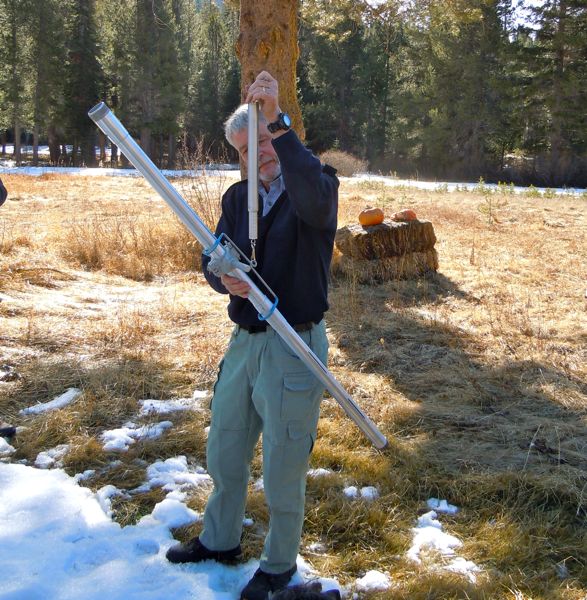
PHILLIPS STATION – Scanning the field at the base of Sierra-at-Tahoe, Frank Gehrke wonders if he needs to bring his equipment out of the vehicle.

It turns out he does need the tools. But he didn’t need them to tell the story. The dry, not even muddy field spoke volumes. The Sierra has no snow.

Frank Gehrke barely found any snow to measure Jan. 3 near Echo Summit. Photo/Kathryn Reed

No snow has many ramifications for a state that depends on its mountains to fill its reservoirs, irrigate its fields, provide winter recreation that translates into tax dollars and keeps people out of the unemployment line, and lowers the threat of fire.

The one measurement Gehrke took Jan. 3 showed a snow depth of 4 inches. But it’s the water content that matters. It came in at 0.14 inches – a record low.

Gehrke has been taking snow samples near the top of Echo Summit for the California Department of Water Resources since 1987. That was the year the previous low water content record was set at 0.9 inches.

1987 was also the start of a five-year drought.

While no one wants to use the “D” word this early in the season, the lack of precipitation throughout California and Nevada last month had it going down as one of the driest Decembers on record. What Northern California has been experiencing is typical in a La Nina year.

Liquid Precipitation

Location         Dec. 2011    Dec. 2010  

S. Lake Tahoe  trace            6.43 inches

Tahoe City       trace          11.40 inches

    Reno                 zero             1.39 inches

Carson City      zero             3.39 inches

Bridgeport       zero             4.52 inches

Mammoth        zero           13.17 inches

Driest Decembers on record

Location           Precip Total/Years

S. Lake Tahoe               trace (2011)

Reno     zero (2011,1883,1882,

1877, 1876,1874)

Carson City      zero (2011,2000,1989)

Mammoth        zero (2011)

2011 Oct.-Dec. Precipitation Totals and Rank

Location           Precip Total/Rank

Tahoe City         3.72 inches (8th driest)

Reno                   0.30 inches (5th driest)

Carson City        0.45 inches (3rd driest)

Source: National Weather Service

The irony is arid Southern California has received more moisture. Some areas are having an above average rainy season.

The smell of dry grass lingers in the air where the snowpack is being measured. No snowcapped peaks are evident. Mountain bikes on cars go by on Highway 50, while a few die-hard skiers turn in to take some runs at Sierra.

“We just don’t know what the future weather will be,” Gehrke said. “Last year was unexpected. It was supposed to be relatively dry.”

Instead, the winter of 2010-11 set records for snowfall in the Sierra. That’s a good thing because it filled California’s reservoirs to the point that they are higher than they were this time last year.

But Gehrke is realistic. He doesn’t believe the water content can catch up if things remain dry through February.

The National Weather Service in Reno does not see any storms on the horizon for at least the next 10 days. That means going into the next holiday weekend – Martin Luther King Jr. – it will be more manmade snow for skiers to schuss on. While resorts keep making snow, bike rental places are getting back into the business, too, in Tahoe.

After all, it’s been darn right hot out – at least for January. South Lake Tahoe hit record highs on Jan. 2 and Jan. 3. On Monday it was 59 degrees in South Tahoe, breaking the 1997 record of 50 degrees. On Tuesday the mercury crept to 58 degrees, one degree higher than the record from 1996.

The entire region is warm. Reno also hit records for the past two days. On Tuesday the high was 66, breaking the 1927 record of 57 degrees. While on Monday the high in Reno was 69, smashing the 58-degree record set in 1939.

While the moisture is nowhere in sight, the cold is returning. Expect highs to be in the 40s in the Lake Tahoe Basin by the end of the weekend with overnight lows in the teens for the weekend.

Phillips Station:

Dec. 30, 2009

  • Snow Depth: 38.5 inches
  • Water Content: 9 inches
  • Percent of Long Term Average: 75 percent

Dec. 27, 2010

  • Snow Depth: 55. 9 inches
  • Water Content: 19 inches
  • Percent of Long Term Average: 158

Jan. 3, 2012

  • Snow Depth: 4 inches
  • Water Content: 0.14 inches
  • Percent of Long Term Average: 1

Source: Department of Water Resources


South Lake Tahoe’s newest resident born New Year’s Day

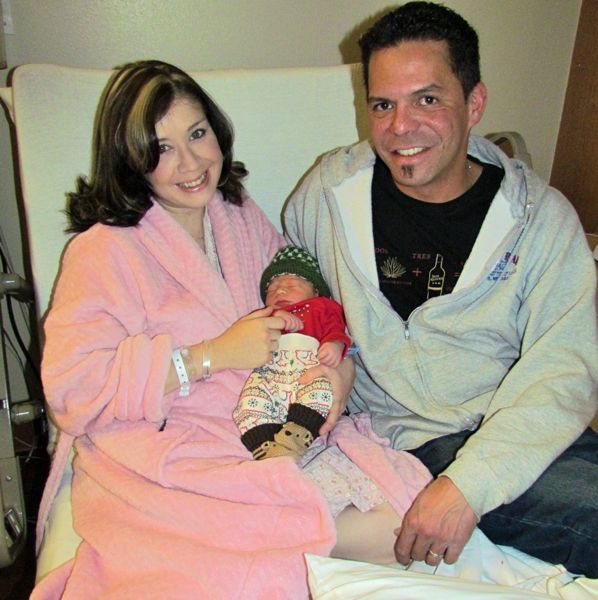
Apparently Laird Lopaka McDaniel doesn’t like to wait and likes to do things his own way.

The newest South Lake Tahoe resident was born New Year’s Day at 8:02pm – two weeks sooner than doctors had expected.

The little one weighs in at 6.9 ounces and is 18.5-inches long.

Andie and Sean McDaniel with newborn son Laird. Photo/Rebecca Wass

Andie McDaniel went into labor about noon New Year’s Eve, but didn’t go to Barton Memorial Hospital until 4am the next day. When a few complications arose, the doctors opted for a Cesarean section. Mom and son are dong fine.

Laird is named after his dad’s brother, who died when Sean McDaniel was a boy.

With their passion for the sun, the ocean and the snow, Laird’s parents look forward to teaching him to surf and ski.

“I knew that as soon as I had a boy he would be named Laird,” Sean McDaniel said. “He will be athletic and a well-rounded individual.”

Barton Health gathered more than $1,300 in gifts from local businesses for Andie, Sean and baby Laird to begin their new journey together.

“It was such a surprise and very nice of all of the businesses to help celebrate the birth of our child,” Andie McDaniel said.

There were more than 400 Barton babies in 2011, with 45 born in December.

 — Rebecca Wass, Barton Health


Pedestrian killed on Hwy. 50 identified

The pedestrian killed in Stateline in the early morning of New Year’s Day has been identified as Alex M. Moore, 21, of Walnut Creek.

He was pronounced dead at the scene.

According to the Nevada Highway Patrol, the victim was walking in the left eastbound lane of Highway 50 near Lake Village when the accident occcurred. He was wearing jeans and a black jacket. Moore was struck by a California Highway Patrol vehicle driven by Officer Joshua J. Varanini, 38 of Truckee.

“Evidence at the scene shows Officer Varanini applied the brakes of his SUV and steered the vehicle to the right to avoid striking the walker. The left front portion of the patrol vehicle stuck the man who was forced into the opposing westbound travel lane,” NHP Trooper Chuck Allen said in a press release.

The pedestrian was then stuck by the undercarriage of a shuttle van. There were no passengers on the bus and the drivers of both vehicles were not injured.

Witnesses or anyone with additional information, is asked to contact Trooper Eric Gallagher at (775) 689.4661.

— Lake Tahoe News staff report


LTCC Writers Series

Lake Tahoe authors Jeremy Evans and Scott Lankford are next up in Lake Tahoe Community College’s Writers Series.

The two will talk about their recent books on Jan. 25 at 8pm in the LTCC library. This event is free and open to the public. Books will be available for purchase.

Evans will talk about “In Search of Powder”, while Lankford will speak about his book “Tahoe Beneath the Surface”.


Book proves why eating locally makes a difference

By Kathryn Reed

“Voting with your fork” is a phrase author Jasia Steinmetz uses that resonated with me over and over again as I read “Eat Local: Simple Steps to Enjoy Real, Healthy & Affordable Food”.

How we spend money on food does make a difference in what stores carry and restaurants serve. We have a right to ask store managers and restaurant owners to stock and use local products. Not only do we have that right, some would argue it’s an obligation.

In many ways this paperback is a resource guide to eating locally and healthfully. It’s not necessarily something to read night after night – but instead in bits and pieces. The chapters are short. After all, there are 45 of them in 186 pages.

Those chapters are then divided into six sections: Introduction, Eat Local: Finding Local Food, Saving Money with Local Food, Eat Well, Join the Local Food Movement, and Appendices.

It’s a great starting point for anyone looking to make a change in how they buy food or who wants to know reasons why they should. It also has good reminders for those already on the path to healthy eating.

It’s about knowing where food comes from before it reaches the grocery store.

This book is all about why eating locally is important. And local comes with different definitions. It could be within 100 miles of where you live or your own state or country.

One of the main points is just getting people to be aware of where food is from. Then it explains how eating what is in season is how our ancestors did it for centuries, and how farmers’ markets are an ideal place to learn about the seasons of food.

“Rather than consume food, we eat food products that may have come from a plant or animal at one time, but are barely recognizable as anything from nature,” Steinmetz writes.

Even though Steinmetz is a professor of food and nutrition at the University of Wisconsin, I did not feel lectured to. I liked the common sense approach to the book.

But some alarming facts were brought forward:

• “U.S. agriculture production is dominated by large farms, i.e., farms with gross sales of $250,000 or more. These farms contribute 80% of the value of production although smaller farms own 63% of the farmland.”

• “One-third of the children born in 2000 are expected to develop diabetes in their lifetime.”

• “Current food production accounts for 35% of the greenhouse gas emissions contributing to climate change.”

• “We have lost 6,000 varieties of apples in the last century, largely because of narrow commercial production and retailing.”