Pray for Snow Party

Apres Wine Co. in South Lake Tahoe is having a Pray for Snow Party on Friday the 13th from 4-10pm.

Be there in your snow boots, mittens and parkas to egg on Mother Nature.

January also marks Après’ third anniversary, so that will be celebrated, too.


South Lake Tahoe pool closed

The swimming pool at the South Lake Tahoe Recreation Center is closed because of mechanical malfunction.

It is not known when it will reopen.

Call (530) 542.6056 for more information.


Lake Tahoe not the only region in search of snow

By Marnie Hunter, CNN

Lane Kommer should be skiing this week. Instead he postponed a trip to Colorado because the snow situation just isn’t looking good.

“We’ve been keeping a close eye on the weather the last few weeks and keeping our fingers crossed, hoping for some good snow and it just got to the point where we decided it’s better to reschedule and pay to change our plans than to go out there and be disappointed,” said Kommer, who was planning to fly from Dallas to meet up with friends at Beaver Creek Resort. Now they’re planning to go in February.

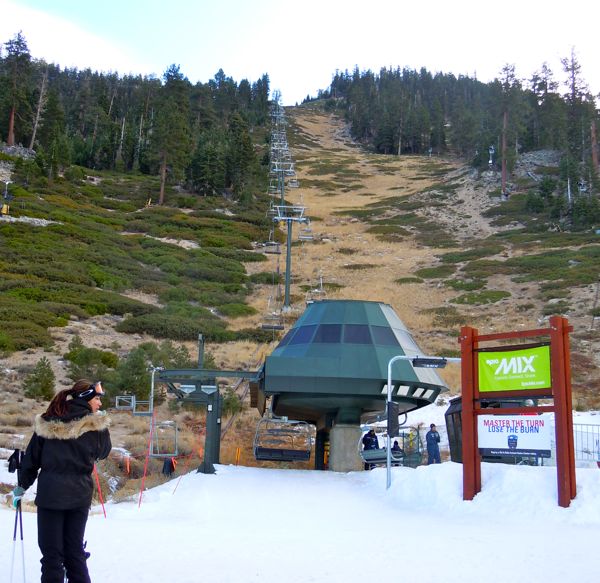
Heavenly has concentrated its snowmaking efforts farther up the mountain. Photo/LTN

It is a decision faced by skiers and snowboarders across the United States as ski resorts scramble to make the snow that Mother Nature isn’t providing. December 2011 yielded the 11th least extensive snow cover in the United States in the past 46 years, according to climatologist David Robinson, a professor in the geography department at Rutgers University.

Weather patterns are moving in and out too quickly and nothing is locking in to produce significant snowfall, he said.

“It doesn’t look like there’s going to be huge improvement the next two weeks and we’re getting halfway through winter by then. But still, hope springs eternal for late January into early March. One would expect that we’re going to see at least some interruption in this progressive fast-moving pattern,” Robinson said.

Any snow would be a welcome change for the Lake Tahoe area straddling California and Nevada, where odd spring-like weather has plagued snow seekers. Base snow averaged about 14 inches at seven area resorts on Thursday, with summit averages of a little more than 19 inches. The annual average summit snowfall at one of the resorts is 350 inches.

Revenue at Lake Tahoe resorts over the peak week between Christmas and New Year’s was down 20 percent to 30 percent after a tremendous ski season across the United States last year, according to estimates from the National Ski Areas Association.

Read the whole story


EFT workshop in Auburn

Participate in a 90-minute interactive workshop to learn Emotional Freedom Technique, a leading strategy in increasing productivity on a business and personal level. EFT is a simple and effective technique that teaches you how to tap on acupoints with focused attention to help you.

The Feb. 8 1-2:30pm workshop is in Auburn.

It is taught by South Lake Tahoe’s Rosemary Manning of Tahoe Health Touch.

For more information, click on the flyer.


Skier visits to Vail Resorts down 15% so far

While visits are down this season throughout the six Vail Resorts ski areas, the company is not downgrading its earning projections with three-quarters of the season still remaining.

“However, we would acknowledge that those targets will be more difficult to achieve given the results over the holidays,” Vail Resorts CEO Rob Katz said in a statement.

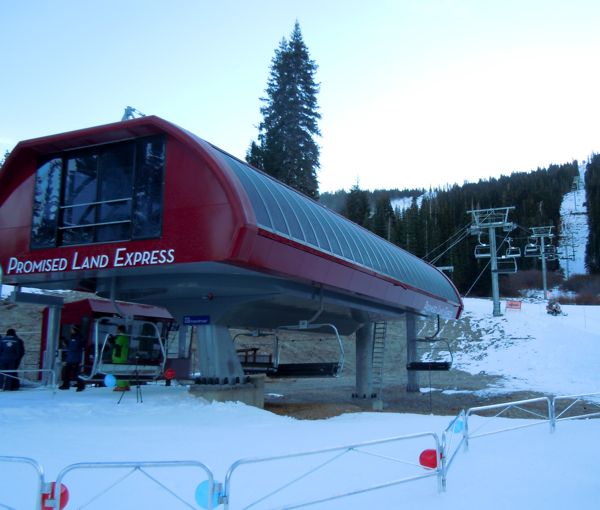
Promised Land lift at Northstar opened Dec. 20 with dirt surrounding it. No snow has fallen since then. Photo/LTN

The Colorado-based company that operates Heavenly Mountain Resort and Northstar in California as well as four ski areas in the Rockies released an interim data report this week.

Highlights:

• Season-to-date total lift ticket revenue at the company’s six mountain resort properties, and including an allocated portion of season pass revenue for each applicable period, was up approximately 0.6 percent through Jan. 2 compared to the prior year season–to-date period ended Jan. 3, 2011.

• Season-to-date revenue for ski school was up 0.9 percent, while dining was down 5.6 percent. Not all facilities are open. Even so, it shows the same number of people are not on the mountains to buy food.

• Fiscal year-to-date retail/rental revenue, which includes preseason ski sale events, was down 0.7 percent through Jan. 2 compared to the same period in the prior year.

• Season-to-date total skier visits for the company’s six mountain resort properties were down approximately 15.3 percent through Jan. 2 compared to the prior year season-to-date period ended Jan. 3, 2011, including fewer season pass holders accessing the resorts.

Katz said, “We have had some very unusual weather so far this season. For the first time in 30 years, a lack of snow has not allowed us to open the back bowls in Vail as of Jan. 6, 2012, and, for the first time since the late 1800s, it did not snow at all in Tahoe in December.”

 — Lake Tahoe News staff report


K’s Kitchen: Minnesota Wild Rice Soup

By Kathryn Reed

One of my favorite soups is my mom’s rice soup. I’ve just added another rice soup to my list of favorites.

The wild soup recipe below comes from my sister, Tami, in Minnesota. When I emailed to say how yummy it was she said she made it the night before as well and was excited to have it for lunch at school (she’s a teacher) that day. But she said it’s even better after being frozen and then reheated.

I can attest to the fact it is better the second day. So many dishes are that way. Time does wonders for allowing flavors to meld.

I was supposed to make this soup Christmas weekend for my mom and sister, Pam, but that didn’t happen. It got delayed a week – without them. Mom had brought the wild rice because she had some and didn’t think she would be using it anytime soon.

This means I don’t know how easy it is to find in Tahoe.

I have copied the recipe as it was published in the Ely (Minn.) Echo’s North Country Saver on Dec. 24, 2001. They printed it from “The Culinary Institute of America Book of Soups”.

The asterisks are from my sister.

I used a quart of cream because I knew I wouldn’t use the leftovers. And I used vegetable broth. I couldn’t find chives. And I used salted butter. If you do that, don’t add salt until the end – assuming you need any.

Minnesota Wild Rice Soup (makes 8 servings)

This rich soup, which is packed with vegetables, is an unusual way to enjoy wild rice. Wild rice contains a substance that produces a unique texture in this soup, not unlike a chowder. Incidentally, wild rice is not rice; it’s actually a long-grain marsh grass native to the Great Lakes region of the Unites States. Many local Native Americans earn their living harvesting wild rice, which is why it’s sometimes known as Indian rice. Clean wild rice before cooking by placing it in a bowl with plenty of cold water. Give the rice a stir, then set the bowl aside for a few minutes to let any debris float to the surface. Pour off the water and proceed with the recipe.

2 T unsalted butter

3 carrots, finely diced (about 1 cup)

2 leeks, white and light green parts, finely diced (abut 2½ cups)

2 celery stalks, finely diced (about 1 cup)

¼ C all-purpose flour*

2 quarts chicken broth*

¾ C wild rice

½ tsp salt, or to taste

¾ C heavy cream, hot*

3 T dry sherry*

¼ C minced chives

3 T chopped parsley

Heat the butter in a soup pot over medium heat. Add the carrots, leeks and celery. Cook until softened, about five minutes.

Reduce the heat to low, add the flour and stir well. Cook gently, about three minutes, stirring constantly.

Add the broth gradually, whisking well with each addition to eliminate flour lumps. Bring to simmer.

Add the wild rice and salt. Continue to simmer until the rice is tender, but still somewhat chewy, about 45 minutes.

Stir in the heated cream and sherry. Season with salt. Serve in heated bowls, garnish with chives and parsley.

* Double the amount, according to my sister, Tami.


RAOK: Giving to others who are in need

Random Acts of Kindness come in all forms. This is truly evident by the varied comments that have been posted through this promotion Lake Tahoe News is sponsoring through the month of January.

Janice Eastburn is the most recent award recipient. She is receiving a one-hour business consultation session with Knox & Associates as well as the new book about Steve Jobs.

It’s easy to be part of Random Acts of Kindness. Write a comment below about an RAOK you received, witnessed or partook in.

The goal is the kindness expressed throughout January will continue forever. But this will only be successful if you tell everyone about the Random Acts of Kindness.

The few rules that apply to the promotion and more details about it can be found on this story.


Opinion: Dim government thinking creates silly law

By Ted Gaines

As we say hello to 2012, it is time to say goodbye to an old friend, the trusty and dependable 100-watt light bulb. It will disappear into the new, uncomfortably-bright white world of the compact fluorescent light (CFL), where green Utopianism is killing consumer choice, shipping jobs to China, and lowering the dimmer switch on freedom.

The government’s benevolent, freedom-loving message to the people regarding CFLs is this: You can use any bulb you like, as long as it’s fluorescent. That’s because CFLs are the chief replacement for the traditional incandescent light bulbs that the federal government will effectively ban in stages starting Jan. 1, 2012.

Ted Gaines

The problem with that Hobson’s choice is that people already have real choices when it comes to bulbs for their homes and they don’t need the wisdom of bureaucrats to light the way for them.

Many are getting by with the same inefficient, global-warming villain known as the incandescent bulb that has only survived more than a century without significant change. Among things it does that CFLs do not do is glow with a light people actually enjoy and does not give them headaches. Who would want that when the government says otherwise?

It also doesn’t spill Mercury – a poison – onto the linoleum when it breaks, requiring a scary list of EPA clean-up instructions that include emptying the room of people and pets, airing out the room for 10 minutes and turning off any central heating and air systems. And it’s cheap.

The CFL has its advantages over the traditional bulb. Energy efficiency is the CFL’s calling card. It uses a fraction of the incandescent’s energy. It lasts longer.

The government, though, isn’t weighing the benefits of one against the other, like consumers in a free society do day after day with product after product from candy bars to cars. No – it has made up consumers’ minds for them and put the fear of global warming above everything else.

What do consumers want? When standing in the light bulb aisle, with the bulbs sitting right next to each other on the shelves, they ignore the dictates of the green bien pensants and overwhelmingly choose incandescent bulbs.

Apparently, they are suffering from a collective delusion about what product is better.

The ban has all the hallmarks of bad government. It’s a nannyish, meddling, superior regulation that will force people to buy a product they don’t want for more money.

The green jobs that were supposed to be one of the many blessings of the forced transition were not a myth, however. They appeared – in China. Apparently, labor-intensive CFL manufacturing doesn’t pencil out in America.

As we say goodbye to the signature invention of American’s greatest inventor, let’s remember that we won’t lose our freedom all at once, but one light bulb at a time.

Ted Gaines represents the 1st Senate District, which includes all or parts of Alpine, Amador, Calaveras, El Dorado, Lassen, Modoc, Mono, Nevada, Placer, Plumas, Sacramento and Sierra counties.



History: Wagons had many uses in Tahoe

Publisher’s note: This is reprinted from the August 1988 Lake Tahoe Historical Society newsletter.

It is a relic, a commemoration of life lived in an earlier time. It sits today, unused, too old to fulfill its original purpose yet admired by all. It is weathered and broken but it has survived, a descendant of centuries of carriage technology. And, if we observe it carefully, it can tell us many things about life in the Sierras (sic) in the 19th century.

Wagons mounted on axels or platforms that connected the wheels, have been a part of western culture since 1500 B.C. Freight or farm wagons, many built on designs brought to this country by immigrants, were essential to the American economy in the 18th and 19th century. Open or covered, drawn by teams of horses or oxen, they could carry tons of produce, building materials or equipment. Early in the 19th century brake levers and elliptical springs for the seats were introduced. Both aided transportation on rugged western roads.

There were many types and refinements of wheeled vehicles in the 19th century; freight, farm, platform and spring wagons, buckboards, surreys, stagecoaches, conestogas and many styles of buggies. The wagon that sits today outside our Museum was a part of the summer dairy operations at the Celio Ranch in Meyers. It carried butter, hay, milk, feed, lumber, fence posts and more. As a working vehicle it was not built for comfort, though it does have a brake and springs for its seat. It has standard steel-banded wheels, 12-spoked, 44 inches in diameter in the front, 14-spoked and 54 inches in the rear. When its usefulness was over, it was purchased by Marjorie Springmeyer and loaned to the museum for preservation and display. We are fortunate to have such a reminder of the early days at Tahoe.

Though built neither for beauty nor for speed, our wagon has become an object of our admiration and wonder. It has its own patina of artless distinction, simple and basic, and beauty that has grown out of its history and utility.


Learn about changes to California and Nevada laws

Lake Tahoe South Shore Chamber of Commerce is sponsoring a legal update seminar for California and Nevada businesses.

The event is Jan. 24 from 9am-noon at the chamber’s conference room at 169 Highway 50, Stateline.

This employment law seminar includes updated information for managers and business professionals.

Register before Jan. 16 for a price of $39 for chamber members or $49 for non-members. After that date the cost goes up $10.

For more information or register, contact Emily Abernathy at (775) 588.1728, ext. 303 or Emily@TahoeChamber.org.