RAOK: Less snow to clear because of thoughtful neighbor

Helping neighbors with snow removal. It might seem just like the neighborly thing to do, but one neighbor thinks Celine Smania should know how appreciated she is.

Celine is Lake Tahoe News’ latest Random Acts of Kindness winner. She will be receiving a gift certificate to dine at Echo Restaurant at Embassy Suites.

Random Acts of Kindness is about recognizing those who do things that are kind. It could be helping to clear snow, holding open a door, giving some cash, providing a ride — whatever.

Tell us about your Random Act of Kindness by writing about it in the comments section at the end of the story. Let us know about the kindness you have given, you have received or you have witnessed.

RAOK is going on throughout January.

There are a few rules associated with Random Acts of Kindness. If you want to read them, check out this story.


Opinion: Water bond needs to be taken off the table

Publisher’s note: This editorial is from the Jan. 12, 2012, Orange County Register.

The last thing California needs now is more state bonds, with the interest and principal paid from the general fund. The state already can’t pay its current bills, including debt service on past bonds.

There are signs the Legislature might dump from the November ballot an $11 billion water bond measure originally planned for two years ago. It was originally called Proposition 18, but in 2010 the recession was in full force, and voters were in no mood to continue their decade-long splurging on bonds. So the Legislature pushed the vote off another two years.

Assembly Speaker John Perez, D-Los Angeles, believes that “$11 billion is, I think, higher than voters would be willing to support right now. And there are superfluous projects that are included in that water bond that would be nice to have, but aren’t crucial.” He also believes water storage is important. He was quoted in an article by John Myers, Sacramento bureau chief for KQED/TV. And he correctly pointed out that a supermajority – a two-thirds vote – in both houses of the Legislature is the reason a Niagara of pork projects was included to bloat the bill.

Mr. Myers reported that “it also takes a two-thirds vote to either delay the water bond or rework it for 2012. Early signs on bipartisanship are good; Assembly GOP leader Connie Conway said … she’s also willing to take a second look at the issue.”

Read the whole story


JPA agrees to refinance South Shore recreation bonds

By Kathryn Reed

While it’s up to the recreation JPA board to decide how to spend the $15,000 that is estimated to be saved each year by refinancing the bonds, it is likely to go toward recreation on the South Shore instead of saving taxpayers a few cents on the $18 a year they pay now for the measure.

That will be an agenda item if and when the bond sales go through and there is actual money to talk about.

The South Lake Tahoe Recreation Facilities Joint Powers Authority – made up of Hal Cole (South Lake Tahoe), Norma Santiago (El Dorado County), and Debbie Henderson (Tahoe Paradise Resort Improvement District) – agreed Friday to go forward with changing 75 percent of the bonds from tax-exempt to taxable and refinancing the remainder as tax-exempt.
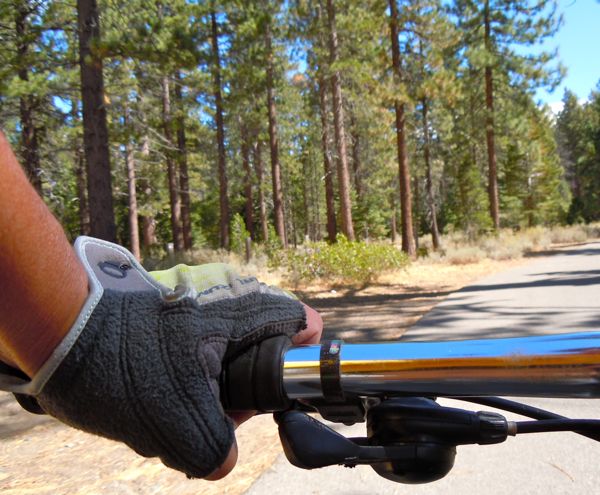
Refinancing the recreation bonds should provide more money for bike trail and ball field maintenance. Photo/LTN

A contingency is the JPA board wants the county Board of Supervisors at its Jan. 24 meeting and Tahoe Paradise board on Jan. 26 to endorse the refinancing idea.

Santiago and Henderson after the meeting told Lake Tahoe News they believe their respective boards will give the green light. Both boards have been apprised of the proposal that will be before them.

However, the JPA board can do what it wants without the approval of the three member agency boards. What the JPA board would do if a no vote were given next week by either or both boards, remains a large question mark.

What has changed since the South Lake Tahoe City Council on Jan. 17 approved the refinancing is interest rates have decreased. Compass Bank is now a better alternative than Alliance Bank.

While financial advisor Mark Northcross would receive a bonus from Alliance if he were to bring the JPA’s business there, he is recommending Compass because of the cost savings to his client – the JPA. (He was the financial advisor when the original bonds were sold in 2001.)

On Wednesday, Compass’ taxable bonds dropped from 5 percent to 4.75 percent and their tax-exempt bonds dropped from 3.25 percent to 3.2 percent.

Northcross noted if the JPA were to refinance all the bonds at the current tax-exempt status, that the annual savings would be $50,000.

The city, though, maintains changing the bond structure will save taxpayers at least $150,000 more a year because the ice arena will stay in the hands of a private operator. With that entity paying the city rent and other money, the city’s coffers could expand even more. City Manager Tony O’Rourke’s mantra is the JPA taxpayers benefit if the city is saving money.

Talk of refinancing the bonds was never brought up by the JPA board until South Lake Tahoe realized the contract it had with private operators of the ice rink had to be altered to comply with IRS rules as they relate to for-profits. That meant creating a 50-day termination clause that is black and white.

The original contract between the city and Tahoe Sports Entertainment (and one that is likely to be reinstituted after the bond sales are finalized) was for 10 years, with a 90-day out clause. Dissolution, though, had many strings attached. The longer contract provides incentives for TSE to make substantive investments in the rink.

The ice rink was built with voter-approved Measure S money.

Property owners on the California side of the basin – roughly encompassing the boundaries of Lake Tahoe Unified School District – pay $18 for Measure S. The JPA collects about $630,000 a year. There is $4.5 million in principal owed on the bonds that were approved in 2000 and sunset in 2030.

It’s expected the bond sales/refinancing will go through at the end of February.

Also at the meeting, the JPA board appointed people to the bicycle and ball field committees. Creation of the committees fulfills a requirement of the revised recreation measure – called Measure R – that was approved in November.

The two committees will have a joint meeting Feb. 3 at 9am at Lake Tahoe Airport where they will be given a primer on California’s opening meeting law and officers will be elected.

All committee meetings will be open to the public.

On the bicycle committee are:

• Russ Dahler

• Peter Fink

• Lauren Lindley

• Shay Navarro

• Charles Nelson

• Eric Thelin

• Mary Lou Whitcomb.

On the fields committee are:

• Marilyn Breisacher

• John Dalton

• Brian Hogan

• Charles Leonard

• Steve Noll

• Ken Riegal

• Steve Weiss.



Man says he is responsible for Washoe Drive Fire

By Reno Gazette-Journal

10:13pm:

Southbound Highway 395 is open at Mount Rose Highway. Northbound Highway 395 to reopen later tonight, Nevada Highway Patrol reports.

8:15pm (summary story)

The Washoe Drive Fire that destroyed 29 homes and charred 3,177 acres south of Reno started Thursday afternoon because a man improperly discarded hot fireplace ashes on the northern end of Washoe Valley, officials said Friday evening.

The blaze was 65 percent contained as 300 firefighters continued to work to extinguish hotspots amid another weather system that brought high winds and the threat of potential flash flooding in the areas that burned.

The elderly man, who officials declined to name Friday, came forward to investigators earlier in the day to admit he had discarded of the ashes in a utility trailer shortly before 1pm Thursday. This is about the time the Washoe Drive Fire started. So far, the cost of the response has been estimated at $690,000 while the damage is likely to be in the millions, officials said.

“He was overcome with remorse,” said Reno Fire Chief Michael Hernandez, who added the Washoe County district attorney will investigate and determine if criminal charges should be filed against the man.

Meanwhile, officials confirmed the only fatality associated with the fire was an elderly woman who lived on Old Ophir Road. The cause of death remains unknown, but authorities believed she died because of smoke inhalation. An autopsy was pending.

Officials had no word on when the 2,000 residents who remained evacuated from the area Friday night could return.

Read the whole story


Historical snowshoe along Tahoe’s West Shore

California State Park interpretive specialist Lindsay Harbison will be leading a snowshoe through history hike along Lake Tahoe’s West Shore at Ed Z’Berg Sugar Pine Point State Park on Jan. 28.

This easy tour explores the parks’ lakefront and the grounds of the historic Hellman-Ehrman estate. Learn about the natural environment that attracted Tahoe’s earliest settlers and explore the history of this Tahoe landmark.

The snowshoe starts at 11am and begins near the restrooms in the day use side of the park (lake side entrance off Highway 89). The program lasts approximately 1½ hours.

The program is free. There is a parking fee of $8 per vehicle.

Bring water, snacks and snowshoes.


Putting a chill on the hot tub after a day on the slopes

By Kris Terrian

What sounds better after a long powder day: icing your knees or hopping in the hot tub? The majority of skiers and snowboarders would prefer the hot tub. And though this sounds like the perfect place to get warm, meet up with your buds and kick back and relax, the hot water could hinder your next day’s skiing or boarding performance.

Hot tubs are great for warming up muscles before activity. Heat opens your blood vessels, allowing more blood to flow into the muscles. But after a great day on the mountain, your muscles are fatigued and have built up pools of lactic acid – causing soreness over time. Cold therapy vasoconstricts, which means it helps reduce the blood flow into the muscles. This is bene¬ficial to help keep the soreness and aches away, especially if you plan on shredding the pow the next day.

Kris Terrian

To avoid sore muscles, try 10 to 20 minutes of heat therapy before activity and 20 to 30 minutes of cold therapy after.

Cooling down properly gives your body a chance to deal with the lactic acid before it makes you sore. What your legs really need after exercising is a cool-down period where either ice or snow is applied to aching muscles to calm them down and stop the excess blood flow.

Remember, if you’re planning on a great week or weekend of powder shredding, don’t get in the hot tub until after you’ve cooled down. Even better, save it for the next morning.

Kris Terrian is an athletic trainer with Tahoe Center for Orthopedics.


Explore Tahoe Winter Speaker Series

Dianna Borges, South Shore speaker-actor, presents a re-enactment of Sarah Winnemucca Hopkins, a Paiute Native American, on Jan. 25 at 6pm.

Hear Sarah’s story at Explore Tahoe: An Urban Trailhead located at 4114 Lake Tahoe Blvd. near the Heavenly Village.

A $5 donation is requested. A $5 flat rate offered in the Heavenly Village Parking Contact Explore Tahoe at (530) 542.4637 for more information.


Wine pairing in Tahoe City

Jake’s on the Lake and Michael David Winery are teaming up for a four-course wine paring at the Tahoe City restaurant on Jan. 26 at 5:30pm.

The cost is $38 per person. Space is limited, guaranteed reservations are required — (530) 583.0188.

Jake’s on the Lake is located at 780 North Lake Blvd., Boatworks Mall, Tahoe City.


Douglas County libraries to close for 2 days next week

Douglas County Public Library in Minden and Zephyr Cove will be closed on Jan. 25 and Jan. 26 due to budgetary constraints.

The Minden library will re-open Jan. 27 at 10am. The Zephyr Cove library will re-open Jan. 27 at 9am.

For more information, call (775) 782.9841.


Opinion: Demise of Kodak a good example of a free market

By Thomas Sowell

The news that Eastman Kodak is preparing to file for bankruptcy, after being the leading photographic company in the world for more than a hundred years, truly marks the end of an era.

The skills required to use the cameras and chemicals required by the photography of the mid-19th century were far beyond those of most people — until a man named George Eastman created a company called Kodak, which made cameras that ordinary people could use.

It was Kodak’s humble and affordable box Brownie that put photography on the map for millions of people, who just wanted to take simple pictures of family, friends and places they visited.

As the complicated photographic plates used by 19th century photographers gave way to film, Kodak became the leading film maker of the 20th century. But sales of film declined for the first time in 2000, and sales of digital cameras surpassed the sales of film cameras just 3 years later. Just as Kodak’s technology made older modes of photography obsolete more than a hundred years ago, so the new technology of the digital age has left Kodak behind.

Great names of companies in other fields have likewise vanished as new technology brought new rivals to the forefront, or else made the whole product obsolete, as happened with typewriters, slide rules and other products now remembered only by an older generation. That is what happens in a market economy and we all benefit from it as consumers.

Unfortunately, that is not what happens in government. The post office is a classic example. Post offices were once even more important than Eastman Kodak, and for a longer time, as the mail provided vital communications linking people and organizations across thousands of miles. But, today, technology has moved even further beyond the post office than it has beyond Eastman Kodak.

The difference is that, although the Postal Service is technically a private business, its income doesn’t cover all its costs — and taxpayers are on the hook for the difference.

Moreover, the government makes it illegal for anyone else to put anything into your mail box, even though you bought the mail box and it is your property. That means you don’t have the option to have some other private company deliver your mail.

In India, when private companies like Federal Express and United Parcel Service were allowed to deliver mail, the amount of mail delivered by that country’s post offices was cut in half between 2000 and 2005.

What should be the fate of the Postal Service in the United States? In a sense, no one really knows. Nor is there any reason why they should.

Thomas Sowell is a senior fellow at the Hoover Institute and author of The Housing Boom and Bust.