Vonn adds to her World Cup points, Mancuso 13 in super combined

By USSA

ST. MORITZ, Switzerland — Lindsey Vonn of Vail pushed her Audi FIS Alpine World Cup points total to 1,070 with a super combined victory in bluebird St. Moritz on Friday. It was Vonn’s seventh victory of the season. She now leads the overall chase by 302 points over Slovenian Tina Maze, who was second.

Vonn has won in every discipline this season except slalom.

Julia Mancuso of Squaw Valley was 13, Leanne Smith of North Conway, N.H. was 18 and Laurenne Ross of Bend, Ore., was 20.

Stacey Cook of Mammoth was 15 in the downhill, but did not start the slalom portion

A downhill is slated for Saturday, with a second super combined on Sunday in St. Moritz

“There’s a really solid American contingency here. We actually had some banners in the finish and a big American flag. It was cool to see the American support,” Vonn said.


Placer County hosting candidate workshop

Placer County Office of Elections will have a free candidate workshop Feb. 7 from 6-9pm at the Placer County Finance and Administration Building, 2956 Richardson Drive, Auburn.

Prospective candidates and their supporters are encouraged to attend. Members of the media and the public are also invited.

The workshop will explain many of the details involved in running for public office.

Guest speakers will include an experienced candidate, a campaign consultant, and a media representative.

Candidate filing for the June 5 presidential primary election will open Feb. 13 and close March 9. For more information, call (530) 886.5650.


A change in attitude can change the course of the day

By Mandy Kendall

I don’t know about you, but I was struck by a number of emotions when the snow finally started falling. I was excited as I thought of all the wonderful days of skiing ahead, I had that feeling of joy, that snow has always inspired in me ever since I was a child. And I felt relief for all those people who rely on the snow for their livelihood. However, my overriding feeling was one of gratitude, for all the beauty that surrounds us and all that I have to be thankful for.

This, often overlooked, emotion is a very powerful mental state that releases Dopamine in our brains, giving us that “warm fuzzy” feeling and generally affecting our health and wellbeing in a positive way.

Mandy Kendall

According to the Happy U Life website, research shows that practicing gratitude may be the fastest single pathway to happiness, health, long life, and prosperity. People exercised more, drank less alcohol and were nicer to be around.

We all have something to be thankful for, even during the darkest of moments. But, like anything we do, if it’s not practiced in our daily lives, it is often neglected or even forgotten.

Here are a few Qwik-e tips to help make sure that there is a little gratitude in your life every day:

• Write 5-10 things that you are grateful for. Don’t stop at 10 if you can think of more. Have them by your bed and read through them last thing at night and/or first thing in the morning. Maybe start a journal and add to your list on a daily or weekly basis. Doing this is scientifically proven to make you feel better.

• Try having a “Today, I’m grateful for…” conversation with family or friends, at dinner perhaps, and talk about the things you are thankful for. It can be incredibly uplifting to tell someone that you are grateful for them being in your life.

• Overwhelmed by things? Take a few moments to refocus on something that you are grateful for; a loved one, those new shoes, your wonderful surroundings. It will help lift your thoughts away from where they might be sinking to.

• Thank someone — with a hug, a smile, a nod. If it’s done at the right time and in the right way, they will get the message without you having to say a word. In today’s world of emails and texts, a hand written note or a small thoughtful gift (homemade cookies perhaps) is a great way of showing someone how grateful you are.

• Say thank you. Whether you believe in a higher power or not, you might be quite surprised how good it makes you feel to say thank you, even if it’s just to yourself. A thank you for that parking space that opened up just at the right time, for that unexpected call from an old friend, or the accident that was averted just in time. There are usually many times during the day when a heartfelt thank you (to yourself or out loud) is just the thing to help you remember there is a lot to be thankful for.

Until next time!

Mandy Kendall operates Health Connective in South Lake Tahoe. If you have any questions, feel free to drop me an email at healthconnective@gmail.com, visit us on Facebook, or keep an eye out on Lake Tahoe News for regular Qwik-e tips on how to make healthy changes one Quick and Easy step at a time.


Opinion: Legalizing drugs is constitutional

By Katie Kieffer

I believe states have the constitutional right to legalize drugs. For, the Constitution is silent on the federal government’s ability to regulate or ban substances that adults choose to digest at their own peril—or medical relief.

The Constitution is so silent on this matter of individual liberty (choosing to digest or use drugs) that in order to ban the sale of alcohol during the Prohibition era, we passed the 18th Amendment. When we wised up and realized that banning alcohol doesn’t work, we repealed the 18th Amendment via the 21st Amendment. I contend that federal drug laws are unconstitutional because they do not stem from a constitutional amendment.

Katie Kieffer

Since the Constitution defines our freedoms negatively, states and individuals retain all rights that are not explicitly delegated to the federal government. The 10th Amendment states: “The powers not delegated to the United States by the Constitution, nor prohibited by it to the States, are reserved to the States respectively, or to the people.” In other words, because the Constitution is silent on drugs, states alone have the constitutional power to regulate drugs.

Voters in states like California have exercised their constitutional right to legalize drugs, specifically medicinal marijuana to help cancer patients and those suffering from chronic pain due to autoimmune diseases like multiple sclerosis.

Californians aren’t flower power hippies. These voters realize that if it’s constitutional for individual Americans to binge on four-to-five alcoholic drinks in one sitting—drinks that incidentally do nothing to relieve chronic pain—it makes sense to legalize a far less lethal substance like marijuana with verified pain-relief benefits.

A prestigious medical study published by The Lancet in November 2010 reveals that alcohol is more lethal than heroin and crack cocaine and drastically more harmful than marijuana, ecstasy and LSD. On Jan. 6, 2012, The Lancet reaffirmed these findings with a global study revealing that: “marijuana was the world’s most widely consumed illicit drug … [and] the least likely of all illicit drugs to cause death,” as the New York Times relays.

We have not amended the Constitution to outlaw drugs. Nor did the war on drugs germinate in Congress. Instead, successive court rulings and executive orders have unconstitutionally banned drug use at the federal level—even to the point of overriding the sovereignty of states that explicitly legalize drugs.

And when the court decides to apply the Bill of Rights to state law, it winds up trampling … on the most important safeguard of our liberties: the division of power between the federal and state governments. … By the middle of the twentieth century the “due process” clause within the Fourteenth Amendment had come to be seen as the catchall phrase for federal intervention,’ writes author Jason Lewis in “Power Divided is Power Checked.”

Today, the Federal government, via the Department of Justice, has violated the separation of powers that the Founding Fathers wrote into the Constitution. Federal agents allege that medical marijuana dispensaries and growers violate “federal law”—ripping out medicinal cannabis plants and destroying legitimate livelihoods overnight.

The New York Times reports: “Federal law classifies the possession and sale of marijuana as a serious crime and does not grant exceptions for medical use, so the programs adopted here, in 15 other states and in the District of Columbia exist in an odd legal limbo. … federal prosecutors have raided or threatened to seize the property of scores of growers and dispensaries in California that, in some cases, are regarded by local officials as law-abiding models. At the same time, the Internal Revenue Service has levied large, disputed tax charges against the state’s largest dispensary, threatening its ability to continue.”

The war on drugs began when President Richard Nixon bypassed Congress and declared a war on drugs on July 17, 1971. He said that drug abuse was a “national emergency” and America’s “public enemy number one.” He signed the “war” into law on January 28, 1972. By unconstitutional executive order, Nixon created the first drug czar and also created an extra-congressional agency to regulate drugs called the Drug Enforcement Agency (DEA). Successive Presidents have sustained this war.

Article I, Section 8 of the Constitution gives Congress (not the president) the “Power … To declare war.” Federalist and framer Alexander Hamilton further explains the Constitution’s checks on executive reach in The Federalist No. 78. He says the president publicly declares and enforces the laws Congress makes and the decisions or appointments Congress approves: “The Executive not only dispenses the honors, but holds the sword of the community.”

Some might object that America’s 40-year-long and over $2.5-trillion fight against drug abuse isn’t technically a “war.” But that’s a hard position to defend when scores of innocent Americans and Mexicans have died throughout our combat with brutal Mexican drug cartels. Since 2006 alone, when President Felipe Calderón declared his own war against drugs, between 40,000 and 50,000 people (depending on your source) have died in this conflict.

Moreover, the right to own your entire person is a fundamental human right and it is foundational to the Constitution. Unless you use wrongful force against another person or their property, you retain full ownership over your body. As John Locke points out, reason tells you that you fully own your body. No one else owns your body—not your neighbors, your family or the government.

Rep. Ron Paul explains: “All of our freedoms – the freedom of religion and assembly, the freedom of speech, the right to bear arms, the right to be free from unnecessary government searches and seizures – stem from the precept that you own yourself and are responsible for your own choices. Prohibition laws negate self-ownership and are an absolute affront to the principles of freedom. I disagree vehemently with the recreational use of drugs, but at the same time, if people are only free to make good decisions, they are not truly free. In any case, states should decide for themselves how to handle these issues and the federal government should respect their choices.”

Freedom is the power to choose between good and bad options for our own private property and body; freedom is the power to opt for healthy behaviors like prayer, aerobic exercise and strength training over unhealthy behaviors like self-mutilation, chain smoking, binge drinking and inhaling pain thinner. I think the federal government needs to respect individual freedom by deferring to the states in matters like drug use where the Constitution is silent.

Katie Kieffer is a conservative multimedia personality, writer and public speaker who runs KatieKieffer.com.



Snippets about Lake Tahoe

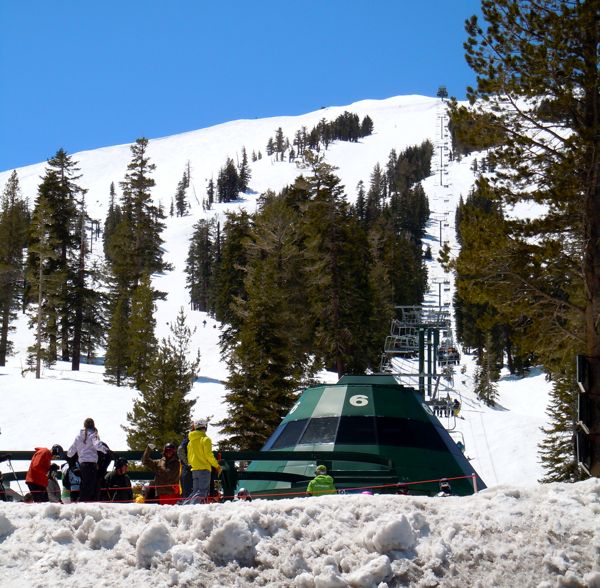
• Kirkwood will be open 100 percent this weekend. Tahoe City Cross Country, Royal Gorge Cross Country, Tahoe Donner Cross Country, Tahoe Donner Downhill, and Donner Summit are open for the season. Snowmobiles will be running at Zephyr Cove starting Jan. 28.

• Super Bowl XLVI at Lucas Oil Stadium in Indianapolis on Feb. 5 will be the first time the Super Bowl has been played in Indiana. Indianapolis is the northernmost city in the United States to host the Super Bowl since Detroit hosted Super Bowl XL in 2006.

• Tahoe Pipe Club measured the clarity of Lake Tahoe on Jan. 25 and published the average clarity of the lake for the month of January as 81 feet. The results are on the website’s first page and science page.

• Kingsbury General Improvement District is having a public hearing Feb. 21 at 6pm to discuss changes to water rates. Documents outlining the proposed changes are available for review at the KGID office at 160 Pineridge Drive, Stateline – the same location as the meeting.

• Embassy Suites in South Lake Tahoe is the place to donate blood Feb. 6 from noon-6pm. For more information, contact Dan Kerr at (775) 781.5343.


Name a mountain bike trail in Nevada

Nevada State Parks needs a name for the trail that currently is called the Marlette Hobart Trail.

This section is scheduled for completion in July and will offer 2.7 miles of flowy singletrack to bypass the exposed and steep Sunflower Hill.

A committee will determine a handful of the best submissions that meet parks criteria and put those out for a popular vote to determine the winner.

Submit your idea online.


RAOK: Newcomer finds kindness from long-time residents

Lisa Sinizer nominated her neighbors Suzy and Rob Krzaczek for being so neighborly — especially with being new to the area.

As Lake Tahoe News’ latest Random Acts of Kindness winner, the Krzaczeks will be receiving two tickets to ride the Tahoe Queen during one of the paddle-wheeler’s day cruises.

To read all the entries for the past month, go to the top of the page. Under the Random Acts of Kindness category is a story from each day this month. The promotion ends in a few days, but we hope the kindness continues.

To participates, write about the kindness that has been done to you, the kindness you have seen or the kindness you have done. It can be as simple as opening a door or helping clear snow, or a bit more grand like turning in nearly $1,000 or giving a lift to a stranger.


South Shore chamber making strides after 5-plus years

By Kathryn Reed

Five years. It’s been that long since the Lake Tahoe South Shore Chamber of Commerce came into being. While the beginning was rocky – as most mergers are – solid ground has been found.

B Gorman has been at the helm since Day 1 when this chamber, which is the culmination of merging Tahoe Douglas Chamber of Commerce and South Lake Tahoe Chamber of Commerce, came to be.

B Gorman on Jan. 26 talks about what Lake Tahoe South Shore Chamber of Commerce is doing. Photo/Kathryn Reed

At the beginning it was Gorman doing almost everything, along with the board. Staff and board members have come and gone. Today there are three full-time employees reporting directly to Gorman and another who is shared with the Lake Tahoe Visitors Authority.

Gorman in a 90-minute presentation gave a recap Thursday of how things are and what the chamber is doing. About 50 people attended the Jan. 26 breakfast meeting at Inn by the Lake. The past and the future, though, were not topics of the meeting.

Afterward, Gorman spoke with Lake Tahoe News about where the nearly 650-member strong chamber is going. (About 70 percent of members are located in California and 30 percent in Nevada, with a mix of sizes.)

Growing membership is always a goal. The CEO-president also envisions the chamber taking on more environmental causes, or at least having a seat at the table when those issues are being discussed.

Chambers and politics have historically been bed partners. But this chamber has not been as politically minded as the former South Lake Tahoe chamber was or others are. That could change, according to Gorman. It’s a direction she would like to take the organization, but said ultimately that will be a decision of the 21-member board.

Relationship building, promoting the community, growing the local economy and representing businesses with government are the main goals of the chamber.

With South Lake Tahoe presumably done with moving people out of and within the government organization, Gorman is forming relationships with those left behind to better serve the business community.

History:                                                                    • 2005 – Serious talks are under way about merging the Tahoe Douglas Chamber of Commerce with the South Lake Tahoe Chamber of Commerce. • March 2006 — In a 13-0 vote, the Tahoe Douglas Chamber of Commerce agrees to merge with the South Lake Tahoe Chamber of Commerce. Three board members were absent and one abstained. The South Lake chamber board voted 18-6 to combine resources. At that time the South Lake chamber had 950 members, and Tahoe Douglas 640, with 350 belonging to both chambers. • Fall 2006 – B Gorman hired to run merged chamber. • November 2006 – merger takes place. Eighteen-year lease signed on Stateline building owned by Primm Ventures. • January 2007 – Public disharmony is evident; members of former South Lake chamber begin forming South Tahoe Chamber of Commerce. Issues with the lease, finances and offices being in Nevada contributed to the problems. • Today – Bitterness is gone for some, remains for others. Another merger is not in the works.

The chamber through a formal bid process was awarded the contract with the city that uses grant funds to provide a business-coaching program called the Tahoe Tactical Team. Forty-five small businesses have gone or are going through the program.

Putting on workshops and forums are a big part of the chamber. Some are open to just chamber members or might cost more for non-chamber members.

Key events the chamber puts on are the Business Expo (March 30 at Harrah’s Lake Tahoe) and Sample the Sierra (Sept. 2 on Ski Run Boulevard).

One member asked why the food and wine event is Labor Day weekend and not at a time when the area is less crowded. Gorman said the harvest of food and wine help dictate when it can be, as do room nights.

“Labor Day weekend is soft. Visitors drop off in mid-August,” Gorman said. “Our hope is to build Labor Day weekend.”

When schools started after Labor Day, Lake Tahoe was busy through that weekend. Not so anymore. Gorman said hotel occupancy has been between 50 percent and 60 percent for nearly a decade on Labor Day weekend.

Another member asked about SnowGlobe, the three-day music festival over New Year’s Eve weekend.

“It’s safe to say if it were not for SnowGlobe, it would have been weaker over New Year’s,” Gorman said. That was based on a survey the chamber sent out to members asking how the event affected business.

But she also said if the city intends to bring the event back, the chamber wants more info that could be shared with members – like suggesting to a coffeehouse it stay open until 2am to warm up the concert-goers on their way back to their lodging establishments.

More information about the chamber may be found online.


Valhalla Renaissance Faire

When Renaissance Productions transforms Camp Richardson into a giant stage in early June, it will mark the 20th year of the South Shore ren fair.

Queens of England, ambassadors from foreign lands and juggling jesters, winsome wenches, lords and ladies, knight of horseback, squires and simpletons will gather June 2-3 and June 9-10 for the 20th annual Valhalla Renaissance Faire.

This unique festival includes a real jousting tournament and full armored combat between knights, along with culinary delicacies, craft demonstrations, ancient music, magic, storytelling, dance and comedy. Patrons can participate in a range of activities such as archery and fencing.

Activities for children include educational areas, games, crafts, a petting zoo, puppet shows and storytelling.

The annual Valhalla Renaissance Faire recreates a renaissance village over two festival weekends and includes a merchant marketplace with nearly 100 unique merchants, and artisans.

The fair is open from 10am-6pm each day.

Cost is adults $17, $12 for seniors, military, ages 13-17, $7 for children 6-12, and under 6 no charge.

For more information, go online.


Feds back off from poisoning Sierra stream

By Jeff Delong, Reno Gazette-Journal

Federal attorneys withdrew a challenge to a judge’s ruling against plans to restore one of America’s rarest trout by poisoning a remote Sierra stream, a move conservationists are calling a victory but which federal officials characterize as but another development in a lengthy dispute over a project they still intend to pursue.

On Monday, federal attorneys filed a motion for “voluntary dismissal of appeal” in the Ninth Circuit Court of Appeals in the case pitting a coalition of conservation groups against the U.S. Fish and Wildlife Service and U.S. Forest Service over plans to poison Silver King Creek south of Lake Tahoe.

The government was considering appeal of a September ruling by U.S. District Court Judge Frank Damrell Jr. granting an injunction blocking plans to poison an 11-mile stretch of the creek to remove unwanted fish and replace them with threatened Paiute cutthroat trout.

“This means the judge’s injunction is permanent now. I’m very pleased,” said Patty Clary, executive director of Californians for Alternatives to Toxics, which sued to block the project along with Wilderness Watch and Friends of Silver King Creek.

Jeannie Stafford, spokeswoman for the U.S. Fish and Wildlife office in Reno, described Monday’s motion as a “procedural step in the process” and said the government intends to continue pushing for the project.

“It does not mean that the project is dead,” Stafford said. “We’re still hopeful that the project is going to go forward.”

Read the whole story