Snow missing for annual memorial snowshoe race

By Kathryn Reed

Snowshoe events in February at Lake Tahoe are a no-brainer. Except for this year.

Fresh Tracks – the Eric Nageotte Memorial 5K Snowshoe Race could actually be a running event. That would seem appropriate considering the Tahoe Mountain Milers puts on the annual fundraiser. Instead, the race part of today’s event has been canceled because Camp Richardson has no snow to groom trails.

“A few years ago we had a similar situation and went ahead and snowshoed through mud. It was horrible and I didn’t want to do it again,” Carol Nageotte said. “People can go out and play and do their own course, in their own groups … run around wherever snow is.”
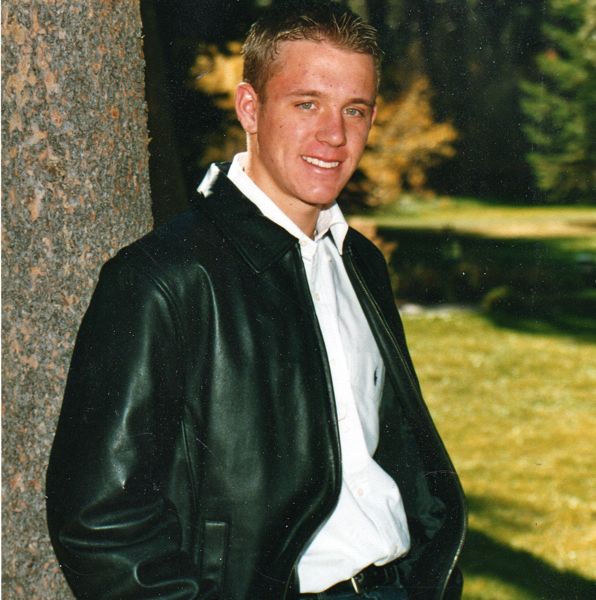
Eric Nageotte graduated from South Tahoe High School in 2004. Photos/Provided

This event is in its 13th year. When Eric Nageotte died in September 2004 the event was renamed to honor him and raise money for a scholarhip fund for members of the Heavenly Ski Foundation freestyle team.

Nageotte was an aspiring freestyle skier with dreams of making the U.S. Ski Team. His two buddies have – Sho Kashima and Jay Panther.

“I feel like we’re living vicariously through Jay and Sho. It makes us proud,” Nageotte said. “It’s not hard to watch them. It gives us joy to see them do so well.”

(Kashima, though, is sidelined having had knee surgery last week on the knee he didn’t hurt a year ago. And Panther is out recovering from a concussion.)

Eric Nageotte was training in New Zealand when the fatal ski accident occurred. The trip was his present after graduating the previous June from South Tahoe High School.

At his memorial his four parents – Ron and Carol Nageotte, and Toni and John Lowe – started the memorial scholarship fund as a way for people to make donations instead of buying flowers for the funeral service.

The snowshoe race is now the main fundraiser for the scholarship that helps up and coming skiers train. (Carol and Ron Nageotte are longtime members of the running club.) Eric participated in a few of the Tahoe Mountain Miler events, but it was bouncing through a field of moguls where he felt most at home.
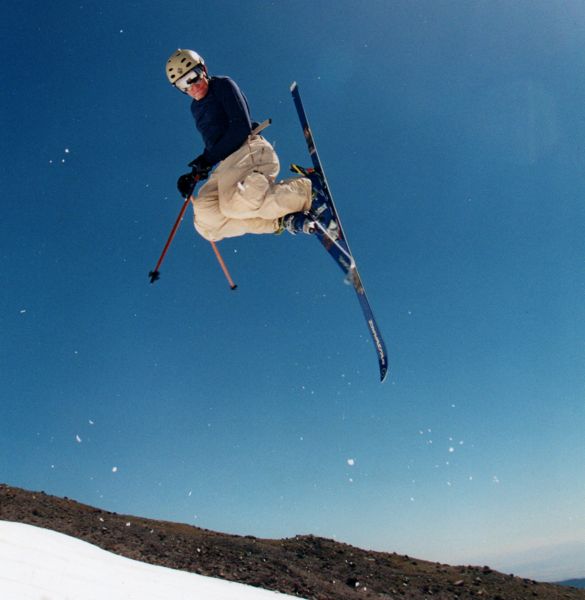
Eric Nageotte had dreams of being on the U.S. Ski Team.

Much of the money raised goes for the young skiers’ gymnastics training.

“It’s pretty expensive to have a kid on the team,” Ron Nageotte said.

Carol Nageotte added, “We’re supporting the kids whether they knew Eric or not. It’s a sport Eric loved. It’s one way to give back to the community.”

As for the event today, Camp Rich has donated the food. Mountain Miler volunteers will be barbecuing sausages and hot dogs, plus there will be vegetarian chili, starting about noon. That’s all free for anyone who shows up to play. Sweat shirts are for sale. Donations to the scholarship fund are welcome.

For more information, go online.



Nevada roadside markers to be updated

By Emerson Marcus, Reno Gazette-Journal

The text on many of the blue and gray, Nevada-shaped roadside markers that note historically significant events and locations will be updated in the coming months and years to fix errors and terminology that could be read as insensitive or even racist, Nevada State Historic Preservation Officer Ron James said.

Phrases like “Chinese hoards stormed” Tuscarora and “Before the coming of the white man, roving Washoe and Paiute bands inhabited the Truckee Meadows” were a couple of examples, James said. Date inaccuracies, physical wear, spelling and grammatical errors will also be corrected.

“Almost all of them need to be updated for some reason,” said James, who estimated the price of each new marker at $1,000. “We also grade the markers. So, as funding becomes available, we’ll address the ones that need to be addressed the soonest.”

The Nevada Department of Transportation will fund much of the effort with about $88,000 this year to help with maintenance and replacement of damaged markers, NDOT public information officer Meg Ragonese said. After a marker is determined to be damaged or stolen, it will be replaced with a new marker containing updated text, James said.

Most of the markers were written by members of the Nevada Historical Society in the 1960s and 1970s after the National Historical Preservation Act of 1966.

Read the whole story


Lake Valley firefighters ready to dance up a storm at 50th ball

By Leona Allen

Members of the Lake Valley Volunteer Firefighter’s Association are gearing up for the 50th annual Firefighter’s Ball on March 2 at MontBleu in Stateline starting at 8pm.

Tickets are $15 in advance and $20 at the door. They can be obtained at Lake Valley Fire Station 6 (Golden Bear and Pioneer Trail), Station 7 (2211 Keetak St., Meyers), Raley’s or Lira’s Market.

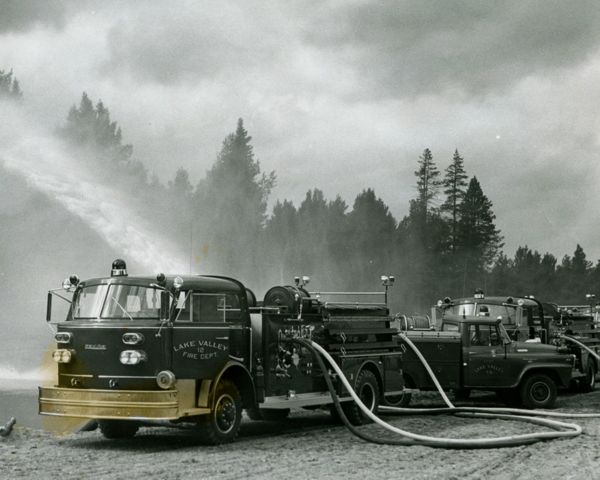
Pat Doyle and Ed Fischer dance at the second Firefighter’s Ball at the American Legion Hall on Feb. 4, 1962. Photos/Lake Valley Fire

The first ball was Feb. 4, 1961. It was initiated by the Lake Valley Ladies Auxiliary to assist in raising money for the district’s training and equipment needs. The first band to play at the ball was the Don Keller Band, and the event was at the American Legion Hall. In subsequent years, local bands such as George Worth, Mal and the Movers, and The Riptides entertained dancers throughout the evening.

If you’re doing the math and counting the years from 1961, this should be the 51st annual event. In 1964, however, part of the American Legion Hall collapsed under the snow load and the ball was canceled for that year.

Starting in 1965 the ball was at the Elk’s Club Lodge in Meyers. During those years, dinner was cooked and served to attendees by the firefighters and the ball became the area’s premier event. Many times the crowd exceeded the capacity of the hall.

Extra outhouses had to be brought in and outfitted with heat and lights.

On April 21, 1961, Lake Valley personnel test three new American La France fire engines. At the time, Lake valley had 17 paid firefighters and 19 volunteers. Current staffing is 25 paid firefighters and 20 volunteers.

Due to the large crowds, the ball was moved to the casinos.

Proceeds from the ball have assisted the district as well as the community in many ways. Necessary equipment has been purchased for the firefighters and paramedics, including defibrillators, extrication equipment (“Jaws of Life”), ice rescue suits, and wildland fire gear. The funds also allow Lake Valley personnel to provide community CPR classes and, most recently, scholarships for South Tahoe High School students to attend the Lake Tahoe Basin Fire Academy.

Leona Allen is an employee of Lake Valley Fire District.


Caesars Entertainments keeps up with green initiatives

By Travel Pulse

Caesars Entertainment issued its 2010-11 Sustainability Report, which covers calendar 2010 and the first half of 2011, and is the company’s and the casino-entertainment and hospitality industry’s second such report. Among the report highlights is an updated CodeGreen (environmental) strategy that produced new two- to five-year targets for energy conservation, renewables, water consumption, waste diversion, supply chain, and guest and employee perceptions of Caesars’ CodeGreen performance.

Caesars is the parent of Harrah’s Lake Tahoe and Harveys at Stateline.

The report also states that the company is on track to meet its 2010 target to reduce absolute carbon emissions by 10 percent from 2007 to 2013, and has created a Green Meetings & Events certificate program, graduating more than 200 managers.

The company has also joined and played active role in UN Global Sustainability Tourism Council and launched the replacement of 65,000 halogen bulbs with LED lighting that requires less than 10 percent of the electricity.

Caesars staff recycled more than 61,000 pounds of hotel soap and 43,000 pounds of bottled amenities for the nonprofit Clean the World, which sanitizes and distributes them to developing countries and low-income communities in the United States to combat illnesses preventable through proper hygiene.


Terrain parks aren’t where all the best snowboarders ride

By Josh Dean, Men’s Journal

When the Winter X Games hit Aspen in January, the world’s snowboarding greats were all present, throwing double corks over the halfpipe. But one was notably absent: Jeremy Jones. The world’s preeminent free­rider was busy prepping for his upcoming expedition to the glaciers of Alaska, where he’ll strap a tent to his back and camp out between blizzards, waiting for the weather to ease so he can locate, climb, and then snowboard down chutes and couloirs so hairy that he is one of the few humans alive who would attempt them.

For the past three years, the eight-time Big Mountain Rider of the Year has dedicated himself to hiking and climbing up mountains so that he can snowboard down them. His primary tool for this is a splitboard, a snowboard that breaks in two to become skis. Jones’ enthusiasm for the splitboard has popularized the genre, and in 2009 he founded a company that manufactures them. His ultimate goal is to get young boarders to follow him out of bounds.

Jones’ transition to a purer, more old-school brand of adventure is not that surprising given his background. Now 36, the Truckee resident learned to snowboard before parks and pipes were ubiquitous.

“I would have loved them, but growing up, the parks just weren’t there,” says Jones. “So to me, it’s always been about riding the whole mountain, finding the stashes and the top-to-bottom line that connects them all.”

From his onscreen introduction in the 1997 film Totally Board 6 — he dropped into a near vertical Alaskan face, triggered, and then disappeared into an avalanche, only to reappear from the tidal wave of white at the last minute and ride to safety — the Vermont-raised resident of Lake Tahoe has spent the better part of two decades seeking out and riding some of the most difficult lines on Earth.

As Travis Rice, the world’s best all-around snowboarder, once said, “Jeremy is breaking down the boundaries of ‘I can’t.’”

Read the whole story


Tribe: Red Hawk Casino may close because of looming debt

By Dale Kasler, Sacramento Bee

The owners of Red Hawk Casino say they may have to close the 3-year-old gambling palace following a devastating $30 million jury verdict.

With its financial pressures intensifying, the Shingle Springs Band of Miwok Indians warned in court papers of a “doomsday scenario” if the cash-poor tribe is forced to pay the December judgment. Under that scenario, the tribe said lenders would take steps to seize the casino’s cash, forcing Red Hawk out of business.

“Any efforts to presently execute on the judgment would likely have catastrophic consequences for the tribe and all who depend on the casino for their livelihood,” tribal attorney Sanford Kingsley wrote in a recent filing in El Dorado Superior Court.

The Shingle Springs casino employs 1,350 workers.

A jury in December awarded $30 million to Sharp Image Gaming Inc., the tribe’s former business partner, over a breach-of-contract dispute. Sharp said the tribe reneged on an agreement for the company to supply slot machines.

Sharp Image lawyer Matthew Jacobs called the tribe’s shutdown warning nonsense. He said in court papers that the tribe’s creditors would do everything they could to keep the Highway 50 facility going.

For now, Sharp Image won’t collect on the judgment. A judge issued a tentative ruling this week preserving the status quo, the tribe said Friday. A final ruling on the issue is expected in a couple of weeks.

Nevertheless, the tribe’s warning provides fresh evidence of the dire financial circumstances that have enveloped the Shingle Springs band, which owes its casino creditors a combined $598 million.

Because of its financial troubles, the tribe said it’s having trouble pursuing an appeal of the December verdict. If the verdict stands, the tribe could default on its debts.

The tribe’s warning also makes it increasingly likely that the casino’s future will be the subject of a lengthy and convoluted legal battle, with bondholders and other creditors fighting the tribe and each other over assets.

This fight will surely be complicated by the doctrine of sovereign immunity, which generally protects tribes against legal claims and puts the Shingle Springs tribe’s most important assets – including the casino – out of creditors’ reach.

“You can’t take their land, you can’t take the building,” said Nelson Rose, an Indian gambling law expert at Whittier College. “I guess you could take the slot machines.”

Gregory Guedel, an Indian gambling lawyer in Seattle who is not connected to the case, said bondholders and other creditors will probably have to negotiate a settlement with the tribe to stretch out debt payments while keeping the casino open.

That’s what happened at tribal-owned Foxwoods Casino in Connecticut – the world’s largest – which defaulted on $2 billion in debts two years ago.

Aside from the hurdles presented by the tribe’s sovereign status, it simply makes more sense for creditors to work out a deal with the tribe.

“It’s still better to have a trickle of money coming in” than to have the casino fold, Guedel said.

As it is, the tribe has temporarily halted principal payments on a $66 million startup loan from Red Hawk’s outside management firm, Lakes Entertainment Inc., because of the casino’s weak cash flow.

Red Hawk pays millions of dollars each year to the state and El Dorado County under a compact that the Shingle Springs band signed with former Gov. Arnold Schwarzenegger.

Read the whole story


Whittemore manager claims Seenos violated environmental permits

By Martha Bellisle, Reno Gazette-Journal

A former manager of the company at the center of a high-profile, high-stakes legal battle involving lobbyist Harvey Whittemore accused the company’s new owners of violating permits on various properties and making numerous threats.

Brad Mamer also said the Seeno family, who took over the Wingfield Nevada Group in 2010, often vented “their complete hatred of Mr. Whittemore.” And after several Seeno family members allegedly made threatening statements, Mamer said he feared for his safety.

“I’m honestly a complete nervous wreck about what the Seenos are capable of and I’m scared for myself and my family, quite honestly,” Mamer said.

Mamer made the allegations against the Seeno family during a taped interview by Whittemore’s lawyers in September, and were attached to a document filed late Friday opposing the Seenos’ motion to dismiss Whittemore’s federal lawsuit against the Seenos.

The documents are the latest legal salvo in a battle that involves millions of dollars and could lead to criminal charges. Both sides say they’ve reported their allegations to officials, and the FBI issues subpoenas last week to about 30 Whittemore associates in a campaign contribution investigations.

The Seenos have denied on numerous occasions ever making any threats against Whittemore. Efforts to reach their lawyers in Reno and Las Vegas late Friday were not successful.

Tom and Albert Seeno Jr., home-builders based in Concord, filed a state lawsuit on behalf of Wingfield against Whittemore in January, saying he embezzled company funds, and claiming he wrote and signed a confession to the alleged misdeeds.

Whittemore responded with a federal lawsuit against the Seenos claiming they used death threats and strong-arm tactics to get him to transfer his assets to Wingfield.

The Seenos responded last week by asking the federal judge to dismiss the case or put it on hold while their state case is resolved. They also amended their state suit by adding Mamer as a defendant, claiming he violated a confidentiality agreement and shared Wingfield trade secrets.

Read the whole story


Bills designed to address ADA-small business concerns

Two measures that would curtail frivolous Americans with Disabilities Act lawsuits and pinpoint conflicting state and federal ADA regulations were introduced this week by Assemblywoman Beth Gaines, R-Roseville.

Assembly Bill 187, would give California’s most vulnerable small businesses an opportunity to correct an ADA violation before a lawsuit can be filed. Once a business has received a written notice of violation, it would be given 120 days to bring the business into compliance.

Approximately 98 percent of California businesses are out of compliance with state and/or federal disability access laws.

An attorney has for several years been working Northern California, including Lake Tahoe, get money out of compliant storefronts.

The complex and inconsistent regulations regarding disability access make it difficult for willing business owners to comply with the complicated and changing regulations and give lawsuit abusers the opportunity to take advantage of the confusing laws. This is harmful to both individuals with a disability seeking access and businesses that are exposed to civil actions, Gaines said.

“The unfortunate reality is that there are individuals who are capitalizing on the complex access regulations enacted by the state and federal government for personal benefit,” Gaines said in a statement. “Businesses can be sued for thousands of dollars for simple faults such as a railing height being off by a centimeter or parking lot striping not being the right shade of a particular color. Many times, businesses want to correct the error to allow for more access to their place of business. These frivolous lawsuits are making it harder for the business to come into compliance, especially in this difficult economic environment.”

The other measure, Assembly Bill 1879, requires the state architect to compile a list of all federal and state disability access regulations and any conflicts in state and federal regulations must be identified.

There will be a meeting

March 15 at 6pm in Pollock Pines to discuss the ADA issues and how businesses in El Dorado County are being targeted by one attorney in particular.

The meeting will be at the Community Center.

For more information, call Kitty Miller at (530) 621.5651.


Parntership forged to operate Auburn State Recreation Area

By Gus Thomson, Auburn Journal

Uncertainty gave way to celebration Tuesday as the U.S. Bureau of Reclamation and California State Parks marked the signing of a 25-year partnership pact to maintain operations in the 30,000-acre Auburn State Recreation Area.

The long-term agreement, which also covers more than 20,000 acres in the Folsom State Recreation Area, means State Parks will continue to manage law enforcement and visitor services in the two areas.

The Bureau of Reclamation hammered out an agreement with State Parks that requires all revenue generated by recreation and other operations to be applied directly to the management of the two recreations areas.

In turn, the bureau will provide federal appropriations “as available” for half of any operational deficit up to a ceiling of $2.5 million annually.

In a sign of goodwill, the state and federal agencies are pledging to continue to work together to minimize or eliminate deficits through continuous collaboration and efficient business planning.

The collaboration was forced by a groundswell of local concern over possible Bureau of Reclamation cutbacks that would have forced closure of access roads and the potential elimination of a State Parks presence in the Auburn State Recreation Area because of lack of funding.

Read the whole story


Bahrke finishes 14th at World Cup

By USSA

MINSK, Belarus – Battling high winds and changing snow conditions, coaches were forced to slingshot athletes down the aerials run where Dylan Ferguson of Amesbury, Mass., finished seventh in the FIS Freestyle World Cup in Minsk Saturday.

Teammate Scotty Bahrke of Squaw Valley, who won the previous World Cup, ended the day in 14th. Weather played a critical role in the competition.

Yang Yu of China was the women’s winner, while Stanislav Kravchuk of the Ukraine took top honors for the men.