Chamber mixer at Hard Rock Cafe

Network among local business leaders in the tourism industry at the Hard Rock Café. Join the Lake Tahoe Visitors Authority and Lake Tahoe South Shore Chamber of Commerce staff, community members and students from CSU Chico’s Recreation and Hospitality Program on April 26 from 5-7pm.

Cost is $10 for members, $20 for non-members. Tickets will include your drink and raffle tickets as well as appetizers provided by our host, the Hard Rock Café inside Harveys at Stateline.


Trends in Tourism forum

This year’s annual spring South Shore tourism forum is titled Trends in Tourism. On April 26 from 3-5pm Ralf Garrison and Emilyn Sheffield will present current statistics and trends to inform tourism and hospitality operations for the future.

Among the topics to be presented are differences in how the younger “wired” and ethnic visitors will connect with recreation in addition to a discussion on what types of accommodation units and amenities are most important to these growing market segments. Additionally, a “Millennial Team” of 20 college students from CSU Chico’s Recreation and Hospitality Program will be participating. They will present a report card to the community of their pre-arrival research, expectations and experiences.

There will be numerous opportunities for: hosting the students, secret shoppers and future intern potential. If you are interested in learning more about the student opportunities, contact Carol Chaplin at carol@ltva.org or B Gorman at bgorman@tahoechamber.org.

The event is at Harveys in Stateline.

Cost is $15 for Lake Tahoe South Shore Chamber of Commerce members and $25 for non-members. Price includes entrance to the mixer immediately following the forum.


Sierra Nevada Alliance benefit

On March 31 at the American Legion in South Lake Tahoe dance into spring with Bison and the Smugglin Hooch Jug Band.

This is a benefit for the Sierra Nevada Alliance.

Suggested donation is $10.

Event starts at 7:30pm.

For more information, email Carissa@sierranevadaalliance.org.


Learn about the world’s changing seas

The study of climate change through Earth history has produced a wealth of information on the operation of the ocean-atmosphere system during climate transitions as well as the feedbacks that impact the magnitude and rate of climate change on the planet.

Although the understanding of the science of climate is built on a firm foundation, much confusion exists regarding the potential and rate of change in the modern world.

Howard Spero will explore the basic science of the Earth’s climate system and examine the natural cycles of climate change in Earth history that have been discovered through the study of flacial ice sheets and deep ocean cores during a lecture March 22 at Sierra Nevada College.

Spero will attempt to demystify the realities of phenomena such as ocean (and Lake Tahoe) acidification and the potential for a warmer Earth in the not too distant future.

Spero is a professor and current chairman in the Department of Geology at UC Davis.

A no-host bars opens at 5:30pm, with lecture at 6pm. A $5 donation is requested.

For more info, call (775)881.7560.

Tahoe Center for Environmental Sciences, Room 139/141 is at 291 Country Club Drive, Incline Village.


Home schooling continues to evolve

By Linda Perlstein, Newsweek

In the beginning, your kids need you—a lot. They’re attached to your hip, all the time. It might be a month. It might be five years. Then suddenly you are expected to send them off to school for seven hours a day, where they’ll have to cope with life in ways they never had to before. You no longer control what they learn, or how, or with whom.

Unless you decide, like an emerging population of parents in cities across the country, to forgo that age-old rite of passage entirely.

When Tera and Eric Schreiber’s oldest child was about to start kindergarten, the couple toured the high-achieving public elementary school a block away from their home in an affluent Seattle neighborhood near the University of Washington. It was “a great neighborhood school,” Tera says. They also applied to a private school, and Daisy was accepted. But in the end they chose a third path: no school at all.

Eric, 38, is a manager at Microsoft. Tera, 39, had already traded a career as a lawyer for one as a nonprofit executive, which allowed her more time with her kids. But “more” turned into “all” when she decided that instead of working, she would homeschool her daughters: Daisy, now 9; Ginger, 7; and Violet, 4.

We think of homeschoolers as evangelicals or off-the-gridders who spend a lot of time at kitchen tables in the countryside. And it’s true that most homeschooling parents do so for moral or religious reasons. But education observers believe that is changing. You only have to go to a downtown Starbucks or art museum in the middle of a weekday to see that a once-unconventional choice “has become newly fashionable,” says Mitchell Stevens, a Stanford professor who wrote Kingdom of Children, a history of homeschooling. There are an estimated 300,000 homeschooled children in America’s cities, many of them children of secular, highly educated professionals who always figured they’d send their kids to school—until they came to think, Hey, maybe we could do better.

When Laurie Block Spigel, a homeschooling consultant, pulled her kids out of school in New York in the mid-1990s, “I had some of my closest friends and relatives telling me I was ruining my children’s lives.” Now, she says, “the parents that I meet aren’t afraid to talk about it. They’re doing this proudly.”

Read the whole story


Mother Goose is on the loose at South Tahoe library

Mother Goose on the Loose Storytime is every Thursday through April 26 at the South Lake Tahoe library.

The 11am and 3:30pm lap sit storytime is for ages up to 2.

Mother Goose on the Loose is an award winning program that combines music, movement, visual literacy and language development to help children get ready to read.

The library is at 1000 Rufus Allen Blvd.

For more information, call (530) 573.3185.


Sandoval: Extend taxes to spare education

By Sean Whaley, Nevada News Bureau

CARSON CITY – Gov. Brian Sandoval said today he will propose to extend a package of taxes now set to expire in June 2013 into the next budget to avoid further cuts to education, which he said cannot withstand further reductions.

To maintain a basically flat spending plan for the two-year budget that will begin on July 1, 2013, Sandoval said the modified business tax that was maintained at a higher rate for large businesses in the 2011 legislative session, along with a small increase in the sales tax, must be continued.

The 2011 tax package also eliminated the business tax for 115,000 small Nevada businesses which would continue into the next budget as well.
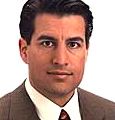
Nevada Gov. Brian Sandoval

“We’re going to keep them,” Sandoval said of the sunsetting taxes. “Again, my baseline is this: I’m not going to cut education, and that includes K-12 and higher ed. I am not going to reduce services for the most vulnerable people in our society.

“I’m not going to pit kindergartners against senior citizens,” he said. “I’m not going to pit higher ed students against people that need essential services.”

This preliminary recommendation for beginning the budget process for the 2013 legislative session could be modified as the state’s fiscal picture becomes clearer in the coming months, Sandoval said.

“We’re going to be having many conversations between now and when the final budget is presented to the Legislature,” he said. “I believe at this point in time, which is very early, it is the responsible thing to do for the future of the state of Nevada.”

Sandoval said an expanding Medicaid caseload, along with costs associated with the expansion of the program under the federal health care law, will consume any revenue increases. Because of this, failing to include the sunsetting taxes for budget planning purposes would mean cuts to education.

“In addition to avoiding further cuts to education, this decision means there will be no need for tax increases in the next session,” Sandoval said. “Nevadans will pay no more than they are in the current biennium. The budget building process remains ongoing, but we must begin today.”

Efforts are under way to circulate petitions to put possible tax increases before the voters, including measures that could lead to hikes in both mining and gaming taxes. A gross margin tax on business is also being considered by labor groups and teachers but no ballot measure has been filed yet.

Sandoval made the announcement to the capitol press corps after a meeting of the Board of Examiners. He said his intention with the announcement is to be transparent.

Sandoval strongly opposed continuing the tax increases approved by the 2009 legislature in the 2011 session, but ultimately agreed to do so after a Nevada Supreme Court ruling threw his proposed budget into financial disarray.

The 2013-15 budget planning process begins Thursday with a briefing by state Budget Director Jeff Mohlenkamp to state agencies and representatives of public and higher education.

Today’s announcement was immediately welcomed by some Republican lawmakers.

Sen. Michael Roberson, R-Las Vegas, who is expected to lead the Republican Senate caucus in the 2013 legislative session, said he supports Sandoval’s preliminary budget instructions.

“I support Gov. Sandoval and his budget instructions that will not impose new taxes on the people of Nevada,” Roberson said. “I will continue to lead the fight against new tax increases while working with Gov. Sandoval to improve public education. I will not support additional cuts to public education.”

Roberson opposed extending the sunsetting taxes in the 2011 session, arguing that the Nevada Supreme Court ruling did not create the huge financial hole in the budget that others had suggested.

“Gov. Sandoval has outlined a prudent and fiscally responsible preliminary budget framework,” Roberson said. “I am grateful for his tremendous leadership. I will stand with him and support him.”

Sen. Ben Kieckhefer, R-Reno, announced his support for Sandoval’s proposal via Twitter.

“I applaud the decision by Gov. Sandoval to do what is necessary to protect education from cuts,” he said, adding that what that means in the 2013 session is yet to be determined.

Sandoval said the spending will also be prepared using the new approach of performance-based budgeting.


South Tahoe looking for homes with lead paint

South Lake Tahoe has grant funding to make local homes healthier by reducing lead paint hazards from the federal government.

Was your home built before 1978? Did you know the city has federal grant funding to test homes built before 1978 for potential lead-based paint hazards?

The grant covers 100 percent of the costs of a lead hazard risk assessment inspection, costs of construction to mitigate lead hazards, and the cost to test the blood lead levels of children who live or regularly visit the home.

Call today about this program — (530) 542.6158.


Poetry workshop to be taught by award-winning writer

Award-winning poet and editor Ravi Shankar will be in Meyers on March 31 to give a poetry workshop from 3-6pm at Bona Fide HQ.

The cost is $25. Interested participants should bring 10 copies of a poem to the workshop.

Advance reservation is necessary, as space is limited. To sign up, call or email Suzanne Roberts at (530) 541.4660, ext. 708 or robertss@ltcc.edu.

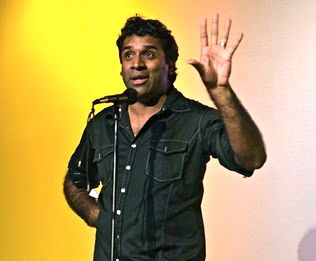
Ravi Shankar

All abilities and aesthetic stances are welcome.

In this workshop, “From Flarf to Cento: Using Multiple Sources to Find Your Voice”, participants will learn what is current in the field of contemporary poetry, taking on everything from the collage-form of the cento to the ancient Japanese form of the zuihitsu and the nonsense permutations of Flarf.

Shankar is the founding editor and executive director of Drunken Boat, one of the world’s oldest electronic journals of the arts. He has published or edited seven books and chapbooks of poetry, including the 2010 National Poetry Review Prize winner, “Deepening Groove”.

Bona Fide HQ is located at 1069 Magua St., No. 4, behind the Getaway Café in Meyers.


Increase in backcountry skiing leads to more avalanches, deaths

By Denis Cuff, Contra Costa Times

Christopher Rudolph was skiing his mountain turf with other expert skiers. It was a route he knew well on an ungroomed slope near the Washington ski resort where he worked.

They had avalanche rescue gear, avalanche safety training, and their group included a professional ski racer, a former ski patrol member and a judge for two international extreme skiing organizations.

Their preparation for last month’s outing fell tragically short, though, when their skis broke loose a 3-foot-thick slab of snow, killing Rudolph, a 30-year-old former Lafayette resident, and two others in the nation’s deadliest avalanche of the winter.

It was a tragic reminder of America’s struggle with avalanches, killers of an average of 25 people per winter over the past decade — about triple the total of the 1960s — as more people ski backcountry areas away from the safety of groomed resort slopes.

This year’s odd snow patterns may have increased avalanche dangers, experts say; and more snow is expected across the West this week.

Already, 27 people have been killed in avalanches this season.

Improvements in ski and snowmobile equipment have made it easier for skiers to climb higher and descend more sharply in their quest for untouched snow.

“The new equipment is opening up more access to the backcountry to more people,” said Andy Anderson, an avalanche forecaster at Sierra Avalanche Center in Truckee. “You have some very good skiers being able

to operate in more challenging terrains, but I’m concerned the ability to evaluate the risk is not keeping up with people’s ability to go to these places.”

Many novices haven’t had avalanche safety training to help them recognize warning signs of unstable snow, such as changes in temperature and wind, experts said.

“Snow conditions can change rapidly,” said Randall Osterhuber, an avalanche safety instructor and hydrology researcher at UC Berkeley’s Central Sierra snow laboratory. “And every day the snow is different.”

Neither Osterhuber nor Anderson investigated last month’s triple tragedy in Washington. Anderson, however, noted research suggests even experienced skiers can become complacent about risks.

“Avalanches don’t care who you are or how much training you have,” he said. “They strike with awesome force.”

Avalanche rescue gear has improved, but it’s aimed at finding buried victims faster — not preventing them from being caught in a slide.

Rudolph had talked with his dad about the risk of backcountry skiing about two weeks before the Feb. 19 tragedy near the Stevens Pass Ski Area, where Rudolph worked as marketing director.

Rudolph had learned to ski before he was 3 and was known for his love of the outdoors and loyalty to friends. He became an Eagle Scout with Troop 204 in Lafayette.

A year ago, he was shaken by the avalanche death of a close friend and skiing companion.

“We talked about his friend’s death,” his father, Bill Rudolph, said in a recent phone interview from his South Lake Tahoe home. “Chris felt he had it under control. He told me, ‘Dad, that will never happen to me.’ ”

Read the whole story