Study scrutinizes Nevada’s ‘green’ jobs initiatives

By Sean Whaley, Nevada News Bureau

A report questions the value of tax incentives and regulations approved by many states around the country, including Nevada, to create “green jobs,” noting that subsidies used for such programs can take away revenue for other needs such as public education.

“States face a hard and fast budget constraint; they cannot deficit spend or take on debt for general operating expenses,” said Bryan Leonard of State Budget Solutions in his report, “Green Jobs Don’t Grow on Trees.”

“This means that every dollar spent by states on green job training programs, grants to green firms, or subsidies for renewable energy producers is a dollar that cannot be spent on teachers’ salaries, educational tools, or social safety nets,” he said.

“Our study showed that green programs are incredibly expensive for states who aren’t in a position to know which investment will pay off and which won’t,” said Bob Williams, president of State Budget Solutions.

Nevada State Office of Energy Director Stacey Crowley said she doesn’t necessarily agree with all the views of the article, but she noted that two of Leonard’s recommendations – to use Energy Service Companies (ESCOs) and allow for renewable power purchase agreements – are both being used in Nevada.

Private sector ESCOs contract to come into a client’s operation and find opportunities for energy savings, pay for the necessary renovations, and then receive some contracted portion of the resulting energy savings as compensation. Renewable power purchase agreements use private firms to install solar panels on a host’s property and the host purchases the resulting solar power at a contracted rate usually set at or below prevailing energy rates. The contracted firm bears all the cost and risk associated with the installation and maintenance of the solar equipment.

“It goes to show you that we are looking at as many options as we can to try to get projects funded in innovative ways that don’t use taxpayer money,” Crowley said. “It is a problem we need to try to address. And that is trying to get all energy projects, clean energy projects, done in a way that has the least impact on ratepayers and taxpayers as possible. So that’s a goal that I think everybody can agree on.”

The State Budge Solutions report examines each state’s green jobs statistics, including Nevada, where Leonard identified seven separate financial incentives for green jobs. Three of the seven are property tax exemptions.

Nevada also received just over $1.1 billion for “energy and environment” projects from its federal American Recovery and Reinvestment Act funding.

Leonard said Nevada came in 11th among states for such projects, meaning there has been a lot of investment by the federal government in green jobs in the state compared to others.

Nevada has also established a goal of having 25 percent of its energy consumption coming from alternative energy by 2025.

Leonard said the average number of financial incentives is eight per state, with New York leading the way with 22 different incentives.

They range from tax credits and rebates for homeowners who install renewable energy systems or purchase Energy Star appliances, to multimillion dollar grants to wind farms and green manufacturing firms.

Tax credits are tricky because they add up quickly and create less obvious budgetary problems because they do not show up in the “expense” column and instead amount to foregone revenue,” he said in his report.

In a telephone interview, Leonard said: “Under certain circumstances is probably makes sense to do things that have real economic costs because it is important. But I think that it is just a pipe dream to think that you can enact these policies that raise the cost of doing business, raise energy costs, and somehow that is going to create economic growth.

“That’s the real problem right now is that there is this whole idea of the green economy, that we can improve environmental quality by raising costs on businesses and that somehow is going to create jobs. I think that is pretty counter-intuitive.”

Leonard said Nevada is in the middle of the pack of states for both policies and outcomes.

Crowley said the costs associated with tax breaks and regulations identified in the article don’t reflect “avoided costs,” like not having to build new and expensive power plants because of energy efficiencies. Other costs are associated with EPA regulations that can be avoided by producing clean energy, she said.

Crowley also noted that the subsidies provided for oil and natural gas far outweigh those given for alternative energy projects.

A little more than one year into the job, she said: “I am sure that there is a lot of potential here. What we need to do is just balance that with the other impacts that are affected by this. We’re very sensitive to the fact that rates are high in this state and that we need to make sure we’re doing the best we can to keep them reasonable. And there isn’t a silver bullet.”

Crowley said her office is working to help ensure green energy development in Nevada is sustainable and does not suffer the fate of the state’s housing market.

Leonard said in the conclusion of his article: “Green growth proponents are convinced that if they could only offer the right subsidies, their agenda would prevail. Unfortunately, subsidies are doomed to fail because they try to make fundamentally economic decisions through the political process.

“State officials, no matter how well-informed they are, simply don’t know what demand for green products will look like or what the opportunity cost of differently technologies may be. Examples like Solyndra, Evergreen Solar, and Cascade Grains illustrate the enormous costs when the government gets it wrong. Far from being the exception, failed investments are by far the more likely result when state governments try to steer the market.”

Nevada has seen a taxpayer funded green energy product fall on tough times as well.

Amonix reported in January that it was laying off about 200 people from its solar panel manufacturing plant in North Las Vegas. Amonix received $5.9 million in federal ARRA funding to build the plant, which opened in May, 2011.


Tahoe bears won’t be part of Nevada hunt

By Jeff Delong, Reno Gazette-Journal

Black bears will not be hunted in the Lake Tahoe Basin and a swath of the Carson Range near Mount Rose during the coming summer, Nevada wildlife officials decided today.

After two days of hearing from those opposed to and in favor of the hunt, the Nevada Wildlife Commission selected hunt boundaries that exclude the Tahoe Basin and the Mount Rose area south of Thomas Creek.

“I just truly believe that it’s reasonable,” Commissioner David McNinch said of a proposal supporters said may diminish controversy over the hunt and at the same time possibly position the hunt to withstand scrutiny during the 2013 Legislature.

Read the whole story


John A. Giannotta — 1923-2012

Longtime Carson City resident John A. Giannotta passed away on March 22, 2012.

He was born Sept. 13, 1923, in San Jose.

John was preceded in death by Helen, his beloved wife of 64 years, and granddaughter Debbie Baskin.

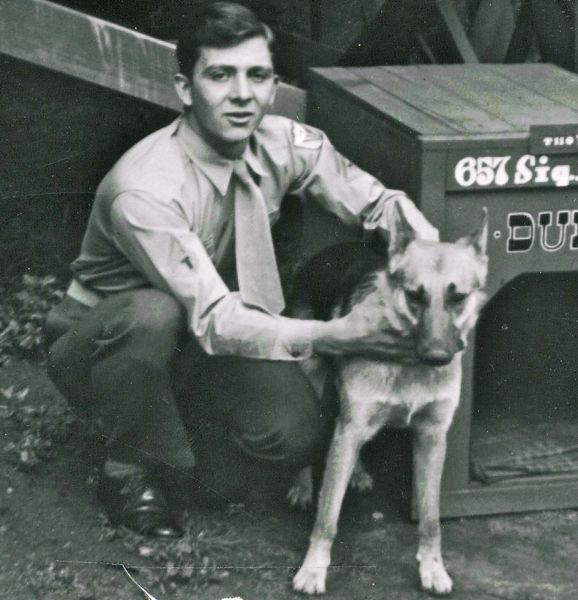
John A. Giannotta

He is survived by his daughters Sharon Howard (Rick), Sandy Jacopetti, Susan Davis (Phil), and Shelley Giannotta, sisters Dorothy Kosowski and Michele Jade Harvey, nine grandchildren and 18 great-grandchildren.

“Fast Talking” John, as he was affectionately known by friends and business associates, was one of America’s “Greatest Generation” serving with the 99th Infantry Division during the Battle of the Bulge and in Germany and Belgium. Returning from the war, John worked as a carpenter during the day and by night pursued his associate’s degree in the carpentry trade. He became a successful building contractor in Santa Clara County until 1968 when he relocated to the Lake Tahoe Basin. In Tahoe he built custom homes, as well as a dream home for his family in Lake Tahoe, Nevada.

He was a member of the Carson Valley Contractor’s Association for more than 30 years and had the position of president for four of those years.

John was an active member of the Elk’s Lodge for 40 years, leading and participating in numerous fundraisers and benevolent activities in support of the Lake Tahoe and Carson Valley communities. He valued the camaraderie, enduring friendships, and the brotherhood of his fellow Elks.

Over a span of 17 years, John and “his Helen” took pride in volunteering their time and energy making 500 trips from Carson City to the Reno veteran’s hospital to distribute donated books, magazines, flags, and toiletries to hospitalized veterans. In addition to his volunteer work, John’s favorite hobbies included golfing, gardening, collecting stamps and family photos, reading, and playing Yahtzee.

John had a lifelong passion and love for all animals. As a youth, he raised rabbits, chicken, and homing pigeons. Over the course of his life, John had a variety of dogs including his beloved German shepherd, Thor, numerous cats, Ricky the skunk, and assorted other animals.

John, larger than life, and having lived his life to the fullest, leaves behind a legacy of enduring love and friendship, honesty, hard work, and loyalty. With his huge heart, he saw the good in everyone and never met a stranger.

John was a wonderful and loving husband, father, and grandfather, beloved and cherished by all and will be greatly missed.

Internment ceremony with full military honors will be at the Veterans Cemetery, 14 Veterans Way, Fernley on March 30 at 2pm.

Those who wish to make a contribution in John’s name may do so to the Wounded Warrior Project, 4899 Belfort Road, Ste. 300,Jacksonville, FL 32256 or Wylie Animal Rescue Foundation, P.O. Box 5364, Incline Village, NV 89450.


Shriners looking for Tahoe kids who may need medical services

South Shore orthopedic physicians will screen children March 31 for possible acceptance into the medical programs offered by Shriners Hospital for Children Northern California.

The screening clinic will take place from 9am- noon at the Lake Tahoe Surgery Center, 212 Elks Point Road, Ste. 201, Round Hill.

All families who believe they may benefit from the expert care provided by Shriners Hospitals for Children are welcome to attend. Appointments are not necessary, and any child up to age 18 may be seen at a clinic. Screenings are free. A parent or legal guardian is required to complete paperwork at the clinic before being seen by the doctor.

The clinics are open to all children with orthopedic conditions, spinal cord injuries, burns, and scars from any cause. Club foot, scoliosis, absence of limbs, spina bifida, and orthopedic problems of cerebral palsy are among the many orthopedic conditions treated at the Shriners medical center in Sacramento.


Opinion: Firefighters appreciative of community’s support

To the community,

The annual Lake Valley Firefighters’ Ball is always gauged by the commitment and generosity of our community. This year was no different.

The 50th annual Lake Valley Firefighters’ Ball is the Lake Valley Volunteer Firefighters Association’s single fund-raising event of the year and this year was a great success.

This would not be possible without the support of this wonderful community by both the attendance and donations. We would like to thank all the individuals and businesses that donated and helped make this happen. Your support and generosity is overwhelming.

We would also like to take a moment to thank our grand prize donors. Thank you to Kirkwood, Sierra-at-Tahoe, Sierra Athletic Club, Pamela Francis – Century 21 at Tahoe Paradise, and general contractor Ray A. Fernsten for your very generous donations.

We look forward to our 51st annual Ball next year and hope to see you there.

“We come to your fire, you come to our ball.”

Thanks again,

Lake Valley Volunteer Firefighters Association


Golf tournament benefits South Shore high schools

The 25th annual Booster Club Golf Tournament is May 5-6 at Edgewood Tahoe in Stateline.

Edgewood donates the course so all funds raised benefit South Tahoe and Whittell high schools.

Entry fee is $125, which includes 18 holes of golf, golf cart and lunch. Or play both days for $225.

Each day is an individual tournament with a scramble format. Individuals, couples, and foursomes are welcome. Trophies will be awarded to the top the teams each day.

Registration and raffle ticket sales open at 9:30am, the tournament begins with a “shotgun” start at 11am. Lunch will be provided as golfers pass between the 9th and 10th holes.

To register or for questions, call Kevin Kjer at (775) 588.6354 or email KJKjer@aol.com.


Boys & Girls Club initiating drum corps for youths

Liz Broscoe, Eric Hellburg and John Shafer are teaming up to bring more drumming to Lake Tahoe Boys & Girls Club. These are three long-time professional drummers with a desire to make a difference by exposing kids to music rather than more technology.

Broscoe will direct South Lake Tahoe’s only marching drum corps — Boys and Girls Club Marching Beat Brigade. Beginning April 18, students in grades 8-12 will have the opportunity to be involved with this project. No experience is needed, just a strong desire to learn and participate. The drum corps will meet every Wednesday from 4-5pm at the Boys & Girls Club for an initial eight-week program.

Starting in April, Hellburg will be offering a drum set class on Friday afternoons. Shafer will be assisting in both new rhythmic endeavors.

Additionally, South Tahoe High School student Rose Campion, an accomplished musician in her own right, will be working with this team, engaging her fellow high school musicians to join the drum corps.

The project is being launched with seed money through the El Dorado Community Foundation/Joan Rochelle Tahoe fund to purchase four drums and essential accessories. To date, six additional marching band drums have been donated. All three professional musicians are volunteering their time to launch these projects.

To learn more about the Drum Corps, how to join, or donate to the project, go online or contact Karen Houser at khouser@bgclt.org. You can also support Broscoe in the woman’s drumming contest Hit Like a Girl 2012. Go online to vote for Liz Broscoe. If she wins, Broscoe will donate music equipment to programs at the Boys & Girls Club and LTCC from the $10,000 worth of prizes. Last day to vote is April 15.


Pilot to give talk about Angel Flight West

New York Times best-selling author and aviator Dale Brown talks about his life, career and avocations on April 5 at Sierra Nevada College in Incline Village.

Brown volunteers for Angel Flight West, a group that volunteer their time, skills, and aircraft to fly needy medical patients free of charge to receive medical treatment. He is also a mission pilot in the Civil Air Patrol, which performs search and rescue, disaster relief, humanitarian assistance, surveillance, and many other missions in support of the U.S. Air Force and other federal agencies.

He supports a number of organizations to promote law enforcement, education, literacy, and support for military veterans and their families.

For more information on the 7-9pm event, contact Shelia Leijon at (775) 832.1310 or shelia_leijon@ivgid.org.


Opinion: Tips to make last run of the day not be trip to the ER

By Warren Withers

Wintertime in Tahoe means skiing and snowboarding for visitors and locals. Few other places in the world have the abundance of snowsports opportunities that we enjoy in the Tahoe basin. With all the excitement and fun, many of us tend to sometimes forget a few simple safety measures that can help prevent the occasional, but largely avoidable injuries that can dampen our day.

Consider the following when you’re headed out to your favorite resort, so your après ski plans do not include a trip to the emergency department:

1) Wear a helmet. It is interesting to see the evolution of the use of the helmet in snowsports. It is such a simple device, but still used and thought of perhaps similarly to seatbelts in 1965: interesting, but optional. Like a seat belt, it does not protect against all forms of injury, but may change the degree of injury you endure if you do hit your head. A moderate head injury without a helmet may lead to a minor head injury if you’re wearing one, and so on. Remember, once you start wearing a helmet, you will never go back. They’re comfortable and keep you warm. Just like your seatbelt, you will begin to feel naked and unprotected without it.

2) Wrist guards. These simple and inexpensive devices can be purchased at any sports shop, and like the helmet they can make the difference between a normal fall and a trip to the emergency room. Wrist guards are especially useful for snowboarders who are just learning to ride.

3) Resort boundaries and backcountry access gates. This subject, too, has evolved considerably in recent years. Today, there are designated gates that you can go through at some resorts and access the “backcountry” or un-roomed terrain. This can be an amazing experience, but it is clearly an activity left to experts who know fully the risk involved. When you cross these gates it’s imperative that you know you are entering unpatrolled areas and if you are injured or become lost, rescues take longer than hoped for and are quite expensive.

4) Resort boundaries, no go areas. Resort staff members are experts at identifying when an area is safe and when it is not. When they mark an area off, usually with a rope or ribbon, it is for your safety, not because the skiing or snowboarding is so great there that they want to keep you away from it. This is a simple concept, but we see these boundaries ignored, often to the regret of those who do so.

5) Avalanches. This subject gets a lot of media attention when it happens and for good reason. If you intend to venture into the backcountry, you must first know what you are doing. Taking an avalanche course and wearing and knowing how to use a beacon is a must. These will reduce, but not eliminate your risk of injury. Avalanches inside resort boundaries are very unlikely, but just beyond that boundary line, the slopes of “steep and deep” snow call out to the powder hounds in all of us. Again, see No. 4 above for boundaries.

Keeping these safety measures in mind can help you have enjoyable and safe spring on the slopes!

Warren Withers is medical director of Emergency Services at Barton Memorial Hospital.


California lawmakers looking at rewriting food policies

By Torey Van Oot, Sacramento Bee

From artisanal breads and homemade jams to gluten-free goods, some of the year’s most buzzworthy food movements are sprouting under the Capitol dome.

State lawmakers are set to consider a handful of food policy proposals that could shape what goods Californians keep in their pantries and what they know about what’s on their plates.

California is no stranger to major food policy measures, including a ban on foie gras that is set to go into effect later this year. But heightened interest in food issues, including the farm-to-table movement and demands for increased disclosure, are driving more proposed changes.

“I think in recent years, there’s been an awareness that buying local is good for you and also good for the environment,” said Assemblyman Mike Gatto, who is carrying a bill that would lift restrictions on selling homemade prepared foods. “I think that as families have realized that, certainly the Legislature has heard from our constituents.”

The Los Angeles Democrat has introduced one of two bills that would allow the sale of “cottage food products,” such as mixed nuts, granolas, roasted coffee, baking mixes, baked goods and preserves made out of the home.

Read the whole story