North Shore voters being asked to keep TOT rate in place

North Lake Tahoe’s Measure F is up for renewal on the June 5 ballot. If approved, it would retain the 2 percent transient occupancy tax that funds public improvement projects and services, such as beaches, bike trails and parks.

The 2 percent tax applied to hotel rooms was first approved by voters in 1996 and subsequently renewed in 2002.

About $30 million from this TOT has been invested in the community, with another $160 million able to be generated in matching local, state and federal funding.

Projects benefiting from the additional hotel tax include: Squaw Valley Community Park, North Tahoe Regional Park, Commons Beach, Tahoe Vista Recreation Area, as well as bike trails in Tahoe City, Midway Bridge to Squaw Valley and along the West Shore.

TOT dollars have also been used for the North Lake Tahoe Express Airport Shuttle, winter and summer free Night Rider Shuttles, seasonal traffic management programs, improved public bus service and a welcome center at the Reno-Tahoe International Airport.

To pass, Measure F requires a 50 percent plus one vote. The measure would expire in 2022.

North Lake Tahoe has a 10 percent TOT, 2 percent of which is for public improvement projects and services. It’s just the 2 percent that is up for renewal. The remaining 8 percent is what is collected by Placer County and does not require voter approval.

— Lake Tahoe News staff report


Student union designed to tie STHS campus together

By Kathryn Reed

South Lake Tahoe is getting a conference center after all.

While it’s on the campus of South Tahoe High School, it is a joint-use facility that is partly funded with a grant South Lake Tahoe helped secure.

It’s like a mini-convention center – especially with all the high-tech features being built in. Drop down screens, smart boards, blackout privacy curtains, and Wi-Fi are included, plus dividers to make it one, two or three rooms. Maximum capacity will be about 150 people seated.

Workers are on schedule to complete the STHS student union by next school year. Photos/Kathryn Reed

With meeting rooms named Cascade, Angora and Fallen Leaf, it will be hard for people to not remember they are on the South Shore.

Natural light will flood the rooms as windows more than 30-feet high flank the south wall.

For now, while work by employees of SMC Contractors and their subs continues inside under shrink wrap, the views are only of the interior work that needs to be finished. When it’s done, the outside view will be of the courtyard area in the center of campus.

The white covering will come off in a couple months, but still, scaffolding will remain as work wraps up. The doors will open for the 2012-13 school year.

Principal Ivone Larson envisions the building, along with the other offerings the school can provide, to be attractive to outside organizations. Of course there will be a rental fee, though the city may use the meeting space for free.

With renovation of the gym complete, another source of income could be  tournaments, with the idea cash would flow into town via hotel rooms and restaurants being full.

The building under construction has real plumbing – which means flush toilets. Those will be accessible to teams using the tennis courts and softball field. Athletes will no longer be relegated to using porta-potties.

A door will limit people just to the restrooms so they can’t meander through the whole building when they aren’t supposed to be in it.

This is the fourth new building at South Tahoe High School – all from the $64.5 million Measure G bond that was approved by voters in 2008. Matching funds have increased the total amount closer to $100 million – all for facilities that will be built throughout Lake Tahoe Unified, with the bulk being at the high school.

The gym and boiler room have been overhauled as well. The sports medicine building should break ground this summer. It will be situated behind the Gold Gym and to the right of the student union.

“We’re calling it a student union because it has the feel of a college,” Larson said while giving a tour of the building Wednesday.

Student clubs are expected to use the rooms regularly. Cheerleaders are excited about the high ceilings so they can do all of their jumps.

Besides the rooms, the biggest area will be for eating. This building will literally unify the student body. Finally, everyone will be able to eat indoors at the same time in one place.

For now, there is no talk of making STHS a closed campus – just to freshmen, as is the rule today.

Larson believes with the number of students receiving a free or reduced lunch growing (it’s about 50 percent at STHS) that more people will keep staying on campus.

Shelley Giannotta, food services director, hopes they’ll be staying because of the expanded food choices she anticipates being able to deliver.

For those who want to be connected even during the lunch break, that will be possible. Much like airports, power outlets are being built in so people can multitask. With students using netbooks for much of the their school work, not to mention needing batteries charged for other devices, plugs will be built into some of the pillars where bar height tables and chairs will go in.

Specifics on the furniture are still being worked out. Steve Morales, who is in charge of district facilities, expects the school board to have a furniture bid to review at a meeting in May.

At the March 27 board meeting, is was unanimously agreed to go forward with the final Measure G bond sales of $16.7 million to allow construction to meet the time lines that are in place. Also at the meeting, the board signed off on the completion of the gym renovation.

——

Here is a video from a group of educators who were in town from Sacramento last week to see what all is going on in LTUSD.

ngg_shortcode_0_placeholder (Click on photos to enlarge.)


Eating out helps Lake Tahoe animals

Twenty percent of the proceeds from regular menu items at Coyote Grill will be donated to the Lake Tahoe Humane Society and S.P.C.A. to help California and Nevada animals in need.

The event is March 29 from 5-10pm.

Coyote Grill is next to Safeway in Round Hill.


Opinion: America’s moral crisis lies in boardrooms, not bedrooms

By Robert Reich

Republicans have morality upside down. Santorum, Gingrich, and even Romney are barnstorming across the land condemning gay marriage, abortion, out-of-wedlock births, access to contraception, and the wall separating church and state.

But America’s problem isn’t a breakdown in private morality. It’s a breakdown in public morality. What Americans do in their bedrooms is their own business. What corporate executives and Wall Street financiers do in boardrooms and executive suites affects all of us.

Robert Reich

There is moral rot in America but it’s not found in the private behavior of ordinary people. It’s located in the public behavior of people who control our economy and are turning our democracy into a financial slush pump. It’s found in Wall Street fraud, exorbitant pay of top executives, financial conflicts of interest, insider trading, and the outright bribery of public officials through unlimited campaign “donations.”

Political scientist James Q. Wilson, who died last week, noted that a broken window left unattended signals that no one cares if windows are broken. It becomes an ongoing invitation to throw more stones at more windows, ultimately undermining moral standards of the entire community

The windows Wall Street broke in the years leading up to the crash of 2008 remain broken. Despite financial fraud on a scale not seen in this country for more than eighty years, not a single executive of a major Wall Street bank has been charged with a crime.

Since 2009, the Securities and Exchange Commission has filed 25 cases against mortgage originators and securities firms. A few are still being litigated but most have been settled. They’ve generated almost $2 billion in penalties and other forms of monetary relief, according to the Commission. But almost none of this money has come out of the pockets of CEOs or other company officials; it has come out of the companies — or, more accurately, their shareholders. Federal prosecutors are now signaling they won’t even bring charges in the brazen case of MF Global, which lost billions of dollars that were supposed to be kept safe.

Nor have any of the lawyers, accountants, auditors, or top executives of credit-rating agencies who aided and abetted Wall Street financiers been charged with doing anything wrong.

And the new Dodd-Frank law that was supposed to prevent this from happening again is now so riddled with loopholes, courtesy of Wall Street lobbyists, that it’s almost a sham. The Street prevented the Glass-Steagall Act from being resurrected, and successfully fought against limits on the size of the largest banks.

Windows started breaking years ago. Enron’s court-appointed trustee reported that bankers from Citigroup and JP Morgan Chase didn’t merely look the other way; they dreamed up and sold Enron financial schemes specifically designed to allow Enron to commit fraud. Arthur Andersen, Enron’s auditor, was convicted of obstructing justice by shredding Enron documents, yet most of the Andersen partners who aided and abetted Enron were never punished.

Americans are entitled to their own religious views about gay marriage, contraception, out-of-wedlock births, abortion, and God. We can be truly free only if we’re confident we can go about our private lives without being monitored or intruded upon by government, and can practice whatever faith (or lack of faith) we wish regardless of the religious beliefs of others. A society where one set of religious views is imposed on a large number of citizens who disagree with them is not a democracy. It’s a theocracy.

But abuses of public trust such as we’ve witnessed for years on the Street and in the executive suites of our largest corporations are not matters of private morality. They’re violations of public morality. They undermine the integrity of our economy and democracy. They’ve led millions of Americans to conclude the game is rigged.

Regressive Republicans have no problem hurling the epithets “shameful,” “disgraceful,” and “contemptible” at private moral decisions they disagree with. Rush Limbaugh calls a young woman a “slut” just for standing up for her beliefs about private morality.

Republicans have staked out the moral low ground. It’s time for Democrats and progressives to stake out the moral high ground, condemning the abuses of economic power and privilege that characterize this new Gilded Age – business deals that are technically legal but wrong because they exploit the trust that investors or employees have place in those businesses, pay packages that are ludicrously high compared with the pay of average workers, political donations so large as to breed cynicism about the ability of their recipients to represent the public as a whole.

An economy is built on a foundation of shared morality. Adam Smith never called himself an economist. The separate field of economics didn’t exist in the eighteenth century. He called himself a moral philosopher. And the book he was proudest of wasn’t “The Wealth of Nations,” but his “Theory of Moral Sentiments” – about the ties that bind people together into societies.

Twice before progressive have saved capitalism from its own excesses by appealing to public morality and common sense. First in the early 1900s, when the captains for American industry had monopolized the economy into giant trusts, American politics had sunk into a swamp of patronage and corruption, and many factory jobs were unsafe – entailing long hours of work at meager pay and often exploiting children. In response, we enacted antitrust, civil service reforms, and labor protections.

And then again in 1930s after the stock market collapsed and a large portion of American workforce was unemployed. Then we regulated banks and insured deposits, cleaned up stock market, and provided social insurance to the destitute.

It’s time once again to save capitalism from its own excesses — and to base a new era of reform on public morality and common sense.

Robert Reich is chancellor’s professor of public policy at UC Berkeley. He has served in three national administrations, most recently as secretary of Labor under President Bill Clinton. He has written 13 books.



EDSO employees to be promoted in official ceremony

El Dorado County Sheriff’s Office is having a promotional ceremony March 31 at 3pm.

Sheriff John D’Agostini has promoted Lts. Marc Adams and Randy Peshon to captain. This filled two vacant division commander positions.

Sgt. Tom Hoagland, Tim Becker, Jackie Noren, and Pete Van Arnum have been promoted to lieutenants.

Subsequently, deputies Daniel Bears, Jim Applegate, and Dan Johnson were promoted to the rank of sergeant.

The ceremony will be at the American Legion Hall, 4561 Greenstone Road, Placerville.


California lawmakers’ salaries highest in nation

By Jim Sanders, Sacramento Bee

Salaries for California lawmakers remain the nation’s highest despite years of budget crisis and a belt-tightening backlash that sparked legislative pay cuts three years ago.

For voters eager to target lawmakers as scapegoats for the state’s massive problems, California’s top ranking is sure to fuel debate this week over whether to cut deeper into legislative paychecks.

State-by-state pay statistics will be weighed Friday by the state’s California Citizens Compensation Commission, a seven-member panel appointed by the governor to set pay for legislators and other statewide elected officials.

Salaries don’t tell the whole story. California’s $95,291- per-year legislative pay does not reflect other cuts made to compensation in the past three years, including stripping lawmakers of cars and slashing their payments for Sacramento living expenses from $173 to $142 a day.

California clearly leads the nation in legislative base pay, followed by Pennsylvania, $82,026, and New York, $79,500.

Read the whole story


Sports academy to be offered in S. Tahoe starting this fall

By Kathryn Reed

In a 4-0 decision, the Lake Tahoe Unified School District board voted to launch the South Lake Tahoe Mountain Sports Academy.

Board member Judy Cefalu was recused because her son, Chris Cefalu, is one of the owners of Tahoe Sports & Entertainment. TSE will bring the hockey and figure skating components to the academy.

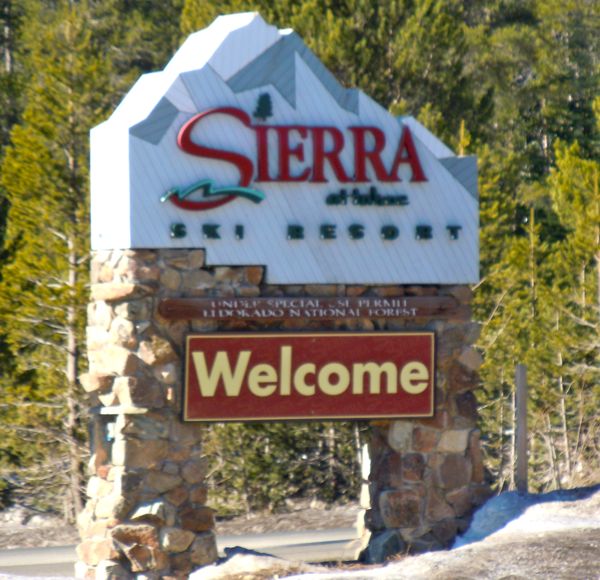
Sierra-at-Tahoe will be the mountain where skiers and snowboarders will train.

While all the particulars have not been worked out, the plan is for the academy to be running at the start of the school year in the fall.

“When we first went to the city, education was a component of it,” Chris Cefalu told the board. His company took over operation of the South Lake Tahoe Ice Arena last summer with the idea of increasing opportunities on the ice.

He envisions a handful of people being involved the first year, growing to maybe 10 in year two, and possibly having enough youths to field a team in year three. These would be traveling teams. The hockey season runs August-January.

Amy Jackson, who has a background in competitive figure skating, will be the counselor for the students. She works at Mount Tallac High.

“I do understand the mentality of competitive athletes. They do need flexibility from teachers and support staff,” Jackson told the board during the March 27 meeting.

Academic components would be structured to fit the schedule of the respective sports involved.

Board member Sue Novasel during the study session before the meeting and during comments before the vote was taken kept bringing up concerns about possible NIAA issues and wanting Heavenly Mountain Resort – where she skis – to be involved.

Employees from Heavenly Resort and Heavenly Foundation were in the audience Tuesday night. It was a packed room for the study session, with about two dozen people.

As for the high school sports issue, the academy is about training high caliber athletes. While some in the academy may ride for South Tahoe High, the academy is not about the high school ski team, plus there are no high school hockey teams in the NIAA.

Maddie Bowman, a South Tahoe High senior who took silver in the superpipe at this year’s Winter X Games and is second overall in the Dew Tour rankings, told the board, “I think this is a good idea.” She said an academy would help student-athletes be more successful.

Educators believe the academy could grow to include other sports and involve all grade levels.


Raley’s takes tough line with union workers

By Dale Kasler, Sacramento Bee

Raley’s is ramping up the pressure on its workers to swallow contract savings, taking steps that could provoke the first strike in the supermarket chain’s 77-year history.

Fed up with months of fruitless labor negotiations, Raley’s refused late Friday to extend the contract with a Bay Area unit of the United Food and Commercial Workers.

The move doesn’t necessarily translate into a strike. Workers will continue to be paid under the terms of the old contract, a situation that could continue indefinitely.

In fact, negotiations will be held almost every day this week, and Raley’s expressed optimism Monday that labor peace is possible.

“I believe we can reach an agreement by the end of this week,” said Chief Executive Michael Teel in a memo to employees.

But Teel said “we are entering the most critical week for negotiations to date.” His decision not to extend the contract with San Jose’s UFCW Local 5 contract has escalated the tension between the West Sacramento grocer and its workers.

Local 5 remains willing to negotiate, but Raley’s move leaves it “no choice but to prepare for a labor dispute,” said local President Ron Lind in a written statement.

The absence of a contract affects 1,700 members of Local 5, mostly workers at Raley’s Nob Hill Foods subsidiary.

That could spread. UFCW 8-Golden State, covering Sacramento and the Central Valley, pledged to stand with the Bay Area unit and not accept a contract extension unless Raley’s backs off. Local 8’s Raley’s contract expires Friday night at midnight. (The contract at Raley’s Bel Air subsidiary runs out May 29.)

Read the whole story


Friends of Hope Valley Benefit

Join Friends of Hope Valley for a fun filled day pitching in to restore Hope Valley’s unique and beautiful habitat. Important jobs include planting willows to restore the banks of the West Fork Carson River.

Cap off the day with the Back 40 Band, the Ten Dollar Pony Duo and a barbecue fundraiser at Sorensen’s.

Date: June 10, 1–5pm

Cost: $10/person (BBQ extra). All proceeds to be matched by Sorensen’s to benefit the Friends of Hope Valley.


Birding Under Sierra Skies

Discover dabblers, divers, and other feathered friends on an early morning walk with Jim Woods, local birder and member of the Lahontan Audubon Society.

See what species are coming and going during the annual spring migration, and what birds will stick around all year. In May, the males will be singing their territorial and nesting songs and will be filling the forest with song. In August, identify the birds in changing plumage from breeding to winter feather and from fledgling to adult as they prepare for the upcoming winter migration. The trips will be along the Carson River and surrounding lands.

The dates are May 26 and Aug. 4, both from 8-11am, and starting at Sorensen’s Resort in Hope Valley.

More information is online.