Opinion: Dealing with steroid fatigue syndrome

By Phil Taylor, Sports Illustrated

For years my buddy Russ has been advocating an all-steroids Olympics—no substances off limits, no lab-coat police, may the best chemist win. Let the athletes eat, drink or inject anything that will make them run faster, jump higher or grow stronger. Allow them to rub testosterone gel all over themselves like sunscreen or binge on HGH if they prefer. Imagine the results if we allowed athletes to soup up their bodies like ’68 Mustangs and see what those babies could do. Sprinters would finish the 100 meters so quickly, it would feel as if your eyes were on fast-forward. High jumpers would have longer hang times than a 60-yard punt. Weightlifters would clean-and-jerk midsized sedans.

To me, the idea of allowing athletes to freely use performance-enhancing drugs borders on absurdity. I don’t want to see competitions decided according to which athlete is most willing to take chemical risks with his or her body. But my resolve weakens with each convoluted case of suspected PED use. Maybe we really should turn athletes loose in all sports. That would at least eliminate the tedious, drawn-out investigations and prosecutions of suspected drug cheats that all too often come to no definitive conclusion—like the case of Ryan Braun, the Brewers’ slugger whose 50-game suspension for testing positive for synthetic testosterone was overturned by arbitrator Shyam Das last week. Braun triumphantly declared that his innocence had been proved, but of course that’s not true. In these high-profile steroid cases little is ever really proved.

Braun argued that the test was invalid because the sample wasn’t shipped to the lab the day it was collected. But he has not disputed that the sample tested positive, nor has he offered a plausible explanation for why it showed a testosterone ratio more than 20 times higher than normal. (At his press conference last Friday, he referred vaguely to possible tampering with the sample, but in making his case to the arbitrator, he reportedly never suggested that as the cause, and there is no evidence that the sample was doctored.)

The most logical explanation for the positive result is that Braun did, intentionally or not, use testosterone from an outside source. The suspicion lingers that he took a performance-enhancing drug but escaped on a technicality, leaving him in that familiar PED limbo along with other well-known athletes who have been acquitted but not exonerated, or convicted of only a tangential offense, or freed from investigation but forever suspected.

Is it worth the time and money spent on these probes when so many come to such an unsatisfactory conclusion that we can’t remember how—or even if—they ended? Quick: Where does Roger Clemens’s prosecution stand? If you answered correctly (without going to Google) that his first court action ended in a mistrial last July and the retrial is set for April 17, you get a free copy of the thousands of pages of legal documents his case has generated in the four years since he was accused of lying under oath about steroid use. The storm of controversy that once surrounded Barry Bonds tapered off to a light drizzle by the time he was convicted of one count of obstruction of justice in December, five years after he was indicted. Bonds was sentenced to 30 days of home confinement—not very harsh when your home is a Beverly Hills mansion.
Read the whole story


Natural beauty of Sedona radiates with wonder

By Kathryn Reed

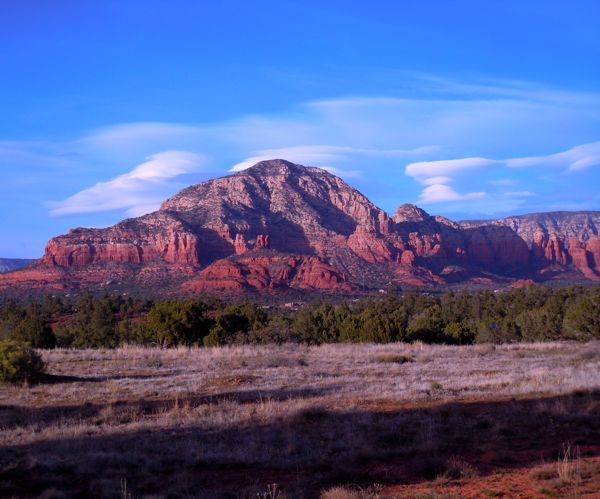
SEDONA, Ariz. – It’s as though the rocks are evolving before my eyes. Shadows come and go. The sun is setting. A little more vibrant red; now a little more pink. Sky changing colors.

Mesmerizing. Breathtaking. Captivating.

Sedona, while well known for its vortexes – or spiraling energy, is a feast for the eyes. Everywhere one looks red rock creations sprout from the landscape. It doesn’t matter if one feels the energy; taking in the beauty is a moving experience.

Exquisite rock formations are everywhere in Sedona, including outside the condo where we stayed. Photos/Kathryn Reed

While much of the area is in the Coconino National Forest, it’s hard to think of it as a forest coming from Lake Tahoe. But it is an outdoor paradise.

We spend the first of three nights watching the sunset from the airport. Throngs of people are there before we arrive. The temperature is dropping as the sun fades behind the mountains.

Mother Nature’s show deserves a standing ovation.

We are here for a few days after being at spring training and in Scottsdale the first part of this mid-March week. My sister, Pam, has secured us a condo at her Sedona Summit timeshare. This is her first time Sedona, while mom had stayed in this Arizona town before, and Sue and I had made day trips in the past.

Nothing is on our agenda except to hang out and look at red rocks. A little pool time, reading, relaxing, mixed with those rocks fill our days.

One morning we head to the old mining town of Jerome. At one time it was the fourth largest town in Arizona – that was in 1899. By 1929, the population was 15,000. Today a few hundred people call it home.

Copper is the main mineral pulled from the hillside land. A scar remains on one side of the mountain. At the Jerome State Historic Park it’s possible to look down a shaft that is about 1,900 feet deep. The Audrey Shaft is lined with concrete for fire protection.

Once a mansion, the focal point of the state park is now a museum below the main part of town.

Jerome is built into a hillside. Streets are narrow. A tiny visitor center on Hull Avenue is a good first stop for getting a map that designates historic buildings and businesses.

We take a different route back to Sedona that leads us past some of the more recognizable rock formations like Bell Rock, Courthouse Butte, Cathedral Rock and Chapel of the Holy Cross.

It’s easy to make this a driving a tour, hiking expedition, or leisurely stroll. The church that in 1956 was built into the rocks is worth getting out to explore – no matter your beliefs.

And make sure your battery is charged. Kodak moments are everywhere.

One morning Sue and I venture off on the Centennial and Girdner trails that are walking distance from the condo.

Sedona turned 100 in 2002. It got its name from the first postmaster’s wife – Sedona was her first name.

Along the red dirt trail are magnificent vistas, with rock outcroppings in the distance. More immediate are blooming cacti, gangly pines and shrub brush. We share the trail with a mountain biker and hikers. The hikers tell us if we descend into the canyon, come out the wash, and hit a road we will make it back to the condo in several hours.

We opt to turn around. The pool is calling.

Another afternoon is spent meandering through the shops at Tlaquepaque. Artwork of all kinds fills the adobe buildings.

Nearby is Ken’s Creekside Café, where we have an early dinner. While no water is running in the creek, the view is still peaceful and relaxing. We all enjoy our meals and fun cocktails.

Sedona is one of those places that is good for all ages. It’s about a two-hour drive from Phoenix. Spend a day, or spend several, there is plenty to do.

ngg_shortcode_0_placeholder (Click on photos to enlarge.)


Raley’s to open books for outside analysis

By Dale Kasler, Sacramento Bee

Raley’s has agreed to open its books to an outside auditor in an effort to convince its labor union that it needs contract concessions.

The United Food and Commercial Workers said it insisted on the “independent review” as contract talks stretch into their eighth month. UFCW Locals 8 and 5, covering thousands of workers in Northern California, agreed early today to extend their contract with Raley’s to next Friday.

Raley’s consented to the outside financial review several hours after Save Mart made the same agreement, according to the UFCW. Both grocery chains are privately held and normally don’t share any financial information. The third chain negotiating with the UFCW in Northern California, Safeway, is a public company.

Read the whole story


California may go its own way with health care rules

By David Siders and Kevin Yamamura, Sacramento Bee

Gov. Jerry Brown’s administration vowed Thursday to continue pushing forward elements of the federal health care overhaul in California, even if the U.S. Supreme Court strikes it down.

If the court does rule the federal law unconstitutional, state Health and Human Services Secretary Diana Dooley said California should at least consider enacting its own universal health care legislation, including requiring every Californian to buy insurance.

“I think that we should be committed to making this system more rational than it is today, and improving the health of the people of California,” Dooley said in an interview. “If we ask the insurance plans to take everybody and insure everybody with no screens or pre-existing conditions, then we have to have everybody buying some level of health insurance to meet their responsibility to the system.”

She said whether the administration sponsors such legislation would depend on “where we are and what the conditions are at that particular time.”

Dooley’s remarks came a day after the Supreme Court finished three days of oral arguments over President Barack Obama’s signature health care law.

At issue is whether Congress can require people to buy insurance and, separately, whether lawmakers overstepped in pressuring states to expand Medicaid coverage.

In 2010, California, amid urging from the White House, became the first state in the nation to enact legislation establishing a public health insurance marketplace to implement the Affordable Care Act.

Read the whole story


Indian tribe allowed to kill bald eagles for religious reasons

By Tristan Ahtone, NPR

Most Americans have little difficulty practicing their religion. But for Native Americans, performing traditional religious ceremonies isn’t always so simple. Many rites often involve heavy regulation by federal authorities — especially when it comes to using sacred items like eagle feathers.

In a first for the U.S. Fish and Wildlife Service, the Northern Arapaho tribe in Wyoming has received a permit to hunt and kill bald eagles for religious purposes. The move comes in the wake of a lawsuit filed last year, alleging that the refusal of such permits violated tribal members’ religious freedom.

The agency has issued similar permits for golden eagles in the past, but the Northern Arapaho permit is the first granted for the iconic bald eagle.

Crawford White, an Arapaho ceremonial elder from the Wind River Reservation in Wyoming, says his tribe uses eagle-tail fans and eagle-bone whistles in several tribal ceremonies and settings, including sun dances, powwows and sweat lodges.

Some of these ceremonies may sound familiar to non-Native Americans; others may seem more exotic. But either way, for many Native Americans to fully participate in religious ceremonies, they need eagle parts. To get those parts, they can go to the black market, use items passed between friends and family, or put in an order to the National Eagle Repository in Denver.

Read the whole story


Auditions at LTCC for ‘The Rocky Horror Show’

Lake Tahoe Community College is having auditions for the live stage version of “The Rocky Horror Show,” the hit cult classic by Richard O’Brien.

Brad, Janet, Frank ‘N’ Furter and the whole gang hit the stage in the ultra-campy classic that unfolds on a dark and stormy night where an uptight couple seeks refuge at the castle of a mad scientist just as he unveils his latest creation.

Auditions are April 3 at 7pm in the Duke Theatre. Check the LTCC theater department callboard or website for audition requirements. Everyone will be asked to sing from the show. PDFs of the sheet music and MP3 recordings of the songs to learn for auditions may be found online.

Scripts are available on reserve in the LTCC library and audition sides are available at the LTCC theater department callboard.

For further information, call (530) 541.5660, ext. 240.


Mancuso takes gold in giant slalom for 15th national title

By USSA

WINTER PARK, Colo. — Olympic gold medalist Julia Mancuso of Squaw Valley powered through exhaustively soft snow at the Nature Valley U.S. Alpine Championships to take giant slalom gold and up her own national title record to 15.

Nineteen-year-old Norwegian Kristine Gjelsten Haugen was second ahead of 17-year-old Mikaela Shiffrin of Vail.

It was Mancuso’s fourth straight giant slalom title and sixth of her career. She also has four super G titles, four combined titles and one downhill title.

World Cup overall champion Lindsey Vonn of Vail started the first run, but made an early exit after getting late into a hair pin turn.

Temperatures soared into the mid-60s creating soft snow conditions for the final run.


Volunteer-driven adaptive ski program gets kids on the snow

By Jill Oberly, Reno Gazette-Journal

Drive by Sky Tavern on a weekday afternoon and the hill is quiet, the parking lot empty.

But stop in on a Saturday or Sunday and the mountain is buzzing. A handful of chairlifts and even more trails are filled with some 2,500 kids learning how to ski under the watchful eyes of 350 volunteers.

Since 1948, the nonprofit has provided ski and snowboard instruction to children of the Truckee Meadows regardless of financial limitation. In 1995, it started giving snow sports instruction to those with cognitive and physical disabilities through the Sky Tavern Adaptive Program.

The adaptive program is unique because of the amount of time its participants get to spend on the snow. During the course of a season, students are on the hill eight weekend days, with two hours of instruction each day. Each week, a single child is paired with an instructor, and often that instructor is the same person. The frequency and consistency are keys to the program’s success.

“A lot of the programs are, show up once and do it once, but this is really something that you can do as a part of your life, not just a one-day thing,” said mom Emily Houston. “My son gets to go for eight weeks, every weekend. It is super affordable, and the guys that do it are so incredibly knowledgeable, talented and generous.”

Houston’s son Ben has cerebral palsy and is in his third year with the program.

In a typical season, both the adaptive and junior ski programs will start the second weekend in January. But this year, a lack of early season snow pushed the adaptive program start back to the weekend of Feb. 25, where it started at Mt. Rose-Ski Tahoe. Mother Nature finally cooperated, and the program operated at Sky Tavern the following weekend. This year’s closing date is not firm. Organizers will wait to see how many kids stick around for spring break, April 7-15, before making the call.

Read the whole story


Washoe County puts traffic accidents online

Washoe County Sheriff’s Office has streamlined the process of obtaining traffic accident reports by partnering with the Carfax Police Crash Assistance Program.

People are now able to obtain a copy of their traffic accident reports online. The reports are stored electronically in a highly secure database and available for purchase through Carfax.

Individuals involved in a traffic accident are given a unique case number by the deputy at the scene. This case number, along with the date of the accident will be needed to access the report, which is generally available within three to five days of the accident. Carfax charges a $5 fee to provide access to residents so they can view, save, print and email their accident report.

The other change at the department is the discontinuation of front desk service on the weekends due to budget cuts.


Opinion: N.J. non-smoking casino worth paying attention to

Publisher’s note: This editorial is from the March 28, 2012, Reno Gazette-Journal.

When the $2.4 billion Revel casino resort opens in Atlantic City on Monday, it will include a spa, 14 restaurants, 10 pools and a theater that seats 5,050 people.

Nevada casinos have spas, restaurants, pools and theaters, of course, many of them just as nice as those in the Revel.

But Revel will have one feature that no major Nevada casino can match: It will be totally nonsmoking, the first in New Jersey and one of the few anywhere in the U.S.

There’s no doubt that it’s a gamble for a resort that a couple of years ago appeared unlikely to be completed. (It took state tax incentives to get the job finished.) The few times Nevada casinos have experimented with a no-smoking policy, they’ve failed, and casino owners here have long argued that gambling and smoking are inseparable.

If Revel is successful, however, it could mark the beginning of a welcome revolution in gaming. Nevada casino owners should watch it closely.

Read the whole story