TRPA ready to engage public in Regional Plan update

The Tahoe Regional Planning Agency has scheduled a series of public meetings and workshops to gather input on the Regional Plan update draft and environmental documents being released later this month.

The plan update includes five draft documents which will be released at TRPA’s Governing Board meetings on April 25 at The Chateau in Incline Village and April 26. The draft documents include the updated plan and corresponding environmental impact statement along with TRPA’s code of ordinances documents, and the Regional Transportation Plan and related environmental impact statement. The 2011 Threshold Evaluation Report, Lake Tahoe’s environmental report card, is also being released at this time.

At the April meeting the board will decide on the length of time for public comment on the draft environmental impact statement — 60, 75, or 90 days.

The public meeting and workshop are as follows:

April 25, 9am: TRPA Governing Board meeting, The Chateau, 955 Fairway Blvd., Incline Village.

April 26, 9:30am: TRPA Governing Board meeting, TRPA office, 128 Market St., Stateline, NV.

May 21, 5-8pm: Public workshops on the Regional Transportation Plan and Regional Plan, The Chateau, 955 Fairway Blvd., Incline Village.

May 22, 5-8pm: Public workshops on the Regional Transportation Plan and Regional Plan, TRPA office, 128 Market St., Stateline.

May 23, 9:30am: TRPA Governing Board meeting public hearings, North Tahoe Events Center, 8318 North Lake Blvd., Kings Beach.

May 24, 9:30am: TRPA Governing Board meeting public hearings, TRPA office, 128 Market St., Stateline.

Members of the public can also send their comments on the Lake Tahoe Regional Plan Update to regionalplancomments@trpa.org or on the Regional Transportation Plan to mobility2035comments@trpa.org.

For additional information, call Kristi Boosman at (775) 589.5230 or send an email to kboosman@trpa.org.


LTUSD looking for kindergartners

Lake Tahoe Unified School District will be conducting the kindergarten “round-up” for the 2012-13 school year from April 30 through May 11.

Children must be 5 on or before Nov. 1.

For transitional kindergarten, children must turn 5 after Nov. 1 and before Dec. 2.

California Law requires:

1. Child’s birth certificate;

2. Proof of immunizations, which includes the Varicella (chicken pox), hepatitis B and for most children – the last booster shot;

3.Health examination upon entry to school;

4. Oral health examination upon entry to school;

5. Proof of California residency.

Call your neighborhood school for an appointment to preregister:

Bijou Community School (530) 543.2337

Sierra House Elementary (530) 543.2327

Tahoe Valley Elementary (530) 543.2350

Environmental Science Magnet School (530) 543.2371.


Money from oil drilling pays for forest improvements

Money paid to the federal government by energy companies drilling for oil and gas on the Outer Continental Shelf is helping Lake Tahoe area entities.

It was announced April 6 the national forest system received $41.6 million from the Land and Water Conservation Fund.

Regionally the money will go to:

• Eldorado Meadows, Eldorado National Forest: The $1.5 million will be used to leverage non-federal funds to consolidate a checkerboard pattern of land ownership in the Sierra Nevada.

• Sierra Nevada Inholdings, Tahoe and Eldorado National Forests: The $2 million leverages a large land donation to purchase areas threatened by development. Purchase will preserve an ancient petroglyph and conserve meadows, wetlands and streamside areas at the headwaters of the American and Yuba rivers.

• Pacific Crest National Scenic Trail, multiple national forests: California, Oregon and Washington will collectively receive $1 million to protect key sections of the Pacific Crest Trail, stretching from Mexico to Canada, as well as migration corridors for wolves, grizzly bears, elk, deer, coyote and moose.

 — Lake Tahoe News staff report


Vonn gives girls advice about fitness

By Kyle Wagner, Denver Post

Olympic gold medalist and World Cup alpine ski champion Lindsey Vonn said she thinks it’s important for young girls to have “general strength” and be healthy overall, but when it comes to working out and weight-training, moderation is crucial and hard-core weightlifting is unnecessary.

“Push-ups, sit-ups, body-weight squats,” Vonn said, “when they want to and they’re ready.”

Vonn was back home in Vail last weekend to get an MRI on her knee to assess whether she’ll need surgery and to meet with a few of this past season’s participants in the Ski Girls Rock program at Vail Resort that Vonn inspired and designed.

“I love kids,” she said. “They’ve got so much energy and potential.”

Vonn said she wanted to be involved in a program like Ski Girls Rock — which offers ski and snowboard lessons to girls ages 5-15 in groups of no more than four per instructor, with a focus on creating opportunities to bond, build confidence and develop teamwork and social skills — because she thinks that having good role models makes a difference.

One of her idols was fellow World Cup alpine ski racer and Olympic gold medalist Picabo Street, who also was in Vail to help welcome Vonn back.

Read the whole story


Artist Thomas Kinkade dead at age 54

By Mike Rosenberg, San Jose Mercury News

Thomas Kinkade, the “Painter of Light” and one of the most popular artists in America, died suddenly Friday at his Los Gatos home. He was 54.

His family said in a statement that his death appeared to be from natural causes.

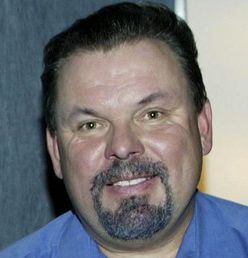
Thomas Kinkade

“Thom provided a wonderful life for his family,” his wife, Nanette, said in a statement. “We are shocked and saddened by his death.”

His paintings are hanging in an estimated one of every 20 homes in the United States. Fans cite the warm, familiar feeling of his mass-produced works of art, while it has become fashionable for art critics to dismiss his pieces as tacky. In any event, his prints of idyllic cottages and bucolic garden gates helped establish a brand — famed for their painted highlights — not commonly seen in the art world.

“I’m a warrior for light,” Kinkade told the Mercury News in 2002, alluding not just to his technical skill at creating light on canvas but to the medieval practice of using light to symbolize the divine. “With whatever talent and resources I have, I’m trying to bring light to penetrate the darkness many people feel.”

His Media Arts Group company surged to success, taking in $32 million per quarter from 4,500 dealers across the country 10 years ago, before it went private in the middle of the past decade. The cost of his paintings range from hundreds of dollars to more than $10,000.

The Placerville native, who also leaves behind a brother and sister, was known to dress up like Santa Claus on Christmas, ride a Harley-Davidson and go on painting trips around the world. He would visit studio executives but also got to know all the homeless people in Los Gatos. He read classic books but also enjoyed shooting and blowing up things on his ranch.

Read the whole story


What to do when a bird hits the window

By Cheryl and Tom Millham

What should you do when a bird hits a window? The first thing to do is to place the bird into a brown paper sack or shoe box and close the container securely.

Get the bird in its container to some place warm and dark. If you have a heating pad, place the container half on and half off of the heating pad and set the heat on low.

After two or three hours, take the bird (and the bag or box) into a bathroom in your house, shut the door and the toilet lid and open the bag or box.

If the bird flies out and around the room, catch it again, take it outside and release it. If it is past 7pm, keep it in the bag (or box) until morning.

If, in the morning, the bird still shows signs of not wanting to fly, hopping around, is holding its head at an angle, or its second eye lid is rapidly opening and closing, then call Lake Tahoe Wildlife Care (530.577.2273) because the bird needs additional help — and soon.

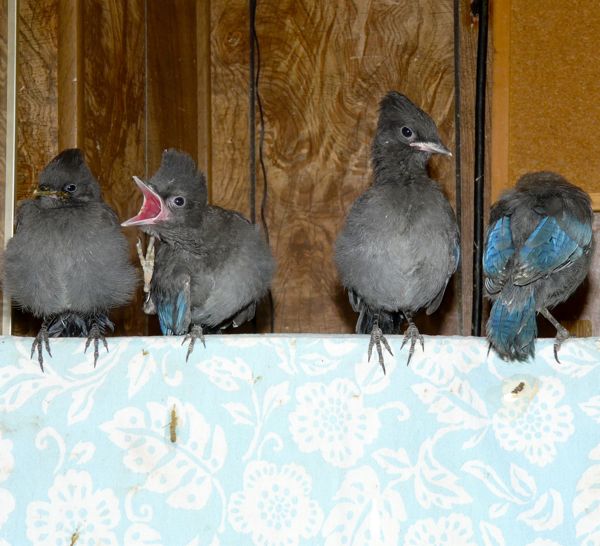
Orphaned baby steller's jays brought to LTWC and raised by volunteers. Photo/LTWC

A bird has a high normal temperature. Robins are 106 degrees, hummingbirds are 115 and most raptors (hawks, owls, falcons, etc.) are 104 to 108 degrees. If the bird is allowed to sit in the snow or on the ground for any amount of time, its body heat will drop rapidly.

Birds hide their illness and injuries well. They can appear normal, even with a slight concussion. If you have a window that birds hit regularly, put up a flag or a pretty swirly decoration that twists and turns in the wind.

As always, should you have any questions when dealing with wild birds and animals, please feel free to give us a call at Lake Tahoe Wildlife Care (530.577.CARE).

Cheryl and Tom Millham run Lake Tahoe Wildlife Care on the outskirts of South Lake Tahoe.


LTCC looking for poetry slam participants-spectators

Poetry slam champion Denise Jolly will emcee the April 26 poetry slam at Lake Tahoe Community College.

The event will begin at 8pm in the college’s Aspen Room. Jolly is a performer, writer, educator, and community builder, who has served as executive director of Seattle Youth Speaks, and co-host and facilitator of the Seattle Poetry Slam. Jolly was also the 2009 San Francisco Grand Slam Champion.

Denise Jolly

This is part of the college’s Writers’ Series.

The slam is free and open to students and the community. The cost to compete is $5 and competitors should prepare two poems. Competitors may sign up 15 minutes prior to the start of the event.

For more information, contact Suzanne Roberts at (530) 541.4660, ext. 708.


Placer, El Dorado two of the healthiest counties in California

By Cynthia Hubert, Sacramento Bee

In Northern California and across the nation, wealth seems to translate into good health, a comprehensive new report affirms.

But the factors behind that trend are complicated, public health experts said following the release of the report Tuesday by the University of Wisconsin and the Robert Wood Johnson Foundation.

The report ranks counties across the nation based on a wide variety of factors including premature death, smoking and drinking, and access to healthy foods and medical care. In California, Marin tops the list of healthiest counties, followed by Santa Clara, San Benito, Placer and San Mateo.

What do the counties have in common? A relatively high mean household income, according to U.S. census figures.

The five counties ranked as having the poorest health are relatively rural and poorer: Trinity, Del Norte, Siskiyou, Tehama and Lake. Sacramento County ranked 31st of 56 counties. (Two of California’s smallest counties were not included in the study because no data were available.)

Read the whole story


Sugar Pine Foundation having fundraiser

Sugar Pine Foundation is having a fund-raiser event at the Eagles Nest Lounge at the top of Kingsbury Grade on April 19 from 6-10pm.

This family event will feature a chili cook off, music, a raffle, and activities for the kids. Proceeds to benefit the Sugar Pine Foundation’s mission to save the sugar pine and other white pines from Eurasian white pine blister rust.

For more information, go online or call (650) 814.9565.


Living in Lake Tahoe increases risk of getting skin cancer

By Kathryn Reed

Cancer is still one of those words that people think should be whispered, or that it should not be said outside of a close-knit circle. Even worse, people think the diagnosis is an automatic death sentence.

Yes, cancer attacks various parts of the body and to different degrees. Yes, a lot more needs to be known about the causes, a lot more research done to find cures, more people should get the tests that would render an early diagnosis, and people could be living a life that perhaps would prevent them from getting certain cancers.

For now, the one thing that most people won’t be immune from is having cancer touch their lives – be it a personal diagnosis, that of a family member, a friend or a colleague.

One application of sunscreen is not enough.

I’ve experienced all of those.

My father is proof you don’t die from cancer. He had colon cancer; did the whole chemo thing. He lived for many years before he died two years ago this month from a heart attack.

My good friend has cancer. She had 18 chemo treatments. The last one may have been this week. We’ll know after a CAT scan later this month how the drugs she’s been infused with have attacked the cancer.

In the last six months I have had two basal cell skin cancer spots removed – one from my calf, one from my neck. (In the world of skin cancer, I have the good kind.)

Maybe my dad’s diet had something to do with his colon cancer. Maybe my friend’s choices in life had something to do with her diagnosis. I’m sure my fair skin exposed (overexposed?) to the sun brought on my growths.

But the problem with cancer is there isn’t always a definitive cause – not yet, any way.

I went to a lecture this week by Ronald Gemberling, a plastic surgeon affiliated with Barton Health, to hear what he had to say about skin cancer.

While he gave some information, much of the presentation was showing disturbing pictures of people with melanoma – the bad skin cancer. Perhaps it’s because he is a surgeon paid to work on those types of things that he thought it necessary to spend more time talking about “fixing” things than preventing them.

An alarming statistic to me was learning how prevalent skin cancer is. In 2011 in the United States there were more than 2 million skin cancer cases. All other cancers tallied 1.6 million cases.

Gemberling said with people living longer it contributes to doctors seeing more patients with skin cancer. It’s one of those diseases that creep up on you.

I’ve already damaged my skin from years of sun bathing, playing tennis without sun protection, not wearing a hat and believing I looked so much better with a tan than with my pasty-white Scandinavian skin.

Still, having chunks of my skin removed was a wake-up call. I now own a wide brimmed hat to protect my face and neck from sun. I’m putting sun block on my face more often. I’m working up to every day – that’s a memory issue.

Gemberling (who is not my doctor) said it’s important to choose a block and not merely a sunscreen. He also says 15 SPF is all that is needed.

That last part contradicts things I’ve read and what my sister, Pam Valentine, who is a nurse practitioner and for years specialized in oncology, tells me. She and the doctors she works with recommend SPF 50 “because you are getting better coverage and blocking more of the UV rays.”

SPF stands for sun protection factor.

The theory is the more protection, the better. And look for products that work on keeping out UVA and UVB rays. Most only repel the latter.

Gemberling and Valentine agree whatever level is used it needs to be reapplied and that there is no such thing as water- or sweat-proof sunscreens.

Living at higher elevations like Lake Tahoe has its own set of problems. Gemberling said for every 1,000 feet in elevation it increases the risk of getting skin cancer by 4 percent. With Tahoe being at 6,200 feet, just living here means a greater chance of getting skin cancer than if one resides in the Bay Area.

Gemberling said two in five people living in Lake Tahoe would get skin cancer. That’s 40 percent of the population.