Barton Health accepting grant applications

In an effort to impact the health of local residents, Barton Health is providing grant funding to programs and organizations that benefit those communities that are underserved and/or can have the greatest impact on the health of our community at large.

In this grant cycle consideration will be given to programs that address the community’s most pressing health needs such as obesity, nutrition and physical fitness, oral health, food and shelter, and mental health. In addition the following criteria will be considered when reviewing applications:

• The sustainability of the project should you not receive grant funding in future years.

• The long term effect i.e. “teach them to fish vs. giving them a fish” of the project/program.

• Is the program leveraging other funding sources vs. solely relying on the Barton Health Grant?

• Is the program innovative and does it inspire other community organizations to take on similar programs?

• Past applicants/recipients may apply but we will need to see a significant difference in the proposed program.

• The objective is to fund projects that serve a large subset of our community. Generally between five and 10 organizations receive grants.

Barton Health Grant proposals are reviewed by the Barton Community Advisory Committee and the final grant recipients will be approved by the Barton Health Board of Directors. Funding for Barton Health Grants is provided by Barton Health through a gift from the Barton Foundation. The total grant amount available for 2012 is $25,000.

Grant proposals will be accepted until June 29. Grantees will be notified in September and awards will be given at the Philanthropy Day Celebration, Nov. 2.

Grant proposals may be submitted online or in person at the Barton Foundation office at 2092 Lake Tahoe Blvd., Ste. 600, South Lake Tahoe.

For more information, call Kindle Craig at (530) 543.5612.


Lake Tahoe tourism officials strive to be relevant

By Kathryn Reed

OLYMPIC VILLAGE – Is Lake Tahoe relevant? Relevant to those planning a vacation, that is.

This is a question those in the tourism business must ask themselves – especially after attending the 37th annual Mountain Travel Symposium at the Resort at Squaw Creek.

“Now every community between here and the Bay Area has an event and a website. Back in the day Tahoe had minimal competition,” Carl Ribaudo said. The president of South Lake Tahoe-based Strategic Marketing Group spoke with Lake Tahoe News in between workshops April 18. “We have to change the look, not just for tourists, but for locals.”

Lake Tahoe wants to be relevant to people eager to travel. Photo/Kathryn Reed

He wants the South Shore to become more relevant for locals and tourists. Two ways to do that, he believes, are by improving the infrastructure and adding special events to the calendar.

It was reiterated at the various workshops that competition is getting greater among destinations. Nearly every town touts its attributes to would-be travelers.

Tahoe has a beautiful lake, but other locations have bigger ski mountains, more robust mountain biking, extravagant casinos, five-star lodging, shopping, reliable public transit and other amenities travelers are looking for.

The difference, though, is Tahoe – all shores combined – has the whole package. While marketing gurus work together on occasion, notably last year’s Tour de California bike race, usually it’s North v. South.

As Dan McHale, general manager of Inn by the Lake in South Lake Tahoe, said, he was glad to come to Squaw so he could drive around the lake, see what is going on, because it’s easy to feel isolated.

Those involved with Tahoe’s tourism have also become complacent in some ways. Some business owners believe Tahoe sells itself. Not so. Look at the vacancy signs — even on holiday weekends. People aren’t coming to Tahoe like they used to. Part of the reason is because they have other choices, part of the reason is because the area is stale.

Carol Chaplin, executive director of Lake Tahoe Visitors Authority, believes those speaking at the multi-day conference reaffirmed her agency’s beliefs.

“Those who have the passion for recreational activities-sports are those who will continue to spend on those experiences,” Chaplin said.

She added that the conference, which is touted as the largest gathering of mountain travel professionals in North America, “Confirmed also that our products-services need to be relevant. That would mean a hard look at those – including infrastructure – to understand if we have what it takes.”

While the conference is about mountain destinations, with a focus on winter activities – skiing and snowboarding in particular, it didn’t stop Tony Lyle, marketing chief of Aramark on the South Shore, from attending. His company runs Zephyr Cove Resorts, which includes snowmobiling, the lodge, stables, and the paddle-wheelers that launch from there and Ski Run Marina.

“Tahoe is unique. It has all these different opportunities,” Lyle said. “You can get on the lake, that is my pitch.”

It’s a mantra other ski towns cannot boast about.

He has been successful in telling that story to visitors this season. The boats have been full when the lift lines were non-existent.

Tourism is Lake Tahoe’s economy. It’s also big business throughout the world. That is why this area of California and Nevada is striving to keep a hold of the market it has and then increase it.

The World Travel & Tourism Council says the global tourism industry is twice the size of the automotive manufacturing sector and about one-third larger than chemicals manufacturing.

The council says U.S. travelers contribute $2 trillion to the world economy.

Andy Chapman, marketing guru for North Lake Tahoe Resort Association, smiles when talking about having more than 1,000 tourism professionals in his back yard for nearly a week.

“The best way to sell it is for them to witness it,” Chapman said moments before he participated in a panel discussion on social media.

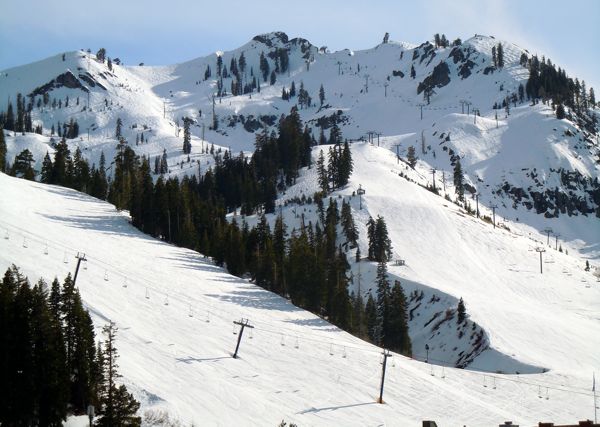
With Squaw Valley as a backdrop, snow glistening and finally covering all the runs, it is hard not to see Tahoe as an Olympic-caliber destination.

But driving the roads, looking at dilapidated infrastructure and knowing the Ritz-Carlton at Northstar is the only five-star lodging property in the area, proves Lake Tahoe doesn’t have it all.

As Chaplin said, the conference, “Confirmed also that our products-services need to be relevant. (It) confirmed that LTVA is getting there, but is not there.”


Truckee area control burns about to begin

The Truckee Ranger District will begin spring prescribed burning in the Truckee area as weather permits. The timing of burning will depend on favorable weather conditions. The prescribed burns will be implemented by fire management professionals.

In addition to weather factors, wildlife needs, soil conditions, tree survival, sensitive plants, and fire suppression activities are all considered in the timing of prescribed burns. A benefit of the prescribed burning will be reduced intensity of future wildland fires in the treated areas. These areas may also provide firefighters with safe locations to control wildfires in the future.

Some of these burns are located in more remote areas of the forest, while some are near communities. Within the Truckee Ranger District of the Tahoe National Forest, pile burning is planned along Alder Creek Road, at Tahoe Timber Trails, and along Highway 89 North. Underburning is planned near Klondike Flats, on Sawtooth Ridge, and near Stampede and Boca Reservoirs. Smoke may be visible in these areas.

Forest Service fuels management personnel work closely with the California Air Resources Board and the local air quality management districts to minimize smoke impacts to communities.

The Truckee Ranger District has a pre-burn notification email list. If you wish to be placed on the pre-burn notification list, or if you would like more information on the fuel reduction efforts on the Truckee Ranger District, contact Linda Ferguson at (530) 587.3558.


Tiny Nevada town faces 240%-410% rise in monthly water bills

By Frank X. Mullen, Reno Gazette-Journal

CHERRY CREEK — This mining town has welcomed booms and endured busts for 140 years, but many of the hamlet’s 31 residents said Cherry Creek might become a ghost town again if a proposed 410 percent increase in water rates is approved by state regulators this month.

“We’re about to get dried up and blown away,” said Marie Jardine, who said the mostly elderly residents of the town 60 miles north of Ely can’t afford anything close to the proposed increase.

The increase initially requested would boost flat-rate water bills from $20 to $102 per month. Using the utility’s reported annual water use for 2010, that’s a cost of about $10 per 1,000 gallons, as compared to the $3.85 per 1,000 gallons paid by Reno-Sparks customers under the Truckee Meadows Water Authority.

On Thursday, the water company filed a document stating that a $48 increase in the water rate to $68 per month would be acceptable. The Public Utility Commission is scheduled to consider the case April 25.

PUC officials were unable to cite any historical water rate requests rivaling the 410 percent initially proposed in Cherry Creek. If the full amount were granted, rate surveys indicate Cherry Creek residents would pay among the highest monthly water bills in the nation.

Read the whole story


Help for adults, teens in El Dorado County needing a job

The El Dorado County Connections One Stop Resource Center is hosting two informational meetings for unemployed, underemployed or dislocated workers and youth in El Dorado County regarding the availability of tuition, on-the-job training and other supportive services through the federal Workforce Investment Act.

The informational sessions are free and as follows:

• April 25 from 3-5pm for youth ages 17-21 at the El Dorado County Public Library located at 345 Fair Lane in Placerville.

• May 8 from 10am-noon for youth and adults at the El Dorado County Public Library located at 345 Fair Lane in Placerville.

Although not required, participants are encouraged to reserve a spot at one of the informational sessions. For more information, or to make a reservation, call (530) 642.4897.

The WIA program serves youth and adults. The youth program is open to people ages 17-21; a 17-year-old must be a senior in high school. Adults who participate in the program must be able to support themselves while in training.

Those who cannot attend one of the informational sessions may visit the Connections One Stop Resource Center and ask to speak to a WIA staff member. The Connections One Stop Resource Center is located at 3047 Briw Road in Placerville and at 3368 Lake Tahoe Blvd., No. 202, in South Lake Tahoe. The offices are open from 8am-5pm, Monday-Friday. Tahoe residents may call (530) 573.4335 for additional information.


CTA president to speak

California Teachers Association President Dean Vogel will be visiting Lake Tahoe Community College on May 7 for an evening of discussion about the current state of California’s public education system.

This is Vogel’s first official visit to the Lake Tahoe Basin since becoming CTA president. Teachers, students, school staff and administrators, and all community members interested in the health of public education are welcome to attend the 5-7pm event at the Duke Theatre.

Vogel will begin by sharing the educator’s perspective on the problems K-12 schools and community colleges face in California, and how CTA’s organizing plan can help to improve public education in our state. He’ll also discuss school funding and Gov. Jerry Brown’s tax initiatives on November’s ballot.

Following his remarks, Vogel will host a Q&A session and an informal reception. Light refreshments will be served.

CTA’s Higher Education Director Theresa Montaño will also be available to discuss issues within the California State University system and the community colleges.

This event is being hosted by LTCC’s Classified Employees Union and Faculty Association.


Entrance to national parks free for one week

Next week is National Park Week. From April 21-29, all 397 units of the park system will waive their entrance fees, from Acadia to Zion and everywhere in between.

To help celebrate National Park Week, mobile app developer Chimani has announced that it will give away 1 million of its 10 highly rated park guides for smartphones. Normally they cost between $4.99 and $9.99 each. If you’re considering a trip farther off the beaten path, their general guide for national parks is also free. All are available for iPhone and Android using the links on their website.

If you use an iPhone, NPCA has a free National Park Field Guides app.


Democrats delay California mortgage overhaul amid business opposition

By Jon Ortiz, Sacramento Bee

Amid raucous boos and hisses from a packed hearing room gallery, an Assembly committee on Monday suddenly pulled two mortgage reform bills sponsored by Attorney General Kamala Harris – just before she was supposed to testify.

The unexpected turn of events in the Democratic-controlled Banking and Finance Committee turned what Harris hoped would be a slam-dunk hearing into a signal that her “Homeowner Bill of Rights” is in trouble.

The banking and mortgage industries strongly oppose the bills, intended to clean up lending and foreclosure industry abuses. The California Chamber of Commerce has put them on its hit list of “job killer” legislation. “We’re concerned about these bills because we believe that they’ll stall economic development in the state,” said Cal Chamber lobbyist Marti Fisher.

The measures pulled by committee Chairman Mike Eng, D-Monterey Park, would apply to California lenders the terms of consumer protections recently accepted by five major banks to settle a high-profile lawsuit by Harris and other state attorneys general.

The $25 billion settlement reached several weeks ago with Ally Financial, Bank of America, Chase, Citi and Wells Fargo expires in three years. Harris’ bills would apply the stricter rules indefinitely to all mortgage companies doing business in California.

Read the whole story


Mountain travel experts hash out ways to lure consumers

By Kathryn Reed

OLYMPIC VALLEY – With skier visits down this season, lodging occupancy at 40 percent and consumers having more choices where to spend their travel-leisure dollars, what are mountain communities supposed to do to stay competitive and solvent?

Embracing that skiing is more than a sport – it’s a lifestyle – is one suggestion. Tap into the fact that people say “I am a skier” and not just “I ski” is what Ian Arthur, chief marketing officer with Intrawest, told a group of industry officials Wednesday morning.

Arthur, with Kirsten Lynch, chief marketing officer of Vail Resorts, and J. William Seccombe, chief marketing officer of Visit Florida, bantered back and forth as they delved into the business of destination mountain travel.
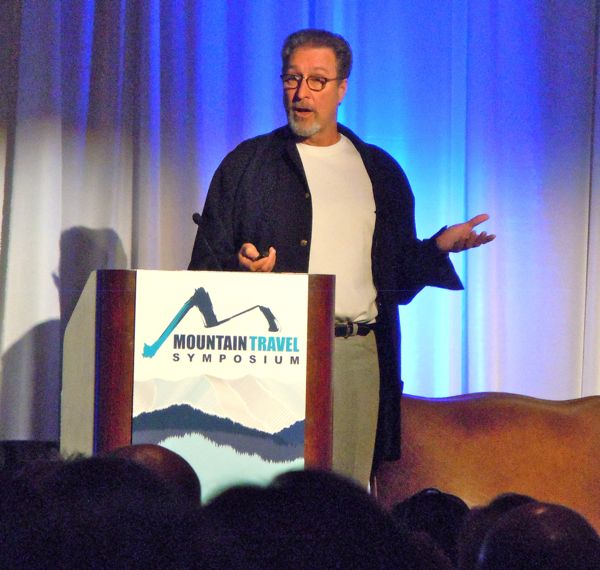
Ralf Garrison, director of MTRiP, speaks April 18 at the Mountain Travel Symposium. Photo/Kathryn Reed

The three were part of one of the sessions during the 37th annual Mountain Travel Symposium that is being hosted by the Resort at Squaw Creek. With several hundred in attendance for a multi-day conference, this is billed as the largest gathering of mountain travel professionals in North America.

Ralf Garrison, director of MTRiP (Mountain Travel Research Program), said, “Pure destination guests, led by international visitors held up the best while the local and regional skiers and boarders were more fickle and made fewer trips to the slopes. As a result, destinations catering to multi-night visitors who book well in advance fared better than the resorts that are more dependent on regional and short-stay guests and the disparity among the various resorts is more pronounced this year.”

Dan McHale, general manager of Inn by the Lake in South Lake Tahoe, echoed that sentiment. He told Lake Tahoe News that it was the international travelers, primarily Europeans, who were filling his rooms this winter, while the Bay Area skiers stayed away.

The MTRiP data Garrison released April 18 shows below normal snowfall and warm weather had skiers doing other things this winter. While the previous handful of years showed skier visits above the 60 million mark, when the final tally comes in at the end of April it’s likely that number won’t hit 50 million for 2011-12, he said.

Perception is everything. The drive-up market for resorts on both sides of the country stayed away as the snow was sporadic, this, despite the abundance of snowmaking in so many places.

Weather is always a factor. A year ago, the snowfall set records in Tahoe for the abundance, this year is was all about the scarcity of white stuff.

If NOAA’s Climate Prediction Center is correct with this week’s posting of warmer water in the Pacific likely to generate an El Nino weather pattern for fall 2012, it could translate into a wetter winter for California next year. However, with where Lake Tahoe is located, these El Nino and La Nina predictions for the rest of the state don’t always hold true for the Sierra.

It was the destination traveler who saved this season.

As Garrison pointed out early in his presentation, for places that consider themselves destination resorts, the season could be salvaged, but for those claiming to be just a ski area, the season was one to write off.

Occupancy during the ski season at Western mountain areas was down 3.9 percent during March compared to the same month last year, Garrison said. Throughout the winter months the occupancy is down 2.3 percent.

The bright spot for hoteliers and those receiving hotel tax, though not for the consumer, is the average daily rate was up in March by 1.7 percent compared to 2011, and is up 4.8 percent for the November-April ski season compared to last season.

To move forward, Garrison said, “You are going to need to generate your own demand.” This is because while consumer confidence is up slightly, it is basically flat.

Arthur pointed out how 25 years ago there was 40 percent more ski resorts in the country and that with the supply going down this should be good for the areas still remaining.

One way to get people into the sport is to show more people having fun. It was pointed out how Ski magazine shows shots of serious skiers. Photographs aren’t of people laughing, having a good time, socializing, or conveying emotion.

Lynch said with Gen Y being full of risk takers and wanting freedom it’s a tough balance between traditional skiing and turning a resort into a sports theme park.

Seccombe pointed out how with all the television channels there are that poker and fishing have more outlets than skiing. With the X Games and Olympics being the only times skiing, boarding or other snowsports are on TV, this gives the mountains little exposure to potentially new customers.

“With billions of dollars  spent to lure the same people, mountain travel needs to broaden its approach or it will see a drop off,” Seccombe said.

Some of the constraints the industry has are price, how long it takes to learn the sport, and accessibility to the mountains.

“We need to start telling our story to a broader consumer base,” Arthur said.

Lynch said the whole summer experience needs to be part of the discussion when it comes to traveling to the mountains.

“There are a lot of choices out there and we need to stay relevant,” Lynch said.

Thinking beyond the traditional skier was brought up. Not everyone in a family or group skis. Promote the spa, shopping and other activities.

McHale said he noticed with his guests that many come to the South Shore not to ski, but to be in the mountains. He partners with Heavenly Mountain Resort so they can go tubing.

Give people more than just a day on the slopes. Seccombe singled out NASCAR and how cameras are put in vehicles so spectators can keep watching those left turns made by their favorite driver.

Arthur said the best way to deliver more to the consumer is to know more about them.

Lynch summed it by saying the way to be successful is to concentrate on delivering service and experiences to the guests – making it all about them – and touting the destination less.



Study: Plastic wrappers seeping into food products

By Susan Freinkel, Washington Post

In a study published last year in the journal Environmental Health Perspectives, researchers put five San Francisco families on a three-day diet of food that hadn’t been in contact with plastic. When they compared urine samples before and after the diet, the scientists were stunned to see what a difference a few days could make: The participants’ levels of bisphenol A (BPA), which is used to harden polycarbonate plastic, plunged — by two-thirds, on average — while those of the phthalate DEHP, which imparts flexibility to plastics, dropped by more than half.

The findings seemed to confirm what many experts suspected: Plastic food packaging is a major source of these potentially harmful chemicals, which most Americans harbor in their bodies. Other studies have shown phthalates (pronounced THAL-ates) passing into food from processing equipment and food-prep gloves, gaskets and seals on non-plastic containers, inks used on labels — which can permeate packaging — and even the plastic film used in agriculture.

The government has long known that tiny amounts of chemicals used to make plastics can sometimes migrate into food. The Food and Drug Administration regulates these migrants as “indirect food additives” and has approved more than 3,000 such chemicals for use in food-contact applications since 1958. It judges safety based on models that estimate how much of a given substance might end up on someone’s dinner plate. If the concentration is low enough (and when these substances occur in food, it is almost always in trace amounts), further safety testing isn’t required.

Read the whole story