Components of Earth Day found in everyday life

April 22 marks the 42nd anniversary of Earth Day ― a day intended to inspire awareness and appreciation for the Earth’s natural environment. The day came from reaction to a massive oil spill in waters near Santa Barbara in 1969.

According the U.S. Census Bureau, the estimated revenue for residential nonhazardous recyclable collection services in 2010 for U.S. firms was up 26.5 percent from 2009 to $715 million.

Less than 2 percent, or 2.2 million, houses in the U.S. are heated by wood. Solar heating is event less common, with 38,100 households in 2010 using the sun. This compares to the 57 million housing units that use gas for heat.

Of the new single-family homes built in 2010, 88 percent included air conditioning. In 1974, it was 48 percent.

The average commute time for workers 16 years and older across the country in 2010 was 25.3 minutes, up from 25.1 minutes in 2009.

The average size of a single-family house built in 2010 was 2,392 square feet, down from 2,438 square feet in 2009.


Reno-area golf course looking parched

By Dan Hixman, Reno Gazette-Journal

Should anyone at the Chamber of Commerce or the RSCVA want to get some nice, color photos of Truckee Meadows golf courses to distribute to travel magazines, this would be a good time to wait.

Reno’s golf courses look like Kansas’ wheat fields, post harvest.

Golfers are no doubt frustrated by the condition of area courses, especially as temperatures finally reach short-sleeves territory, and this might not be all that comforting, but there is nothing that could have been done to stop it.

In match play terms, it’s Mother Nature 10 and 9.

Some golf pros call it “winter kill”; others, “winter desiccation.” It’s the rare combination of little or no precipitation and either really low temperatures or really high winds (or all three). Northern Nevada had one of the driest winters on record this year, and golf courses are feeling the after-effects.

“This is very unique,” said Tom Janning, who has been the superintendent at Rosewood Lakes since the city of Reno-owned course opened in 1991. “Some years we haven’t watered all winter and we came through fine.”

Read the whole story


Babysitters need to know escape plan

When you leave your children in the care of a babysitter, take time to cue the babysitter to your family’s escape plan. Discuss the floor plan of your house, and leave the phone number where you can be reached.

Explain the family fire safety plans to your babysitter. If the smoke detector sounds, nobody should try to find the fire, much less try to put it out.

Make it clear that your only concern is that everyone gets out of the house quickly and safely.

The South Lake Tahoe Fire Department urges you to spend time preparing your family to be fire safe this year.

 — Sallie Ross-Filgo, SLTFD


Panel: Special event success depends on community support

By Kathryn Reed

INCLINE VILLAGE – Figure out what works for your area, get community buy-in and the people will come.

That was the message during the Special Events – The Lifeblood of Rural Tourism workshop last week at the annual Rural Roundup event put on by the Nevada Commission on Tourism at the Hyatt in Incline.

Curtis Fong, who is the master behind the two annual cycling events around Lake Tahoe, and Bernadette Anthony and Michele Yegge Evans with Mesquite Gaming spoke about what needs to take place for an event to become successful.

The annual Soroptimist International South Lake Tahoe wine tasting is successful because locals believe in it. Photo/LTN file

And success was defined in different ways. It’s possible the event is not a big money-maker, but the people coming to town are dropping cash so it’s successful in a broader scope. Turning a profit is not likely to happen the first three years, they said.

Anthony stressed how events can be developed from a variety of ideas – tapping into a hobby (like what they did with their Bunco event), embracing history, the natural environment, national or state holidays, cultural events, or sports.

Events can include animals – from cow chip tossing to bird watching; foot events – from historical walking tours to pub crawls; motor events – tractor pulls to personal watercraft.

Fong said it’s important to define the goals of the event. With outdoor events, he said to consider the geography – mountains, sky, water, wind, open space – all play a role in what type of activities can take place.

Creating a sense of value for the consumer was driven home by Fong.

“Package everything. Everything is perception in terms of marketing,” Fong said.

When he puts on the annual America’s Most Beautiful Bike Ride people know the fee isn’t just to ride 72 miles – it includes a shirt, lunch on the course, post-party and more.

Anthony added the event must benefit the entire area. “Then everyone will get involved,” she said.


Valhalla annual art-music fest ready to dazzle crowds

By Kathryn Reed

CAMP RICHARDSON – If people didn’t know why it’s called the Great Lawn before Saturday, they did after the cleanup session at the Tahoe Tallac Site.

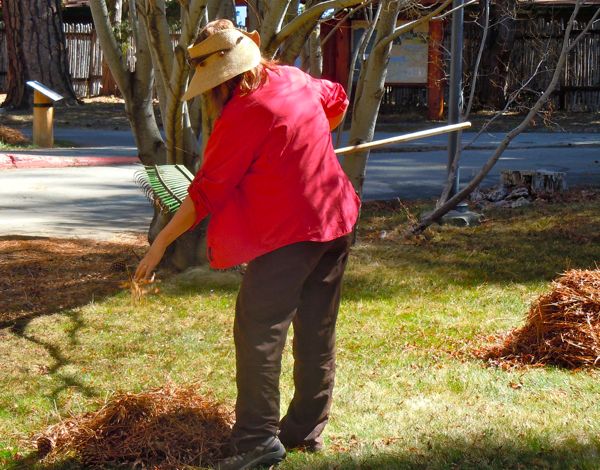
Bag upon bag of pine needles were filled as volunteers descended upon the South Shore venue to spruce it up before the season kicks off in June.

While the Tahoe Tallac Association has been without an executive director since last August, the volunteer board is committed to keeping the 33-year-old Valhalla Arts and Music Festival alive for decades to come. The board of directors has had some turnover, volunteers are returning, and the dedicated paid staff is hanging on with limited hours.
Tahoe Tallac Association volunteer Jenny Sweatt on April 21 helps clean up the site. Photo/Kathryn Reed

On top of all of that, changes within the local office of the U.S. Forest Service – the landowners – have led to a better working relationship. The feds have even agreed to allow more events on the lawn, and for wedding receptions to filter from the Grand Hall onto the adjacent grass.

A bugaboo between the Forest Service and TTA in the past has been the gate across the driveway just off Highway 89. It limits access to the site. People would have to walk in after parking in the neighboring dirt lot. For some, that just isn’t an option, and for those who didn’t know what was on the other side of the gate, they might not have ventured forward on foot.

“We have been told they are moving the gate,” TTA board President Ginger Nicolay-Davis told Lake Tahoe News.

Even when a show is not going on, artists in residence are working in the small cabins — which are open for the public to see. Plus, the historic buildings are worth visiting in their own right.

By the end of May a USFS sign that has been controversial with the board because it seemed to detract visitors will be coming down, according to Nicolay-Davis.

Fifteen percent of the gross receipts each year per the contract with the USFS is supposed to go back into the site. That hasn’t always happened. But better accounting practices are ensuring it gets done.

Exterior painting will occur before the festival season begins and carpet will be replaced.

Revenue from weddings is expected to be double what it was a year ago.

With cash in the bank, the association will be able to pay someone to take care of the lawn this year instead of board member Dave Hamilton pushing his mower over the grass.

After this season, the board may consider hiring someone to take over more of the heavy lifting.

“We are very hopeful we will be able to hire at a minimum a summer director for the festival The board can’t do this forever,” Nicolay-Davis said. “In a perfect world we want to become a summer theater venue and mix in music and other stuff as part of our mission.”

Three plays will be staged at the Boathouse Theater this summer. “God of Carnage”, a Tony-award winning comedy,  starts the theatrical season on July 5. That is followed by the comedic play “Death by Golf” later in July.

The locals’ favorite “Guilty Pleasures” is returning in August with new, updated material – including a segment on the Ta-hole and revisions to the TRPA skit. Hamilton is the mastermind behind the words and lyrics.

All three plays will be for multiple days, including evening and matinee performances.

Music on the lawn will be one day a month starting in June. (June 17, July 8, Aug. 19 and Sept. 2.) It is geared to locals. A variety of genres will be represented during the free noon-2pm performance.

Plus, there will be several musical acts in the boathouse, though those cost money.

The improv, which has always drawn a crowd, will be one day a month, as well – July 3, Aug. 7, and Sept. 4.

“My thought was to have really good events, but not as many (overall),” Nicolay-Davis said.

For more information about the festival, go online to the revamped website that was launched earlier this month. Here is the Valhalla 2012 schedule. And right now a membership drive is going on, which entitles people to free tickets. For details on membership, click on the ad at the top of Lake Tahoe News’ home page.




Opinion: Warm weather not always good for pets

By Trista Cunningham

The warm weather is just around the corner and the American Red Cross has some steps people can take to make sure their pet is safe and healthy as we head into spring and summer.

April is Pet First Aid Awareness Month and Red Cross courses are available to teach people how to care for their pets. Dog and Cat First Aid Guides are available with a DVD that teach basic responsibilities like the importance of spaying/neutering and how to give medications, to performing CPR, recognizing if your pet is sick and preparing for disasters. The guides are available on the Red Cross Store.

For a list of Pet First Aid classes available in your area, call 800.RED.CROSS for information and to register.

Warm weather brings special pet concerns with it. For instance, leaving an animal in the car, even for a short time can be dangerous in warm weather.

“The inside temperature of the car can quickly reach 120 degrees,” said veterinarian Deborah Mandell, pet care adviser for the Red Cross. “It’s not a good idea to leave the pet in the car, even with the windows cracked open.”

Another problem for pets when the temperatures rise is heat stroke because pets are not yet acclimated to the warmer weather.

“Animals love to play and may not stop playing, even if they are becoming overheated,” Mandell said.

Dogs with short noses or snouts, like the boxer or bulldog, are prone to heat stroke. This is also true for any obese pet, a pet with an extremely thick fur coat or any pet with upper respiratory problems such as laryngeal paralysis or collapsing trachea. Even though some areas of the country have already experienced a few hot days, dogs still aren’t acclimated to those types of temperatures.

Some signs an animal may be developing heat stroke include heavy panting and being unable to calm down, even when lying down. Their gum color may be brick red, their pulse rate may be fast, or they may not be able to get up. If someone suspects their pet has heat stroke, they should take their temperature rectally. If their temperature is above 105 degrees, the owner should cool the animal down. The easiest way to do this is by using a water hose. They can stop cooling the animal when the temperature reaches 103 degrees, and should bring the pet to the veterinarian as soon as possible as heat stroke can lead to severe organ dysfunction and damage.

An open window or door can be a pet hazard. Pet owners need to be aware that animals may try to get out a window or door, which are more likely to be open as the weather warms. Spring planting can also be a pet hazard – do not use plants which are poisonous to animals. For instance, many lilies are very poisonous to cats. Visit the ASPCA Poison Control web site to find out which plants and flowers are poisonous to animals.

A pet is part of the family. Just like any other family member, pets deserve to be cared for and protected. Pet First Aid Awareness Month is a great time for people to learn how to protect their pet and keep them healthy. More information on how to keep pets in good health and safe can be found online and on the Red Cross Pets and Disaster Safety Checklist.

Trista Cunningham works for the American Red Cross.


Quagga mussel laced barges stopped before polluting other lakes

By Rocky Barker, Idaho Statesman

An armada of 41 flexible barges infested with quagga mussels during construction work in Lake Mead were stopped by Idaho’s boat inspection program.

The barges were heading back to Seattle after work on the new Las Vegas water intake tunnel was completed in Lake Mead. Mead has been infested with the quagga mussels that were carried by boat from the Great Lakes.

The mussels reproduce quickly and clog canals, hydroelectric dams, and other structures in the state’s lakes and streams and vast network of waterways. They also take over the ecosystems reducing the number of game fish. State officials predicted an infestation here could cost $91 million.

A week ago one of the barges showed up at an Idaho inspection station at the port of entry on Interstate 84 south of Burley. Idaho Department of Agriculture inspectors stopped the barge and found mussels. They contacted Washington and Nevada officials when they learned that 41 similar barges were heading toward Seattle.

All of the states jumped into action to find, inspect and decontaminate the barges, said Amy Ferriter ISDA invasive species coordinator. Inspectors stopped two barges last Wednesday on Highway 93 north of Jackpot that had been reinspected and decontaminated by Nevada.

“Our inspectors said they were spotless,” Ferriter said

Read the whole story


U.S. sues Nevada over employment discrimination

By KRNV-TV

CARSON CITY — The feds are suing the state saying Nevada is discriminating against a man who served our country in active duty. According to court documents obtained by News 4, the case revolves around a man who used to work as the chief deputy controller.

Arthur Ingram was called to serve on active duty with the army reserves after less than a month of holding that state government position. The documents say when he returned several years later, the agency had a new leader who would not give him back the same job. He was offered a lower position with less pay on probationary bases.

Read the whole story


Some foods are worse than eating a stick of butter

By Sarah Klein, Huffington Post

You wouldn’t sit down to dinner at your favorite restaurant and order a stick of butter a la carte. You’re too smart for that — you know there’d be lots of calories and little nutrients and, most of all, lots and lots of fat.

But some of the cheesy entrees and meaty meals you’re ordering are packed with just as much fat — or more. There’s a total of 92 grams of fat in a stick of butter, much more than the maximum amount recommended for an entire day on a healthy diet.

The Dietary Guidelines For Americans recommend limiting fat intake to 20 to 35 percent of your daily calories. (A gram of fat provides 9 calories.) For a 2,000-calorie-a-day diet, that means anywhere from 44 to 78 grams of fat a day won’t push you over the edge. Most Americans don’t have to worry about not getting enough fat; in fact, our diets are too heavy in saturated and trans fats and skimpy on the healthy, unsaturated kind, found in good-for-you foods like fish, olive oil and nuts.

Unfortunately, it’s too easy to find foods — especially on the menus of your favorite chain restaurants — that trample those daily fat recommendations in one fell swoop.

Read the whole story


Nevada has plan, but no money to help problem gamblers

By Richard N. Velotta, Las Vegas Sun

The good news for Nevada is that it now has a strategic plan for treating problem gambling.

The bad news: State budget cuts have eliminated funding to put the plan in motion.

Bo Bernhard, executive director of UNLV’s International Gaming Institute, and Jeff Marotta, president of Portland-based Problem Gambling Solutions, kicked off the sixth-annual Nevada State Conference on Problem Gambling Thursday with speeches assessing how Nevada is addressing compulsive gambling, an affliction that affects not only individual players, but their families.

It’s believed that 5 percent of Nevadans who gamble have addictive behavior and another 9 percent are at risk.

Marotta said that over five years, academic experts and the Nevada Council on Problem Gambling have shepherded the development of a strategic plan to treat problem gamblers.

Read the whole story