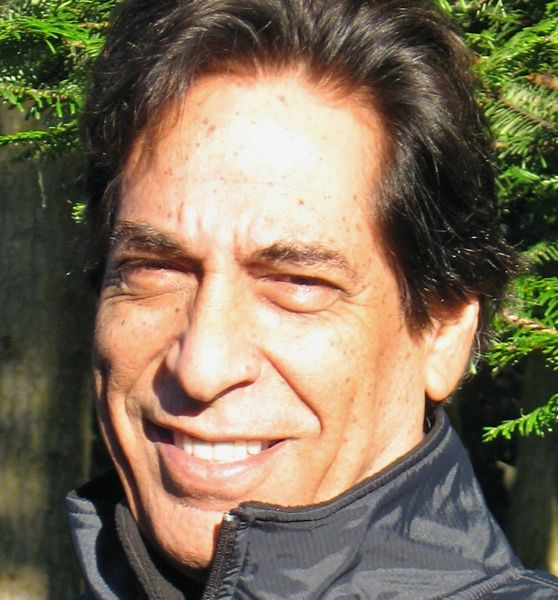
Photographer to showcase work at exhibit in Meyers

Bona Fide Books will host an art reception for Sierra photographer and writer Stacy Hicks on May 5 from 5:30-7:30pm.

It will feature 16 black and white images from her collection “What Remains”.

The event in Meyers is free.

Stacy Hicks' photos will be on display at Bona Fide Books.

Hicks, who lives in Strawberry, says that her photographs reveal the things that people often don’t see, and this is what she finds most interesting in her subjects.

Hicks also contributed to “Tahoe Blues: Short Lit on Life at the Lake”, a book about life at Lake Tahoe featuring local writers that will come out June 8 from Bona Fide Books.

Hicks’ work will be on display at Bona Fide Books May 1-27. Bona Fide HQ is located at 1069 Magua Street, No. 4, behind the Getaway Café in Meyers.

For more information, contact Kim Wyatt at editor@bonafidebooks.com.


Travel agents no longer a dying breed

By Michelle Higgins, New York Times

The complimentary wine and fruit platter was sent up to Jessica Griffin and her family moments after they strolled into their roomy suite. They were accompanied by a bellhop who placed their bags near a tidy crib made up with luxurious, high thread-count sheets for Griffin’s 1-year-old daughter.

The V.I.P. treatment at the Cheeca Lodge and Spa in the Florida Keys last month hadn’t come with an extra cost. In fact, Griffin said, she paid about $100 a night less than the standard rate for her room. And the deal wasn’t the result of hours of tedious online research either. She had finagled her savings the old-fashioned way: through a travel agent.

“I needed recommendations and someone to steer me in the right direction,” said Griffin, who opted to work with an agent after years of making her own reservations because she needed a getaway suitable for a toddler and had little interest in scrolling through endless and conflicting user hotel reviews online. “There are so many,” she said. And with every site displaying beautiful pictures and tantalizing offers, “it can be overwhelming.”

“I wanted somebody from a reputable agency who could say yes, you’ll enjoy this stay,” she said.

According to those in the travel agent industry, clients like Griffin are not alone, and are in fact helping to stanch the bloodletting the industry has experienced since the onset of D.I.Y. booking more than a decade ago. Nearly one in three leisure agencies is hiring, according to PhoCusWright, a travel research firm. And in 2011 travel agencies experienced a second consecutive year of growth; their bookings account for a third of the $284 billion United States travel market.

This comes after years during which all signs seemed to be suggesting that travel agents would soon go the way of telex operators. And it’s true that the numbers are stark: During the industry’s peak years of the mid-1990s, there were about 34,000 retail locations booking trips. Today, there are 14,000 to 15,000, according to PhoCusWright. In 2009 alone, in the throes of the recession, bookings through traditional agencies plummeted by 23 percent.

Read the whole story


Nevada outdoor author to give talk

The Douglas County Public Library in Minden is bringing back Nevada outdoor author Mike White on May 15 from 4:30-6:30pm.

The award-winning author will give a presentation of some of the best Nevada hikes as featured in his books “50 Classic Hikes in Nevada” and “Backpacking Nevada”. Spanning the entire state of Nevada, the presentation is designed to inspire and inform lovers of the outdoors about a spectrum of trails, from a half-hour stroll to an all-day jaunt. He will be available to sign books after the presentation.

The Douglas County Public Library is located at 1625 Library Lane in Minden. For more information, call (775) 782.9841.


Placer, Nevada counties on quest to find foster parents

By Cathy Locke, Sacramento Bee

A group of foster care agencies has launched a 100-day campaign to encourage more people in Placer and Nevada counties to become foster parents and allow children to remain in their communities.

The initiative, “Today’s Foster Parent,” highlights the need for local foster parents. The main purpose of the campaign, which runs through July 30, is to prevent children from moving from foster home to foster home, and to improve their chances for a permanent family.

“Far too many children in foster care are forced to move outside of their communities, far from their birth parents, friends, schools and other support groups,” Gail Johnson Vaughan, executive director of Mission Focused Solutions, said in a written statement. “We are asking local families to step forward to make a difference in the lives of these children.”

Read the whole story


Snippets about Lake Tahoe

• Santa Barbara City College board of trustees on April 26 chose Lori Gaskin to be president of the college. She worked at Lake Tahoe Community College for 17 years as a dean of Instruction, then the vice president of Academic Affairs and Student Services.

• Stream fishing season opens April 28 in California.

• Away.com puts Lake Tahoe in the top 10 for places to travel to during Memorial Day weekend.

• Kirkwood Mountain Resort will be open April 27-29.

• Truckee-based Sierra Agape Center has launched a website showcasing a new look and information about the nonprofit’s range of donation-based counseling services.


K’s Kitchen: Yummy sauce to top portabella mushrooms

By Kathryn Reed

As the temps soared last weekend in the Lake Tahoe Basin, it was time for one of my favorite warm weather activities – fire up the barbecue.

While others barbecue year-round, we are definitely fair-weather grillers.

One of my favorite veggies to grill is asparagus. I never get tired of those tasty green stalks.

But then I decided I wanted us to eat the same thing for dinner. Sometimes when Sue is womaning the bbq there is a meat product for her and veggies for me. We started the season with portabella mushrooms for both of our entrées.

To change things up a bit I decided to create a sauce that I would drizzle over the ’shrooms once Sue did her job out back. It’s definitely a keeper recipe.

For the asparagus, I just cut off the ends of the stalks – the white part – and laid them on a piece of foil. Then I put small chunks of butter on the pile and drizzled fresh lemon juice on them. Wrap them all up and give them to the barbecuer. I think they are best when the foil is a bit charred. Just before serving, once they are on the plate, I drizzle balsamic vinegar on them.

Below is the recipe for the mushroom concoction. I found all of the ingredients for it – as well as the mushrooms and asparagus – at Grocery Outlet. So, not only was it was a good meal, but inexpensive. And there were leftovers.

The other thing served with this was rice pilaf, which I made from scratch.

Portabellas with Red Pepper-Fontina Sauce (serves 4)

4 portabella mushrooms

Olive oil

12 ounce jar red peppers

¾ ounces of basil, or more

5 cloves garlic

1 shallot

¼ pound Fontina cheese, cut into chunks or grated

Brush mushrooms with paper towel to clean. Then brush each one, both sides, lightly with olive oil. Give them to the person stationed at the grill. Sue says they take about 12 minutes to cook.

In blender, mix peppers, basil, garlic and shallot until pureed.

Transfer mixture to small saucepan. On medium heat gradually add cheese, stirring constantly. (Cheese can burn easily and stick to the bottom of the pan.)

Cook until cheese is melted and mixture is hot.

With mushroom on plate, pour some of the red pepper-cheese mixture over the top of each one in an appetizing manner.


Caution urged when deciding to take supplements

By Mandy Kendall

I was invited to join a meeting of the Lake Tahoe Business Referral Network this week and met a great group of like-minded business owners doing great things for business in our community. During my short presentation I decided not only to introduce the Health Connective – a great group of natural health practitioners also doing wonderful things for our community – but also to talk briefly about another subject close to my heart – supplements.

Research has revealed that a lot of people fall under the category of “I think I should be taking supplements, but I don’t know what I need or which ones to take” or, if they are already taking supplements, the general consensus seems to be “I’m not sure if I’m taking what I need or if they are doing me any good?”.

Mandy Kendall

Surveys conducted in more than 4,000 health practitioner’s offices revealed that 85 percent of patients wanted their health care provider to advise them on supplementation.

Interestingly, people who do take supplements often use a variety of methods to choose which supplement and brand to use, including criteria such as: “I saw it on TV”, “I liked the label”, and “it was the cheapest”.

While these may be the ways we choose many of the products we use in our lives, when it comes to our health it might be prudent to take a little more expert advice.

So where do you start? It seems every day someone is telling us that something we were told last year is good for us is now on the bad for you list. There are so many supplements to choose from, all seeming to claim to be just what you need for complete health.

Then if you know which supplement you should be taking there are so many different brands. So it’s hardly surprising that some ignore the supplement issue all together, or base their choices on random criteria.

So why take supplements at all?

Medications deplete some nutrients — According to the University of Maryland Medical Center, statins appear to deplete the body of Coenzyme Q10, necessary for the production of ATP, which is the major energy source of human cells. This tends to require supplementation in addition to a balanced diet containing foods such as salmon, tuna, organ meats and some whole grains. Some studies also indicate that Coenzyme Q10 supplementation can help with the muscle pain sometimes experienced when taking statins. However, always check with your doctor for any possible supplement/medication interactions

Essential nutrients — Some nutrients are called ‘essential’ which indicates that they cannot be made by the body so must be obtained through food or supplements. Omega 3 fatty acids are considered essential for health, and by themselves can raise HDL (good cholesterol) and lower triglycerides (high levels can lead to risk of heart disease). In children these fatty acids are ‘essential’ for brain development and immune function and there are studies that claim some behavioral issues can be linked to an Omega 3 deficiency. Foods high in Omega 3 include cold water and oily fish, some nuts and some vegetables. As there probably aren’t too many kids keen on any of these foods it could be wise to consider a good Omega 3 supplement.

Overfed and undernourished — Today’s fast-paced lifestyles are leading to an array of poor dietary choices and chronically stressful lives, with convenience diets that provide too many calories with too few nutrients. Couple that with overfarming of land, and the mass production of food worldwide, and the nutritional value of food is not as high as it used to be. In today’s world, we tend to be missing some of the valuable nutrients our bodies need.

Stress — Affects the body’s metabolism like an engine racing in a high gear. The increased metabolism can cause an increase in the use, and excretion of, many nutrients such as vitamins A, C, D, E, K, and B complex, and minerals such as magnesium, calcium, phosphorus, chromium, selenium, zinc, and potassium. If these are not replaced we can become deficient, however the effects of these deficiencies tend not to be obvious until a disease or condition manifests.

Lifestyle — Smoking and alcohol (yes, I’m afraid that means wine, too) cause a deficiency of a number of nutrients in the body. Thiamine, Zinc and Niacin (vitamin B3) perform a wide range of functions in the body, including aiding memory, DNA processes, and brain functioning and are all detrimentally affected by alcohol. Smoking drains the body of many essential vitamins and minerals. For example vitamin C, one of the body’s natural antioxidants (which mop up free radicals that harm our cells), is drawn from tissues and blood to help counteract the effects of smoking. This deficiency leads to low absorption of iron and the reduction of antioxidant protection can lead to the onset of numerous diseases. Smokers are generally advised to increase their daily intake of Vitamin C to 2000mg which generally cannot be achieved through diet alone, therefore requiring a supplement. (That said, no amount of supplements or antioxidants can protect the body against the damage caused by smoking.)

All supplements are not created equal — Everything from ingredients, types of processing used, to the delivery mechanism (tablets versus liquids) will affect how effective a supplement is. Isotonic formulas (liquids easily absorbed by the body) tend to be four to five times more effective than tablets because of the digestive process required to break down tablets, which often results in some of the tablet passing through the entire body without being digested at all. The quality of ingredients is also an important consideration and often will make the product seem more expensive, but ultimately worth it.

So, as you can see, there are many considerations when choosing a supplement. Everyone’s supplement requirements are going to be very different, based on the huge variations of lifestyle, health and environment. So it is advisable to seek advice from a medical or licensed professional, familiar with your situation, who will assess your particular needs and help determine what supplements are best for you.

The Health Connective strives to support its community in all natural health and wellness issues, so please contact us at healthconnective@gmail.com if you have any questions, or would like any further information, about the article above.

Until next time.

Mandy Kendall operates Health Connective in South Lake Tahoe. If you have any questions, would like some advice, or would like to request some Qwik-e tips on any health and wellbeing topic, please feel free to drop me an email at healthconnective@gmail.com, visit us on Facebook, or keep an eye out on Lake Tahoe News for regular Qwik-e tips on how to make healthy changes one Quick and Easy step at a time.


Opinion: Make polluters, not taxpayers, responsible for the damage

By Steve Kubby

The first thing you and I have to do, if we really want to clean up our planet, is identify the biggest polluters. Who is the biggest polluter in our country today? Unfortunately, it is the U.S. government.

How, then, can our government claim to protect you and me from pollution when, in fact, they are the worst polluter?

For example, examine the environmental record of the military. In 1991, Pentagon spokesperson Kevin Doxey told the National Academy of Science, “We have found some 17,400 contaminated sites at 1,850 installations, not including formerly used sites.”

Steve Kubby

He was referring to toxic solvents used to de-ice military planes, byproducts from the manufacture of nerve gas and mustard gas, and radioactive waste. Back in 1988, the Energy Department estimated that it would take 50 years and $100 billion to clean up just 17 of these sites.

You cannot expect the country’s greatest polluter to protect you. Instead of guaranteeing your right to a hazard-free environment, government sets acceptable standards for pollution. The time has come to embrace strict liability, private property, and the principle of trespass to protect you and me from polluters.

Liability is a key element of any policy to clean up our environment. It means that those who pollute our air, land or water will be held accountable for their damage. Unfortunately, politicians conspire in pork barrel dealings to waive liability for many polluters.

For example, in the late 1950s, private insurance companies would not insure nuclear power plants. The insurance companies felt that the huge risk of a possible nuclear accident was unacceptable. Without insurance, power companies refused to consider nuclear power. Leave it to the politicians and some well placed influence peeling to change that. Congress passed the Price Anderson Act.

That law limited the amount of money victims could claim in case of nuclear accident. The law also specified that 80 percent of the cash damages would come from taxpayers, not the people or companies that caused the damage. Once the law was passed, nuclear power proliferated, because they wouldn’t have to be so careful with taxpayers assuming most of the risk. Instead of protecting your rights and mine, the government sided with special interests.

Private property rights are equally important in protecting the environment. A long time ago, the British learned how to prevent pollution of their rivers. Fishing rights in British streams and rivers are considered private property that can be bought and sold. During the last century, angry owners routinely hauled polluters into court and forced them to clean up any damage they caused. Every owner became an environmental protector because each can profit from nurturing the environment.

Before government intruded, shrimp fishermen in the Gulf of Mexico claimed parts of the gulf as their property. They used the time-honored practice of homesteading. They formed a voluntary association to keep the waters productive and to avoid over-fishing.

Private ownership also encourages preservation of endangered species. Compare the elephant herds in Zimbabwe and Kenya. In Zimbabwe, homesteading claims of natives to are respected and include elephants on their land. Elephants and their products are freely bought and sold. The people have a strong incentive to raise as many elephants as possible to improve their own lives. They have the incentive to report and convict unscrupulous poachers. As a result of this policy, the Zimbabwe elephant herd increased from 30,000 to 43,000 over the past ten years. On the other hand, the Kenyan government built their elephant protection plan along the lines of U.S. government policies. During the exact same period that elephants prospered in Zimbabwe, Kenya’s herd shrank by 67 percent.

Here in America, we see huge tracts of federal forests clear cut and left desolate. Yet this doesn’t happen to land owned by paper companies and lumber interests. They replant their land and tend it with care. Why? Barren land is a liability for a profit-oriented company. Yet when politics enter the picture, you and I see bidding wars as unscrupulous politicians and business interests go in and ravage public forests.

Private ownership does not mean it has to be corporate commercial land. Nonprofit groups like Ducks Unlimited and the Nature Conservancy are excellent examples of groups that acquire land to nurture delicate ecosystems. Whom would you trust more to protect our redwoods and coastal fauna, ecologists or politicians? We urgently need to encourage more private ownership by caring environmentalists, so that our precious resources are not subject to the whim of politicians voting late in the night. It’s sad to know that the top environmental lobbies spent more than $1 billion on politics last year. Imagine how much land and water could have been protected if they had simply bought the resources and cared for them.

Trespass is a simple, age-old principle designed to protect your rights. If your neighbor does anything to pollute the air you breathe, the water you drink or the land you own, they have committed an act of aggression that must be stopped. Then they must be held liable to correct the damage they have done. Under current policy, if a simple majority says some pollution is acceptable, you have no say in the matter. Nobody should be allowed to trespass against you, even if all your other neighbors tolerate such a violation.

The bottom line is that we must make polluters pay for the damage they cause. Not you and me and other taxpayers. The polluter.

If somebody pollutes or destroys that piece of the earth owned by another, the polluter has to restore that property. In practice, this would be so expensive that a polluter could be bankrupted by his or her own carelessness. To make sure that this policy would work effectively, corporate officers have to be held personally responsible for deliberate acts of pollution. They cannot hide their bad acts behind a corporate curtain. When we make polluters, not taxpayers, responsible for the damage they do, the profit will be gone from pollution.

Steve Kubby is a resident of South Lake Tahoe.


Teens using hand sanitizers to get drunk

By Anna Gorman, Los Angeles Times

Six teenagers have shown up in two San Fernando Valley emergency rooms in the last few months with alcohol poisoning after drinking hand sanitizer, worrying public health officials who say the cases could signal a dangerous trend.

Some of the teenagers used salt to separate the alcohol from the sanitizer, making a potent drink that is similar to a shot of hard liquor.

“All it takes is just a few swallows and you have a drunk teenager,” said Cyrus Rangan, director of the toxicology bureau for the county public health department and a medical toxicology consultant for Children’s Hospital Los Angeles. “There is no question that it is dangerous.”

Although there have been only a handful of cases, Rangan said the practice could easily become a larger problem. Bottles of hand sanitizer are inexpensive and accessible, and teenagers can find distillation instructions on the Internet.

“It is kind of scary that they go to that extent to get a shot of essentially hard liquor,” Rangan said.

In addition to the teenagers who intentionally drank the sanitizer, younger children also have accidentally ingested it in the past.

Read the whole story


TRPA draft EIS Regional Plan update showdown begins

By Kathryn Reed

STATELINE – Sixty days. That’s how long people have to review and comment on the environmental documents associated with the Tahoe Regional Planning Agency’s Regional Plan update as well as the transportation update.

About an hour of Thursday’s Governing Board meeting was devoted to discussing how long the comment period should be on the environment impact statements. While some wanted the maximum 90-day period, the board voted on a 60-day limit with the idea the vote on the EIS will happen before the end of the year and there will be more time for public meetings. Board members Mara Bresnick and Ryan High, the alternate for Ross Miller, voted against the 60 days.

Those in the conservation community asked for the 90 days, visually demonstrating the task ahead for all who want to participate in the process by bringing to the podium the volumes of binders that contain close to 3,000 pages of information. All of the docs are on the TRPA’s website.

TRPA Governing Board member Claire Fortier of South Lake Tahoe listens to deliberations April 26. Photos/Kathryn Reed

Before the April 26 vote, board member Claire Fortier said, “The folks who want the delay are the same people who were at the Regional Plan committee meetings.”

Fortier, who is also the mayor of South Lake Tahoe, was one of the six members of the committee who came up with the proposed Regional Plan update.

Regional Plan draft EIS

Five alternatives are in the EIS, with alternative 3 the preferred alternative. TRPA staff describes alternative 2 as what the conservation community wants. Conservationists say that is not true.

“We provided a 256-page Conservation Alternative to the TRPA. That alternative was discussed with the staff over a number of months,” Laurel Ames, with the Tahoe Area Sierra Club, told Lake Tahoe News. “We were shocked to find our alternative eviscerated and allegedly replicated as current alternative No. 2. The EIS analysis of alternative No. 2 does not reflect our alternative.”

The “we” also includes the League to Save Lake Tahoe, Friends of the West Shore and other conservation groups.

Sydney Coatsworth with Ascent Environmental Inc., the firm that prepared the draft EIS, described the alternatives in basic terms as follows:

• Alternative 1 would keep things as they are – using the current Regional Plan that was adopted in 2007. This comes with 86 residential allocations, 874 residential bonus units, 383,579 square feet of commercial floor area, and 342 tourist accommodation units.

• Alternative 2 is described as low development with increased regulation. It calls for 2,600 residential allocations, 200,000 square feet of CFA, maximum coverage of 50 percent on high capability land in community plan areas. Existing height rules stay in place except in some high-density locations.

• Alternative 3 is called highly incentivized redevelopment. Coverage and development transfer ratios are based on sensitivity between areas, allows coverage transfer across the nine hydrological related areas, and has changes to density and height standards. There are three tiers for height, the maximum being 197 feet in the Stateline casino corridor. (That is the current height of Harveys and Harrah’s Lake Tahoe. For the Stateline casino properties to get a permit to redevelop, they must conform to rules in the Regional Plan. If this alternative is adopted, then they would. Those casinos were built before there was a Regional Plan.) This alternative also has 2,600 residential allocations and 200,000 square feet of CFA. It exempts non-motorized trails from being categorized as coverage.

• Alternative 4 is labeled as reduced development with incentivized redevelopment. It comes with 4,000 residential allocations, 400,000 square feet of CFA, 200 TAUs, and 70 percent coverage on parcels in community plans.

• Alternative 5 has a similar rate of development and regulatory structure as the 1987 plan. It comes with 5,200 residential allocations, 600,000 square feet of CFA and 400 TAUs.

Fourteen environmental topics are analyzed in the EIS. Chapter 2 details the alternatives. The 14 are land use, transportation, air quality, green house gas-climate change, noise, geology-soils-coverage, hydrology-water quality, scenic resources, biological resources, recreation, population-employment-housing, public services-utilities, hazards-public safety, and cultural resources.

Chapter 3 focuses on the analysis. Two designations not often, if ever, found in an EIS are labeled as B for beneficial and SU for sufficient-unavoidable.

What people are saying

Several times during the past two days of TRPA board meetings it was stressed how the Regional Plan update and the EIS are drafts. Comments on the Regional Plan will be taken until the day the board votes on it in December. The EIS has 59 days left for people to comment.

TRPA Executive Director Joanne Marchetta repeatedly said the plan update would get on a four- to five-year cycle – no more of this every 20-year process – or 25, as is the case now. The idea is to be able apply adaptive management techniques to the plan – so changes can essentially be made on the fly to things not working instead of waiting years after that realization.

Seventeen people during the public comment period spoke about the draft EIS.

Dan Siegel with the California Attorney General's Office goes over his notes at the April 26 TRPA meeting.

First out of the gate was Dan Siegel, California deputy attorney general.

“I believe the draft has serious legal defects,” Siegel said. In particular he took issue with delegating authority to local jurisdictions, coverage rules, and the allowance of new development.

Ames, with the Sierra Club, spoke of the desire for better stormwater rules, in particular the need to use infiltration techniques instead of collection basins.

Jennifer Quashnick, who has worked for the Sierra Club, questioned why when so many people touted the economic benefits of the plan why there is no feasibility study associated with it to prove that point.

On the other side, advocating for the adoption of alternative 3, were attorney Lew Feldman, Carl Ribaudo of SMG Marketing, consultant Gary Midkiff, Richard Shaw of Design Workshop, Clint Purvance of Barton Health, Blake Riva of East-West Partners, Chuck Sharer of Edgewood Companies, Hilary Roverud with the city of South Lake Tahoe, B Gorman of Lake Tahoe South Shore Chamber of Commerce, and Carol Chaplin of Lake Tahoe Visitors Authority.

Formation of the plan

To come up with the draft Regional plan the committee met 15 times, with unanimous agreement coming on 145 items.

Fourteen of the items that will need to be resolved between now and December are:

• Transfers of planning and permit review responsibility to local government

• Options for stormwater management implementation

• Annual release system for residential allocations, bonus units, and non-residential development allowances

• Transfer of coverage across hydrologically related area boundaries

• Tourist accommodation unit transfers

• Development and subdivision authorized in the recreation district

• Building height in the high density tourist district

• An eight-hour ozone threshold standard

• Level of service allowances when alternative transportation modes are available

• Distribution requirements of air quality impact fees

• Restrictions on biomass burning facilities within the basin

• Numeric restoration targets and trails for stream environmental zones

• Coverage or other permanent land disturbances in stream environmental zones

• Airport activities and nuisance abatement requirements

• Ridgeline and viewshed protection and scenic mitigation

• Maintaining and restoring the scenic qualities of the natural appearing landscape.