LTN tidbit 3: Find out what to do on the Events page

May is 31 tidbits about Lake Tahoe News month.

LTN tidbit No. 3:

What is going on in the area? Find out on Lake Tahoe News’ Events page. A variety of events are on the page – all based on the info that is sent to us.

Having an event? Send LTN an email to info@LakeTahoeNews.net with all the particulars – who, what, where, when, why, cost, contact info. There is no cost to have your event listed.

Just a warning, though – if a key piece of information is missing that a reader would need, we don’t call to get it. We don’t have time to do your job for you. Sorry.

Here is information about becoming a paid subscriber.


Snippets about Lake Tahoe

• Not sure if the trail you want ride is dry? Check out TAMBA’s webpage before hopping on your mountain bike.

• Hal Cole has been voted off the Barton Hospital board of directors and Rhonda McFarland has been voted on.

• Sammy Hagar has been confirmed for the 2012 Lake Tahoe Summer Concert Series at Harveys Outdoor Arena on Sept. 1. Tickets go on sale May 4 via Ticketmaster.

• La Familia restaurant has opened on Ski Run Boulevard in South Lake Tahoe in the old Scusa’s location.

• Pioneer Appliance and Repair has a new website.


Summer construction on Kingsbury Grade up in the air

By Kathryn Reed

Nevada Department of Transportation officials expected Peek Construction to resume work on Kingsbury Grade on May 1.

The Las Vegas-based company which, according to its website, has an office on the same road it’s supposed to be finishing work on did not return a phone call.

Work on this main artery between Stateline and the Carson Valley started in 2009 with the original bid being $6.8 million. NDOT extended the contract by 87 days, which increased the bill by another $2.5 million.

Left on the contract is 20 days worth of work.

“If they don’t do it, they will be in default,” according to Scott MacGruder with NDOT. “They were supposed to start May 1.”

The state and contractor are trying to work things out in court regarding the cost overruns, but MacGruder said it was his understanding the work was still to be finished.

MacGruder said his agency, if the contractor doesn’t return to the job, would assess whether it’s satisfied the erosion issues have been taken care of. If not, plan B would need to be found.

The water quality project has been painfully slow for commuters caught in the traffic jam for the past three summers.

But MacGruder also told Lake Tahoe News that the road needs resurfacing – which would not start this year. When it does, it will mean further delays for motorists.


Opinion: Fallen Leaf Lake residents on USFS land cannot vote

Publisher’s note: This email is reprinted with permission. It relates to the April 29, 2012, Lake Tahoe News story about who is legally allowed to vote at Fallen Leaf Lake.

Our Region 5 Recreation Residence policy includes the following:

“Principal Residence The principal residence can be a house, apartment, mobile home, or other reasonable domicile, either owned or rented, and must be open and available to the permit holder at all times. The principal residence cannot be simply an address used to give the appearance of living in a home elsewhere. It must be the place where the permit holder routinely receives mail, is registered to vote, from which children attend school, and from where the permit holder normally commutes to work.”

A recreation residence may *not* be a principal residence. Therefore, regardless of how the term domicile is defined by the state of California, if a permit holder is using the recreation residence to register to vote, it directly conflicts with our policy.

I hope that helps.

Jonathan Cook-Fisher, acting Recreation Special Uses Program Manager, Pacific Southwest Region, U.S. Forest Service


More Asians live in California than any other state

In 1978, a joint congressional resolution established Asian/Pacific American Heritage Week. The first 10 days of May were chosen to coincide with two important milestones in Asian/Pacific American history: the arrival in the United States of the first Japanese immigrants (May 7, 1843) and contributions of Chinese workers to the building of the transcontinental railroad, completed May 10, 1869.

In 1992, Congress expanded the observance to a monthlong celebration.

Per a 1997 Office of Management and Budget directive, the Asian or Pacific Islander racial category was separated into two categories: one being Asian and the other Native Hawaiian and Other Pacific Islander.

The estimated number of U.S. residents of Asian descent, according to the 2010 Census, is 17.3 million. This group comprised 5.6 percent of the total population. This count includes those who said they were both Asian alone (14.7 million) and Asian in combination with one or more additional races (2.6 million).

California, with 5.6 million, is the state with the largest Asian population in the 2010 Census, followed by New York (1.6 million). Hawaii had the highest proportion of Asians (57 percent).

Chinese-Americans (3.8 million) were the largest Asian group, followed by Filipinos (3.4 million), Asian Indians (3.2 million), Vietnamese (1.7 million), Koreans (1.7 million) and Japanese (1.3 million). These estimates represent the number of people who reported a specific Asian group alone, and people who reported that Asian group in combination with one or more other Asian groups or races.


S. Tahoe council questions need for 20-year ice rink deal

By Kathryn Reed

If questionable decorum at a City Council meeting should come with consequences, then the operators of the South Lake Tahoe Ice Arena could probably find a penalty box for them.

While Van Oleson and Chris Cefalu were before the council on May 1 asking to formalize their contract with the city, Councilwoman Angela Swanson and City Manager Tony O’Rourke verbally checked one another. Councilman Tom Davis took his swipes, alluding to how he knew best how to run a business and was in support of the city manager’s proposal.

The entire discussion was a rare demonstration of hostility between the electeds and city manager.
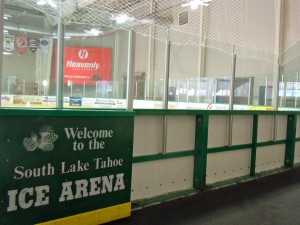
Tongues were as sharp as ice skates during the May 1 South Lake Tahoe City Council meeting. Photo/LTN

Swanson was not alone in questioning O’Rourke’s insistence on doubling the length of the contract from 10 years to 20.

All O’Rourke said to Lake Tahoe News as to why the need for the change was, “We have been discussing this for six months.”

It appeared no one had been discussing it with the council.

Oleson and Cefalu, owners of Tahoe Sports Entertainment, walked out of the meeting Tuesday afternoon without a contract.

Councilman Hal Cole said, “We want to see what you are going to do (before extending the contract).”

Swanson echoed that sentiment, “Why should the city enter a 20-year agreement unless there is an assurance of a plan?”

But the TSE duo wasn’t prepared to show its hand without a contract.

Mayor Claire Fortier said, “This is a community asset. We need to strike a balance between the community and profits.”

Cefalu responded, “I agree it is a community asset. But the local community will not sustain it.”

The city knows this. In some years the city lost $100,000 a year on the rink. That is why South Tahoe went looking for a private operator. TSE is bringing in tournaments to help sustain the business.

TSE last summer was awarded a 10-year contract to run the city ice rink. A month later, in August, that contract was revised because it was discovered a for-profit organization could not make money on an entity being paid for with non-taxable bonds.

A side letter – essentially a new contract – was put in place as the city worked through changing the bonds to taxable. The bonds were resold as taxable and in turn financed at a lower rate earlier this year.

However, that new contract expired Feb. 1. That is why TSE was before the council this week.

But it’s not the same contract as to what the council had agreed to 10 months ago.

TSE wants a 20-year contract. What was never articulated well was why the company needed to double the time frame.

After the meeting, Cefalu told Lake Tahoe News that to do the capital improvements – like another sheet of ice – and to finance it, a 20-year agreement is needed to get financing and recoup expenses. That second sheet of ice was talked about last year, too.

Other changes in the contract that were proposed include changing the fee structure. The monthly fee would go from $3,000 to $2,000. However, the percentage of gross revenue in excess of $600,000 TSE would pay the city would max out at 10 percent, while the original contract had a 5 percent maximum.

Another proposed change is that TSE would be entitled to reimbursement at a depreciated rate for improvements made to and items bought for the facility if the city terminates the contract. However, all of those potential improvements would have to be cleared by the council before the capital investment were made.

Councilman Bruce Grego had a problem with the prospect of the city having to come up with a lump some if that were to occur.

Staff was told to come up with another plan and bring it to the council June 5.

City Attorney Patrick Enright told Lake Tahoe News the agreement that expired three months ago will stay in effect until the council votes on an ice rink contract.

In other council action:

• On a 4-1 vote, with Davis in the minority, garbage rates as of May 1 are 4.97 percent higher.

• Tahoe Bear Box was awarded a bid to put in containers on city property to be paid for from a state recycling grant. It was a 4-1 vote with Grego voting no.


Papers filed to protect rare woodpecker living in Angora burn

By Scott Sonner, AP

RENO — Smokey Bear has done such a good job stamping out forest fires the past half-century that a woodpecker that’s survived for millions of years by eating beetle larvae in burned trees is in danger of going extinct in parts of the West, according to conservationists seeking U.S. protection for the bird.

Four conservation groups filed a petition with the U.S. Interior Department on Wednesday to list the black-backed woodpecker under the Endangered Species Act in the Sierra Nevada, Oregon’s Eastern Cascades and the Black Hills of eastern Wyoming and western South Dakota.

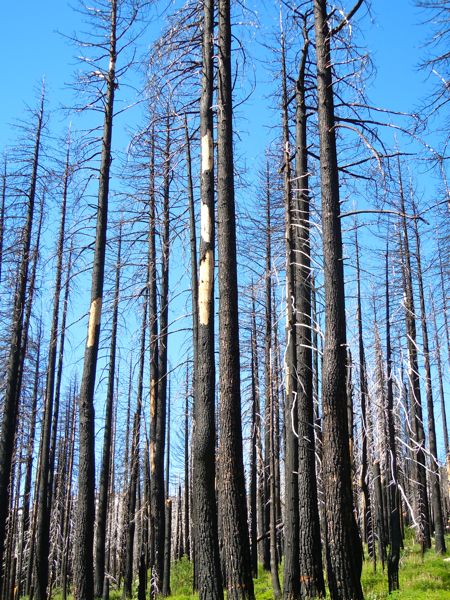
Dead trees like these from the Angora Fire are habitat for a rare woodpecker. Photo/LTN file

It is the first federal petition to recognize the ecological significance and seek protection of post-fire habitat, an expert said.

In addition to fire suppression, the groups contend post-fire salvage logging combined with commercial thinning of green forests is eliminating what little remains of the bird’s habitat, mostly in national forests where it has no legal protection.

“Intensely burned forest habitat not only has no legal protection, but standard practice on private and public lands is to actively eliminate it,” the petition said. “When fire and insect outbreaks create excellent woodpecker habitat, salvage logging promptly destroys it.”

Chad Hanson, executive director the Earth Island’s John Muir Project based in Cedar Ridge, filed the petition Wednesday with the Interior Department’s U.S. Fish and Wildlife Service in Sacramento. Co-petitioners are the

Center for Biological Diversity based in Tucson, Ariz., the Blue Mountains Biodiversity Project in Fossil, Ore., and the Biodiversity Conservation Alliance in Laramie, Wyo.

Hanson, a wildlife ecologist at the University of California, Davis, said the black-backed woodpecker has been eating beetles in fire-killed stands of conifer forests for millions of years and specifically in North American forests for “many thousand years—since the last Ice Age.”

“Now, it’s very rare,” he said.

The best science suggests there are fewer than 1,000 pairs in Oregon and California, and fewer than 500 pairs in the Black Hills, the petition said.

“Such small populations are at significant risk of extinction, especially when their habitat is mostly unprotected and is currently under threat of destruction and degradation,” the document said.

The three-toed, black-backed woodpecker is a specialist at digging out wood-boring insect larvae. The bird’s sooty black dorsal plumage serves to camouflage it against the deeply black, charred bark of burned trees.

Richard Hutto, a biology professor and director of the Avian Science Center at the University of Montana, has been doing post-fire research since the early 1990s. He said it would be difficult to find a forest-bird species more restricted to a single vegetation cover type than the black-backed woodpecker is to early post-fire conditions.

Hanson believes the federal petition is the first to seek protection of post-fire habitat and recognize it as “distinct and ecologically significant.”

“While it may come as a surprise to some, burned forests, and the dead trees associated with them, are essential to the survival of many wildlife species,” said Justin Augustine, a San Francisco-based staff attorney for the Center for Biological Diversity.

Over the past five years, the two have been pressing for protection of the bird through legal challenges to U.S. Forest Service logging projects, primarily in burned forests in the Sierra north and south of Lake Tahoe.

A May 14 hearing is set before the 9th U.S. Circuit Court of Appeals in an ongoing legal battle between the Forest Service and the John Muir Project over salvage logging in woodpecker habitat where 254 homes burned in the 2007 Angora Fire at South Lake Tahoe.

Read the whole story


Sand Harbor bans pedestrian traffic

Starting June 16 people will no longer be allowed to walk into Sand Harbor.

Officials are saying this change is for safety reasons.

People wanting to access the beach can still pay to park there assuming there is room.

The other option is to take the East Shore Express shuttle from Incline Village throughout the day. The transit system will begin operation June 15 daily from 9am to 6pm. The pickup location is at the old elementary school on the corner of Tahoe and Southwood boulevards in Incline Village. The cost is $3 per person and it runs every 20 minutes to Sand Harbor.

In addition, bicycle traffic will only be allowed into the park when the parking lots are not full. During the months of June through August, the parking lots are typically full by 10:30am.

Drop-offs and parking are illegal along the highway at Sand Harbor. The no parking zone covers approximately three-quarters of a mile in both directions from the park’s main entrance. A multi-agency effort to increase enforcement of this no parking zone will be in place to prevent pedestrian injuries.

For further information on the shuttle system, contact the Tahoe Transportation District at (775) 589.5500.


Leg-holds make for gruesome animal deaths

By Tom Knudson, Sacramento Bee

No tool in Wildlife Services’ arsenal kills more nonselectively – or slowly – than the leg-hold trap.

Since 2000, more than 90 species of wildlife have died by mistake in agency traps, including pronghorn antelope, mule deer, river otters, swift foxes, badgers, porcupines and federally protected bald eagles, government records show.

But whether animals are caught accidentally or not, they often struggle for days and die of exposure, injuries and other causes long before a trapper returns to the site.

“They suggest traps be checked once a week, but that’s all it is, a suggestion,” said Gary Strader, a former Wildlife Services trapper in Nevada from 2006 to 2009. “There are traps that are not checked for literally months at a time.”

By then, little is left but steel and bone. “I’ve found traps that were Wildlife Services that were never checked, come across them years later with skeletal remains of skunks or badgers or coyotes,” said Tony Wasley, a mule deer biologist with the Nevada Department of Wildlife.

Leg-hold traps have been banned in more than 80 nations and outlawed or restricted in eight states, including California, where voters in 1998 passed a proposition banning leg-hold traps, but allowing padded traps in some situations.

Read the whole story


Science of river restoration emphasis of weeklong course in Truckee

Geomorphic and Ecological Fundamentals for River and Stream Restoration is a weeklong course at the Sagehen Creek Field Station in Truckee.

The Aug. 13-17 program is an introductory course emphasizing the understanding of geomorphic and ecological process as a sound basis for planning and designing river restoration, covering general principles and case studies from a wide range of environments. Incorporating insights from recent research in fluvial geomorphology and ecology, the course emphasizes developing predictive connections between objectives and actions, learning from built restoration projects, and developing restoration strategies and innovative management approaches to address underlying causes of channel or ecosystem change, rather than prescriptive approaches.

The course integrates perspectives from leading academic researchers to consulting practitioners in river restoration, and across that spectrum it draws on a range of approaches from state-of-the-art hydraulics and sediment transport, historical geomorphic-ecological process analysis, urban-infrastructure-focused approach, to resource-focused approaches.

In addition to field techniques, the course uses spreadsheet models to calculate sediment transport and channel design based on this analysis, map and aerial photo analysis, and sequential problem solving in approaching restoration of fluvial processes. The course includes field trips to the Truckee River and streams in the Lake Tahoe Basin, and workshops on stream restoration problems faced by participants for discussion and ideas on analytical approaches and resources.

This course emphasizes integration of hydrology, hydraulics, sediment transport, geomorphology, aquatic ecology, fisheries, and riparian ecology, and includes field measurements, mapping, and interpretation. An advanced course focuses explicitly on geomorphic, sediment transport, and riparian vegetation principles applied to channel design.

For more information and registration details, go online.