South Tahoe Chamber celebrating five years

South Tahoe Chamber of Commerce is celebrating its fifth birthday May 24 at Lake Tahoe Golf Course in Meyers.

No host cocktails and meet-greet will be an hour starting at 5:30pm, with dinner starting at 6:30pm.

RSVP by May 18 to (530) 542.5060 or (530) 544.7412.


Sides being taken in South Shore loop road project

By Kathryn Reed

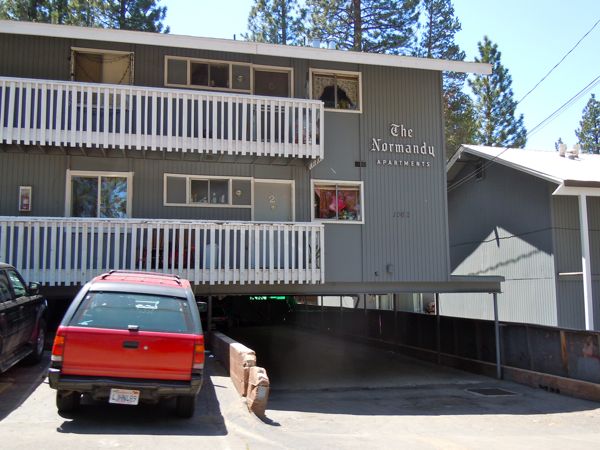
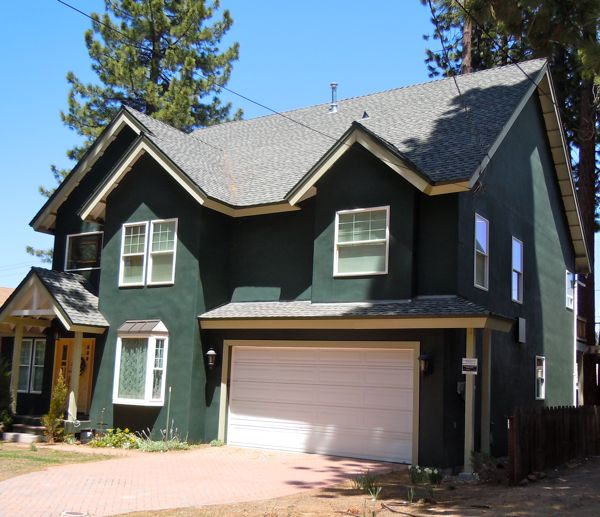
Driving down Fern Road it’s one of those typical South Lake Tahoe streets with a variety of housing options. Apartments are at the east end, various size single-family residences closer to Highway 50 – including a fairly decent size dwelling. Sprinklers are going, gardens starting to sprout. Kids toys are out and about.

It’s a neighborhood.

If planners have their way, it will be a state highway.

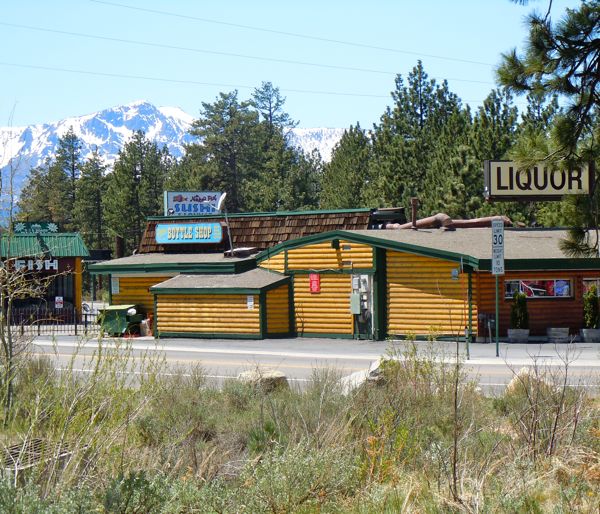
From the cul de sac at Fern is a paved path to the corner of Highway 50 and Pioneer Trail. There sit a variety of businesses – liquor store, sushi restaurant, pizza and ski shop. Places locals go to as well as tourists.

The owners and operators are in a prime location. They wonder where an equal parcel with the same foot and vehicle traffic could be found in town if planners relocate them.

Across the highway is the Holiday Inn Express. Access to that hotel will be dramatically affected if the proposed loop road goes in.

There is already a loop road behind the four main Stateline casinos. But the bulk of traffic stays on the straight thoroughfare through the casino corridor.

Tahoe Transportation District is the lead agency plotting a course that would widen the route behind Harrah’s Lake Tahoe and MontBleu because it would be a state highway. On the California side it will eliminate 88 dwellings where 245 people live. Thirteen businesses would be affected in some way. “Affected” was not defined at the May 11 TTD board meeting.

A house on one end of Fern Road.

Housing on the other end of Fern Road that would be wiped out if the Loop Road goes through. Photos/Kathryn Reed

The route would in some ways follow the back way locals go to avoid the casino area.

Highway 50 through the tourist corridor would become a city street on both sides of the state line.

While an underpass and overpass were talked about in the planning stages of the would-be convention center to link that site with Heavenly Village, Caltrans approval was never secured. If the loop road project goes forward, then it would be South Lake Tahoe that would have the say regarding an underpass-overpass.

Environmental gain is touted as a reason to do the loop road, but the reality is the project has always been about creating a better atmosphere for people walking in the area. So, better for tourists and the businesses that service tourists in the Stateline area.

Businesses that would be affected if the highway is rerouted.

But with a road still dividing the casino properties, it won’t be all that pedestrian friendly.

Gone, though, would be the through truck traffic.

This project is also tied to the South Shore Vision Plan – a public-private revitalization project that would overhaul the area from Ski Run Boulevard in South Lake Tahoe to Kahle Drive in Stateline.

Of the 13 members of the public who spoke, seven voiced support for the project, five were against and one asked questions.

Angie Watson, who owns apartments on Fern Road, said she wasn’t surprised to hear her tenants liked the idea of a $12,000 cash payment that has been talked about.

“I have a lot to lose,” she told the TTD board during the meeting at Embassy Suites. “I don’t understand how the loop road will bring business. Is it for the 2½ months we have good weather?”

Fern Road parallels the backside of the formerly named Crescent V Center. Nearby streets that would be affected are full of people who walk to work.

Shawn Kearney, owner of Tahoe Duck Tours, says she hears all the time from tourists about how pretty the area is, but the town looks like a dump.

“Relocating the highway is a chance to reinvent ourselves. It’s not wise to rest on our laurels,” Kearney said.

Few people disagree the South Shore as a whole is in need of upgrades to the way it looks. How that happens is the sticking point.

Inertia has partly set in because redevelopment projects like the loop road are talked about for decades so property owners don’t want to make a substantial investment if they don’t have the opportunity to get a return on that investment. Another reason is the Tahoe Regional Planning Agency has eliminated a true free market by making tourist accommodation units and commercial floor area commodities. TRPA has also been the spoke in the wheel of progress for converting dilapidated hotels into another use.

What the TTD board agreed to on Friday was to establish a citizen review committee and established a 30-day comment period for when the relocation plan is released. That is expected to be released to the public by the end of the month.

The South Lake Tahoe City Council is having a special meeting May 29 from 6-8pm at Lake Tahoe Airport to discuss the loop road. The city has eminent domain powers, which means it could take a private entity’s parcel for a project like this. However, a previous council on a 5-0 vote passed a resolution saying eminent domain cannot be used. That decision could be overturned if four council members agree to do so.

TTD staff said a series of meetings would be scheduled throughout the summer for people to learn more about specifics of the project, such as what happens from their meeting May 15 with the design consultants, and for staff to gather input from proponents and opponents.


Placer County has little-known star on Hollywood Walk of Fame

By Gus Thomson, Auburn Journal

Loveable irascible Fred Clark is far from a household name.

And he may be little more than a second banana in the Hollywood moviemaking jungle.

But he’s Placer County’s second banana. He was born in the Mt. Pleasant district between Auburn and Lincoln March 19, 1914.

And – this is an important caveat – his star on the Hollywood Walk of Fame is the only one of the more than 2,000 that honors a native of Placer County.

Who was Clark? In the Placer County realm, he was the son of England-born Frederick Clark, an attorney who came to Placer County because of the healthy air and became a successful orchard owner. Clark’s mother, Stella,was a school teacher from Chico beloved by the few and last students at tiny Mt. Pleasant school, which closed in 1919.

The junior Clark was also the joker who would quote a popular ditty in the Lincoln High School yearbook asking whether “your chewing gum loses its flavor on your bedpost overnight?” He graduated in 1930 from Lincoln High and went on to Stanford, where he began to find a future in acting. 1938 found him on Broadway for the first time. After taking a break for Navy and Army service in World War II, Clark would inhabit hundreds of memorable roles in Hollywood films and TV programs until his death in 1968.

Read the whole story


Opinion: TRPA thresholds mostly being met

By Claire Fortier

Seven years, countless meetings and 2,500 pages later, the TRPA draft Regional Plan update and supporting documents are finally ready for your reading enjoyment. While not the action-packed read of a Harry Potter or dark pleasure of “Fifty Shades of Grey,” the four tomes of the TRPA have some unexpected plot twists.

Key among those surprises is the Threshold Evaluation Study, a report I consider the prelude to the Regional Plan because understanding what worked well environmentally after the 1987 Regional Plan helps inform us what needs attention in the new plan. This review, which was done at the behest of California, examined 151 standards of measurement for nine threshold categories, which include fish habitat, wildlife habitat, vegetation, soil conservation, scenic resources, air quality, water quality, noise and recreation.

Claire Fortier

What the Tahoe Regional Planning Agency found was comforting, concerning and confounding.

First comforting: 63 percent of the thresholds mandated under the TRPA compact have not further degraded the environment nor were impacted by humans in the basin. Moreover, 29 percent of indicators were considered improved or improving.

Only 8 percent were labeled as trends of concern. Those focused on water quality and noise. But more on those later.

In the meantime, the fish seem to be swimming and spawning unhampered. With the recent introduction of the Lahontan cutthroat trout, a major TRPA milestone was realized. But the cutthroat presents a new conundrum — every new project or rebuild, from water quality collection to road repairs, will now have to consider its impacts on our newly “endangered” species.

The peregrine falcon is back, as are the osprey and northern goshawk. The goshawk seems to have surprised scientists. They are more seasonal visitors than constant residents, returning when their kind of food is plentiful and leaving when its not.

The vegetation of the Tahoe basin appears to be blooming quite well. Although old-growth forest, essentially eliminated during the Comstock era, is meeting Mother Nature’s schedule, it’s not adhering to the man-made threshold schedule. It could take a century or more before new growth becomes old-growth.

The other surprise is that the endangered Tahoe yellow cress is only endangered in wet weather or high lake levels. During dry seasons and low lake levels, the yellow cress is as plentiful as the dandelions in my front yard.

Soil conservation has shown great improvement, except in one area, stream restoration zones. Restoring those zones is one of the critical issues in the proposed Regional Plan. But it is very difficult to convince someone to remove their home or business from an SEZ, particularly if it has been there for decades, without significant incentives.

Breathe deeply: our air is even fresher than before, thanks to cleaner burning cars and fewer visitors.

Scenic thresholds are improving, but exactly what that means eludes me. While there are benchmarks for scenic improvement, I still believe beauty or ugly is in the eye of the beholder. While no one in Tahoe is seeking Las Vegas gaudy as a standard for our lake, I do believe this threshold is simply leveraged for anyone who does not want change in the basin.

In short, seven out of the nine thresholds are in good shape and getting better.

Which leaves us with the concerning ones. The first is water quality. Aside from the Secchi dish standard, or mid-lake water clarity, there are significant near shore problems. With all the scientists involved at Lake Tahoe, few, it seems, are dipping their toes in the water that most people see, feel and play in on a daily basis. There is some move afoot to focus on near shore, but this needs far more attention than we have given to it.

The other area that is out of compliance is noise. This topic is extensive and one I hope to address in much more detail. But, in short, any noise, even a single event like a noisy motorcycle or the South Lake Tahoe’s air fest, puts us out of compliance with the noise standard.

Noise was a significant area of concern in the threshold peer review, where scientists from outside the basin looked over the threshold study. They thought the noise standard was simply impossible to obtain and poorly measured.

Which brings me to my final category: confounding. What is absolutely confounding to me is the recreation threshold. While every other threshold has a multitude of qualifiers, recreation has two: Are there recreational opportunities and are they available to most people? The answer to both is yes. In other words, as long as people can get to the lake or the woods that threshold is met.

Compared to standards that the goshawks and yellow cress enjoy, recreation seems an afterthought. But the message is clear. Thresholds were never intended to include humans in the mix, and that is a fundamental flaw of basing all planning on threshold attainment.

Claire Fortier is mayor of South Lake Tahoe and the city’s rep on the TRPA Governing Board.


Multi-state drug case ends with arrest, seizure of drugs-cash in El Dorado County

By Cathy Locke, Sacramento Bee

The El Dorado County Sheriff’s Department announced one arrest and the seizure of more than $236,000 in cash, assault weapons and marijuana plants in a drug trafficking case that extended to Florida, Virginia and North Carolina.

The Western El Dorado County Narcotics Enforcement Team began the drug trafficking investigation Friday and discovered that a suspect in North Carolina was under investigation by authorities in that state for sales of marijuana, according to a Sheriff’s Office news release. Several other suspects in other states also were involved in the sales and distribution of marijuana that was being shipped from suspects in the El Dorado County area, officials said.

Read the whole story


Opinion: Important to know the rules before construction begins

By Michael Lavallee

In general, a building permit is required before doing construction work. This includes building, plumbing, electrical and mechanical work. Section 105.1 of the adopted California Building Code states:

Deck Repairs Require a Permit “Any owner or authorized agent who intends to construct, enlarge, alter, repair, move, demolish, or change the occupancy of a building or structure, or to erect, install, enlarge, alter, repair, remove, convert or replace any electrical, gas, mechanical or plumbing system, the installation of which is regulated by this code, or to cause any such work to be done, shall first make application to the building official and obtain the required permit.”

The code also includes a long list of exceptions. Some of the more common ones include, one-story detached tool or storage accessory structures less than 120 square feet, fences not over six feet in height, retaining walls not over four feet in height from the bottom of the footing to the top of the wall, painting, papering, tiling, carpeting, cabinets, counter tops, similar finish work, cord and plug connected heat, vent or air conditioning appliances, replacement of minor parts, stopping of plumbing leaks, replacing a toilet seal, or emergency work as long as a permit is obtained the next business day.

A complete list of all exceptions can be found on the Truckee website where the Building and Safety Division has prepared a policy. The policy includes specific code wording, code exceptions and additional specific Town of Truckee exceptions. It can be found online.

Work that involves new buildings, additions, bathroom or kitchen remodeling, replacement of building systems including roofs, water heaters, furnaces, siding, windows, plumbing, electrical or mechanical work requires a permit. To assure an erosion hazard is not created, grading or excavation work that disturbs over 500 square feet or that involves over 20 cubic yards of cut or fill requires a permit.

The above are building code requirements only. Work also needs to comply with Town Planning and Engineering standards. Exterior work to buildings located in the historic district requires historic design review by the Town. In all areas, retaining walls are regulated when located within required property setbacks. The Planning Division can be reached at (530) 582.7820, and Engineering can be reached at (530) 582.2911.

Obtaining a permit and required inspections will assure that work is done correctly, is safe, and meets minimum adopted codes. Please be aware that there are penalties for doing construction work without a permit, and if work was done in violation of the code, it may need to be redone. If you are not sure whether or not a permit is required, please call the Building and Safety Division at (530) 582.7820.

Michael Lavallee is the chief building official for the town of Truckee.


Camp Concord to remain open on South Shore

By Matthias Gafni, Contra Costa Times

As the Concord City Council weighed options Tuesday night to address a $3.5 million structural deficit, it sent a strong message to staff that saving $300,000 by closing Camp Concord would not be considered.

The camp, near Lake Tahoe and created more than four decades ago to serve the city’s youth, was a jewel for the community, all five council members said. They asked staff to find ways to save the camp and increase the occupancy rate, which has dwindled in recent years.

In addition to council support, numerous campers came to the meeting and voiced their concerns that the campground — which is owned by the federal government, but operated by the city of Concord — would be shuttered.

Staff had recommended ending operations and selling off its assets, such as the bath houses, cabins and other infrastructure at the site.

At the budget workshop, the council also discussed forcing school districts to shoulder the funding for five school resource officers patrolling campuses, potentially saving the city $900,000.

No formal decisions will be made until June.


Sailors’ Swap Meet at Tahoe Keys Marina

The Lake Tahoe Windjammers Yacht Club is hosting a Sailors’ Swap Meet on May 19 from 11am-2pm.

Sailboat parts and pieces, boat gear, sailing clothing and more will be available.

Do some spring cleaning and bring some stuff to sell or swap. Or come with cash and find deals on all kinds of boating treasures.

The swap will be in the building next to the Fresh Ketch, upstairs from Harbor Master’s Office at the Tahoe Keys Marina.


Allegations swirl around El Dorado County judge candidate

By Carlos Alcalá, Sacramento Bee

The case of a fugitive jailed in Sacramento on federal fraud charges this week may have ramifications in the June 5 race for El Dorado Superior Court judge.

Daniel Chartraw, now held without bail on the fraud charges, was once represented by candidate Joseph A. Hoffman in another matter, and some observers question whether Hoffman acted properly on Chartraw’s behalf.

Hoffman’s supporters, including prominent members of the legal community, say they’ve seen no indication of any wrongdoing.

Hoffman’s publicist Greg Jones released a statement saying: “Judges, prosecutors and other legal professionals endorsing Joe know the law and see this for what it is: a desperate and politically motivated ploy that lacks any substance.”

Much of Hoffman’s connection to Chartraw comes out in a criminal complaint filed in U.S. District Court in February, accusing Chartraw of using interstate means to commit fraud in 2010 and 2011.

That complaint was used when Chartraw was arrested in San Ysidro in late April, after Mexican authorities detained him in Baja California.

Read the whole story


Lakeview Commons — battle rages on over lease, name

By Kathryn Reed

Does the landowner or the lessee have the right to name a piece of property?

That is the fundamental question as to what the name of Lakeview Commons in South Lake Tahoe will permanently be called.

City officials believe the name is fine based on the decision earlier this month not to sit with county officials to discuss the name.

Ever since the county leased this land to South Lake Tahoe the two government bodies have been squabbling. Photo/Kathryn Reed

El Dorado County officials on Tuesday spent considerable time discussing the whole area, which includes both sides of Highway 50. The entire area is loosely called the 56-acre project because that is how large the area is.

Phase one of two for the waterfront area is what is called Lakeview Commons. But at issue is how it got the name, whether it was a working name and who gets to have final say regarding the name.

Supervisor Norma Santiago gave a history about the area, which goes back to the 1920s when longtime families gave the land to the county to be used in perpetuity as open space.

South Lake Tahoe leases the land from the county. Through the years a number of agreements, leases, and memorandums of understanding have been signed between the government bodies.

South Lake Tahoe Assistant City Manager Nancy Kerry spoke on behalf of the city and for the council at the May 8 supervisors’ meeting in Placerville.

“It’s a false controversy about the name that has been used well over three years,” Kerry said. She even pointed out how all the supervisors’ documents listed the discussion item as Lakeview Commons.

Santiago, to her board said, “I ask for support for county counsel to work with our facilities group to look at the lease for clarity of what is contained in the lease in regards to any aspects of what happens on this property.”

On the May 15 council agenda is an item to possibly appoint a subcommittee for review of the lease agreement at El Dorado Beach-Lakeview Commons.

Supervisor Jack Sweeney has records dating to 1968 that he cited, where the land is called South Lake Tahoe-El Dorado Recreation Area. That name was what was used on working documents as the 56-acre project got under way until it morphed into Lakeview Commons.

Supervisor Ron Briggs said, “I never once thought we approved Lakeview Commons.”

Keeping it named El Dorado Beach, as the area was known before the $6 million renovation of the site, is what the majority of the supervisors want.

Supervisors Sweeney and Santiago were appointed to the El Dorado Beach ad hoc committee to look into the lease and work with the city.

The board will have its annual Tahoe meeting June 25. At that time a report to the board about the lease would likely be made.

However, on June 20 is the dedication by the city of Lakeview Commons.

Supervisors said a plaque can always be replaced if the name on it should be changed. The city has ordered the plaque. It says Lakeview Commons at El Dorado Beach.

Kerry mentioned how every City Council member who ever had anything to do with the project has a right to their name on the plaque. Plus, state reps, including a slew from California Tahoe Conservancy – the agency that funde the renovation – will be on the plaque.

The supes want the people of El Dorado County to be on the plaque and not their names or any other electeds. There was a little discussion about the order of the words, at which time Sweeney made a homosexual slur which can be heard at the very end of the video from this agenda item.