‘Gomer Pyle’s’ ties to Tahoe, Indianapolis 500

By Associated Press

INDIANAPOLIS — Jim Nabors is back home again in Indiana, this time to say farewell.

The actor whose bumbling Gomer Pyle character endeared Nabors to an entire generation, and whose rich baritone has provided the soundtrack for the Indianapolis 500 for more than four decades, will perform “Back Home Again in Indiana” on Sunday for the last time.

“I’ll be honest with you, I didn’t want to stay too long at the fair,” the 83-year-old Nabors said with a hearty chuckle. “Everyone has been so incredible to me so many years. The first time I was here was 1972, so I guess most people have grown up with me.”

Indeed, millions of race fans have come to know Nabors not for his character on “The Andy Griffith Show” and its spinoff, “Gomer Pyle, U.S.M.C,” but for his Memorial Day weekend tradition.

Jim Nabors, who will sign "(Back Home Again in) Indiana" for his final time at tomorrow's Indianapolis 500 IndyCar auto race, tries on a ring the was presented to him during the drivers meeting at the Indianapolis Motor Speedway in Indianapolis, Saturday, May 24, 2014. The 98th running of the Indianapolis 500 is Sunday. Nabors has sung the song for 37 years during pre-race festivities. (AP Photo/Darron Cummings)

Jim Nabors will sign “(Back Home Again in) Indiana” for his final time at the Indianapolis 500 . Photo/Darron Cummings

“To many Indianapolis 500 fans the pre-race pageantry is as important as the race itself,” Indianapolis Motor Speedway president J. Douglas Boles said this week, “especially as the lead-up reaches its highest point with Jim Nabors singing ‘Back Home Again in Indiana’ and Mari Hulman-George giving the command to start engines.”

People tend to forget Nabors was actually born in Alabama. He moved to California when he started out in show business, and was performing in Lake Tahoe one day for an audience that included Bill Harrah. The casino magnate happened to be a car aficionado, and he invited Nabors to attend the Indy 500 for the first time.

Nabors was supposed to be there as a fan, but Tony Hulman had also seen Nabors perform in Lake Tahoe, and the speedway’s owner asked if he would sing along with the Purdue marching band prior to the race. With that, Nabors picks up the story:

“So to the conductor of the Purdue band, I said, ‘What key do you do this in?’ And he looked at me funny and said, ‘We only have one key.’ I said, ‘No, the “Star-Spangled Banner” has two keys.’ And he said, ‘You’re not singing that!’ And I said, ‘Well, what the hell am I singing?’ It was only five minutes to race time, too, and there’s 500,000 people here,” Nabors said.

“He says, ‘It’s the traditional song that opens the race, “Back Home Again in Indiana.'” I kind of looked at him and go, ‘I’m from Alabama!’ And he started laughing and asked if I knew it. And I said, ‘Well, I know the melody but I don’t know all the lyrics.’ So I’m writing them on my hand. The first time I ever sang it, I wrote it on my hand.”

He knows every nuance by heart these days. While missing the race a handful of times over the years because of illness and other conflicts, Nabors’ rendition of the Hoosier State’s unofficial anthem is as much a part of race day as the milk swilled by the winner in Victory Lane.

In truth, his health is a big reason that Nabors is stepping away.

“I had a liver transplant, then I had a pacemaker put in, then I had a new knee put it, then I had a heart valve put in,” he said. “I’m almost brand new. I have a lot of new parts.”

There is always emotion when Nabors grabs the microphone on race day, and there will no doubt be tears flowing when he does it for the final time. But when asked who he would like to see take over, Nabors gazed out at a throng of fans gathered in the infield.

“I think y’all should do it. You know the words,” he said. “I know y’all can sing better than they can at the Kentucky Derby, and they all sing. So why can’t you sing?”

With that, a fan called out for Nabors to sing a few lines.

He did, and the crowd took over: “When I dream about the moonlight on the Wabash,” they sang in unison, as Nabors leaned back and smiled, “then I long for my Indiana home.”



‘Older’ crowd hard to describe with words

By NPR

About one-fifth of the U.S. population will be 65 or older by the year 2030. NPR’s Ina Jaffe covers this population — and says it’s often difficult to find the right words to describe it.

“I realized what a minefield this was after I’d been on the beat just a few months,” she says. “I did profile of this 71-year-old midwife. She’s still up all night delivering babies, and the headline on our website — and reporters … do not write the headlines … described her as ‘elderly.’

“Listeners were furious,” Jaffe continues. “Maybe once upon a time, ‘elderly’ referred to a particular stage in life, but now people think … it means you’re ailing and you’re frail.”

Jaffe sometimes uses “older adults” or “older Americans,” she says, if it’s relevant to the story. “Sometimes I use the term ‘senior’ — though I’ve met some older people who don’t like that, either. And ‘senior citizen’ really seems to annoy just about everyone now. … There really aren’t a lot of widely acceptable terms anymore.”

A traffic sign in the U.K. depicts “elderly people” as frail and hunched over. It was first created in the 80s, but many now consider it out of date.

So, there lies a paradox: Everyone wants to live a long time, but no one wants to actually be old.

Read the whole story


Report: Kids being medicated at alarming rate

By Alan Schwarzmay, New York Times

ATLANTA — More than 10,000 American toddlers 2 or 3 years old are being medicated for attention deficit hyperactivity disorder outside established pediatric guidelines, according to data presented last week by an official at the Centers for Disease Control and Prevention.

The report, which found that toddlers covered by Medicaid are particularly prone to be put on medication such as Ritalin and Adderall, is among the first efforts to gauge the diagnosis of A.D.H.D. in children below age 4. Doctors at the Georgia Mental Health Forum at the Carter Center in Atlanta, where the data was presented, as well as several outside experts strongly criticized the use of medication in so many children that young.

The American Academy of Pediatrics standard practice guidelines for A.D.H.D. do not even address the diagnosis in children 3 and younger — let alone the use of such stimulant medications, because their safety and effectiveness have barely been explored in that age group. “It’s absolutely shocking, and it shouldn’t be happening,” said Anita Zervigon-Hakes, a children’s mental health consultant to the Carter Center. “People are just feeling around in the dark. We obviously don’t have our act together for little children.”

Read the whole story


Letter: Power to the people — yes on L

To the community,

As a homeowner and longtime resident of South Lake Tahoe, the library is important to me because it provides a link to knowledge, and everyone knows knowledge is power: Power over poverty, power over ignorance, and power over circumstance.

To live and work in a community where power is in the hands of only the few would be quite stifling and recalcitrant.

Luckily for all of us, the citizenry of South Lake Tahoe feels otherwise, and votes accordingly. I only hope that the prevailing wind, with an emphasis on technology, will see the broader picture and realize that not all citizens have access to the same resources. The library provides that link to technology and to knowledge that many lack in their homes and residences.

Please vote yes again to keeping our library open and accessible to all. Vote yes on Measure L.

Sincerely,

De-Anne Hooper, executive director South Lake Tahoe Family Resource Center


Adventure games at Squaw just for kids

Registration is open for the Kids Adventure Games taking place at Squaw Valley on June 28.

Kids Adventure Games, designed for children ages 6 to 14, will feature teams of two competing in mountain biking, hiking, ziplines, a Tarzan rope swing, giant slope-n-slide, cargo nets, mud pits and more.

Squaw is one of eight mountain resorts to host the event.

The race is from 8am-6pm. The exact race course is kept a secret until race day. Kids will be given a map and must navigate their way through the course. Parents are encouraged to watch and cheer on their kids from the sidelines. The course is a parent-free zone.

To accommodate different racing abilities, younger or beginner racers will compete on a short course. Older racers will compete on a longer course with more challenging obstacles.

Cost for the race is $120 per team of two through June 1. After that date, the cost increases to $150 until registration ends on June 14 or the race is full. Online registration is available.


Class teaches how to make holiday arrangement

Lake Tahoe master gardeners are going to show people how to make a 4th of July Bowl.

Bring a 14- to 16-inch color bowl with fresh soil. The secret to healthy containers is good dirt. The gardeners will supply the plants. There will be ornamentals as well as edibles, all with a red-white-and-blue theme.

Advance registration is required and may be done online.

Each of the free classes is from 5:30-6:30pm.

  • June 30 — Lake Tahoe Community College Demonstration Garden, 1 College Drive, South Lake Tahoe
  • July 1 — TERC Tahoe City Field Station, aka Historic Fish Hatchery, 2400 Lake Forest Road, Tahoe City
  • July 2 — North Lake Tahoe Demonstration Garden, Sierra Nevada College, 999 Tahoe Blvd., Incline Village.


CalFire crews training with little water

By Patrick Walker, KXTV

AUBURN -– Firefighters are ready for what could be a long and busy summer ahead.

Extreme conditions and low water levels may make it even harder for crews to battle wildfires this season.

“The drought has absolutely left the conditions tinder-dry, and obviously very explosive,” CalFire spokesperson Daniel Berlant said.

New recruits are training this week at CalFire’s Auburn facility, and they are learning not to depend too heavily on water.

“We’re still going to need to use water, but we may use hand tools, we may use other fire-suppression techniques that don’t require as much water,” Berlant explained.

These techniques are nothing new.

Read the whole story


Price impacts what people think of food

By Kevin Short, Huffington Post

Which of these plates looks like a better meal to you?

food cost

According to science, you’d probably be happier with meal No. 2, since it’s more expensive. A new study out of Cornell University found diners tend to rate the quality of their food higher if they pay more for it, and people who pay less for the same exact meal report feeling more guilty, bloated and uncomfortable.

“We were surprised by the results. Especially, we found that pricing has little impact on how much one eats, but a huge impact on how one interprets the experience,” Brian Wansink, a co-author of the study and professor of consumer behavior at Cornell University, told Huffington Post.

The researchers offered 139 diners an all-you-can-eat buffet at an upscale Italian restaurant for either $4 or $8 dollars. Though the diners ate the same food and the same amount, those who paid $8 rated their meal an average of 11 percent higher. The $4 diners were more likely to feel guilty and that they’d overeaten.

The study adds to the body of research around how to maximize restaurants’ bottom lines while managing customers’ waistlines. Price cuts can actually hurt people’s perception of a restaurant and cause diners to feel their meal was less worthwhile, the researchers found.

Read the whole story


Camp teaches kids grief is a part of life

By Susan Wood

Steven Gerling shrugs at the thought of being a role model to young children so early in life – age 16. He’s modest. He’s responsible. He’s sensitive. And he’s ahead of his time – for reasons that have made him grow beyond his years.

He’s lost four grandparents, all whom he was close to, in less than five years. With the first loss of his grandpa Jim in 2010 and grandma Mary in the same month of the following year (both on his father’s side), he ended up at Camp Sunrise with his siblings.

The free camp sponsored by Barton Home Health and Hospice is like no other. It’s set in the beauty of Glenbrook’s spiritual retreat Galilee every spring, a time of renewal. It’s specifically designed for ages 7 to 14.

Were there highs and lows?

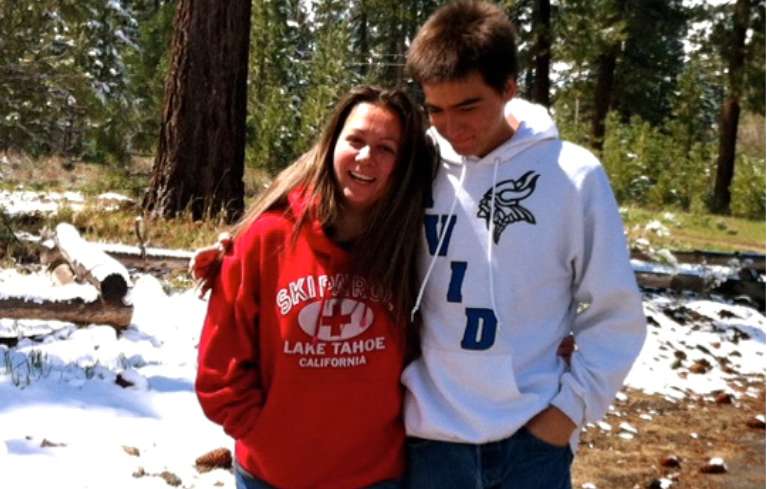
Mom Melissa barcus spends tender moment with son Steven feeling

Melissa Barcus with son Steven Gerling. Photo/Susan Wood

“My high was the whole experience – the fun activities, even the crying. It was a good thing to let it all out,” he told Lake Tahoe News. “There were no lows.”

To this day, tears well up when he thinks of the special relationships he had with his grandparents.

Regrets are few, but memorable, as is the case with most cases of grief. The teen had wished he had spent more time with his grandmother.

This is one example of the honesty that comes out at Camp Sunrise.

“My first thought was (my kids) don’t need this. How depressing. But then I thought they don’t necessarily want to talk to me about everything. They came back different, like they grew. It’s made our relationship stronger. We’ve always been one unit, but it does make you closer,” mom Melissa Barcus said of her four children — Steven, Jason, Michael and Sydney.

The family of five eats dinner together every night (with no cellular phones at the table), and they often go for walks after the meal. She specifically held back and let them approach her after the camp experience because she “didn’t want to invade their privacy.”

All of a sudden, the floodgates opened and the children opened up like never before.

“I think it’s one of the best things that’s happened to my kids,” she said.

Upon his return, Gerling gripped his mom a little tighter during their usual hugs.

The teen started out as a participant in 2010. He got so much out of it that he asked Barton camp organizer Tina Bruess how many years he could attend. When he maxed out at age 14, that didn’t stop him. He chose to volunteer last year. He’ll do the same for this year’s camp slated from June 13-15. And he’s still dealing with loss having lost two more grandparents in the last two years.

As anyone who has suffered from a loss of a loved one knows, you find kin in the fellowship of those who have experienced it. Children going through grief offer a different dimension of dealing with this life lesson.

“It’s especially hard for children. They know grandma and grandpa as big people. Then, their physical presence is very different,” Bruess said, while sitting to reminisce with Gerling and Barcus. “We let kids know it’s a safe place to cry, but they can always be a kid.”

One of Bruess’s fondest memories is how Gerling tucked in his little sister, Sydney, every night to check on her and give her a hug and a kiss.

Neither Bruess nor Barcus was surprised by the behavior.

“He knows what it feels like to have a loss and the younger kids feel like he’s cool and has made it through (the experience),” Bruess said, recalling how many of the younger children climbed all over Gerling for comfort and support.

“For Steven, it’s natural for him,” Barcus said, turning to her son. “You’re a protector.”

Such is the dynamic of the varied ages and roles at the camp. Parents join their children for part of the last day, after the participants have completed some heartfelt exercises on their own.

Gerling preferred the “memory” rocks the children placed in a labyrinth, a spiritual ring of hope. They also make “power sticks,” in which the children dress up a piece of wood with materials that symbolize the loss or a characteristic about the bereaved.

“Their power sticks are still hanging in their bedrooms,” Barcus said of her children’s receptiveness to the exercise.

Each year, Gerling’s power stick has a different look.

To that, Bruess indicated: “Grief evolves.”

No one knows better than the hospice services coordinator. She has staged many bereavement events and activities. This reporter participated in a moving tribute to a sister’s memory that Barton Hospice put on last Christmas season. The health care department also goes to South Tahoe High School to do focus groups on grief. Camp Sunrise is Barton Hospice’s premier event.

“Camp Sunrise provides a supportive space for grieving children to explore and express their feelings of grief,” said Rebecca Phillipsen, licensed social worker and camp co-director.

For more information, call 530.543.5614.


Opinion: Telemedicine changing health care

By Ann Truscott

Expanding access to health care in rural communities requires innovation and collaboration. In remote areas like South Lake Tahoe with smaller populations, residents still expect high quality care and individual medical needs vary widely.

To increase specialty medical services available in our community, with consideration that unique medical conditions may not have the demand for a local office, Barton Health launched telemedicine in 2009.

Telemedicine, or telehealth, is an exchange of medical information through electronic communication. Saving time and gas money, a patient can conveniently see a specialist from a distant location. Using a live video stream, a specialist at another location discusses the patient’s medical condition and views the patient’s medical records, vitals, images, and other pertinent information electronically. All appointments and documents are kept confidential and transmitted over a secure network.

Telemedicine technology expands the spectrum of care. Without leaving town, a patient receives specialized care and continuity with his or her current care plan. Local medical providers play an active role in the process and expand their own skills. This patient-centered approach helps meet the patients immediate health needs, leading to more successful outcomes.

All Barton Telemedicine consultations take place with licensed medical providers. It is also reimbursed by most health insurance carriers and Medicare. Barton Telemedicine providers are located at larger medical centers, like UC Davis and UC San Diego. Barton also has arrangements with smaller practice providers from Truckee, Roseville, and Bakersfield. Current specialties available include cardiology, dermatology, endocrinology, infectious diseases, neurology, oncology, and psychiatry.

Barton has been recognized as a leader in telehealth services in California. In its fifth year, Barton hosts between 150 and 200 consults each month between Barton Memorial Hospital, skilled nursing, the emergency department, and five physician offices. Barton staff holds trainings for rural communities on how to integrate Telehealth and Barton Telemedicine received the California Telehealth Network Award for “Community Collaboration” in 2013.

Telemedicine continues to evolve and expand. In 2012, Barton was instrumental in encouraging the Federal Communications Commission to allocate funds for broadband access to rural areas and promote the expansion of telehealth services. To cover costs, Barton has received grants and mini-grants to grow the program. Future projects include neonatology consults with UC Davis Medical Center and a Telehealth reimbursement grant to identify costs and savings associated with the expansion of remote services.

For more information and complete list of services available with Barton Telemedicine, contact your local primary care provider or visit bartonhealth.org/telehealth.

Ann Truscott is the Telemedicine Coordinator for Barton Health.