Letter: El Dorado County needs to vote smart

To the community,

One of the great oxymorons for El Dorado County is that the political registrations are highly favorable to Republicans, so why do we have so many Democrats elected to our county offices? I get it that Democrats have certain policies that they favor, such as Sanctuary State, Planned Parenthood, hate Trump, gun confiscation, speech restrictions, and protection of illegal aliens and restriction of representation.

Stephen Ferry

Republicans, on the other hand support, the elimination of Sanctuary policy for the state, they are “pro life,” support President Trump, want to retain their guns and ammunition, support freedom of speech and religion and think that the public should be protected by our police/sheriff not the criminal. They also support requiring proper representation in our state Senate.

These are very clear differences and it would seem that the choice of who to vote for would be easy, but it’s not, and it is not for one reason. The Democrats found that land use is a very powerful trigger in EDC and they have narrowed the debate to just this issue. A small contingent of folks have ruled the narrative on this subject in spite of losing in court on Measure E, which would have taken away the public’s rights (that is you) on land use. This contingent of folks have complained that the Zoning Ordinance Update (ZOU) was badly done even though it is a requirement of state law to update the General Plan on a regular basis. This group even tried to recall the Board of Supervisors because the BOS obeyed state law.  

Check this quote from the El Dorado County Alliance for Responsible Planning:“Most development activity and nearly all new housing built since 2004 involves projects approved before 1999. Through 2015, fewer than 200 new residential lots have been approved and finalized.” Yes, folks, that means EDC has only created about 10 new units per year for 20 years outside the projects that were approved long before adoption of our 2004 General Plan.

When you go to the BOS to ask them to join the lawsuit against the Sanctuary State law and they don’t do it, maybe its because of their basic belief system (see above). When the time comes to confiscate your guns, who will be on the board that serves your beliefs? When they decide to open a new Planned Parenthood facility or Stem Express to sell baby body parts again who will be making that decision?  Your government will ruin your way of life a lot quicker than any developer.

The public should know the belief system of the candidates running for public office because even if they don’t make the final vote they will still influence the folks who do make the vote. Three of these positions in this next election: 1. District 4 supervisor, Michael Ranalli, Republican and Lori Parlin, Democrat;  2. Tax collector, Anne Billingsley, Republican and Karen Coleman, Democrat; 3. District Attorney, Vern Pierson, Republican and Patricia Kelliher, Democrat. Vote their conscience or yours.

Stephen Ferry, El Dorado Hills

Publisher’s note: The offices noted above are all non-partisan.


Burning Man founder Larry Harvey dies

By Jenny Kane, Reno Gazette-Journal

The unapologetic, silver haired, Marlboro-loving eccentric credited with creating Burning Man, now a 68,000-person arts celebration held in the middle of the Northern Nevada desert, died Saturday morning. He was 70.

Harvey suffered a massive stroke on April 4 in San Francisco. He was since in critical condition at a Bay Area hospital.

“Our founder, friend, and original instigator, Larry Harvey has passed away,” wrote Marian Goodell, one of the original Burning Man founders, on Saturday. 

Read the whole story


USFS seeks comments on plans for Incline

Comments are being taken until May 27 on the draft environmental assessment for proposed management of 1,083 acres of U.S. Forest Service land off the Mt. Rose Highway above Incline Village.

The goal is to restore the Incline Meadow wetland and surrounding habitat, improve water quality, and improve dispersed recreation opportunities. The project is designed to complement the Incline Fuels Reductions and Healthy Forest Restoration.

Project-specific activities would include a series of management actions related to roads and trails projects, hydrology and habitat restoration and vegetation management activities. The project also proposes a Forest Plan amendment to modify a portion of the project area from a general conservation management area to a backcountry management area.

Project specific roads and trails proposals include adopting and rerouting of existing trails; replacing and/or upgrading road and trail stream crossings; installing best management practices and interpretive and wayfinding signs; creating a new trail near the former Incline Lake bed and installing resource protection barriers.

Restoration activities would include removing the dam diversion ditch that connects Third Creek to the former Incline Lake bed; restoring stream channels and aquatic species habitat throughout the area; revegetating areas that are degraded with native vegetation species; restoring damage to wetlands, which resulted from water diversion activities; repairing erosion along the Franktown Ditch; developing a plan for future white bark pine management; and reducing tree density in meadow and wetland areas through forest thinning and restoration of Aspen communities.

The draft EA is available online.

For more information or to comment, contact Ashley Sibr at 530.543.2615 or asibr@fs.fed.us.       


Boat inspection stations opening in Tahoe-Truckee

Roadside stations for inspections and decontamination of motorized boats and watercraft are to open in Tahoe-Truckee.

Locations, hours of operation, and opening dates are as follows:

Opening May 1:
8:30am-5:30pm, sevent days a week

Meyers: at the junction of Highway 50 and Highway 89
Spooner Summit: at the junction of Highway 50 and Highway 28 in Nevada
Alpine Meadows: Highway 89, off Alpine Meadows Road north of Tahoe City

Opening May 17:
8:30am-5:30pm, seven days a week

Truckee-Tahoe: Highway 267, off Truckee Airport Road.

All motorized watercraft require an inspection for aquatic invasive species prior to launching into Lake Tahoe, Fallen Leaf Lake, Echo Lake, and Donner Lake. Invasive species, such as quagga mussels, New Zealand mudsnails, and hydrilla, are known to multiply quickly and colonize underwater, as well on docks and piers, water supply and filtration systems, buoys, moored boats, and on shoreline. They destroy fish habitat, ruin boat engines, and can negatively impact water quality and the local economy, recreation, and ecosystem.

Knowingly transporting AIS into Lake Tahoe is against the law, and violators may be subject to monetary penalties.


States prepping for sports betting legalization

By Jennifer Roberts, The Conversation

The gambling world is waiting with bated breath for the United States Supreme Court decision that could result in an expansion of sports betting. The decision could be announced anytime between today and the end of June.

Since I teach sports betting regulation and gambling law, I’ve been closely watching the developments as well. Although Nevada has had a robust sports betting industry for decades, New Jersey has been at the forefront of the push to legalize sports betting.

In recent years, many other states have prepared for a ruling from the Supreme Court that would overturn the prohibition of sports betting. Even professional sports leagues – which have emerged as the leading opponents of efforts to legalize and regulate sports betting – are looking to cash in.

How we got here

According to the 10th Amendment of the United States Constitution, “The powers not delegated to the United States by the Constitution, nor prohibited by it to the States, are reserved to the States respectively, or to the people.”

For this reason, states have traditionally overseen and regulated casino gambling. The Nevada Supreme Court specifically recognized, in a case involving the infamous Frank Rosenthal (portrayed as Ace Rothstein by Robert De Niro in the movie “Casino”), that gaming is “a matter reserved to the states within the meaning of the 10th Amendment to the United States Constitution.”

However, in 1992, responding to concerns about the spread of state-sponsored sports wagering, Congress enacted the Professional and Amateur Sports Protection Act, also known as the Bradley Act, named after its lead sponsor, then-U.S. Senator Bill Bradley.

The Bradley Act made it unlawful for any governmental entity, such as states, municipalities or Indian tribes, to “sponsor, operate, advertise, promote, license, or authorize by law or compact” any sports betting. In addition, the act prohibited any individual from operating any sort of sports betting enterprise.

However, the Bradley Act exempted four states from the prohibition: Nevada, Oregon, Delaware and Montana. Of these four states, Nevada was – and remains – the only one with full-scale sports wagering. New Jersey was given a one-year window to legalize sports wagering, but the state legislature failed to take action within the allotted time.

Fast forward to 2011. That year, New Jersey government officials decided they wanted to have regulated sports wagering, so the state introduced a referendum on a statewide ballot that would amend the state Constitution to permit wagering on college, amateur, and professional sports at Atlantic City casinos and racetracks across the state.

New Jersey voters supported the ballot referendum, and in 2012 the New Jersey legislature passed a law to legalize sports wagering.

However, the major professional and college sports leagues – NCAA, NFL, MLB, NBA and NHL – opposed the legislation and filed a lawsuit to stop New Jersey from regulating sports wagering.

In response, New Jersey claimed that the Bradley Act was unconstitutional because it violated the state’s 10th Amendment rights to regulate gambling in the form of sports wagering. In 2013, the Third Circuit Court of Appeals ruled in favor of the leagues, and the U.S. Supreme Court declined to consider the case. The Bradley Act remained intact.

New Jersey pressed on. Having lost on the argument that legalizing sports wagering is equivalent to “authorizing” it under the existing Bradley Act, New Jersey got creative and decided to simply repeal the state’s criminal laws and regulations that prohibited sports book operations in casinos and racetracks.

Once again, the sports leagues sued to stop New Jersey. In response, New Jersey argued that it would be a violation of the 10th Amendment if the state were prevented from repealing an existing law. Again, the lower courts and Third Circuit Court of Appeals ruled in favor of the leagues – but for the first time, the U.S. Supreme Court decided it would weigh in.

Prepping for the inevitable?

Now we await the decision.

It’s important to note that this case is about more than sports betting, which is simply the subject matter before the Supreme Court. It has more to do with states’ rights, and the decision has the potential to affect other areas of dispute, from marijuana legalization to the ability of cities to protect undocumented immigrants to gun control.

There are several possible outcomes. The U.S. Supreme Court could decide in favor of the leagues, which would mean New Jersey – and any other nonexempted state – would remain prohibited from allowing any sports wagering.

At the other end of the spectrum, the court could declare the Bradley Act unconstitutional, and states and Indian tribes would no longer be blocked from authorizing and regulating full-scale sports wagering.

Another possibility is that the court sides with New Jersey and allows the state to decriminalize sports wagering – on an either limited basis (in casinos and racetracks) or entirely – but not regulate it.

Finally, the Supreme Court could strike the prohibition that prevents states and tribes from permitting sports wagering, but keep the restriction so that individuals cannot conduct legal sports wagering. If this were to happen, sports betting could be permitted by states, but individuals would be prevented from operating their own sports betting business.

About 20 states are already preparing for the event that the Bradley Act gets overturned and are gearing up to pass laws (or have already done so) that will give them the ability to offer regulated sports wagering.

However, there are many unknowns and issues that will need to be addressed: Will state-sponsored sports wagering be run by state lotteries or private enterprise such as casinos or racetracks? Will amendments be needed to permit Indian tribes to offer sports wagering? And will information on sporting events for wagering purposes – such as scores, outcomes or game statistics – be restricted to data generated from the leagues?

There are already disagreements over something called an “integrity fee.” In states where sports betting will likely become legal, leagues have been pressing to receive 1 percent of all amounts wagered on a sporting event.

In Nevada – where legal, regulated sports wagering has taken place since 1949 – such a fee has never been in place. Instead, casinos simply pay the state up to 6.75 percent in a tax on revenues (which is the same tax paid by casinos on other forms of gambling), in addition to a federal tax of 0.25 percent on amounts wagered. States looking to legalize sports betting are proposing varied rates of taxation.

So how might an integrity fee affect sports books?

If we look at the most recent Super Bowl, over $158 million was wagered in Nevada on the game. If there were a mandated integrity fee, this means that the NFL would have received $1.58 million from Nevada sports books.

But in the case of the Super Bowl, Nevada sports books only made $1.17 million, or 0.7 percent of the total amount wagered. So that means that if Nevada sports books had to pay an integrity fee on the Super Bowl, it would have lost money even before having to pay state and federal taxes, rent, employee salaries and the other costs of operating a sports book. From the industry’s perspective, sports wagering isn’t always as lucrative as it’s often portrayed to be.

For this reason, states must be educated and informed when considering whether to legalize sports betting. If they think they’ll get a tax windfall for schools and roads, they could be sorely mistaken – especially if the leagues end up getting a cut.

Jennifer Roberts is an adjunct professor of law at UNLV.



NIAA approves six-team state playoffs

By Jim Krajewski, Reno Gazette-Journal

The Nevada Interscholastic Activities Association board of control approved six teams for the 4A state team bracketed tournaments at its meeting in Las Vegas on Tuesday.

The state tournaments will include two Northern, two Desert and two Mountain Region teams. Schools in the Southern 4A will no longer be called Sunrise & Sunset regions.

The board approved six-team state playoffs in boys and girls soccer, baseball, softball and boys and girls basketball.

Read the whole story


Sugar Bowl set to overhaul snowmaking system

When skiers and snowboarders visit Sugar Bowl Resort next season they will be sliding on more snow, produced in less time, and using less energy than ever before.

This summer the first $3 million of an $8 million snowmaking system upgrade and expansion will be invested to produce more snow to cover trails, race venues and terrain parks faster when temperatures drop.
 
Because of a 50 percent increase in water pumping capacity and the latest snow gun technology, the time it takes to cover Sugar Bowl’s snowmaking terrain will be reduced by two-thirds. With tthe addition of more than 150 low energy-use snow guns, Sugar Bowl will significantly reduce its need for high-pressure compressed air. Less compressed air equals elimination of diesel-powered air compressors and a significant reduction in CO2 gas emissions.

The resort is seeking regulatory approvals for snowmaking to be added to advanced terrain on Mt. Disney, including East Face, Disney Traverse, Montgomery, and Upper and Lower McTavish trails.


Schedule set for Commons Beach concerts

Featuring an eclectic mix of touring regional and national artists, as well as local bands, Concerts at Commons Beach music series will return to Tahoe City on Sunday afternoons this summer from June 17 through Sept. 2.

The free concerts are on Sundays from 4-7pm.

Food and wine are available for purchase from local vendors, and attendees are welcome to bring picnics, blankets and low back chairs.

The 2018 summer lineup features:

June 17: Dead Winter Carpenters
June 24: Groove Foundry | Drop Theory
July 1: Jimmy Leslie’s Guitarfish Family Band

July 8: Peter Joseph Burtt & The Kingtide | Sam Ravenna Band / Kai & The Monsters

July 15: Gene Avaro Jr. | Desert Rhythm Project
July 22: SambaDá
July 29: Todo Mundo | The Beer Gardeners
Aug. 5: Mumbo Gumbo
Aug. 12: Ideateam | Serina Dawn + Mark Sexton
Aug. 19: Poor Man’s Whiskey
Aug. 26: Midtown Social
Sept. 2: Joy & Madness.


Wise demands Congress act on global warming

By Roxanna Scott, USA Today

Olympic gold medalist David Wise stepped out of his comfort zone this week and delivered a message to members of Congress.

The Reno skier was one of five Olympic athletes who spoke about climate change on behalf of Protect Our Winters at a briefing to Congress on Wednesday. He was joined by Olympic champion cross-country skier Jessie Diggins, Alpine skier Stacey Cook, Olympic bronze-medal winning snowboarder Arielle Gold and biathlete Maddie Phaneuf.

He shared how as a skier, he’s seen the effects of climate change up close.

Read the whole story


Road Beat: A new kind of small car

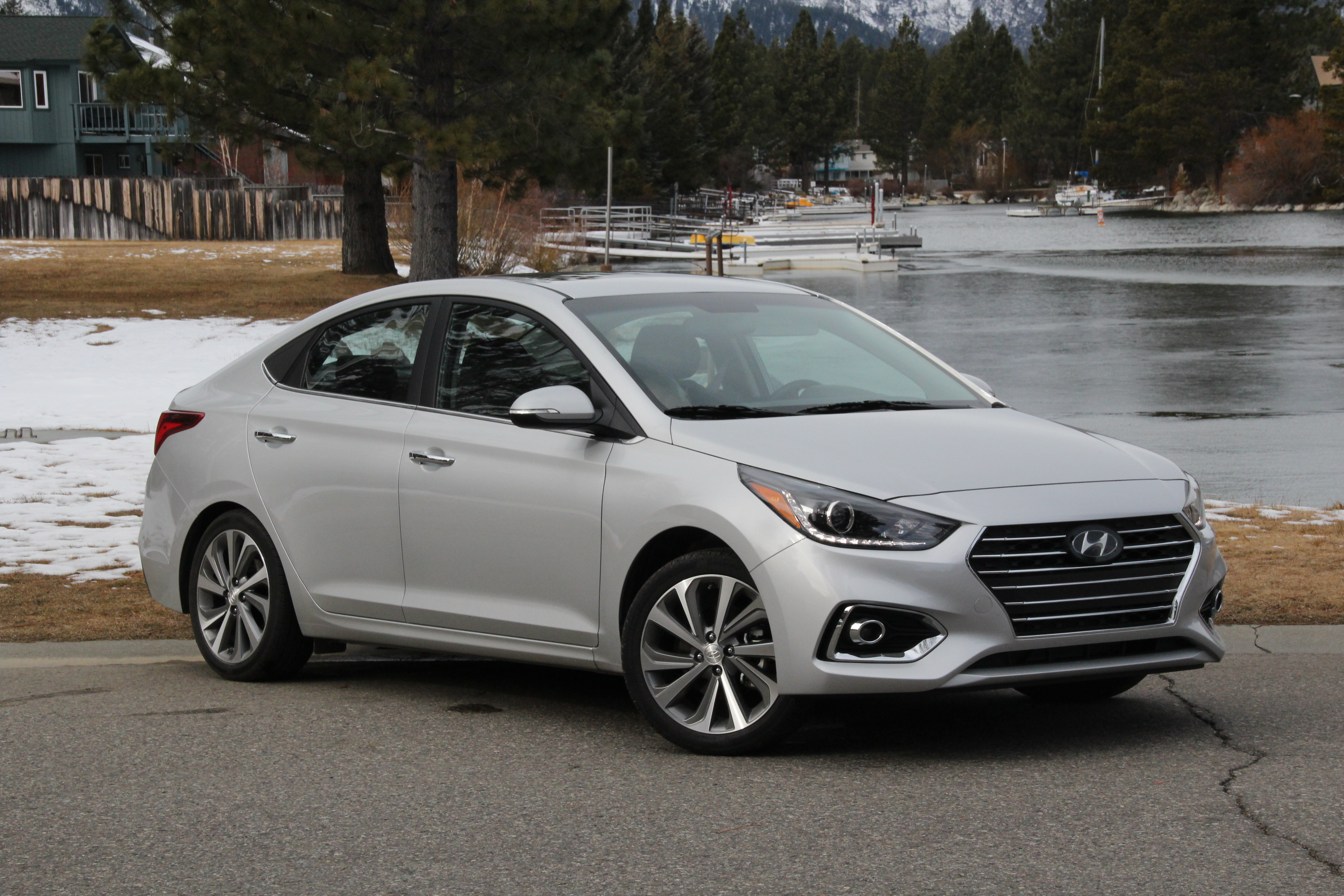
The 2018 Hyundai Accent is affordable, fast and comfortable. Photos/Larry Weitzman

By Larry Weitzman

Hyundai continues its tsunami of fabulous automobiles with the overachieving, brand new 2018 Accent. No more is it to be considered a cheap little car, a throwaway. Something that is considered just basic transportation. Something that shouldn’t be fun to drive, lacking performance and styling. You can fuhgeddaboutit.

 All that is now history with the new Accent, a stylish, quality, high performing subcompact that is fun to drive. Something that you will want to drive, a car that will want you taking the twisty, long way home. A car that will be guilt free. That is the new Accent.

Styling will make it difficult to tell it from the new Elantra. The sleek shape is the same as is the grill, the window line and the rear end. The proportions are perfect. Dimensions are small, with a length of just 173 inches on a 102-inch wheelbase. Width is a narrow 68 inches and it stands a deceiving 57-inches-tall (it looks lower). Track, however, remains a wide 59 inches, which pays handling dividends.

Motive power is a simple, yet sophisticated 1.6L DOHC, 16 valve direct injected inline four cylinder that pumps out a solid 130 hp at 6,300 rpm combined with a peak torque 119 pounds at 4,850 rpm. This stingy unit drives the front wheels via a six-speed auto torque converter tranny. In the base SE model, a six-speed manual is standard but the auto tranny is available for an even grand.  

How quick you ask? Zero to 60 mph will come up in a tick above 8 seconds, with an average time of 8.11 seconds and that makes the sub-compact Accent about the quickest in the business. A 285 (gross) hp 1957 Dodge D-500 muscle car with a 5.3L V-8 could barely break into the eights with a time of 8.9 seconds. This little Accent, in other words is capable of embarrassing some so-called muscle cars from the ’50s and ’60s. Passing times are also very good, with a 50-70 mph run taking 4.64 seconds and the same run up a 6-7 percent grade slowing that time to 7.59 seconds.

Specifications
Price
$15,880 to $19,780
Engine
1.6L DOHC, 16 valve, direct injected inline four cylinder 130 hp @ 6,300 rpm
119 lb.-ft. of torque @ 4,850 rpm
Transmission
Six-speed manual (SE model only)
Six-speed torque converter automatic (std on SEL and Limited)
Configuration
Transverse mounted front engine/front wheel drive
Dimensions
Wheelbase 101.6 inches
Length 172.6 inches
Width 68.1 inches
Height 57.1 inches
Track (f/r) 59.3/59.5 inches
Weight 2,502 to 2,679
GVWR 3,439 to 3,638
Fuel capacity 11.9 gallons
Truck capacity 13.7 cubic feet
Passenger volume 90.2 cubic feet
Steering lock to lock 2.8 turns
Turning circle 33.46 feet
Wheels 17X6.5 inches
Tires 205/45X17
Performance
0-60 mph 8.11 seconds
50-70 mph 4.64 seconds
50-70 mph (uphill) 7.59 seconds
Top speed — Well into triple digits, but does anyone really care? It will cruise comfortably at any U.S. speed limit.
Fuel economy EPA rated at 28/38/32 mpg city/highway/combined. Expect 32-33 mpg in suburban/rural driving and 42 mpg on a level highway at legal speeds.

Throttle response feels even better than the excellent numbers as response to throttle inputs are instantaneous without feeling jerky while being easy to modulate. Nice job Hyundai. I’ve driven more than 1,000 cars in testing and the Accent was one I looked forward to driving.

Fuel economy is even better than EPA predictions, which are 28/38/32 mpg city/highway/combined. You can expect 10 percent better on the highway where at a constant 70 mph on cruise control the Accent averaged exactly 42 mpg. In my 200-mile round trip to Carson City over Echo Summit the Accent averaged 39 mpg in very aggressive driving. Overall fuel economy for the 400 miles of testing averaged 32-33 mpg, with less than 15 percent spent on the freeway. Accent is a true economy car. With a fuel capacity of just 11.9 gallons, I would like to see a bigger fuel tank.

Suspension is standard small car with MacPherson struts up front and a semi-independent torsion axle in the rear with coils in all corners. The electric power steering rack is just 2.8 turns lock to lock and standard with the Limited are 17-inch alloys shod with comparatively meaty 205/45 rubber. Adding to its creds are its relatively wide track and light curb weight of just 2,679 pounds.

Consequently, the Accent makes quick work of the twisties as its grip seems almost limitless and its accurate steering slices and dices each corner. There is some body roll when pushed to the limit, but handling is not just very good, but more important, fun. Powering out of corners is part of the overall package as you squeeze the go pedal on the exit approach. Chicanes are a blast. Accent’s turning circle is a very small 33 feet. Parking lots will never be so maneuverable.

About the only negative is road noise on coarser roads. I don’t know if its tires or a lack of sound deadening (tires are probably more of the issue), but it seems all small cars have this issue. If it were a bit quieter, this might have an almost luxo ride as it takes road imperfections so well. The engine spins about 2,250 rpm at 70 mph and on a smooth asphalt surface (or concrete, for that matter), the Accent is very quiet with no wind and mechanical noise.

Safety is all there with all the basic acronyms and with the top of the line Limited standard equipment includes automatic emergency braking and a driver’s blind spot mirror. Even the rear-view camera has dynamic guidelines. Four-wheel discs brakes are strong and the projector beam headlights are very good on low and high beam.

Inside is a comfortable interior with cloth seats that will go the distance. While not power, they are six-way manually adjustable. But everything else is standard power, mirrors and windows and even the front chairs are heated on the Limited, a nice touch in what must be considered an economy car, at least by price and fuel economy, but certainly not by styling, performance, handling and content.

Instrumentation is complete with a big speedo and tach flanking a center trip and info center which gives you three trip computers for fuel economy, a nice feature for data geeks like me. The center stack is also well done and simple to use with a touch screen and a decent sound system. And its so intuitive to use, it just adds to the pleasure of the Accent. Even both sun visors have lighted vanity mirrors standard on the base Accent.

Interior volumes mimic that of a larger compact and the trunk is huge for a vehicle of this size at nearly 14 cubes. Some mid-size cars aren’t that big and fold down rear seat backs add to the utility.

OK, so what’s the damage? This top of the line Limited Accent which has every factory option available stickers for $18,895, plus $885 for the train and truck from its Nuevo Leon, Mexico, assembly plant which totals $19,970. Carpeted floor mats add $125, which is still under $20 large. A base SE manual is $14,995. That is a bargain as is the Accent Limited. It’s a lot of car for the money and you get all the attributes, performance, economy, styling, handling, comfort and a long equipment list with it, but most of all, driving pleasure.

Larry Weitzman has been into cars since he was 5 years old. At 8 he could recite from memory the hp of every car made in the U.S. He has put in thousands of laps on racetracks all over the Western United States.