DMV fees going up for El Dorado County residents

The El Dorado County Board of Supervisors raised local residents’ DMV renewal fees.

Prior to the board’s action last month, DMV was billing county residents $9 per vehicle, per year on behalf of the Board of Supervisors.  The supervisors raised the fee to $10. The additional $1 will be used to pay for automated fingerprint identification services throughout the county.

The remaining $9 per vehicle fee goes to:

·      $1 for highway call boxes (charged since 2000)

·      $6 for the Air Quality Management District (charged since 2006)

·      $1 for Abandoned Vehicle Abatement (charged since 1992)

·      $1 for DUI/Auto Theft Prosecution Program (charged since 1993).

The sheriff, district attorney, and auditor-controller all supported raising the fee.

However, the county-auditor asked the electeds to review the other $9 that is levied.

“When your board charges a fee to an individual, the intent of the California Constitution requires that there is a reasonable relationship between the amount of the fee charged, the individual charged, and the benefit or service provided to the individual by the county. I believe that in the case of the automated fingerprint identification fee a reasonable relationship exists,” Auditor Joe Harn wrote to the supervisors. “I believe that the relationship of the fees charged for the Air Quality Management District and the highway call boxes is not nearly as clear ….”

— Lake Tahoe News staff report


Lake Tahoe luxury home sales blossom

By Mark Glover, Sacramento Bee

Luxury home sales are flying high again in the exclusive Lake Tahoe region and the Sacramento area.

Tahoe City-based Coldwell Banker Residential Brokerage said the number of single-family luxury home sales in the North Lake Tahoe/Truckee region soared more than 62 percent in the first quarter of the year compared with the same period a year ago. The figures were derived from Multiple Listing Service data of all single-family homes sold in the region with a sales price of more than $1 million during the most recent quarter.

The biggest increase in sales in the first quarter was in the $1 million to $2,499,999 segment of the market, with 34 transactions, up about 80 percent from the 19 sales in that price range a year ago.

Read the whole story


Refugees coming to Northern Nevada

By Julia Ritchey, KUNR

The U.S. State Department has greenlighted a Northern Nevada nonprofit  to help resettle refugees escaping hotbeds of conflict around the globe beginning this fall.

Carina Black, executive director of the Reno-based Northern Nevada International Center, says their application to become an official resettlement agency was approved in February. They’ve since been laying the groundwork, and building a stakeholders’ network, before those first few families arrive.

Black says initially about two families — approximately 10 people — could arrive by September. For the federal fiscal year running October 2016 through 2017, they’ve asked to resettle at most 75 refugees.

All refugees relocating to Reno will go through a vigorous, federal screening process, which can take between 18-24 months.

Read the whole story


Nonpartisan voters face hurdles in Calif. primary

By Jeremy B. White, Sacramento Bee

With the presidential nominating contest about to conclude in California, elections experts are warning that voters who aren’t registered with a party could miss out on a chance to help pick the Democratic standard-bearer.

As California’s fastest-growing voter bloc, people without a party play an increasingly instrumental role in elections. They can vote in this year’s Democratic primary, which will cap a nominating process in which candidates Hillary Clinton and Bernie Sanders are still competing.

But they must take some extra steps to do so, fueling concerns that the additional requirements will prevent unaffiliated voters from participating.

Read the whole story


Tahoe Vista man guilty in Incline burglary

Cameron Francis Covington

Cameron Francis Covington

A jury found a Tahoe Vista man guilty of stealing from a doctor’s office in Incline Village.

In February 2014, Cameron Francis Covington, 33, entered the office through a window. He stole non-narcotic medications, a prescription pad and $260.

Because of Covington’s prior 11 felony convictions, the Washoe County District Attorney’s Office said it intends to ask for a stiffer sentence on June 17 for this one burglary conviction. He face one to 10 years in prison.

— Lake Tahoe News staff report


NRA eager to defeat Nevada gun initiative

By Sean Whaley, Las Vegas Review-Journal

CARSON CITY — The National Rifle Association’s Institute for Legislative Action has launched an informational website to stop the “Californication” of Nevadans’ gun rights.

The www.votenoquestion1.com website “exposes the truth” about how a universal background check would criminalize the commonplace activities of many Nevada gun owners, the group announced Wednesday.

The background check measure will be on the Nov. 8 general election ballot. It was qualified through the initiative process and is before Nevada voters because the Legislature did not enact the measure in the 2015 session.

The measure would extend firearm background checks to private party sales and some transfers.

Read the whole story


Revised Calif. budget has less money for new programs

By John Myers, Los Angeles Times

Gov. Jerry Brown sent legislators a revised version of his state budget on Friday, insisting that lawmakers hold overall spending flat while endorsing a $2-billion bond to help the homeless.

“We have the money, and it’s a serious problem,” Brown said at a state Capitol news conference.

The support for a housing bond, which still would face sizable legal and political hurdles, was the most noticeable pronouncement in a $173.1-billion spending plan that otherwise holds the line on new programs and confirms a noticeable erosion in state revenues compared to estimates from January.

Overall, tax receipts are now expected to shrink by $1.9 billion. And Brown’s budget team continues to say that California could face as much as a $4-billion deficit by the summer of 2020.

Read the whole story


Snippets about Lake Tahoe

·       North Tahoe Public Utility District is continuing its restricted watering days this summer.

·       The Academy of Dance Arts spring concert is May 20 and May 21. Dancers from Tahoe to Reno will perform the ballet the “Adventures of Madeline” at MontBleu in Stateline. The second half of the show is titled “Dancin’ Through the Decades”, with dance including jazz, tap, lyrical and contemporary. Tickets are $20. The show starts at 6pm.

·       On June 2 from 6:30-8:30pm Barton Health is putting on a class for expectant parents. Cost is $20 per couple. Sign up at fit.bartonhealth.org under family classes or series. For more info, contact Bridget at 530.543.5549 or bdemaree@bartonhealth.org.

·       Concerts at Commons Beach in Tahoe City return June 19.

·       Tahoe Unleashed Dog Park, which is just past the entrance to the North Tahoe Regional Park in Tahoe Vista, is open. There are two fenced off-leash areas, one for small dogs and one for large dogs.


Human trash a problem for wildlife

By Devin Middlebrook

Bears, raccoons, and other wildlife in search of an easy meal are increasingly visiting residential areas in the Tahoe-Truckee region. It may not always be obvious, but a bag of garbage, bowl of pet food, or plate of leftovers left outside your home or vacation site can harm wildlife.

Of all the wildlife and human interactions, encounters with bears are becoming the most common. The Tahoe basin and surrounding foothills are prime black bear habitat. Forty percent of the California black bear population inhabits the Sierra Nevada.

A typical wild bear diet consists of berries, grasses, plants, nuts, roots, honey, insects, and small mammals. In urban areas adjacent to undeveloped wildlands, bears are optimistic scavengers and are attracted to easy food sources such as improperly stored human food, pet food, birdseed, and garbage. Once a bear has discovered an easy source of food, they will remember that location and return on a regular basis.

Bears that grow accustomed to people can become complacent and lose their fear of humans. This is referred to as human habituation, and it often forces wildlife officials to kill the bear because of the threat it poses to humans. For residents who don’t take steps to discourage bears, these interactions can cause expensive property damage, result in fines from local jurisdictions, and pose dangers to visitors and neighbors.

“Residents and visitors living in bear country have a responsibility to the wildlife whose habitat we share, and also to human neighbors. Improper storage of food or garbage is attributed to 95 percent of all human-bear conflicts,” said Madonna Dunbar, resource conservationist with the Incline Village General Improvement District. “By removing the attractants, we can reduce risk to both people and wildlife. Preventing access to garbage and food is the easiest way to reduce the risk of human-bear interactions.”

The most secure way to store garbage at your home is by installing a bear box, a large metal enclosure to house trash cans. While the boxes cost an average of $1,000, they offer the highest level of security from bears. To help homeowners, some local jurisdictions are now offering programs to subsidize the cost of purchasing bear boxes.

Placer County offers no-interest loans for homeowners in Placer County east of Colfax, including Lake Tahoe. Eligible homeowners can apply for a five-year, interest-free loan that homeowners repay through a $22 per month surcharge on existing quarterly garbage bills.

Learn more about this program online.

The Incline Village General Improvement District offers a rebate for homeowners who have an approved bear box installed after July 1, 2015.

The rebate is valued at $150 and is available for single-family and multi-family homes (without dumpster trash service). To learn more about this program, go online.

No matter where you live in Lake Tahoe, it is important to do your part to protect native wildlife by properly storing your garbage, food, and other attractants.

Devin Middlebrook is an environmental education specialist at Tahoe Regional Planning Agency. This article first appeared in Tahoe In Depth.


No opposition to STPUD rate increases

By Susan Wood

Looks like the thousands of South Tahoe Public Utility District customers are going with the flow in respect to proposed water and sewer rate increases.

The district scheduled a workshop on May 12 to gather input and provide a presentation on the infrastructure-laden plan. No one showed up.

The capital improvement plan with rates amounting to a 6.5 percent increase for water and a 6 percent uptick in sewer services generated zero feedback. The public absence demonstrates a huge departure from meetings two years ago that created a little unrest.

“I am surprised no one showed up. We put a lot of effort into advertising it. Maybe what’s happened is we made extensive outreach to the community, and even though they had to be confirmed each year, the rates were adopted for five years. We talked about the projects, and it brought out a lively discussion (two years ago),” Executive Director Richard Solbrig told Lake Tahoe News Thursday night.
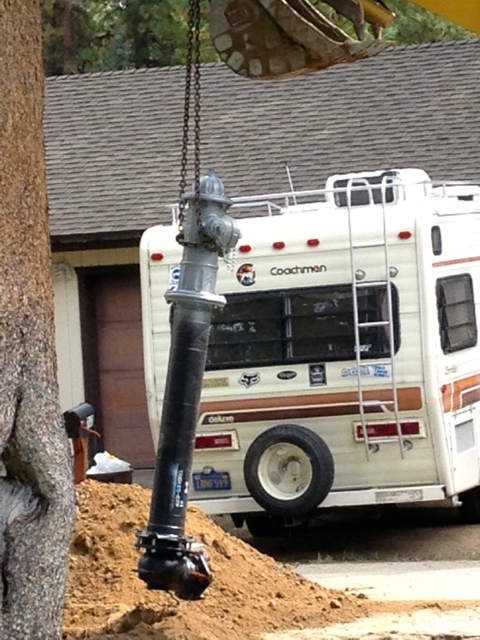
South Tahoe PUD plans to install more fire hydrants this summer. Photo/LTN file

South Tahoe PUD plans to install more fire hydrants this summer. Photo/LTN file

In 2014, the district sent a five-year notice to all its customers — 14,000 water and 18,000 sewer — to meet Proposition 218 guidelines. The measure requires local governments to gain voter approval to increase taxes, fees and charges.

The infrastructure-laden plan will be folded into a larger discussion when the district takes up its 2016-17 budget May 19. The meeting is delayed from 2pm to 6pm because of the Amgen bike race.

The STPUD 2016-17 budget rounds out to about $40 million between the two utility services.

A typical consumer will pay an additional $15.36 per quarter from the $122.30 water bill and $94.35 sewer statement. Two years ago, the increase was $13.62 per quarter.

If it passes the board as expected, the improvement plan for the year appears to be aggressive and ambitious.

Over the long haul, water expenditures call for $43.7 million over the next decade and $57 million for sewer in that timeframe.

For starters, the installation of water meters is about halfway done, with about 5,000 more to do.

Solbrig lamented over California’s laborious process in settling a low-interest loan to help fund the massive project. Even though the loan is 1.6 to 1.8 percent, “interest payments are significant.”

The feedback on the whole metering process has been tenuous at best.

“In general, most people think meters are a fairness issue, and that they should pay for what they use,” Solbrig said.

In other words, some customers thought their bills would go down.

But the delivery of water and sewer is different compared to rate setting for electric and gas. It’s based on infrastructure regardless of how often residents inhabit their homes. Case in point – fire protection becomes a steady constant need “whether you’re living in it or not.”
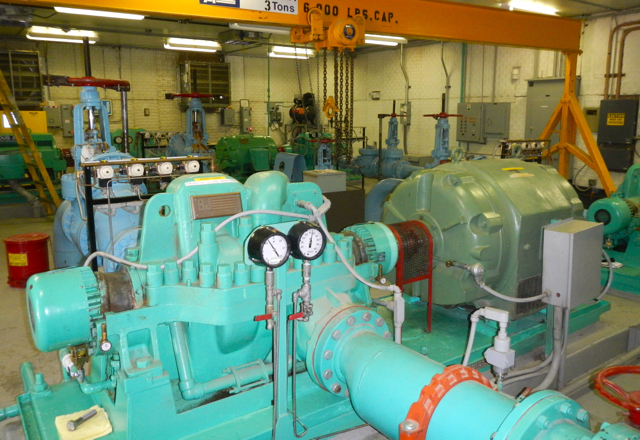
Luther Pass pump station is part of the 2016 capital improvement plan. Photo/LTN file

Luther Pass pump station is part of the 2016 capital improvement plan. Photo/LTN file

The cost is in the delivery of the product – not the product – when it comes to water.

Solbrig also addressed the specific earmarking of the money gained by rate increases.

“One hundred percent of the rate increases are driven by infrastructure needs,” he said.

Beyond meters, South Shore residents will also notice 105 additional fire hydrants installed in places that are “strategically located to meet the fire departments’ standards for fire flows,” he added. The hydrants are placed alongside the stretches where the new, larger 6-inch water lines lie. The U.S. Forest Service absorbed $400,000 of the $1 million plan through a grant designed for fire suppression.

And Tahoe knows about fire.

One of the scariest times during the 2007 Angora Fire was two days after the start when the back blaze reversed and jumped Highway 89 toward the Tahoe Keys in the Lukins Water district jurisdiction. The small company had just announced major challenges in having adequate flows.

Fire districts are requiring hydrants spaced within 250 feet of properties. Some sketchy areas include the uphill side of Pioneer Trail and pockets in the Sierra Tract, Solbrig mentioned.

On the sewer side, the district wants to rehabilitate concrete treatment tanks and replace electrical equipment and motors at the Luther Pass Pump Station. This station sends all of the recycled wastewater from the district over the Highway 89 pass to Alpine County.

STPUD also plans to replace equipment that fails to meet standards, namely for air quality regulations. One mentionable is the standby generator at the wastewater treatment plant, a necessary device in case of an electrical outage.