
Fire destroys 2 sheds, damages a third

Flames were shooting 70 feet in the air when South Lake Tahoe firefighters arrived Wednesday morning to a structure fire. What at first looked like multiple houses on fires turned out to be large sheds.

“We found a large body of fire between three different homes,” Battalion Chief Jim Drennan told Lake Tahoe News.

He said bad electrical wiring caused the first shed to catch fire, which then led the second one to become engulfed, then a third was damaged. Two were completely destroyed. It is not known what was being stored in any of them.

The sheds were on the back lots of three properties on Long Valley and Oak avenues. The call came in just before 2am May 2.

While some trees were scorched, there was no damage to houses. And there were no injuries. Assisting South Lake were CalFire, Lake Valley and Tahoe Douglas crews.

— Lake Tahoe News staff report


Driver accused of attempted murder in crash on Hwy. 50

By Cathy Locke, Sacramento Bee

A man whose van landed in the American River after he allegedly drove into oncoming traffic on Highway 50, causing a head-on collision, is in El Dorado County Jail accused of attempted murder.

California Highway Patrol officers responded about 6:35pm Monday to a two-vehicle collision on Highway 50 near Randall Tract, in the White Hall area , with one vehicle submerged in the south fork of the American River.

Jacob Shay, 22, of Alameda was driving 2005 Freightliner Sprinter van westbound on Highway 50 when he allegedly intentionally crossed over double yellow lines, head-on into a 2017 GMC Yukon driven by a 29-year-old South Lake Tahoe woman, according to a CHP news release.

Read the whole story


Bona Fide Books changes hands; new book coming

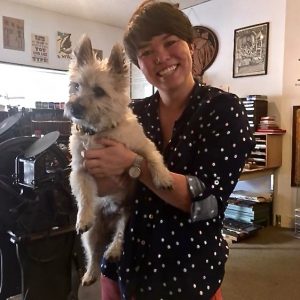
Bona Fide Books in Meyers has a new publisher, and a new book coming out this spring. Maeko Bradshaw recently took over the independent press from Kim Wyatt, who founded the company in 2009, specializing in nonfiction and poetry. 

Maeko Bradshaw

Bradshaw, a Tahoe local, received a master’s in book publishing from Portland State University. Her first release as Bona Fide’s publisher, “Permanent Vacation II: 18 Writers on Life and Work in Our National Parks,” will debut June 8. The second volume of this popular collection features writers from national parks all over the country, including locales like Cape Cod National Seashore and Hawaii Volcanoes National Park. 

 
“Permanent Vacation II” can be pre-ordered online. Readings will be at Lake Tahoe Community College in South Lake Tahoe June 13 and at Word After Word in Truckee June 25; see the Bona Fide Books schedule for more information.
 
Books can be purchased locally at Gaia-Licious and Dharma Love in South Lake Tahoe and Word After Word, or order directly from Bona Fide Books here.


Tahoe Valley choir competes on high note

Tahoe Valley singers earn high marks. Photo/Provided

The Tahoe Valley Thunderbird Choir shined at the Music in the Parks Choir Festival in April.

Students grades 3-5 traveled off the hill to Vanden High School in Fairfield on April 21 to be adjudicated for the first time. The intention was to provide the students with the opportunity and experience of performing under pressure in the presence of top quality competitors.  

The result was an outstanding showing that netted the choir first place in their division as well as first place in the overall elementary choir category, and a rating of excellence from the panel of judges. For their efforts they were award two trophies, one of which was almost as tall as many of the singers.

One budding young star, Lucia Solorzano, was selected as the most outstanding elementary vocalist. With an ear-to-ear smile, she was recognized in front of the entire auditorium for her outstanding performance.

“I had a feeling we would perform well, but these kids blew me away, then to have the adjudicators verify that it wasn’t just me being biased was just awesome,” said choir director Allyssa Little. “All of the work to make this trip possible instantly seemed more than worth it when we saw the smiles on the kids’ faces and when we got to experience the excitement at the school when they saw our trophies.”

This also wouldn’t have been possible without the help of many teachers at Tahoe Valley and parent chaperones.

— Provided to LTN


Report on controversial inquiry divides SLT council

The South Lake Tahoe City Council is doing a lot of talking behind closed doors. Photo/LTN

By Kathryn Reed

It’s as though the South Lake Tahoe City Council is unraveling one thread at a time, with the holes of incompetency and distrust exposing themselves a little bit more each time the electeds meet.

Tuesday was the latest episode of “Dysfunction at 6,200 feet.” On the May 1 agenda was the MRG contract. This is the firm led by Mary Egan that was hired last fall to do a cultural assessment of the city. The contract, though, until this week had never been brought before the council in open session.

By the time the agenda item came up for discussion Councilman Jason Collin had left the meeting, citing a work obligation.

It was impossible for the remaining four to have an honest, open conversation because the contract was first OK’d in closed session and those discussions must remain confidential.

In reality what the council was being asked was to approve paying an invoice. Even interim City Attorney Nira Doherty said it wasn’t really a contract, instead she called it an agreement. The first agreement sent by Egan to Doherty stated the work would not exceed $10,000, with another $1,500 for expenses. The Nov. 16 amended agreement asked for another $2,500 based on additional work.

Only the November agreement was in the council packet on Tuesday. Councilmembers Wendy David and Austin appeared flummoxed when Councilmembers Tom Davis and Brooke Laine knew about the October document and had a copy of it.

The first agreement said, “All participations (sic) will be told that their comments will be included in a summary written report that identifies important themes, and not include information attributable to any individual.”

That report has never materialized. That is one argument Laine and Davis cited in not voting to authorize payment of the bill; they said the scope of work was not completed. David and Sass voted to approve payment of the original agreement. That motion failed on a 2-2 vote.

Ultimately it was decided that the mayor (David) and mayor pro tem (Davis) would work as a subcommittee of sorts to decide whether a written report should be provided by the firm as was stated would be done in the original agreement.

Doherty or someone from her law firm will provide the pros and cons of asking for the written report. Then the council as a whole will decide how to proceed.

Doherty told the council Egan’s written report is likely to be a public document.

Depending on what is in the report, it’s possible sections would be redacted based on it being a personnel issue.

Sass raised the specter of a lawsuit by former City Manager Nancy Kerry if information were released. This is based on a threat made by her attorney Jacqueline Mittelstadt regarding Sass potentially breaking the city’s settlement agreement with Kerry with his comments at an April council meeting. Neither side is supposed to disparage the other.

Still, the report would be based on information gathered before Kerry’s separation with the city earlier this year, so it would not likely be protected by the settlement agreement. It could just fall under normal personnel privacy.

One of the glaring things about this agreement is that the council agreed to hire MRG in closed session under an agenda item that had nothing to do with Kerry or the city in general.

The Sept. 5, Sept. 19 and Oct. 3 closed session items each stated: “(b) Public employee appointment and employment pursuant to Government Code Section 54957(b)(1) Title: City Attorney.” At the Sept. 19 meeting it was announced that Doherty had been hired as interim city attorney to replace Tom Watson. On Oct. 3 the contract was approved and Doherty began her job.

It was at her first meeting that she learned of the directive by the council in one of those September closed sessions to hire MRG. The council did this with Watson in the room; Doherty was not there.

Doherty told the council on May 1 she had issues with how all of this went down. After the meeting, though, she would not elaborate other than to tell Lake Tahoe News, “I think it is best practice to have contracts approved in open session.”

She would not say why the topic was not brought out into the open until now.

Sass was mayor at the time and in a battle with Kerry because he wanted more power than what comes with the ceremonial position.

Watson in a farewell salvo was in cahoots with Sass to have MRG evaluate Kerry. However, it was sold to the other council members as a cultural assessment of the whole city and to study a succession plan. That didn’t happen.

Per Kerry’s contract she had the right to know when she was being evaluated or investigated, and there were protocols in place to inform her. That didn’t happen and it’s something she could have sued the city over. In June 2017 she received a glowing review by this very council that voted to oust her.

Ultimately the Egan debacle became a witch hunt that resulted in Kerry being shown the door.

It was on Jan. 23, after Egan’s work was completed, that a closed session item pertaining to Kerry’s evaluation was placed on the agenda.

After weeks of turmoil, the council agreed to pay Kerry the nine month’s severance in her contract based on there being no actual cause for the separation.

Beyond taxpayers’ dollars being used to pay Kerry, the city is now in talks to hire an interim city manager who will make about $100 an hour.

Still, though, what was uncovered by Egan has never been disclosed to the public. Nor were the allegations alleged ever substantiated by anyone. The council received a verbal report from Egan, that’s it.

There are public records that might shed light on what happened, but the city is withholding those documents as was illustrated in this April 30 Lake Tahoe News column.

On a related note, the council was to discuss Laine’s allegations about Brown Act violations that were first brought to light on Lake Tahoe News. The council agreed to table that item until the District Attorney’s Office completes its investigation.



Opinion: Preventing more Parklands

By Tom McClintock

For years the left has attacked the Second Amendment as the progenitor of gun violence, and demonized the millions of Americans who support their right of self-defense as abettors of child murder.

Yet it is the policies of the left that have produced this tragically familiar story: a deranged individual, known to police to be violent and dangerous, is ignored until he brings a gun into a gun-free zone and massacres defenseless victims at will. 

Tom McClintock

The bromide of the left is that enough “gun control” will keep guns out of the hands of such criminals and madmen.  After all, our drug laws have been so successful at keeping drugs out of the hands of addicts.

In 50 years of experience with gun laws, we have found them extremely effective at disarming law-abiding citizens.  We have found them extremely ineffective at disarming criminals, madmen and terrorists. They invariably create a society where the law-abiding are unarmed, and murderers are as well-armed as ever. Our schools are a microcosm of such a society, where the gunman is king.   

Parkland did have one armed officer on campus, but according to his attorney, he was under standing orders from Broward County’s politically correct sheriff “to seek cover and assess the situation in order to communicate what one observes to other law enforcement.” That didn’t work.

Fortunately, we know what does. Executing murderers works. Locking up other gun predators until they are old and feeble works. Confining the dangerously mentally ill so they can be treated works. Responsible armed citizens who can return fire works. These laws protected us well for many decades.

But beginning in the 1960s, under relentless attack by leftist politicians, our governments abandoned them. Today, we are reaping the whirlwind. Indeed, just days after the Parkland massacre, Oakland Mayor Libby Schaaf tipped off criminal illegal immigrants of an impending raid by law enforcement — including many charged with gun crimes, criminal gang affiliations, weapons violations and police battery. The left applauded her irresponsible act and then seamlessly returned to its advocacy of disarming the communities these gun predators escaped into.

Depending on criminals and madmen to obey gun laws is delusional. Authorities turned a blind eye to repeated complaints that the Parkland shooter illegally brandished firearms and threatened lives. In many cases, criminal background checks are rendered ineffective because information that would lead to disqualification is never entered into the system. And many more just obtain weapons from family, theft or the ubiquitous black market.

No one gives a second thought to an armed guard at a bank to protect our money. But any suggestion that armed guards should protect our children at school is met with hoots of derision. Hardening security at schools must invariably be backed by armed force, yet leftists won’t have it.

Why shouldn’t school employees, trained and entrusted by their local sheriffs with concealed weapons permits, be allowed to use those permits in our schools to stop the next massacre? That doesn’t mean requiring every teacher to be armed — it means having the common sense to allow the same safety measures in our schools that we provide in our communities. 

Chief Edward M. Davis, the legendary chief of the Los Angeles Police Department during the late 1960s and ’70s, introduced such innovations as “neighborhood watch” and community-based policing that engaged private citizens.  It worked. During his tenure, violent crime declined in Los Angeles while it skyrocketed nationally. He fiercely opposed gun control laws because he viewed responsible, law-abiding citizens as an integral part of policing and the first line of defense against crime. 

Wise and effective laws take the world as it is, not as we wish it would be. As long as guns exist – and there are nearly a billion of them on this planet – criminals and madmen will have them despite all our laws. We once did everything possible within the rule of law to keep dangerous people off our streets and protect the right of peaceful citizens to defend themselves. Abandoning these laws has produced the bloody legacy we now endure and returning to them is the only sure path to preventing more Parklands.

Tom McClintock represents the California side of the Lake Tahoe Basin in Congress.


Study: Night owls may have 10% higher risk of early death

By Kristen Knutson and Malcolm von Schantz, The Conversation

Do you wake up bright eyed and bushy-tailed, greeting the sunrise with cheer and vigor? Or are you up late into the night and dread the sound of your alarm clock? We call this inherent tendency to prefer certain times of day your “chronotype” (chrono means time). And it may be more than a scheduling issue. It has consequences for your health, well-being and mortality.

Being a night owl has been associated with a range of health problems. For example, night owls have higher rates of obesity, high blood pressure and cardiovascular disease. Night owls are also more likely to have unhealthy behaviors, such as smoking, alcohol and drug use, and physical inactivity.

We study the health effects of being a night owl. In our recent study published in Chronobiology International, we found even worse news for the owls of the world: a higher risk of early death.

Your very own biological clock

Our bodies have their own internal time-keeping system, or clock. This clock would keep running even if a person were removed from the world and hidden away in a dark cave (which some dedicated researchers did to themselves years ago). We believe these internal clocks play an important role in health by anticipating the time of day and preparing the body accordingly.

For example, as humans, we typically sleep at night, and our bodies start preparing for our habitual bedtime even before we try to fall asleep. Similarly, we eat during the day, so our body is prepared to process the food and nutrients efficiently during the daytime.

Our chronotype is also related to our biological clock. Morning larks’ biological clocks are set earlier. Their habitual bedtimes and wake times occur earlier in the day. Night owls have internal clocks set for later times. But are there any problems related to being a lark or owl, other than scheduling difficulties? Research suggests that there are; night owls tend to have worse health.

And, in our study, we compared risk of dying between night owls and morning larks. In this study, death certificates were collected for an average of 6.5 years after the initial study visit to identify those who died. We found that night owls had a 10 percent increased risk of death over this six-and-a-half year period compared to larks. We also found that owls are more likely to have a variety of health problems compared to larks, particularly psychiatric disorders like depression, diabetes and neurological disorders.

The switch to daylight saving time in the U.S. (or summer time in the U.K.) only makes things more difficult for night owls. There are higher rates of heart attacks following the switch to daylight savings, and we have to wonder if more night owls are at risk.

Why do night owls have more health problems?

We researchers do not fully understand why we see more health problems in night owls. It could be that being awake at night offers greater opportunity to consume alcohol and drugs. For some, being awake when everyone else is sleeping may lead to feelings of loneliness and increased risk of depression. It could also be related to our biological clocks.

As explained above, an important function of internal biological clocks is to anticipate when certain things, like sunrise, sleep and eating, will occur. Ideally, our behavior will match both our internal clock and our environment. What happens when it doesn’t? We suspect that “misalignment” between the timing of our internal clock and the timing of our behaviors could be detrimental over the long run.

A night owl trying to live in a morning lark world will struggle. Their job may require early hours, or their friends may want to have an early dinner, but they themselves prefer later times for waking, eating, socializing and sleep. This mismatch could lead to health problems in the long run.

What can owls do?

It is true that someone’s “chronotype” is (approximately) half determined by their genes, but it is not entirely preordained. Many experts believe that there are behavioral strategies that may help an individual who prefers evening. For example, gradually advancing your bedtime – going to bed a little earlier each night – may help to move someone out of the “night owl zone.”

A gradual advance is important because if you try to go to bed two to three hours earlier tonight, it won’t work, and you may give up. Once you achieve an earlier bedtime, maintain a regular schedule. Avoid shifting to later nights on weekends or free days because then you’ll be drifting back into night owl habits. Also, avoiding light at night will help, and this includes not staring into smartphones or tablets before bed.

On a broader scale, flexibility in work hours would help to improve the health of night owls. Night owls who can schedule their day to match their chronotype may be better off.

It is important to make night owls aware about the risks associated with their chronotype and to provide them with this guidance on how to cope. We researchers need to identify which strategies will work best at alleviating the health risks and to understand exactly why they are at increased risk of these health problems in the first place.

Kristen Knutson is an associate professor of neurology at Northwestern University and Malcolm von Schantz is a professor of chronobiology at University of Surrey.


Literacy event for elementary kids at LTCC

Lake Tahoe Community College will be hosting a Gift of Literacy event May 25 so each Lake Tahoe Environmental Science Magnet School student receives a nw hardbound book to help spark a lifelong interest in reading.

Among the invited guests who will be reading to local children that day will be two-time Olympic gold medalist freeskier and children’s book author David Wise.

In its pilot year, the Gift of Literacy program will provide approximately 138 kindergarten, first grade and special day students from the magnet school with copies of selected books. Copies will also be provided to all LTUSD elementary school libraries, the South Lake Tahoe Public Library, LTCC’s Roberta Mason Library, and at LTCC programs including the Child Development Center and Tahoe Parents Nursery School.

In addition to receiving free books, magnet school students will spend the day at the college.

For more info about the event, call 530.541.4660, ext. 210.


Prescribed fires to be set throughout Tahoe

The Tahoe Fire and Fuels Team will continue prescribed fire operations for the next several weeks, weather and conditions permitting.

California State Parks will conduct prescribed fire operations in Sugar Pine Point State Park, between General Creek Campground and Tahoma beginning on May 8. The U.S. Forest Service will conduct operations this week on Highway 89 (Luther Pass) near Big Meadow. 

Smoke may be present. A map with project locations and details is available online. To receive prescribed fire notifications, send an email to pa_ltbmu@fs.fed.us. 

Whenever weather and conditions allow, prescribed fire operations are conducted by the TFFT to reduce overgrown vegetation, which decreases the severity of future wildland fires and helps protect communities. 


SLT voters may decide competing VHR initiatives

By Lake Tahoe News

South Lake Tahoe residents known as the Tahoe Neighborhoods Group on April 30 submitted 1,651 signatures on a petition to limit vacation home rentals in the city.

The group wants voters to decide in November if short-term rentals should only be allowed in the tourist core. VHRs would be eliminated elsewhere over a three-year period if voters so decide.

The signatures will be validated in the next 30 days by the El Dorado County Elections Department, with 1,036 needed to qualify.

If validation occurs, the South Lake Tahoe City Council would then have to adopt a resolution for the initiative to be on the ballot.

This is the second petition regarding VHRs that has been submitted that could end up before voters in the fall.

The other one is the work of real estate agents Jerry Williams and Craig Woodward, and VHR owner Melissa Wong.

In part their petition says, “Despite their importance to the city’s economy, vacation home rentals can result in impacts to the community and the quality of life for permanent residents. As such, a balance must be struck between maintaining the economic viability of vacation home rentals as an important element of the city’s tourism industry, while at the same time placing certain restrictions on the establishment and management vacation home rentals in order to protect and preserve the quality of life in the city’s residential neighborhoods.”

Their goal is to continue to allow VHRs in neighborhoods, but with constraints. They also want to create a commission that would have some oversight on the industry.

Collateral in all of this is that the recreation center has been put on hold by staff. It’s not something that has come before the council. That facility was to be paid for by transient occupancy tax. Voters in 2016 approved a measure to increase TOT by 2 percentage points. That additional revenue is dedicated solely for recreation.

The plan was to seek bonds to fund the facility, with the TOT used to pay the debt. Now with TOT collections in jeopardy if the number of VHRs is drastically reduced, the city’s finances are no longer stable.

It’s not just the rec center that will be impacted by less TOT, but all city services. TOT is one of the top three revenue sources for South Lake Tahoe. The other two are sales and property taxes. Those, too, would be affected by changes to VHR regulations.