Opinion: TERC’s importance 10 years later

By Geoff Schladow

I have spent the last week observing the impacts of poor land management, uncontrolled invasive species, and degrading
aquatic resources in one of the most unique and idyllic places on earth. I also saw really big crocodiles, so I wasn’t at Lake Tahoe. Rather, I was in the Northern Territory in Australia, a region that is starkly different than Tahoe, but sharing many of the same challenges.
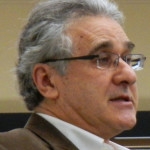
Geoff Schladow

Geoff Schladow

In the last 50 years this region has been opened up to the world, in the same way that Tahoe was opened up after the
Squaw Valley Olympics.

Where Lake Tahoe has outdone the Northern Territory is that it has built on a continuous science presence for over 55 years, with the greatest advances in the last decade. It is hard to believe that it was 10 years ago that the finishing
touches were being installed on TERC’s new labs and offices at Incline Village. That was an exciting time. After years of getting by in makeshift houses and buildings, we finally had the home we needed: a facility where research, public engagement and the science to guide restoration had a base in the Tahoe basin.

Looking back at all that has been accomplished it becomes clear how monumental an achievement this really was. Over
100,000 people of all ages have walked through the doors to learn about solving Tahoe’s challenges. Scores of research grants have launched the careers of young scientists and helped unravel the lake’s secrets. International conferences have brought hundreds of visiting scientists from every continent to help us understand Lake Tahoe and have launched new collaborations on lakes around the world.

Most importantly, it has created a permanent home for research and science here in the Tahoe basin. The nature and the complexity of Lake Tahoe and its ecosystem will never stop changing and we need institutional memory, experienced
researchers who know what was learned 40 years ago and where the knowledge gaps lie, and new cohorts of students, to
keep abreast of these changes and to take on future conditions.

This home for research and dcience was built through philanthropy. To the many people and foundations in the greater
Tahoe community who had the foresight and vision to invest in science when UC Davis launched its campaign for TERC in the 1990s, we once again thank you for your generosity. We hope that on our 10-year anniversary you will again step forward and renew your commitment to Lake Tahoe and to science, and help provide the resources we need to sustain
independent science.

Geoff Schladow is director of Tahoe Environmental Research Center.


Meyers hockey academy on solid ice

TRPA board approves facility


By Kathryn Reed

STATELINE — Hockey before education. That is ultimately what made the difference for the Tahoe Hockey Academy in Meyers to move forward.

The Tahoe Regional Planning Agency Governing Board on June 22 voted unanimously to allow a 16.4-acre parcel at the bottom of Old Meyers Grade to be transformed into an elite hockey academy for athletes seeking to play at a Division 1 university or beyond.

“We are going to help a lot of kids achieve their goals. That is the most important thing,” Jami James, founder and vice president of Tahoe Hockey Academy, told Lake Tahoe News after the meeting.

As a kid James came to Tahoe to go to different camps. He said he played hockey and baseball at the professional level. The Berkeley native said he loves Tahoe and wants to give back, to help youngsters, to essentially repay the people who helped him when he was an at-risk kid.

While education is a large component of what will go on at the academy, hockey is the reason youth ages 13 to 20 will attend. All classes will be online. No instructors will be at the facility.

Opponents argued this is a school, while proponents said the California Department of Education does not define this type of facility as being a school. The parcel is zoned for a group facility. If this were deemed to primarily be a school, it would not be an allowed use per zoning regulations.

At build-out, which is probably going to take a few years, eight adults will be employed, with 92 players attending. Dorms will be built, with construction expected to start this summer. James told LTN the school will start this fall, but players are likely to be housed elsewhere until construction is finished.

The academy will follow the academic year, with summer being reserved for camps – including this summer.

The project generated controversy when last month it was on the bi-state regulatory agency’s consent agenda. Letters and phone calls prompted staff to table the item for one month and bring it out into the open with a public hearing. It was originally on the consent agenda because two previous projects – in 1995 and 2011 – had been approved, and the academy is an allowed use.

Land use, parking, traffic, coverage, noise and lighting were the major issues raised.

The 10 people who spoke on Wednesday were almost split between supporters and opponents.

The uproar generated change, including moving the tennis court away from the nearest neighbor. It will be frozen in the winter to have training onsite. Resident Rick Van Horn is worried any chemicals used in the coils for freezing purposes could leak. He asked for the soil and groundwater to be tested.

No outside lights will be used to enable play or training after dark.

No student is expected to have a vehicle. Vans will transport the players to the ice rink in South Lake Tahoe.

Earmarked by the academy is $150,000 in upgrades for that facility.

All of the board members who spoke were complimentary of the academy, saying this is good for the region, will benefit the economy and that one day the South Shore may be home to Olympic hockey players just as it is for skiers and snowboarders.


Opinion: Florida — the ‘Gunshine State’

By David Cole

Ever since the brutal mass shooting at a gay nightclub in Orlando in the early morning hours on June 12, Florida has become the focus of nationwide concerns about easy access to guns, and the mayhem such access can produce.

That focus on the Sunshine State is even more appropriate than the American public understands. The state of Florida has long played a leading role in the establishment and expansion of the right to bear arms.

As constitutional rights go, the right to bear arms is of relatively recent vintage. In 1991, then-retired Chief Justice Warren Burger characterized the notion that the Second Amendment protects such a right as one of the greatest frauds perpetrated on the American public in his lifetime. In the uniform view of the federal courts for more than 100 years, the Second Amendment protected only the states’ prerogative to have militias. It afforded individuals no personal rights to own or carry firearms.

But In 2008, the Supreme Court ruled in District of Columbia v. Heller that the Second Amendment did in fact protect such an individual right to bear arms. What happened?

The answer lays in Florida — and the offices of Marion Hammer, a 4-foot-11-inch grandmother, now in her 70s, who never went to law school but happens to be the most powerful lobbyist in Florida.

Hammer was the first female president of the National Rifle Association. The NRA was primarily a marksmanship, hunting, and sport shooting organization for most of its history. It did not even establish a political arm until 1975; about the same time Hammer became involved in the political fight for gun rights. Both developments were a response to the first major piece of federal gun legislation, the Gun Control Act, passed in 1968 after the assassinations of John and Robert Kennedy and Martin Luther King Jr. Hammer and the NRA saw the Gun Control Act as a threat to their liberty, but understood that the federal courts would not be receptive to a constitutional challenge, given their longstanding rejection of an individual right. Instead, the NRA found more sympathetic forums in the states, where gun control advocates were not organized, and where politicians responsive to rural constituents were especially receptive to the need for individuals to own guns for self-defense.

In no small part because of Hammer’s early and effective advocacy, Florida became the NRA’s go-to state, so much so that it is sometimes called the Gunshine State.

Under Hammer’s direction, the NRA’s state-by-state strategy started in its most hospitable state, and exported victories won there to other states. In Florida and then other states, NRA lobbyists fought for amendments to state constitutions to recognize an individual right to bear arms. They pressed for laws requiring state and local governments to issue individual licenses for concealed weapons. They successfully protected gun manufacturers from liability for injuries caused by illegal use of their weapons. These legislative victories created a new environment. By 2008, when the Supreme Court took up the question of a federal right to bear arms, the vast majority of states already protected individual gun ownership rights, thereby easing the way to recognition of a federal right.

In this way, recognition of an individual right to bear arms was not imposed from the top down by five justices, but developed from the bottom up, through decades of advocacy (in the legal academy, the executive branch and Congress) sponsored by the NRA. And even after receiving the Supreme Court’s imprimatur, Marion Hammer and her NRA colleagues, through their political influence in Washington and the state, remain the most significant guardians of the right to bear arms, notwithstanding the right’s formal recognition in our constitutional law.

This story is not unique to the NRA and the Second Amendment. Often, the key actors in constitutional law are not the justices on the Supreme Court, but “we the people,” acting in associations of like-minded citizens, and engaged in advocacy far beyond the federal courts. As Learned Hand, a legendary federal judge, once said, “Liberty lies in the hearts of men and women. When it dies there, no constitution, no law, no court can save it…while it lies there it needs no constitution, no law, no court to save it.” Civil society organizations—on the left and the right, whether they are the ACLU or the NRA—help to ensure that liberty lies in our hearts, and is reflected in our constitutional law.

David Cole is the Hon. George J. Mitchell Professor in Law and Public Policy at Georgetown Law, and author of “Engines of Liberty: The Power of Citizen Activists to Make Constitutional Law”.


Fundraiser benefits metastatic breast cancer group

Tahoe Women Fighting Breast Cancer is a fundraiser for METAvivor Research and Support.

This nonprofit provides support for women and men with metastatic breast cancer, and funding research to transition from a terminal illness to a controlled, chronic condition.

The event is June 27 from 5:30-9pm at 121 Holly Lane, Stateline. This is in Lake Village. Music will be provided by Ike & Martin. Bring a beverage, lawn or beach chair. Finger foods and dessert will be provided.

A minimum donation of $10 is requested. RSVP online.


Night bike races in Meyers

Lake Tahoe Golf Course in Meyers is becoming a cycling venue on June 24.

Tahoe Games Bike Nights is a cross country race featuring illuminated pedaling across varied terrain. Helmets, bike lights, headlamps, glow sticks, bike decor and costumes are strongly encouraged. The course will be designed for ages 10 and up.

Sierra Cycle Works will have demo bikes and raffle prizes for competitors.

Registration will open at 7pm, with races beginning at 9pm. Cost is $20. There will be three heats broken down by classes. Awards and an after-party in the clubhouse will follow the race. The next race will be July 29.


Plague treatment forces Tahoe campground closure

State officials are closing Fallen Leaf Lake Campground from June 27-July 1 in order to apply a pesticide to “minimize potential future plague risk,” according the U.S. Forest Service.

Campers must check out by noon Monday. The gate will likely reopen the morning of July 1.

California Department of Public Health officials want all rodent burrows to be dusted with a pesticide to reduce the number of fleas that can carry plague. The pesticide to be used, DeltaDust, is a pyrethroid that has minimal effects to people or pets with direct contact. Pyrethroids are a man-made version of pyrethrins, which are natural insecticides made from chrysanthemum flowers.

Test results confirmed on June 20 that four out of 15 rodents tested positive for exposure to plague. Health officials are not aware of any human contact with infected rodents or fleas at the campground.

Plague is naturally present in many parts of California, including higher elevation areas of El Dorado County and is spread by squirrels, chipmunks and other wild rodents and their fleas. People may get plague if bitten by an infected flea or through close contact with an infected rodent or pet. Plague can be prevented by avoiding contact with wild rodents, and by keeping pets away from rodent burrows. Risk of acquiring plague is low when precautions are taken.

Symptoms of plague usually show up within two weeks of exposure to an infected animal or flea, and include fever, nausea, weakness and swollen lymph nodes. Plague can be effectively treated with antibiotics if detected early.


Feds: Drought kills 66 million trees in Sierra

By Scott Smith, AP

The number of trees in California’s Sierra Nevada forests killed by drought, a bark beetle epidemic and warmer temperatures has dramatically increased since last year, raising fears they will fuel catastrophic wildfires and endanger people’s lives, officials said Wednesday.

Since 2010, an estimated 66 million trees have died in a six-county region of the central and southern Sierra hardest hit by the epidemic, the U.S. Forest Service said.

Officials flying over the region captured images of dead patches that have turned a rust-colored red. The mortality from Tuolumne to Kern counties has increased by 65 percent since the last count announced in October, which found 40 million dead trees.

California is in the fifth year of a historic drought, which officials say has deprived trees of water, making them more vulnerable to attack from beetles.

Gov. Jerry Brown in October declared an emergency, forming a task force charged with finding ways to remove the trees that threaten motorists and mountain communities.

These efforts have hit obstacles, slowing the tree removal as California enters a potentially explosive wildfire season.

Brown pushed for burning the trees at biomass plants to generate electricity, sending them to lumber mills or burning them in large incinerators, removing potential fuel for wildfires.

U.S. Agriculture Secretary Tom Vilsack, who oversees the Forest Service, said disaster awaits if more money isn’t invested in managing forests in California and across the country. He urged Congress to act.

“Tree die-offs of this magnitude are unprecedented and increase the risk of catastrophic wildfires that puts property and lives at risk,” he said in a statement. “We must fund wildfire suppression like other natural disasters in the country.”

The Forest Service has committed $32 million to California’s epidemic, and the state budgeted $11 million for CalFire to buy tree removal equipment and to grant local communities money for their own work.

So far, the Forest Service says it has cut down 77,000 trees that pose the greatest risk to people, along roads and near communities and campgrounds. Crews from CalFire and Pacific Gas and Electric Co. also are at work using chain saws and wood chippers to remove dangerous trees.

Kathryn Phillips, director of the Sierra Club California, said the die-off from drought should signal to policy makers the urgency of curbing pollution that contributes to climate change.

“This is a warning to all of us,” she said. “We need to cut our air pollution and greenhouse gas emissions more. We’re on the right path, but we need to accelerate our effort.”


Snippets about Lake Tahoe

·       Lake Tahoe South Shore Chamber of Commerce is putting on an ADA compliance workshop on July 13 at 9am at the Stateline office. It is free for members, $10 for others. For more info, email amber@tahoechamber.org.

·       The deadline to enter the Truckee Fourth of July parade is June 30. For more info, go online.

·       El Dorado County’s capital improvement program and traffic impact mitigation fee update is on hold until questions raised by Measure E are resolved.

·       Professional stargazer Gigi Giles is putting on a star gazing event at Spooner Lake on June 24 at 8:30pm. Wear comfortable shoes and bring a flashlight. The event is free except for parking. For more info, email spooner.ranger@gmail.com.

·       Rep. Tom McClintock, R-Granite Bay, will have staff in South Lake Tahoe on June 23 from 9-10:30am at the South Tahoe PUD offices – 1275 Meadow Crest Drive.


Douglas County updating master plan

Douglas County is preparing the five-year update to the county’s master plan.

The master plan provides guidance on the location of different types of development in order to protect public health, safety, and welfare. There are 11 elements such as land use, housing, and transportation, as well as a five-year action plan to address specific development and quality of life issues within the County.

The current Douglas County Master Plan was first adopted in April 1996 and was last updated in 2011.

Comments and suggestions on the plan may be submitted at any time. Draft chapters will be posted for review and feedback during the summer and fall. The county has a survey to gather input from residents.

The Douglas County Planning Commission and Board of Commissioners will have public hearings about it in early 2017.


‘Downton Abbey’ fundraiser benefits State Parks Foundation

The Hellman-Ehrman Mansion at Sugar Pine Point State Park is putting on “Downton Abbey” themed tea party on June 30.

Starting at 2pm, guests will be served tea and treats in the tradition of a British afternoon tea.

Cherie Oliver’s vintage fashion show will highlight authentic styles seen in the hit show “Downton Abbey”, bringing post-Edwardian elegance back to life. Attendees are also invited to a special tour of the Hellman-Ehrman Mansion after tea.

Feel free to get in the spirit of the day by wearing hats, gloves and accessories, historic or contemporary.

Seating is limited. Tickets for this fundraising event benefitting the Sierra State Parks Foundation are $40 and include entrance to Sugar Pine Point State Park. Tickets may be purchased online.