Brady: Political and law enforcement experience

Publisher’s note: Four people are running for the position of sheriff of Douglas County Sheriff’s Office. Their profiles will run May 4 and May 5.
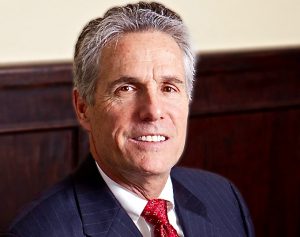
Dave Brady

Name: David J. Brady

Age: 62

Occupation: Financial advisor, Brady & Associates, a financial services firm

What groups, nonprofits, other civic involvement are you part of outside of work?: Board member and treasurer, Carson Valley Chamber of Commerce and the Douglas County Community Services Foundation. Board member, Suicide Prevention Network. Rotarian.

What is your opinion about teachers having guns at school?: I believe it is the responsibility of law enforcement Agencies to provide for public safety and the responsibility of teachers to teach. I would strive to increase law enforcement presence in the schools, and add additional school resource officers where financially feasible.

Vacation rentals are allowed at Lake Tahoe. Should they be allowed everywhere in Douglas County? Why or why not?: Vacation rentals bring a host of problems in the communities in which they are located. (Parking, noise etc.) Should the Douglas County change its position on vacation rentals in the valley, I would involve law enforcement when particular situations become problematic and beyond the scope of the code enforcement officers.

How best to enforce vacation home rental regulations?: Add additional code enforcement officers, and add fines or fees where regulations are not being followed.

Why do you want to be sheriff?: I have long had a passion for public safety and law enforcement in particular. I became a police officer in 1978, and have been involved in different capacities for 25 years. I want to contribute my broad based background, education, and work experience to enhancing and improving the delivery of law enforcement services in Douglas County. 

Why should someone vote for you over someone else?: I have the proper education (master of public administration) for the position, as well as extensive executive level leadership and management experience in both the public, as well as the private sector. Having served on the Douglas County school board for nine years, and as your county commissioner for six years, I have a deep commitment and understanding of the community. I will bring a broad range of skill sets to the position that will enhance my leadership ability and lead to successful outcomes.

How are you going to deal with people driving under the influence of marijuana?: I served as a DUI investigator and was responsible for approximately 300 DUI arrests while a police officer in Redondo Beach, I understand that the marijuana issue is more complex, due to the inability to determine THC levels because of the lack of suitable tests. Valid detection for cannabis is time-consuming, and tests cannot determine an approximate degree of impairment. An objective investigation to determine the extent of intoxication may not lead to a conviction, without an accurate and timely way to determine THC levels. Extensive training will be required of deputies. The most important expectation is to determine objective symptoms of intoxication, and make an arrest if appropriate to protect for the safety of the driver and the public.

What do you believe is needed for a good relationship between the sheriff’s department and county commissioners?: Having served as a county commissioner, I believe communication is key in dealing with all the elected officials. I would work to build and maintain positive, constructive and candid dialogue with each commissioner, as well as the county manager.

If the commissioners cut your budget by 10 percent, what program or people would you cut? Please be specific.: A 10 percent cut in the budget would mean a reduction of approximately $1,650,000. Capital expenditures for vehicles would be eliminated, saving $300,000. Additionally, I would conduct an operational audit to determine the appropriate staffing structure of the organization and eliminate positions deemed not critical to the operation of the department.  Considering that over 80 percent of the budget is salaries and benefits, personnel would have to be reduced. As an example, I believe the department is top heavy, and would reduce positions through attrition, rather than reduce positions on the street. 

What is your relationship with businesses at Lake Tahoe that work with the sheriff’s department on various events? If anything, what would you consider changing?: Currently, I do not have a relationship with the businesses, but it would be my expectation as sheriff to work directly with anyone or any business to make sure their needs are addressed and adequately met. 

Deputies use targets to practice marksmanship. Is there a better way to train people so not so many unarmed people are being shot? Please elaborate.: The Sheriffs Advisory Council purchased a Fire Arms Training Simulator (FATS) for the department approximately five years ago, which is an excellent training tool when it comes to “shoot, don’t shoot” situations.

If you could make the rules for New Year’s Eve at Stateline, what would they be?: Having worked New Year’s Eve as a reserve deputy sheriff for approximately 10 years, I believe DCSO has done a great job in their approach to maintaining public safety and order. In light of the recent developments in the Las Vegas shooting, greater coordination with the casino properties regarding access to hotel rooms overlooking the casino corridor might be a consideration.  The summer concert series need to have the same consideration, unfortunately.

Douglas County sheriff’s deputies make less than South Lake Tahoe police officers and El Dorado County sheriff’s deputies. Does this hamper efforts to recruit employees? Do you believe deputies should be paid more? Why or why not? If yes, how would you go about getting them more money?: At present, I am unfamiliar with the compensation and benefits paid by SLT and El Dorado County in relation to DCSO deputies. I would certainly look to pay a competitive wage and benefit package, once an analysis has been completed. It may be that we can’t compete with California agencies, but I would expect to work with DCSO Association to clearly identify opportunities that would enhance the ability to recruit and retain employees. I believe our starting pay is low relative to other agencies, but becomes more equitable with time and tenure on the job.  Increasing entry level compensation needs to be addressed. Finding ways to reduce turnover saves the county money and cost savings should be redirected where appropriate.

What is lacking in the department right now in terms of personnel or equipment or other resources? How would you address those needs?: Initially, I would conduct an operational audit, as mentioned before, to determine the appropriate structure and staffing of the organization. Staffing ratios for the department are low by national standards. Currently, the ratio is 0.95 deputies/1,000residents for DCSO while the national ratio is 2.5 deputies/1,000 residents. Consider as well, the county is 750 square miles. I would look to reallocate resources to the street, and increase the number of area cars using “predictive policing” to concentrate LE resources where and when the data indicates a need. Additionally, I would engage in “expenditure control budgeting” to look for opportunities to save money within the budget and use these monies to pay for additional deputies to increase the ratios mentioned above. 

What do you think is the biggest issue facing Douglas County Sheriff’s Office and how do you plan to resolve it?: Currently, the biggest issue facing DCSO is the turnover of personnel. In the past 18 months, the department has hired 24 new deputies to replace the deputies that have left the department for various reasons. The turnover is a function of low morale which was documented in the most recent grand jury report. High turnover undermines good service, professionalism and morale. I would have a climate survey conducted which would interview each employee to determine where there might be opportunities for improvement within the organization, and do follow up exit interviews of deputies that have left to best determine the scope of the problem. I would communicate any and all findings to the employees and prepare a plan of action to address the issues identified from the interviews.

Body cameras are about to be required throughout Nevada. What are the pros and cons?: The argument against body cameras centers primarily on cost. Purchase of the equipment, storage of film content, and the training of deputies, as well as the need to hire additional personnel to maintain the equipment, are requirements to be considered. Body cameras will serve a very useful purpose in that they have the potential to reduce litigation costs or expensive settlements.  The cameras provide value information that can be used as evidence, and will benefit the deputies and the individuals the come in contact on the street.  False claims by either party can be verified through the use on body cameras. 

Tell us something about yourself that people might not already know?: Graduated USC magna-cum-laude, kidney donor, and a twin.


Opinion: Census count of same-sex couples not enough

By Akiesha Anderson, The Conversation

Although LGBT people are becoming more visible in society, federal data reveal little about the U.S. LGBT population and its needs.

In a first in U.S. history, the U.S. Census Bureau will explicitly count same-sex couples living together in the 2020 census.

The decision to ask about same-sex relationships, announced this spring, is an important change that will improve the quality of the data.

Yet the 2020 census and most federal surveys don’t ask people to disclose their sexual orientation or gender identity. That means there’s no official count of LGBT people in the country, and most government data sets cannot be used to assess the LGBT population at the national, state or local level. Such information would help policymakers, researchers and advocates understand the particular needs of this population and design effective policies and programs.

As a legal scholar who studies federal sexual orientation and gender identity data, I know that currently there are many unanswered questions about LGBT people’s employment, housing and family circumstances; their health and well-being; and the discrimination and disparities they face.

If the census and other federal surveys included sexual orientation and gender identity, we would know so much more.

What the 2020 census will capture

The decennial census is one of the nation’s most important data collections. It’s the constitutionally mandated official headcount of people living in the U.S. and is the principal way to determine political representation throughout the nation.

Although the census is collected only every 10 years, the U.S. Census Bureau regularly conducts numerous other surveys, including the American Community Survey and the Current Population Survey. The data from these and other federal surveys are often used in conjunction with decennial census data to influence law and policy. These data also determine the annual distribution of more than $675 billion of federal funding.

In the past, demographers analyzing U.S. Census Bureau data had to use complicated and imperfect systems to estimate the number of cohabiting same-sex couples living in the U.S. The current estimate is that are 646,500 same-sex couples living together in the U.S.

The 2020 census will allow respondents to describe their relationship to members of their household using the categories “same-sex husband/wife/spouse” and “same-sex unmarried partner.” In the past, this was not the case.

The 2020 census will better count the number of married and unmarried same-sex couples living together. Respondents’ answers will provide a wealth of information about same-sex couples’ diversity, their children and living arrangements, employment rates and incomes.

Gaps in the data

By capturing distinct data only on same-sex couples living together, however, the 2020 census will tell us nothing about the entire LGBT population, including LGBT people who are single or bisexuals in different-sex relationships. Nor will it capture specific data on transgender youth and adults.

During the Obama administration, the Department of Justice and other federal agencies asked the U.S. Census Bureau to collect sexual orientation and gender identity information. However, the Trump administration withdrew these requests, against the objection of members of the U.S. Senate, LGBT rights groups, researchers and others.

The U.S. Census Bureau’s director stated in a blog post that “there’s no federal data need” nor any statutory requirement to collect sexual orientation and gender identity data.

It’s true that Congress has failed to pass legislation that would require the census to add sexual orientation and gender identity questions. However, as the U.S. Census Bureau has acknowledged, various questions are included on the decennial census or other surveys because “the data are needed for program planning, implementation or evaluation” even though “there is no explicit mandate or requirement.” Moreover, the Department of Justice and other agencies’ requests to the U.S. Census Bureau clearly articulated the federal need for this data.

Only a few federal surveys currently capture information about sexual orientation and gender identity. That suggests that such items could easily be added to the census and other federal surveys that ask about people’s demographics.

Beyond the decennial census, the Trump administration has rolled back sexual orientation and gender identity data collection in other federal surveys.

Why it matters

Businesses, government agencies, journalists, researchers and others use U.S. Census Bureau data to understand the socioeconomic characteristics of the nation. Without an accurate count, many public and private programs and services may not effectively reach vulnerable LGBT populations.

Moreover, there are federal laws and programs in place designed to increase access to employment, housing, health care and other services. But without inclusive data, policymakers, social service providers and others can’t know if these activities meet the needs of LGBT people and help them thrive. Without this information, stereotypes and myths may drive policies that impact LGBT people.

For example, despite the popular stereotype of LGBT affluence, studies suggest that some LGBT people are more likely than their non-LGBT counterparts to be in poverty. Also, despite the belief that marriage equality would result in full societal acceptance, many LGBT people throughout the nation continue to face persistent and pervasive discrimination.

What’s more, the LGBT population faces numerous health disparities compared to the non-LGBT population, such as higher rates of substance use, depressive symptoms and suicide attempts.

Existing data show that the LGBT population is remarkably diverse and that the experiences of LGBT people are shaped by many factors, including race, age, socioeconomic status and education level. But existing data are not enough. The U.S. Census Bureau’s failure to ask sexual orientation and gender identity questions makes it hard to know much about the intersections between LGBT status and other characteristics.

In my view, if policymakers want to truly understand and attempt to meet the diverse needs of LGBT people, then more inclusive data ought to be collected. And the U.S. Census Bureau – with its vast surveys, strict confidentiality and expertise – is the ideal agency to lead the way.

Akiesha Anderson is a law fellow at the Williams Institute, UCLA.


Calif. bill would expand pot deliveries

By Taryn Luna, Sacramento Bee

There’s a problem with access to legal weed in California, and a Senate bill may help solve it.

A 2016 voter-approved measure to legalize marijuana in the state gave cities and counties the authority to pass regulations outlining the types of weed businesses that can operate within their borders. With limited time to craft rules before the law took effect at the start of the year, many towns approved outright bans of all marijuana businesses.

Read the whole story


Calif. attorney general race goes negative

By John Wildermuth, San Francisco Chronicle

The race for attorney general is getting nastier, with Democrat Dave Jones going on the attack against retired El Dorado Superior Court Judge Steven Bailey , who with Los Angeles attorney Eric Early is one of the two Republican candidates in the contest.

On Monday, Jones sent out a news release calling Bailey the leading GOP candidate in the race and none-too-subtly pointing out that “this candidate is under investigation for 11 counts of judicial misconduct.”

 Jones, the state insurance commissioner, also made sure to point out that Bailey is supported by “numerous conservative organizations,” including the Pro-Life Council and Gun Owners of California.

Read the whole story


Las Vegas-style public lands bill pitched for N. Nev.

By Benjamin Spillman, Reno Gazette-Journal

Northern Nevada communities could get a taste of Las Vegas-style land management practices if Washoe County officials get their way.

A draft of the proposed Washoe County Economic Development and Conservation Act seeks to replicate the idea behind the Southern Nevada Public Lands Management Act, also known as SNPLMA.

Since Congress passed the southern Nevada version which became law in 1998, sales of federally owned land in the Las Vegas-area generated more than $3 billion, much of which has been used to fund conservation in Clark County and around Nevada, including at Lake Tahoe.

Read the whole story


Nev., N.J. pokers players can play online against each other

By Richard N. Velotta, Las Vegas Review-Journal
 
Online pokers players may have hit the equivalent of a royal flush Tuesday.

Caesars Interactive Entertainment, a subsidiary of Caesars Entertainment Corp. and the owner of wsop.com — the online outlet of the World Series of Poker — on Tuesday introduced its first competition between residents of Nevada and New Jersey.

The move follows Monday’s decision by regulators in Nevada and New Jersey to allow the pooling of players in those states to compete with each other in online poker games.

Read the whole story


$1M in federal funds to help with AIS at Tahoe

The U.S. Army Corps of Engineers is providing $1 million in funding to the Tahoe Regional Planning Agency to help control, prevent, and monitor harmful aquatic invasive species in the lake.

This is the second such agreement of federal investment for AIS in the Lake Tahoe Basin that the Corps has executed. The first agreement in 2008 with the California Tahoe Conservancy helped establish the boat inspection program.

The new agreement will provide funding for prevention,  control and monitor existing populations, education, outreach, and research.

TRPA said funding will help with challenges in the Tahoe Keys, Ski Run Marina and at Sand Harbor State Park.


Coverley: Proud of endorsements for DCSO sheriff

Publisher’s note: Four people are running for the position of sheriff of Douglas County Sheriff’s Office. Their profiles will run May 4 and May 5.

Dan Coverley

Name: Dan Coverley

Age: 48 years old

Occupation: I am the administration captain with the Douglas County Sheriff’s Office. My office is in Stateline in the judicial building.

What groups, nonprofits, other civic involvement are you part of outside of work?: I am a member of the FBI National Academy Associates, I am a member of the Douglas/Carson Chapter of the Nevada Farm Bureau, member of the Nevada Cattleman’s Association, member of the Carson Valley Roping Club, soccer coach with the Carson Valley Soccer Club U-17 girls, member of the Carson Valley Chamber of Commerce, board member of the Family Support Council and board member of the Douglas County Partnership of Community Recourses.

What is your opinion about teachers having guns at school?: I believe that arming teachers is an option, but the level of training that should be required to be armed while at school should be on the level of a sworn law enforcement officer. If the individual teacher and school district is able and willing to participate and provide that level of training, then arming teachers is an option. I believe a better option is to provide sworn officers at the schools to serve as school resource officers. I also believe the relationship between the sheriff’s office and the school district needs to be strong and open lines of communication must exist in order to share information to stop violent threats that my occur. Douglas County Sheriff’s Office and the Douglas County School District currently have an excellent relationship and I would work to enhance and strengthen that relationship.

Vacation rentals are allowed at Lake Tahoe. Should they be allowed everywhere in Douglas County? Why or why not?: I believe that vacation rentals should be allowed in Douglas County.

How best to enforce vacation home rental regulations?: I also think that there should be an ordinance which would regulate the rentals. The ordinance should address disturbance complaints such as loud parties or excessive noise late at night or early in the morning. Also parking should be addressed to limit the number of vehicles allowed at each rental so as to not obstruct or prevent homeowner’s access or emergency vehicles, specifically fire trucks and ambulances.   rental owner who has numerous noise or parking complaints should be subject to a fine. Permanent residence should not have to suffer because their neighbor is a vacation rental. 

Why do you want to be sheriff?: Douglas County is a wonderful place to live and raise a family. I want to do everything I can to ensure that Douglas County stays the great place it is. The sheriff’s office plays a vital role in the safety and security of the residents and the quality of life we all enjoy. The sheriff is the only local law enforcement office in the Douglas County. As such the sheriff’s office must have and maintain the best relationship with the community as it can. The sheriff holds a key position in fostering and maintaining that good relationship. I believe I can continue and improve the good relationship that the sheriff’s office currently enjoys with the citizens of Douglas County. I have been a cop for 23 years, 21 years with Douglas County. I have worked in every division and held every rank up to captain. As sheriff I will work hard as I have always done as a deputy to keep the Douglas County safe and provide the best law enforcement service to the citizens. 

Why should someone vote for you over someone else?: The current sheriff, Ron Pierini, has endorsed me as his choice to be sheriff. I have received the endorsement of the deputies, South Lake Tahoe Police Department and the Tahoe Douglas Fire District. I believe I have received these endorsements due to the relationships I have developed with the men and women who work for the sheriff’s office and those agencies. I will use those collaborative relationships to be effective in enforcing the law and keeping the residents safe, thus ensuring the quality of life we have to come to know and love.

How are you going to deal with people driving under the influence of marijuana?: Driving while under the influence of any substance which may impair your ability to safely operate a motor vehicle is illegal.  Marijuana, while legal in Nevada up to an ounce, will be treated just like alcohol. Drivers who are contacted and based on their driving pattern, physical demeanor and the results of field sobriety tests, and are deemed to be impaired will be arrested in accordance with Nevada law. The legalization of marijuana just made it legal to use and possess in your home, but it did not make it legal to be under the influence and drive.

What do believe is needed for a good relationship between the sheriff’s department and county commissioners?: A good relationship between the sheriff and the county commissioners starts with developing a good relationship with them individually. It is maintained with good communication and an attitude of cooperation. The sheriff is a constitutionally elected official and as such, has autonomy and does not work for the commissioners, but does need to work with them as well as all county departments and other elected officials. 

If the commissioners cut your budget by 10 percent, what program or people would you cut? Please be specific.: If the budget was cut by 10 percent, I would have to cut personnel and equipment. I would eliminate the PIO position and one youth services deputy. I would also reduce the vehicle budget and make do with the vehicles we currently have, without replacing old vehicles in the fleet. Any cuts in the budget would almost certainly affect personnel, which is currently 80 percent of our budget.

What is your relationship with businesses at Lake Tahoe that work with the sheriff’s department on various events? If anything, what would you consider changing?: As the administration captain and having my office at the lake, I serve as a liaison between the sheriff’s office and the Lake Tahoe community. I have worked closely with the LTVA coordinating special events such as Celebrity Golf Tournament, Amgen bike race, Fourth of July and New Year’s Eve celebration. I also work closely with individual businesses to include, Harrah’s-Harveys, Hard Rock Casino, MontBleu, Zephyr Cove, Lakeside Inn and Edgewood who all host special events each year. I have worked with the Catholic church on Elks Point Road, Presbyterian Conference Center, Heavenly and the Ridge. I work closely with Tahoe Douglas Fire District, TRPA and all GIDs with any issues that come up. The only change I would make is to strengthen the relationship with lake business and community. The lake is a unique community in Douglas County that depends on tourism to a large extent. People need to feel safe so they will continue to visit and spend their vacation money in Douglas County.

Deputies use targets to practice marksmanship. Is there a better way to train people so not so many unarmed people are being shot? Please elaborate.: As a member of our range staff I feel we have an excellent firearms training program. All deputies qualify with all weapons four times a year. Three of the four qualifications are daytime shoots and one is a nighttime shoot. Non-mandatory firearms training is provided to all members of the sheriff’s office in the months between the mandatory qualifications.  Force on force training is provided utilizing less lethal munitions to put the individual deputy in a scenario of a shoot, no shoot situation to help them make the correct deadly force decision. We also use a firearms simulator to provide realistic training that requires the deputy to interact with the scenario.

If you could make the rules for New Year’s Eve at Stateline, what would they be?: As the incident commander for the last three years at Stateline during New Year’s I have worked closely with the Stateline casinos to ensure the event is safe for the celebrants, property owners and deputies. Douglas County prohibits bottles or cans on the street during the event. The casinos and restaurants cooperate by only serving alcohol in plastic containers. The sheriff’s office has taken a non-confrontational approach to policing the event, which has led to fewer arrests and less problems with the public. The event itself has changed and is not as well attended as it has been in the past, largely due to the SnowGlobe event in South Lake Tahoe.

Douglas County sheriff’s deputies make less than South Lake Tahoe police officers and El Dorado County sheriff’s deputies. Does this hamper efforts to recruit employees? Do you believe deputies should be paid more? Why or why not? If yes, how would you go about getting them more money?: Recruitment in law enforcement is always tough and competing with neighboring agencies that pay more doesn’t help. The sheriff does not set the wage or benefits package of the employees. That is done by the employees through their individual bargaining units. I believe the sheriff should be supportive of the deputies as they negotiate for the best contract that they can get. I think deputies should be paid a competitive wage that allows them to afford to live in the area they work.

What is lacking in the department right now in terms of personnel or equipment or other resources? How would you address those needs?: The sheriff’s office has done a good job keeping up with the advances in technology utilized in current law enforcement agencies. One item I will work hard at getting is license plate readers in both the valley and the lake. This will assist us in locating wanted persons, persons of interest in local crimes, potential terrorist threats and to locate and identify stolen vehicles. It allows us to know who is entering our community, which will help keep it safe especially during special events that are common at the lake. 

What do you think is the biggest issue facing Douglas County Sheriff’s Office and how do you plan to resolve it?: The biggest issue facing the sheriff’s office is the opioid epidemic. Heroin is much more prevalent in Douglas County than it was even 10 years ago. Heroin is a devastating drug that has a ripple effect with regards to crime in a community. The sheriff’s office must aggressively work to keep this drug at a minimum. The issue must be attacked on the patrol level by identifying users and possession, on the investigative level to identify sellers and traffickers and by education of youth to prevent use of the drug. 

Body cameras are about to be required throughout Nevada. What are the pros and cons?: I believe the pros of bodycams vastly outweigh the cons. Bodycams will aid in the prosecution of cases, transparency with the public and protect the deputies from false accusations. The cons are the cost of the program that the department has to absorb and the storage of the data. I believe they are a good thing and are worth the cost and any potential difficulties they may create.

Tell us something about yourself that people might not already know?: I have a twin brother who is an Idaho state trooper.


Beauty and ease with elevated gardens

By Melinda Myers

Elevate your gardens to waist high level for convenience and easy access. Elevated gardens are easy on your back and knees and are perfect for the patio, balcony, deck or any area where a bit of planting space is desired. Place them near your kitchen door, grill or table for easy cooking and serving access. You’ll be able to plant, weed and harvest with minimal bending or even from a chair.

Purchase one on wheels or add casters to the legs of your elevated garden for added mobility. Then wheel it into the sun or shade as needed each day or out of the way when you entertain.

Elevated gardens are an easy and convenient way to add planting space.
Photo/Gardener’s Supply Company

Set the garden in place first. Once it’s filled with soil, it will be very heavy and difficult to move. Those gardening on a balcony should confirm the space will hold the weight of the elevated garden you select when filled with soil and mature plants.

Make sure you have easy access to water. Since this is basically a container, you will need to check the soil moisture daily and water thoroughly as needed. Fill the elevated garden with a well-drained planting mix that holds moisture while providing needed drainage.

Incorporate a low nitrogen slow release fertilizer at planting. It contains 85 percent organic matter, feeding the plants and soil. Slow release fertilizers provide plants with needed nutrients for several months, eliminating the need for weekly fertilization.

Grow a variety of your favorite herbs and vegetables like basil, parsley, compact tomatoes, and peppers. Support vining plants or try compact ones like Mascotte compact bush bean. Add color and dress up your planter with flowers like edible nasturtiums and trailing herbs like thyme and oregano which will cascade over the edge of the planter.

Maximize your growing space by planting quick maturing vegetables like radishes, beets and lettuce in between tomatoes, peppers, cabbage and other vegetables that take longer to reach their mature size. You’ll be harvesting the short season vegetables just as the bigger plants need the space.

Further increase your garden’s productivity with succession plantings. Fill vacant spaces that are left once a row or block of vegetables are harvested.  Add more planting mix if needed.

Select seeds and transplants that will have time to reach maturity for harvesting before the growing season ends.  Broccoli, cabbage, compact Patio Pride peas, lettuce, spinach and other greens taste best when harvested in cooler fall temperatures.

Replace weather-worn flowers with cool weather beauties like pansies, nemesias, dianthus, alyssum and snapdragons. Fertilize the whole planter so new plantings and existing plants have the nutrients they need to finish out the season.

Protect your fall flowers, herbs and vegetables from hard frosts with floating row covers. These fabrics allow air, light and water through while trapping the heat around the plant.

Once you discover the fun, flavor and ease of waist high gardening, you’ll likely make room for more elevated planters for your future gardening endeavors.  

Melinda Myers has written more than 20 gardening books, including “Small Space Gardening.” She hosts the Great Courses “How to Grow Anything: Food Gardening for Everyone” DVD set and the nationally syndicated “Melinda’s Garden Moment” TV and radio segments.


Bart Sullivan — 1928-2018

Bart Sullivan

Fifty-year South Lake Tahoe resident Bartholomew “Bart” Jeremiah Sullivan, known as Papa, died April 11, 2018. He was 90.

He was born in San Francisco on Feb. 19, 1928.

Loving father to Debra Sullivan, Pam Sullivan, Karen (Randy) Burns, Diane (Jeff) Resler, Scott (Carol) Sullivan, and Dan (Deni) Sullivan. Proud Papa to his grandchildren Alicia Mackey, Bridgette Garrison, Emily (Dan) Erwin, Robyn (Joe) Tamburini, Hannah Sullivan, Connor Sullivan, Joshua Sullivan, Aaron Sullivan, Ally Sullivan, Matt Sullivan, Tess Sullivan and his great-grandchildren Noah Garrison, Nathan Garrison, Sydney Erwin, James Tamburini, Kenzie Erwin, Maxine Tamburini, and Danny ‘Sully’ Erwin. He is also survived by brother in-law Jack Ahern, sister in-laws Ruth Sullivan and Maureen Sullivan, along with many loving nieces, nephews, other family members, and friends.

He was preceded in death by the love of his life, his wife of 62 years, Eugenia “Jeanne” Sullivan, parents Barney and Mary Sullivan, brothers Pat (Peggy), John, Frank (Jane), Mike, sisters Helen Ahern and Mary Ann Sullivan, son-in-law Rodney Mackey, grandson Brian Burns, and nephews John Sullivan and Jack Ahern.

Bart was a native San Franciscan, son of Irish immigrants, who grew up in St Mary’s Park in San Francisco in a large and fun loving family. He attended St John’s grammar school and Sacred Heart High School.

He began his career as an engineer with Pacific Bell where he met his wife Jeanne. Their courtship was interrupted when he served in the U.S. Army as staff sergeant to the judge advocate during the Korean War. He returned to San Francisco to continue his career, marry Jeanne, and start a family. They made their home in Santa Rosa until 1968 when they moved their family to South Lake Tahoe where Bart continued his career with Pacific Bell, retired, and enjoyed the good life in Tahoe.

He was a devout parishioner of St. Theresa Catholic Church and regularly attended the 8am daily Mass. He loved spending his time gardening, playing the lottery, and attending sporting events, dance recitals, and anything else his grandkids were involved in. Bart was devoted to his family above all else.

He will be missed by all who knew him for his sense of humor, his laughter, and his kindness.

A funeral Mass will be said on May 17 at 10am at St. Theresa Church, 1041 Lyons Ave., South Lake Tahoe, with a reception to follow.

In lieu of flowers please make a donation to an animal shelter/rescue of your choice.